High on a windswept ridge inside the Periyar Tiger Reserve stands a ruined stone shrine that the world is allowed to touch for a single day each year — the mysterious Mangaladevi Kannagi Temple, cradled in the clouds where Kerala meets Tamil Nadu.
The story of Mangaladevi Temple trek
Roughly 1,337 metres (indicative — confirm locally) above the sea, on a lonely grassland saddle of the Western Ghats, sits one of South India’s most enigmatic ancient sites — the Mangaladevi Kannagi Temple. Built from massive granite blocks and now largely a picturesque ruin, its tumbled walls, weathered steps and roofless sanctums look out over a sea of misty peaks that fold away into both Kerala and Tamil Nadu. There is no town here, no shops, no permanent priest — only wind, silence and the enormous emptiness of the high forest.
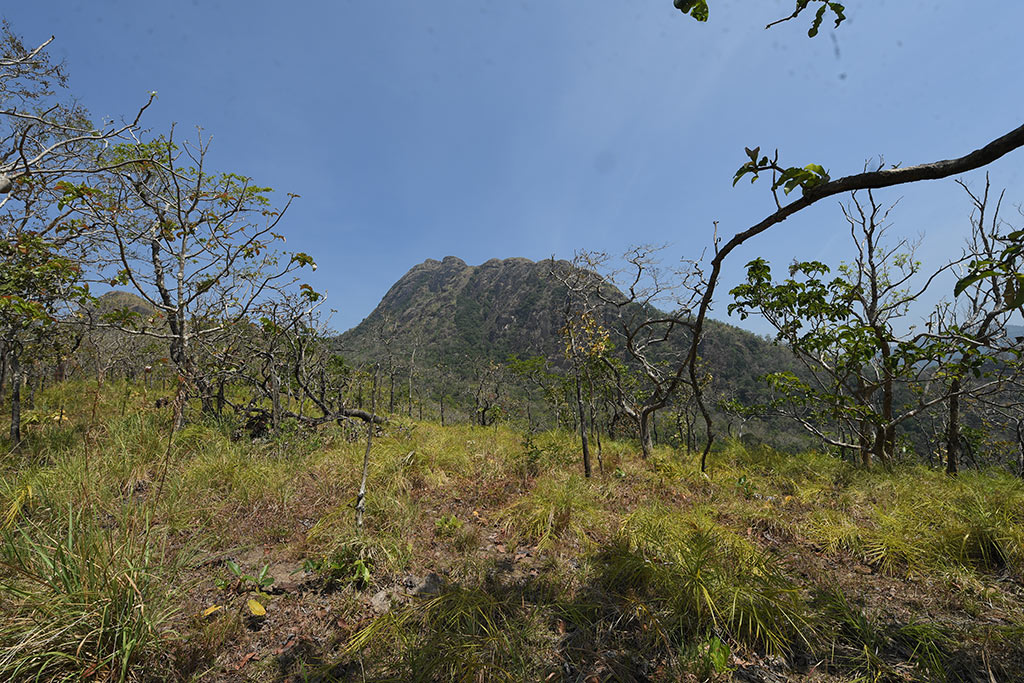
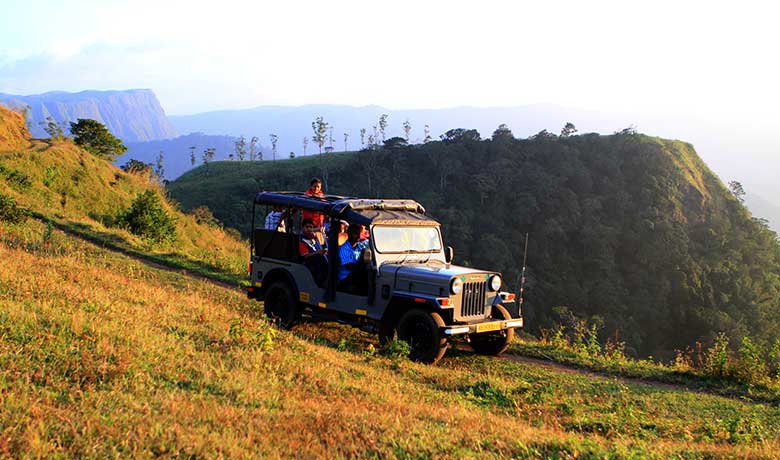
Reaching it is half the pilgrimage. The shrine lies deep within the buffer zone of the Periyar Tiger Reserve, and for all but one day of the year the surrounding jungle belongs strictly to the wildlife. The classic approach is from Kumily, roughly 10–15 km away (indicative — confirm locally), along a rough, climbing forest track that jeeps grind up through dense evergreen woodland before the trees thin into rolling shola grassland near the top. Trekkers also toil up from the Tamil Nadu side near Pazhiyankudi, some 7 km below (indicative — confirm locally). Either way the last stretch is a lung-testing walk across open hillside to the ridge.
The reward at the summit is one of the finest panoramas in the whole region. On a clear morning the ruined temple seems to float above the clouds, with the blue ranges of the Ghats rippling in every direction and, far below on the eastern flank, the patchwork villages and plains of Tamil Nadu’s Cumbum valley shimmering in the heat. The grassland setting — cropped short by wind and grazing, dotted with wildflowers and the occasional stunted tree — gives the place an almost Himalayan, otherworldly feel that is rare in tropical Kerala.
What makes Mangaladevi truly unusual is that it opens to the public only once a year, on the full-moon day of Chitra Pournami in the Tamil month of Chithirai (April–May) (indicative — confirm locally). On that single day the empty ridge is transformed: thousands of devotees — many tens of thousands in a good year — stream up from both states, a portable idol is carried in from Kambam on the Tamil side, and both Kerala Namboodiri priests and Tamil priests perform rituals side by side amid the ancient stones. For a few hours the ruin breathes again as a living temple, then the crowds descend and the forest reclaims its solitude for another twelve months.
The one-day opening is not only a matter of ritual — it is also bound up in a long-running jurisdictional tangle. The temple straddles a stretch of the Kerala–Tamil Nadu border where the exact line, the land it stands on and the right to administer the shrine have all been contested between the two states for decades. Kerala controls physical access through its Forest Department, while Tamil Nadu has pressed to bring the temple under its own religious-endowments administration. On festival day the sensitivity is visible in the sheer scale of policing, with large contingents of officers from both states deployed along the trek route to keep order.
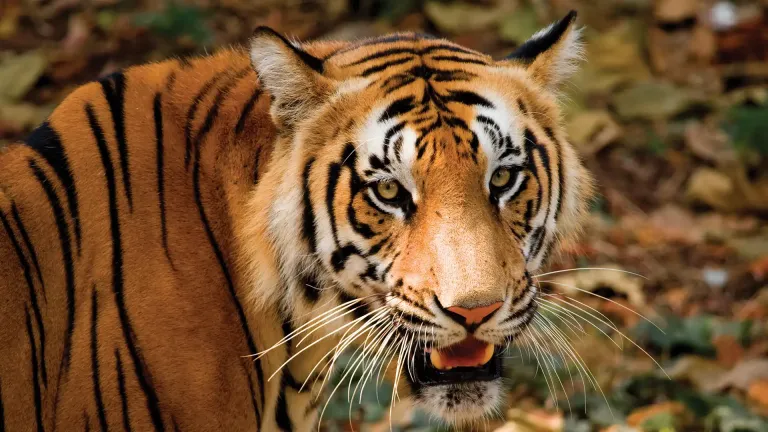
For the rest of the year Mangaladevi belongs to the tiger, the Nilgiri tahr, the sambar and the elephant, and to the botanists who prize the ridge for its endemic orchids. Visitors cannot simply wander up on a whim: the reserve rules, the border sensitivities and the genuine dangers of the forest mean the site is effectively sealed except under Forest Department permission or on the festival day itself. That inaccessibility is exactly what has preserved its haunting, end-of-the-world atmosphere — a two-thousand-year-old memory in stone, guarded by a living wilderness.
Legend & myth
By tradition the temple is sacred to Kannagi, the tragic heroine of the ancient Tamil epic Silappadikaram (the Cilappatikaram). In the story Kannagi’s husband Kovalan is wrongly accused of theft and executed by the king of Madurai; in her grief and fury she confronts the court, proves his innocence, and is said to have torn off her breast and hurled it at the city, calling down a fire that consumed Madurai. The legend holds that, after the burning, Kannagi wandered west into the hills and — in versions retold at this shrine — remained here in the forest for a time before being taken up as a goddess.
It is from this that the site draws its dual name and its aura of divine womanhood. Elevated in death to the goddess Pattini — the deity of chaste devotion and marital fidelity — Kannagi is worshipped here as Mangaladevi, the auspicious mother. Local tradition credits the Chera king Chenguttuvan with raising a shrine in her honour, and it is this fusion of a flesh-and-blood epic heroine with an enduring goddess-cult that gives the lonely ruin its powerful pull, especially for women devotees who come to have their marriage-thali and bangles blessed at the annual festival. All of this belongs to the realm of legend and sacred tradition rather than documented fact.
History
According to long-standing tradition, the sanctuary was consecrated in the early centuries of the Common Era — often placed around the 1st–2nd century CE (indicative — confirm locally), in the Sangam age — when Chenguttuvan of the Chera dynasty is said to have raised a shrine to Kannagi-Pattini in these hills. The deity venerated is identified with Kannagi, the heroine of the Old Tamil epic Silappadikaram (broadly dated to the early first millennium CE), which anchors the temple firmly in the classical Tamil cultural world even though it stands on the Kerala side of the modern Ghats.
The surviving structures are built of large dressed granite in a Dravidian idiom, and today comprise a cluster of stone shrines — the principal sanctum plus subsidiary shrines associated with deities such as Karuppasamy, Shiva and Ganapathi. The main temple has long stood in ruins, its roof gone and its walls broken, though boundary walls, carved fragments and stone steps still trace the plan of the original complex. Because the ancient image is no longer worshipped in situ, a portable panchaloha (five-metal) idol is brought up from Kambam for the festival.
Historical layers beyond the founding legend have been documented at the site. Epigraphists are reported to have recorded inscriptions here linked to later dynasties — associated with the Chola ruler Rajaraja I (around the late 10th to early 11th century CE) and with a Pandya king of the 13th–14th century (indicative — confirm locally) — indicating that the shrine remained a place of note across successive medieval powers before falling into ruin and jungle obscurity.
In the modern era the temple’s defining rhythm is its single annual opening for the Chitra Pournami festival on the Chithirai full-moon day (April–May) (indicative — confirm locally). On that day priests of both Kerala and Tamil Nadu traditions officiate together, tens of thousands of pilgrims ascend from either state, and the otherwise deserted ridge briefly becomes a major regional shrine before closing again for the year.
The site also sits at the heart of a long jurisdictional dispute between Kerala and Tamil Nadu over the border alignment and the right to administer the temple, with Tamil Nadu seeking to place it under its own religious-endowments department while Kerala governs access through its Forest Department. Because it falls inside the Periyar Tiger Reserve, entry for the rest of the year is tightly restricted and requires the permission of the Wildlife Warden at Thekkady, so that reaching Mangaladevi at all is a matter of forest permits, inter-state coordination and, on festival day, heavy joint policing.
Why visit
Stand among genuinely ancient ruined stone shrines with a two-thousand-year-old legend, on a site tied to the great Tamil epic Silappadikaram.
Experience a place open to the public on only one day a year — a rare, atmospheric pilgrimage that most travellers never manage to see.
Soak up one of the finest high-altitude panoramas in the Western Ghats, with clouds, shola grassland and views spilling into both Kerala and Tamil Nadu.
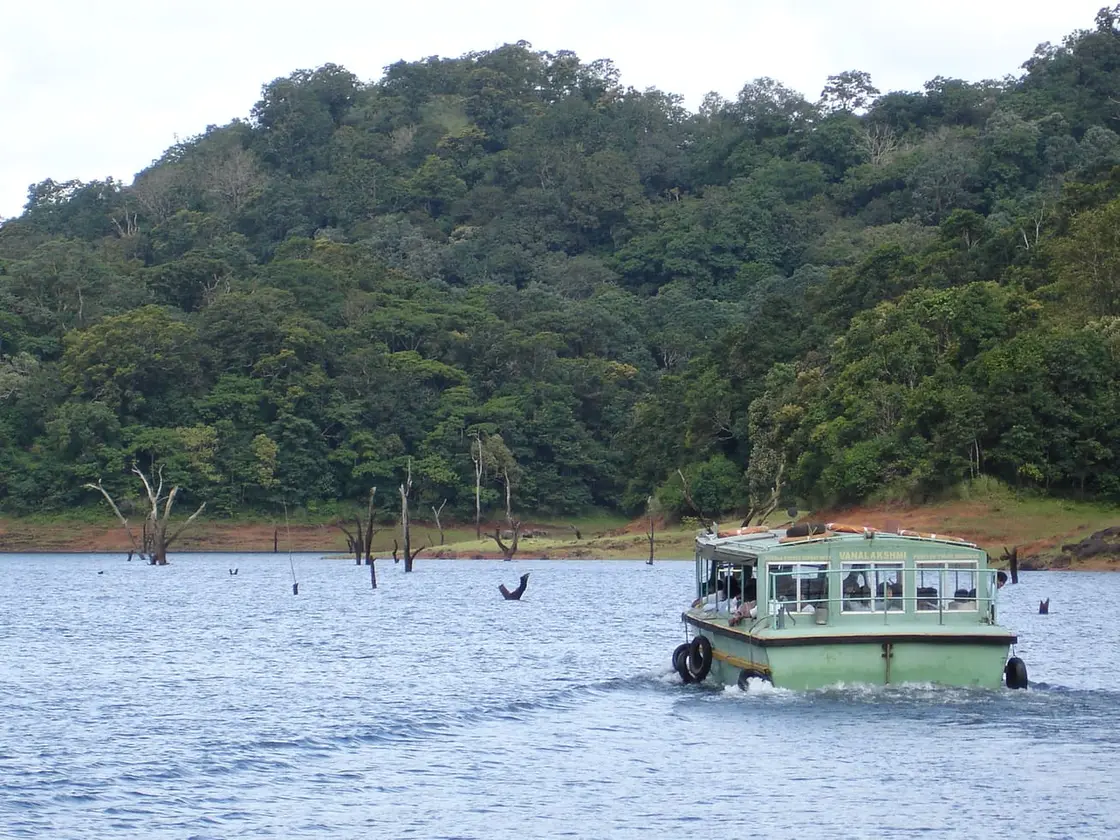
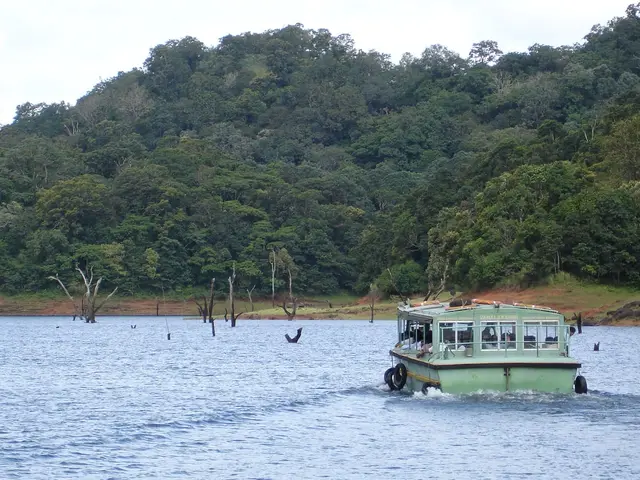
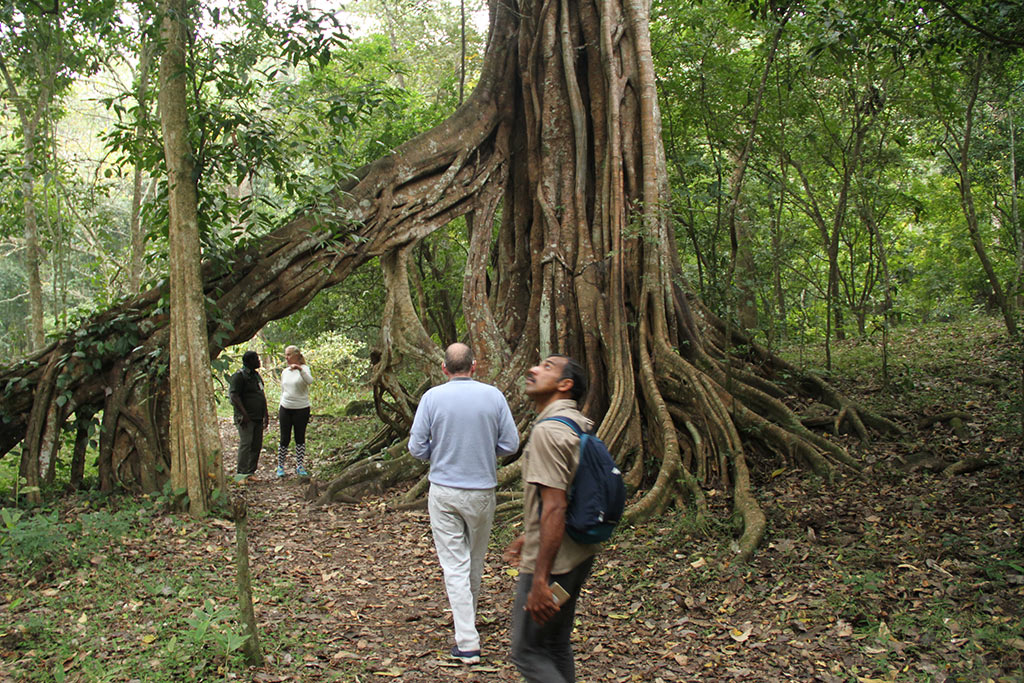
Trek or jeep deep into the wild heart of the Periyar Tiger Reserve, through evergreen forest alive with elephant, sambar, Nilgiri tahr and rich birdlife.
Witness a unique dual-state ritual where Kerala and Tamil priests worship together at the annual Chitra Pournami festival.
Feel the haunting solitude of an end-of-the-world ruin whose very inaccessibility has preserved its mystery and its wild, cloud-wrapped setting.
_13072018164535.jpg)