The story
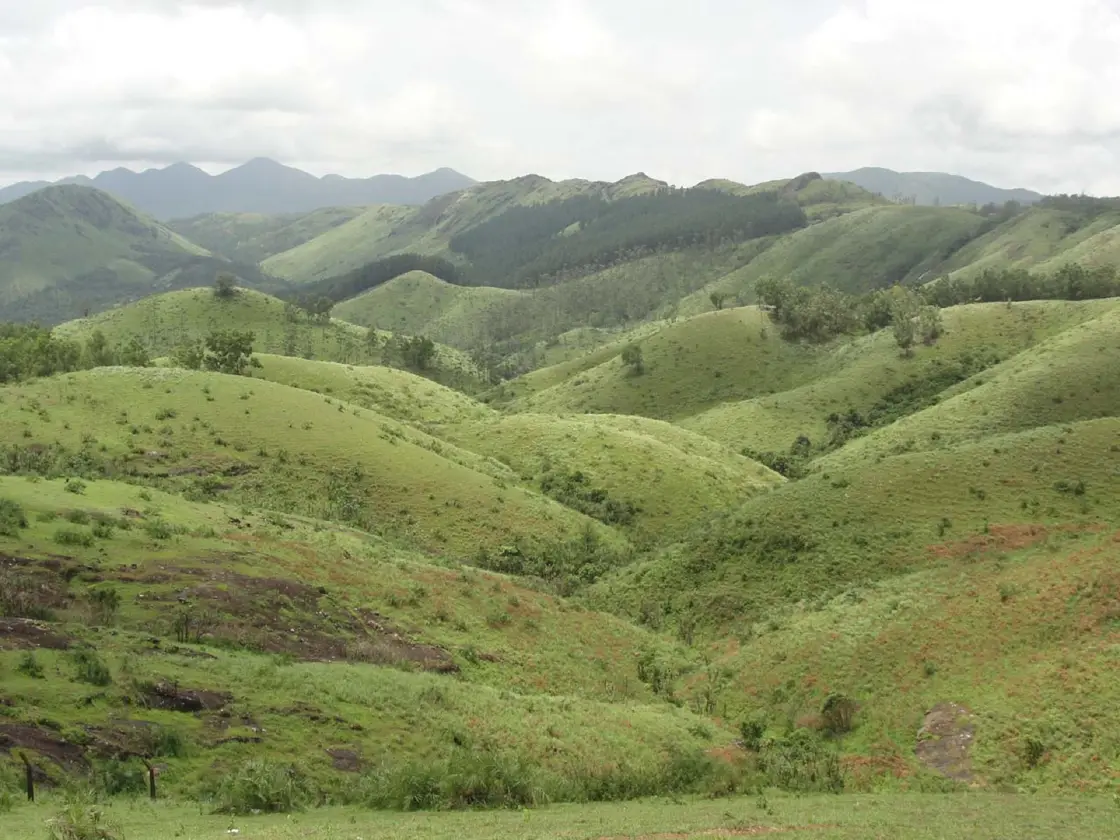
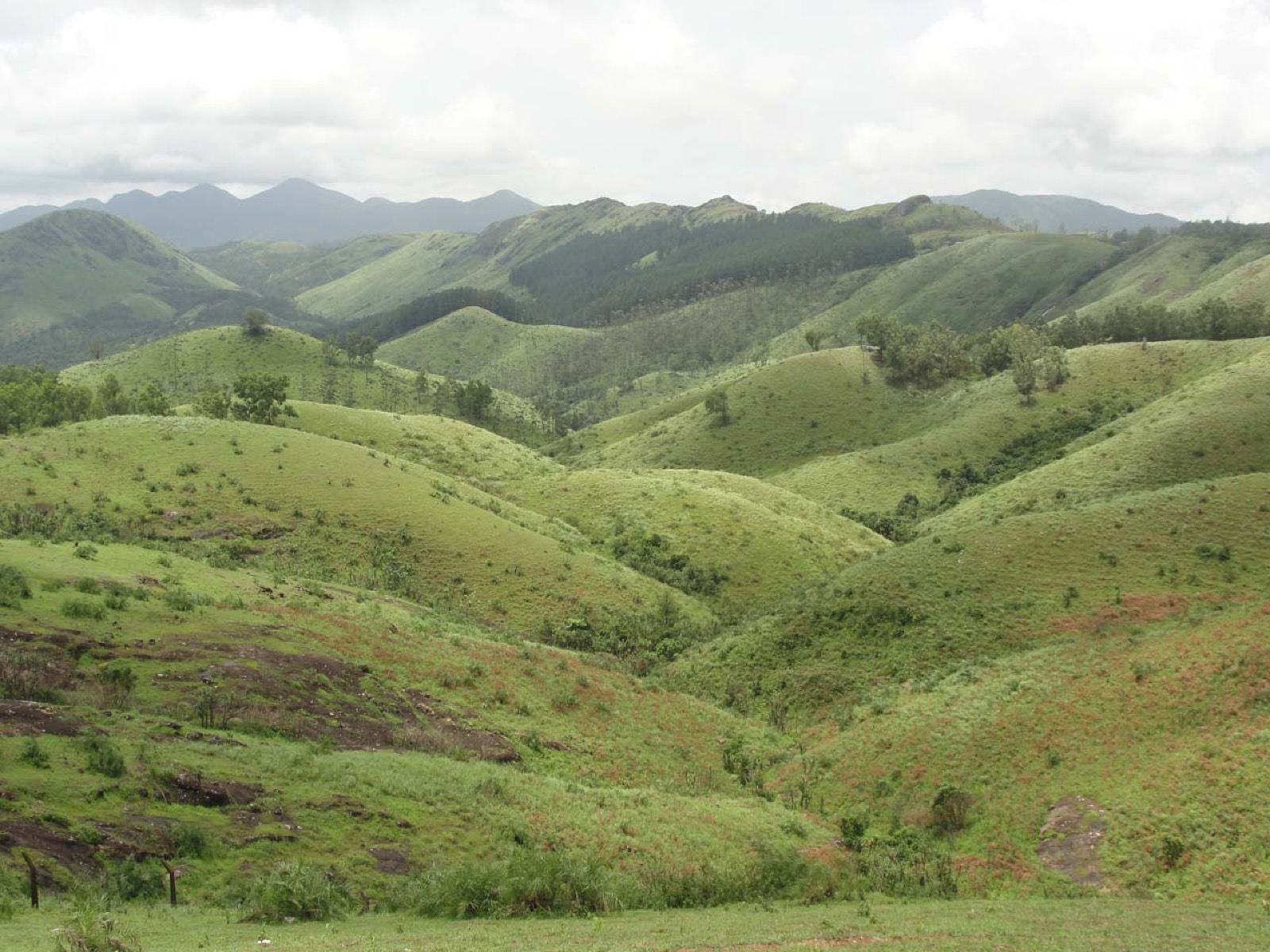
The treeless, rolling green hills of Vagamon — locally the ‘Mottakkunnu’ or ‘Barren Hills’ and often signposted as Vagamon Meadows — are the postcard image that earned this Idukki hill station its ‘Scotland of Kerala’ nickname: bald, grassy domes rippling to the horizon, laced with pine belts, wrapped in mist and cooled by Western Ghats air.
The story of Vagamon meadows
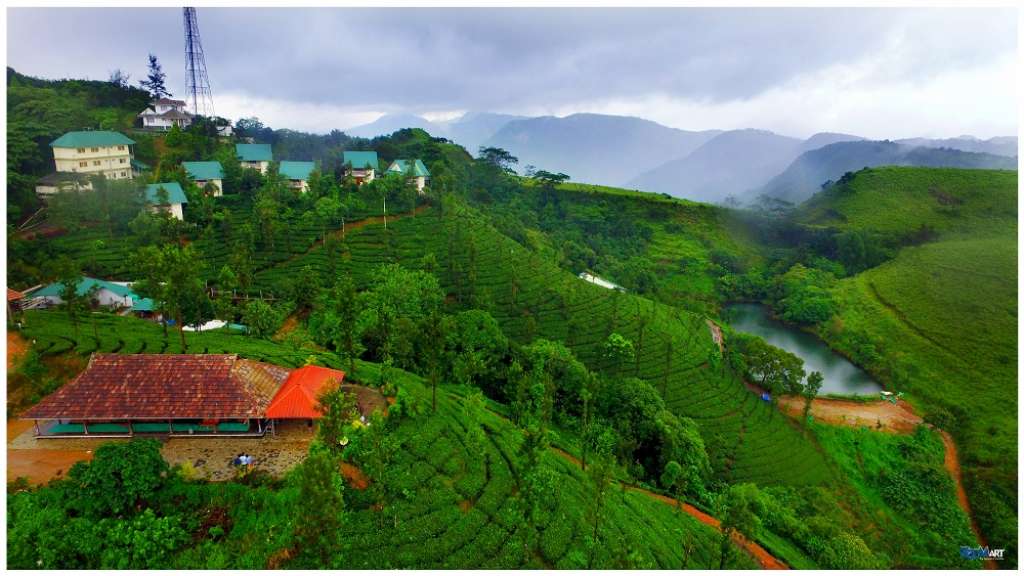
Come over the last rise on the Vagamon–Elappara road and the landscape simply opens: mile upon mile of close-cropped, emerald grassland tumbling over rounded hills with barely a tree to interrupt the eye. This is the meadow country the locals call Mottakkunnu — literally the ‘bald hills’ — and it is unlike almost anywhere else in Kerala, a state otherwise defined by dense forest, backwater and coconut palm. Here the land is bare, sculpted and green, and the effect is closer to the Scottish Highlands or the Nilgiri downs than to the tropical plains below.
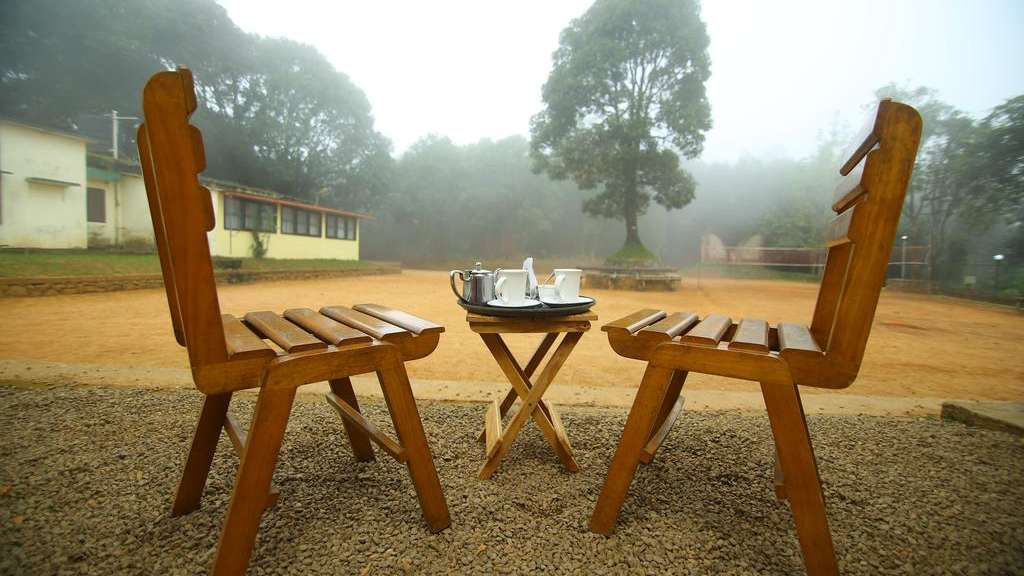
The meadows sit high in the Western Ghats at roughly 1,100 metres, where the air stays cool and the temperature typically hovers between about 10°C and 23°C. Cloud and mist are part of the experience: banks of fog roll in over the grass, dissolve, and reveal deep valleys with small interlocked ponds glinting at the bottom. Walkers drift across the springy turf, children roll down the slopes, and photographers wait for the moment the mist parts over a lone pine — a scene that feels less like the tropics and more like a temperate upland.
Adventure is woven into the place. The gentle, uninterrupted gradients and steady hill breezes make these slopes a natural launch pad, and Vagamon has grown into one of India’s premier paragliding destinations, hosting an international paragliding festival that draws pilots from across the country and abroad. From the air the meadows unfold as a patchwork of green domes, pine plantations and tea gardens — a genuine bird’s-eye view of the Kerala highlands.
The meadows are also camera country. Their cinematic sweep has made them a favoured film-shooting location; the vivid green hills seen in the Tamil blockbuster ‘Puli’ (2015) were captured at the Vagamon Meadows viewpoint, and countless Malayalam and Tamil productions have used the barren hills as a stand-in for far-off highlands. On any clear weekend you may well share the ridge with a shoot as much as with fellow travellers.
What makes the meadows quietly remarkable is how the seasons transform them. After the monsoon the grass turns an almost unreal lush green; through the dry months the same hills fade to straw-gold and bare — Kerala’s rare chance to watch a landscape run through something like four seasons. Sunrise and sunset are the headline hours, when low light rakes across the folds of the hills and the ponds in the valleys catch fire.
Framing the meadows on the surrounding ridges is Vagamon’s celebrated spiritual trio — the Christian pilgrim hill of Kurisumala, the Sufi shrine of Thangal Para and the Hindu rock temple of Murugan Mala — three faiths sharing one small cluster of hills. That backdrop of quiet inter-faith harmony gives the grasslands a contemplative edge that pure scenery alone would not.
Legend & myth
The spiritual lore of these hills is told, in the pilgrims’ own telling, as living tradition rather than proven fact. Kurisumala — the ‘Mountain of the Cross’ — is climbed every Good Friday by hundreds of the faithful, who ascend a path marked by fourteen crosses, the Stations of the Cross, carrying wooden crosses in a meditative re-enactment of Christ’s Passion to the church on the summit.
On a neighbouring ridge stands Thangal Para, a Sufi shrine venerated as the resting place of Hazrat Sheikh Fariduddin Baba, a saint whom devotees hold to have travelled to Kerala from Afghanistan some 800 years ago — a story kept alive by generations of pilgrims. A short way off, Murugan Mala carries a rock-cut shrine to Lord Murugan on its crest. Taken together, and framed by the same green meadows, the three sites are cherished locally as an emblem of the hills’ inter-faith harmony.
History
Long the grazing high country of the Idukki uplands, the Vagamon plateau came into wider view in the colonial era, when the cool climate of the Western Ghats drew planters to establish tea estates on and around these hills — a legacy still visible in the manicured tea gardens that neighbour the bare grasslands.
The hill’s modern spiritual identity was shaped in 1958, when Kurisumala Ashram was founded by Father Francis Mahieu — later known as Francis Acharya — a Belgian Trappist monk from Scourmont Abbey, together with the Benedictine Bede Griffiths, at the invitation of Bishop Zacharias Mar Athanasios. Griffiths soon left to found Shantivanam in Tamil Nadu, while Mahieu remained to develop the monastery on the meadow-clad heights above Vagamon.
The founders acquired some 88 acres and, to sustain the community, established a dairy farm stocked with imported Jersey cattle; within three years the community had grown to around fifteen monks. Belonging to the Syro-Malankara Catholic Church and following Trappist tradition, the ashram was incorporated as an abbey into the Cistercian Order of the Strict Observance in July 1998.
Kurisumala became known for its practice of ‘bread-labour’ — monks sharing the daily work of farming and housekeeping — and for nightly ‘satsang’ reflections that draw on both Christian and Hindu texts, making the monastery a notable bridge between faith traditions. Its Good Friday pilgrimage up the Way of the Cross has grown into one of the region’s most attended religious events.
As road access improved and Kerala Tourism promoted Vagamon as an emerging highland resort and international paragliding venue, the surrounding meadows — the barren hills the estate country had long bordered — became the destination’s signature attraction, drawing trekkers, film crews, paragliders and day-trippers to what is now marketed as the ‘Scotland of Kerala’.
Why visit
The signature ‘Scotland of Kerala’ landscape — vast, treeless, rolling green meadows utterly unlike the rest of tropical Kerala, sculpted into rounded ‘bald hills’ (Mottakkunnu).
One of India’s top paragliding spots — gentle grassy slopes and steady breezes make it a natural launch site, home to an international paragliding festival.
Cool, misty highland climate at around 1,100 metres, with temperatures roughly 10–23°C and fog rolling dramatically across the grass.
Spectacular sunrise and sunset over the folded hills and the little interlocked ponds in the valleys — the standout photographer’s hours.
A famous film-shooting location, including the green-meadow scenes of the Tamil film ‘Puli’, so the views are quite literally cinematic.
Encircling spiritual heritage — the tri-faith cluster of Kurisumala (Christian), Thangal Para (Sufi) and Murugan Mala (Hindu) — plus easy walks into adjoining pine forest, all within a short drive.