In the very heart of Kozhikode, ringed by the roar of traffic and the buzz of SM Street, lies a great sheet of still water and a green civic square that locals call the lungs of the city. Mananchira is a centuries-old freshwater tank once dug for the Zamorins of Calicut, and Mananchira Square is the landscaped park that now wraps around it — an open-air stage, a musical fountain, avenues of old trees and heritage buildings that together form the beating cultural heart of the town.
The story of Mananchira
Arrive at Mananchira in the late afternoon and the mood of the place reveals itself slowly. The rectangular tank sits like a mirror at the centre of the city, its laterite embankments dark with age, its surface catching the last gold of the Malabar sun. Around it the modern square unfurls — lawns and flowering shrubs, a small artificial hill and rivulet, rows of ornamental lamp posts and shaded pathways where families, students and office-goers drift in as the heat softens.
The tank itself is the oldest thing here, and the most quietly astonishing. It is roughly 130 metres long and a little over 100 metres wide, fed not by pipes but by a natural spring welling up from below, which is why its water has stayed sweet across the centuries. For generations it supplied the drinking water of the town, and municipal rules from the late nineteenth century have long forbidden bathing or washing in it — a rare thing, a royal pond that became a public utility and then a public treasure.
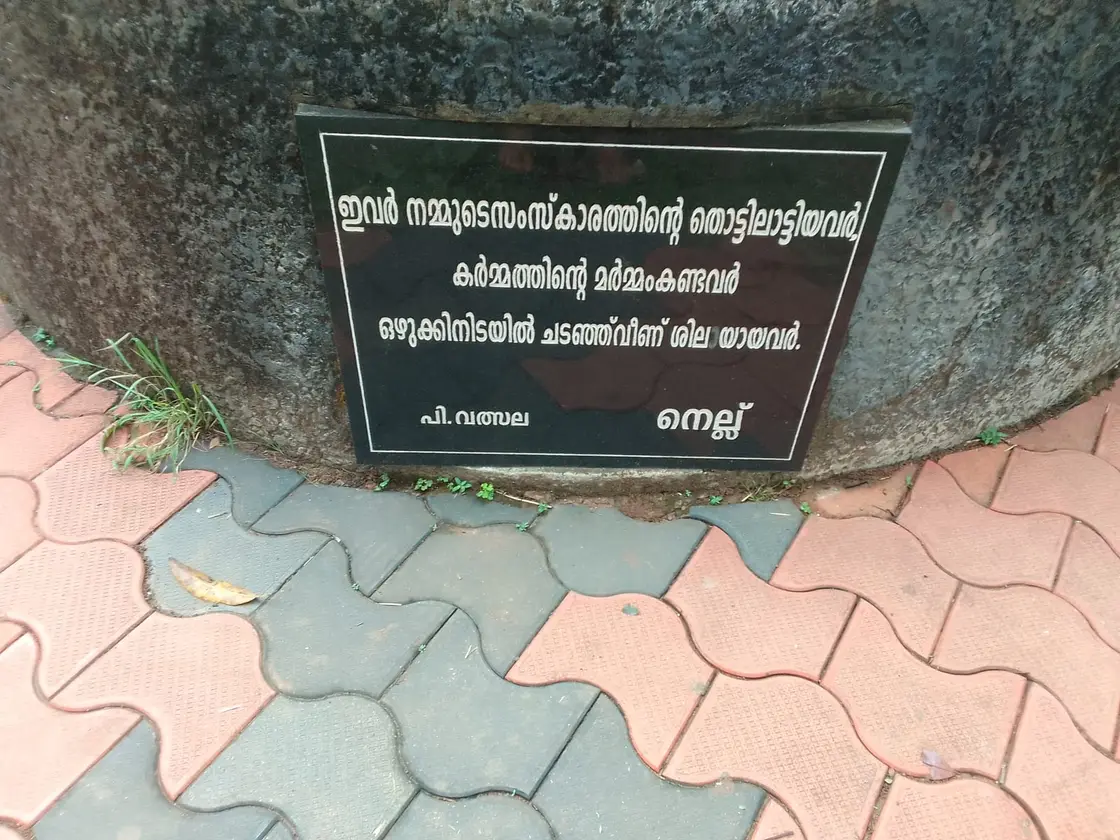
By evening the square transforms. The musical fountain comes alive, jets of water rising and falling in time to Malayalam film songs and light classical tunes, coloured beams catching the spray while children press against the railings. On the open-air stage nearby there may be a dance recital, a music performance or a poetry reading, for this is where much of Kozhikode gathers to celebrate. Statues of beloved Malayalam writers stand among the greenery, a reminder that Kozhikode wears its title as a UNESCO City of Literature with real pride.
Walk the perimeter and the history of the whole city presses in from every side. On the surrounding streets stand the old Commonwealth Trust weaving works, the Town Hall, an art gallery, a public library, and some of the most storied mosques in Kerala. Within a short stroll are the ancient Jama-at and Muchundi mosques, layered temples, and the famous SM Street with its sweets, spices and halwa shops. Few urban parks in India carry so much living heritage on their doorstep.
What makes Mananchira special is precisely this doubleness — it is both intensely historic and thoroughly everyday. Grandparents bring toddlers to watch the fountain, couples find a quiet bench, joggers loop the paths at dawn, and on festival evenings the whole square glitters with lights and crowds. It is not a monument you tick off and leave; it is a place the city actually uses, a green pause in the middle of one of Kerala oldest port towns.
Give yourself an unhurried hour or two, ideally around sunset when the light is kindest and the fountain is due to play. Sit by the water, let the noise of the surrounding streets fall away, and it is easy to imagine the Zamorins bathing here six hundred years ago — the same spring still rising, the same tank still holding the memory of Calicut at the centre of the spice-trade world.
History
Mananchira was created around the fourteenth century as a bathing tank for the Zamorins, the ruling dynasty of Calicut (Kozhikode). It is named after the ruler Mana Vikrama — Mana, shortened, giving the tank its name, chira meaning pond or tank in Malayalam. According to tradition the laterite quarried while excavating the great pond was itself used to build two palaces flanking the water, so that the tank and the royal residences rose together.
For centuries the pond stood at the literal and symbolic centre of the Zamorins city. Calicut was one of the richest ports on the Malabar Coast, the place where Vasco da Gama landed in 1498 and where Arab, Chinese and later European traders converged for pepper and spices. The palace precinct around Mananchira — its courtyards, administrative buildings and the tank that supplied and sanctified it — sat at the core of that cosmopolitan medieval city.
Through the colonial era the pond kept its role as a vital source of drinking water for the growing town, and by the late nineteenth century the municipality had passed regulations protecting it from bathing, washing and pollution. The open ground beside it, long known as the Mananchira Maidan, served the townspeople as a playground and gathering place, hosting football tournaments, public meetings and religious functions.
The square as visitors know it today was created in 1994, when the maidan and its surroundings were redeveloped into a landscaped urban park. The project — carried out during the tenure of the district collector Amitabh Kant — closed adjoining roads to enlarge the public space and added lawns, an artificial hill and rivulet, an open-air theatre, a musical fountain, ornamental lamp posts and statues of Malayalam literary figures, turning a plain ground into a designed civic square.
Since then Mananchira Square has become the recognised cultural heart of Kozhikode, the venue for festivals, performances and everyday recreation, while the ancient tank at its centre continues to be fed by its natural spring. It stands surrounded by heritage buildings — the Commonwealth Trust works, the Town Hall, art gallery, library and historic mosques — a rare place where the medieval, colonial and modern city meet around a single sheet of water.
Why visit
It is the green civic heart of Kozhikode — a rare open, tree-shaded square in the middle of a dense old city, perfect for a relaxed evening stroll away from the traffic.
The historic Mananchira tank, a six-centuries-old spring-fed pond dug for the Zamorins, gives the square a genuine sense of depth and story that few urban parks can match.
The evening musical fountain, with its coloured jets set to music, is a simple delight and a favourite with families and children.
An open-air stage regularly hosts music, dance and cultural performances, so on many evenings there is something live to watch — fitting for a UNESCO City of Literature.
It sits right beside the famous SM Street and the old bazaar quarter, making it an ideal starting point for a heritage walk through mosques, markets and colonial-era buildings.
Entry is free and it is walkably close to the railway station and the city centre, so it slots easily into any Kozhikode itinerary.