Malampuzha Dam

Malampuzha Dam is one of the guidebook places to plan around Malampuzha, with practical planning organized from the nearest town/base and verified local listings when available.

Malampuzha Dam, Malampuzha
Practical guide

Plan Malampuzha Dam

Typeheritage
Nearest baseMalampuzha
Best timeNovember to February and early mornings are best for walking
Time needed1 to 3 hours
EntryModest garden entry of around ₹25 per adult and ₹10 per child, with separate charges for the ropeway (roughly ₹15 one way / ₹25 return), boating, aquarium and snake park (indicative — confirm locally).
Nearest town/baseMalampuzha
DistrictPalakkad
Place typeheritage
Time needed1 to 3 hours.

Malampuzha Dam is one of the guidebook places to plan around Malampuzha, with practical planning organized from the nearest town/base and verified local listings when available.

Malampuzha Dam belongs under Malampuzha, one of the practical travel bases in Palakkad district. Use Malampuzha for stays, food, local transport and operators, then plan this place as a focused stop rather than an isolated pin.

The story

Malampuzha Dam, the largest reservoir in Kerala, spreads across the Malampuzha river just outside Palakkad town, where the great gap in the Western Ghats lets the sky open wide over the water. It is far more than an irrigation work: below the dam wall lies one of Kerala’s best-loved landscaped gardens, threaded with fountains, a Japanese garden, a fantastical rock garden, an aquarium and a snake park, and crossed overhead by a swaying aerial ropeway. Watching over it all stands the vast reclining ‘Yakshi’ sculpture, one of the most famous — and most argued-over — works of modern Indian art. Framed by blue hills and cooled by the mango breezes that give the Palakkad Gap its name, Malampuzha is where families, honeymooners and day-trippers come to picnic in the shadow of an engineering giant.

The story of Malampuzha Dam

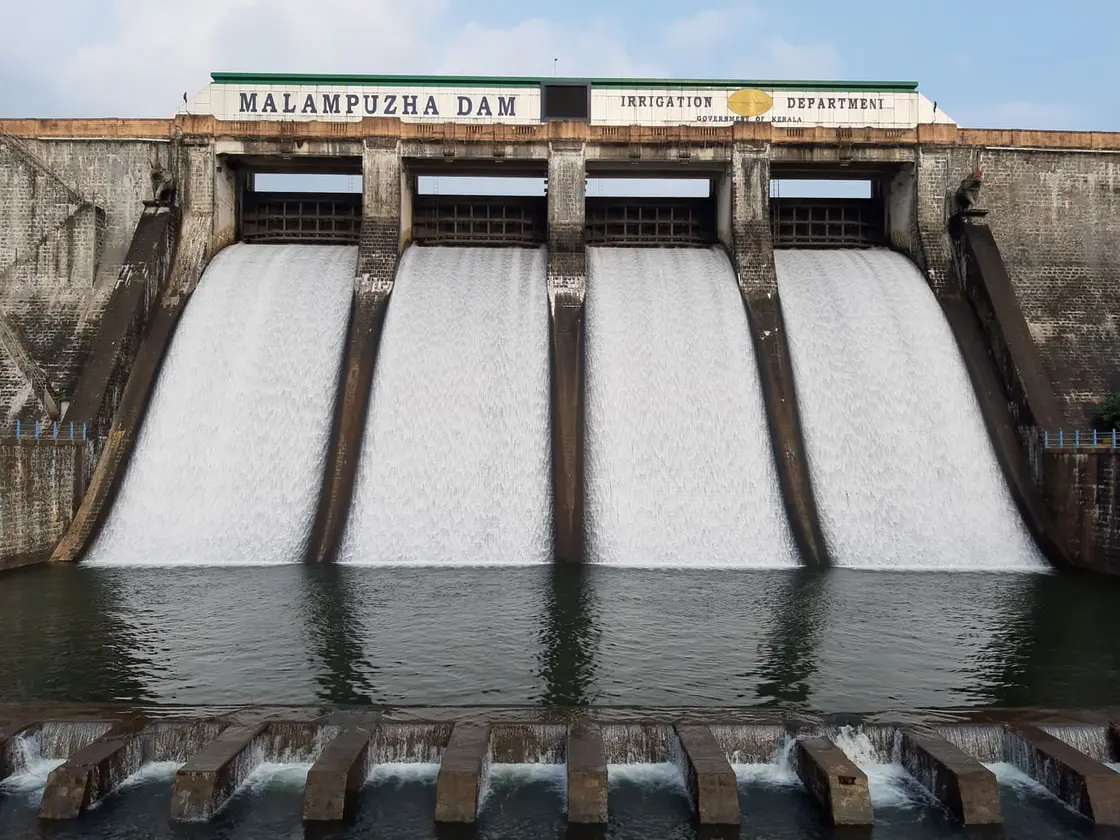
The reservoir is the heart of it. Held back by a masonry-and-earthen dam over two kilometres long — reckoned the longest in the state — the Malampuzha waters stretch away toward the foot of the Western Ghats, a broad silver sheet that mirrors the changing light of the sky. Standing on the dam crest with the wind coming off the water, you look one way over the calm expanse of the reservoir and the other way down onto the geometric flower-beds and fountains of the gardens far below. It is a view that rewards an unhurried hour, and sunset — when the hills darken and the water turns to copper — is when Malampuzha is at its most beautiful.

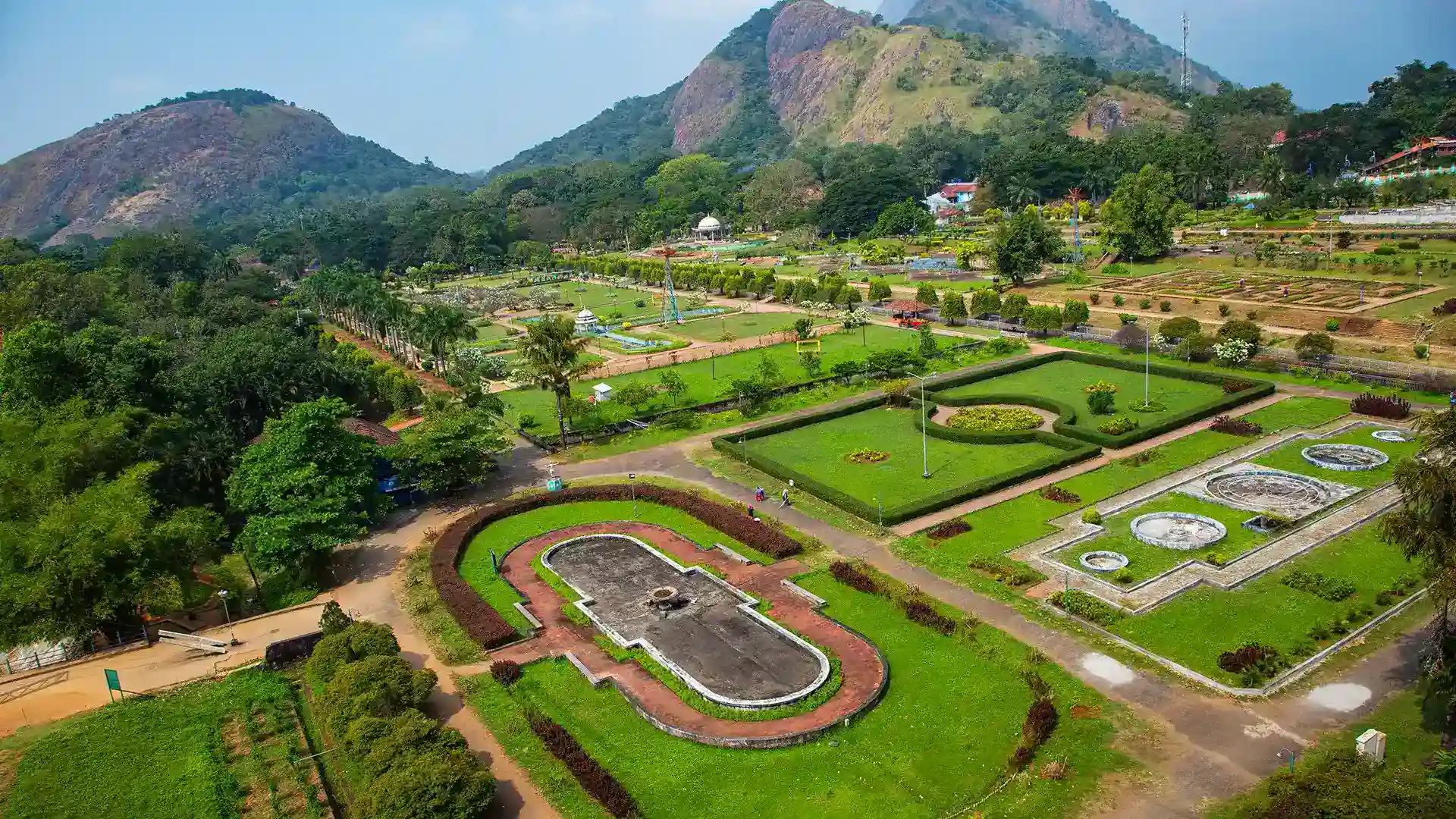
Below the wall, the Malampuzha Gardens roll out in terraces of lawn, fountain and flowering shrub, laid out by the state to draw visitors and give the great dam a softer, human face. There are dancing musical fountains that light up in the evening, ornamental ponds, a Japanese garden, a children’s park and shaded walkways where families spread out their picnics. Landscaped in the manner of a grand public pleasure-garden, the grounds have become a destination in their own right — many who come to Malampuzha spend the whole day in the gardens and barely glance at the reservoir that made them possible.

Gliding overhead is the aerial ropeway, the ride that children beg for and adults secretly love. A line of small cable cars carries you high above the flower-beds and fountains, swaying gently as the whole sweep of the garden, the dam and the distant hills unfolds below. It is Kerala’s original garden ropeway and still one of its most popular, giving a bird’s-eye view that no walkway can match — the fountains reduced to bright dots, the Yakshi sculpture reclining serenely off to one side, and the reservoir glinting beyond the dam wall. (Indicative — confirm current ropeway operation and timings locally.)

The Yakshi is Malampuzha’s unmistakable landmark. Sculpted by the celebrated Kanayi Kunhiraman and completed in 1969, the enormous reclining nude — a female nature-spirit of Kerala tradition, cast in concrete and rising some nine metres — dominates one corner of the gardens. Sensuous, monumental and unapologetically modern, it has drawn admiration and controversy in equal measure ever since it was unveiled, praised as a landmark of Indian public sculpture and objected to by others for its nudity. Whatever one’s view, it is impossible to ignore: for generations of visitors, ‘the Yakshi’ and ‘Malampuzha’ have meant the same place.

The rock garden is Malampuzha’s quirkiest surprise. Built from cast-off materials — broken bangles, used plastic, discarded tiles, tins, granite offcuts and fuse carriers — it was created by Nek Chand, the self-taught artist behind the famous rock garden of Chandigarh, and is widely described as the second such garden he made in India. Winding paths lead past figures, mosaics and grottoes assembled entirely from waste, a whimsical man-made landscape that delights children and quietly makes its point about beauty out of rubbish. Together with the aquarium and snake park nearby, it turns a stroll through the gardens into a small tour of curiosities.

Behind everything rises the wall of the Western Ghats. Malampuzha sits at the edge of the Palakkad Gap, the great natural breach in the mountains through which the winds — and once the trade and armies — passed between the Tamil plains and the Kerala coast. The blue-green hills form a constant backdrop to the reservoir and gardens, and paths lead toward viewpoints and the small hill temples above. On a clear morning the light off the water and the closeness of the mountains give Malampuzha a freshness rare on the humid coast, and it is this meeting of engineering, garden and Ghats that keeps drawing people back.

Legend & myth

The great sculpture takes its name and form from the Yakshi of Kerala legend, and the folklore behind it is worth knowing before you stand in its shadow. In the old tales the yakshi is a spirit of ravishing beauty — long flowing black hair, a bewitching smile, a hypnotic aura — who appears on moonless nights along lonely paths, most often beneath the pale-flowered Paala tree (Alstonia scholaris). The sickly-sweet scent of its blossom is said to drift ahead of her as a warning.

As the stories go, a lone traveller passing at night would meet a woman of unearthly loveliness who lured him with her charm; by her ‘maya’, or power of illusion, a mere palm tree might appear to him as a shining mansion. Those who followed her were never seen again by morning. The yakshi is often imagined as the restless spirit of a woman wronged or violently killed, at once alluring and terrifying — a figure of desire and dread woven deep into Kerala’s imagination.

Kanayi Kunhiraman’s reclining Yakshi draws directly on this tradition, giving monumental modern form to a spirit that had lived for centuries only in whispered tale and temple lore. It is legend, not history — but it is the legend that gives the sculpture its charge, and knowing it turns the great concrete figure from a curiosity into something older and stranger, watching over the gardens as her kind were once said to watch over the forest paths. (Folklore recounted as legend, not fact.)

History

The Malampuzha Project was the first large-scale irrigation scheme attempted in the old Malabar district of the erstwhile Madras State. Work on the dam across the Malampuzha river — a tributary of the Bharathapuzha, Kerala’s second-longest river — began in March 1949 under the First Five-Year Plan, and the completed dam was opened on 9 October 1955 under the Second Five-Year Plan (indicative dates — confirm locally). By the time the State of Kerala was formed in November 1956, the dam was already fully operational.

The structure combines a long masonry dam with an earthen embankment; taken together its length of well over two kilometres is often cited as the longest dam in Kerala, and the reservoir it holds back is the state’s largest. Built primarily to irrigate the dry farmlands of the Palakkad region and supply drinking water, it remains a working irrigation and water-supply project as much as a tourist attraction (technical figures indicative — confirm locally).

In the years after completion the Kerala Government developed landscaped gardens on the downstream face of the dam to draw visitors, beginning with the main gardens and fountains and adding features over time — the rock garden, aquarium, snake park and the aerial ropeway among them. The gardens gradually turned an irrigation dam into one of Palakkad’s foremost sightseeing destinations.

The rock garden was created by Nek Chand Saini, the self-taught artist internationally known for the rock garden of Chandigarh, using industrial and domestic waste — broken tiles, plastic, tins and granite offcuts. It is commonly described as the second garden of its kind that he built in India, and it brought a note of international art-world fame to Malampuzha.

The reclining Yakshi sculpture was completed in 1969 by Kanayi Kunhiraman, one of India’s most eminent modern sculptors. Cast as a single monumental concrete figure roughly nine metres in scale, it has been a landmark and a lightning-rod ever since — celebrated as a milestone of Indian public art and periodically criticised for its nudity. On the sculpture’s fiftieth anniversary in 2019 the artist was honoured by the state, a mark of the place the Yakshi now holds in Kerala’s cultural memory.

Why visit

See Kerala’s largest reservoir and one of its longest dams, with sweeping views over water and the Western Ghats from the dam crest — especially fine at sunset.

Wander landscaped gardens with musical fountains, a Japanese garden, ornamental ponds and shaded picnic lawns that make it a full family day out.

Ride the aerial ropeway for a swaying bird’s-eye view of the fountains, the Yakshi and the reservoir beyond (confirm operation locally).

Stand before the monumental Yakshi sculpture by Kanayi Kunhiraman — one of modern India’s most famous, and most debated, public artworks.

Explore Nek Chand’s whimsical rock garden built entirely from waste, plus the aquarium and snake park nearby.

Enjoy the cool, breezy setting of the Palakkad Gap, where the closeness of the hills gives Malampuzha a freshness rare on the Kerala coast.
Visiting

Malampuzha Dam — at a glance

TimingsGardens generally open daily, roughly 9:00 am to 8:00 pm; the ropeway usually runs around 10:00 am to 6:00 pm, and the ropeway and snake park are typically closed on Mondays (indicative — confirm locally).
Best timeAugust to February, after the monsoon fills the reservoir and the weather is pleasant; the post-monsoon months offer lush hills and comfortable sightseeing (indicative — confirm locally).

Entry: Modest garden entry of around ₹25 per adult and ₹10 per child, with separate charges for the ropeway (roughly ₹15 one way / ₹25 return), boating, aquarium and snake park (indicative — confirm locally).

Photography: Superb for photography — wide shots of the dam wall and reservoir against the Ghats, aerial garden views from the ropeway cars, the colourful Rock Garden mosaics, and the striking Yakshi silhouette. Golden hour on the dam-top is the standout; check locally whether photography is restricted on the dam for security reasons.

Getting here

How to reach Malampuzha Dam

  • ✈︎ By air Coimbatore International (TN) ~55 km; Cochin International another option (indicative — confirm locally)
  • 🚆︎ By train Palakkad Junction (Olavakkode) (indicative — confirm locally)
  • 🚗︎ By road ~8–10 km from Palakkad town, ~20–30 min (indicative — confirm locally)
  • 🚌︎ By bus regular buses/autos/taxis from Palakkad (indicative — confirm locally)
Do

Things to do

  • Ride the aerial ropeway cable car for panoramic views of the dam and hills
  • Wander the Nek Chand Rock Garden built from recycled waste
  • See the monumental Malampuzha Yakshi sculpture by Kanayi Kunhiraman
  • Take a walk along the dam top for reservoir-and-mountain views
  • Go boating on the waters below the dam
  • Visit the freshwater aquarium and the snake park (pythons and king cobras)
  • Let children loose in the fantasy gardens, fountains and hanging bridges

Timings, entry and ride charges change seasonally and some attractions close on Mondays — confirm operating days and fees locally before you plan your visit, and carry small change for the individual ride tickets (indicative — confirm locally).

What to expect

Highlights

  • Heritage experience at Malampuzha Dam
  • Architecture, local stories and old trade/cultural routes
  • Good fit for guided walks and nearby cafes/shops
Getting there

How to visit

  • Base yourself in Malampuzha or a nearby town in Palakkad, then confirm the last-mile route locally before leaving.
  • Walkable heritage areas are best done slowly; combine nearby streets, museums, markets and food stops.
  • If the visit depends on forest, temple, boat, ferry, weather or seasonal access, check the official/local rule on the day before travel.

Distance by road

  • Coimbatore54 km
  • Kozhikode127 km
  • Kochi143 km
  • Madurai224 km
  • Mysuru251 km

Road km to Palakkad; ghat roads and traffic vary — allow extra.

Timing

Best time

November to February and early mornings are best for walking; avoid midday heat where possible.

Visitor notes

  • Use a local guide when the value is in stories rather than just the building.
  • Check closure days for museums or protected monuments nearby.
Safety

Good to know

  • Watch traffic on narrow heritage streets.
  • Keep valuables close in crowded markets.
Stay · eat · do · rent · see · shop

Stays, food & things to do near Malampuzha Dam

Verified hotels, homestays, restaurants, experiences, sights, shops and rentals around Malampuzha Dam — commission-free, with direct contact. Filter by what you need.

Au Revoir Resorts Malampuzha Restaurant — Resort restaurant in Malampuzha
Top pick Verified
Resort restaurant · Malampuzha
Au Revoir Resorts Malampuzha Restaurant

eat option in Malampuzha: Au Revoir Resorts Malampuzha Restaurant is a Resort restaurant option for eat planning in Malampuzha, Ernakulam, kerala, India. Use Au Revoir Resorts Malampuzha Restaurant as a eat option in Malampuzha, Ernakulam, kerala, India. compare menus, pricing and location against your route. Key details: Malampuzha, Palakkad, Kerala 678591 · Price range: Contact direct / check current rates · Amenities: eat, Resort restaurant, Au Revoir Resorts Malampuzha Restaurant.

Commission-freeView details
Udan Khatola Malampuzha Ropeway — Ropeway attraction in Malampuzha
Top pick Verified
Ropeway attraction · Malampuzha
Udan Khatola Malampuzha Ropeway

do option in Malampuzha: Udan Khatola Malampuzha Ropeway is a Ropeway attraction option for do planning in Malampuzha, Ernakulam, kerala, India. Use Udan Khatola Malampuzha Ropeway as a do option in Malampuzha, Ernakulam, kerala, India. book timing, permits and local support before heading out. Key details: Malampuzha Garden, Malampuzha, Palakkad, Kerala 678651 · Price range: Contact direct / check current rates · Amenities: do, Ropeway attraction, Udan Khatola Malampuzha Ropeway.

Commission-freeView details
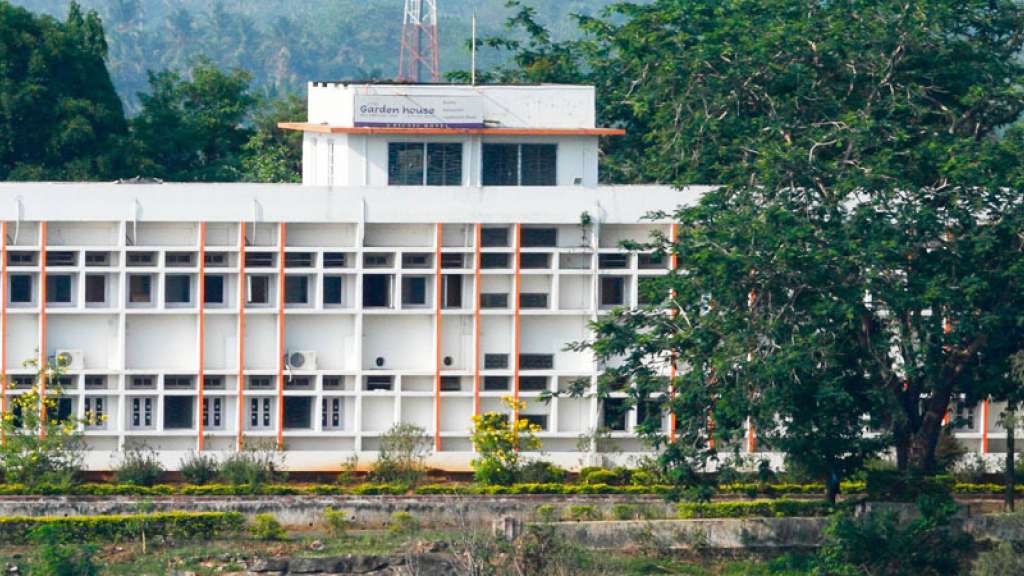
KTDC Garden House Malampuzha — Hotel in Malampuzha
Top pick Verified
Hotel · Malampuzha
KTDC Garden House Malampuzha

stay option in Malampuzha: KTDC Garden House Malampuzha is a Hotel option for stay planning in Malampuzha, Ernakulam, kerala, India. Use KTDC Garden House Malampuzha as a stay option in Malampuzha, Ernakulam, kerala, India. book your stay, transport and nearby food stops. Key details: Garden House KTDC, Malampuzha, Palakkad, Kerala 678651 · Price range: Budget hotel (KTDC) · Amenities: Malampuzha, KTDC, Garden House.

Commission-freeView details
Malampuzha Dam and Garden Official — Dam and garden in Malampuzha
Top pick Verified
Dam and garden · Malampuzha
Malampuzha Dam and Garden Official

do option in Malampuzha: Malampuzha Dam and Garden Official is a Dam and garden option for do planning in Malampuzha, Ernakulam, kerala, India. Use Malampuzha Dam and Garden Official as a do option in Malampuzha, Ernakulam, kerala, India. book timing, permits and local support before heading out. Key details: Malampuzha Garden and Dam, Malampuzha, Palakkad, Kerala · Price range: Check current official rules · Amenities: Malampuzha, Dam, Garden.

Commission-freeView details
A
Au Revoir Resorts Malampuzha
Place to stay
Top pick Verified
Kerala Tourism-listed resort · Malampuzha
Au Revoir Resorts Malampuzha

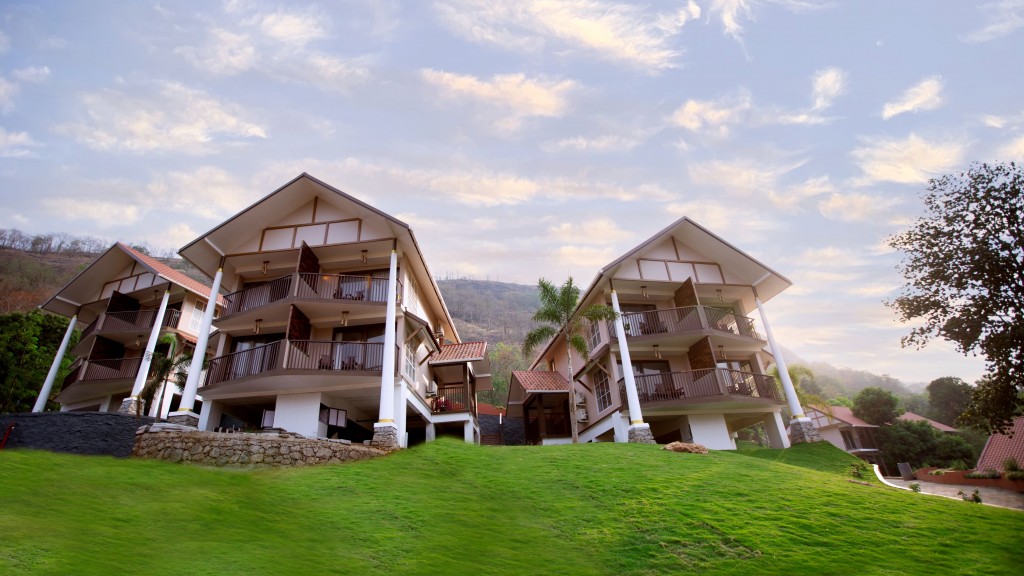
stay option in Malampuzha: Au Revoir Resorts Malampuzha is a Kerala Tourism-listed resort option for stay planning in Malampuzha, Ernakulam, kerala, India. Use Au Revoir Resorts Malampuzha as a stay option in Malampuzha, Ernakulam, kerala, India. book your stay, transport and nearby food stops. Key details: Malampuzha Dam Ring Road, Palakkad, Kerala · Price range: Contact direct / check current rules · Amenities: Au, Kerala Tourism-listed resort, malampuzha.

Commission-freeView details

Roampedia is commission-free — own or know a stay, eatery, guide or shop near Malampuzha Dam? List it and it appears here once verified.

Add a nearby business
Good to know

Malampuzha Dam — frequently asked

When is the best time to visit Malampuzha Dam?

November to February and early mornings are best for walking; avoid midday heat where possible.

What are the entry fee and timings at Malampuzha Dam?

Entry: Modest garden entry of around ₹25 per adult and ₹10 per child, with separate charges for the ropeway (roughly ₹15 one way / ₹25 return), boating, aquarium and snake park (indicative — confirm locally).. Timings: Gardens generally open daily, roughly 9:00 am to 8:00 pm; the ropeway usually runs around 10:00 am to 6:00 pm, and the ropeway and snake park are typically closed on Mondays (indicative — confirm locally).. Fees and timings are indicative — confirm on site before you travel.

How do I reach Malampuzha Dam?

Base yourself in Malampuzha or a nearby town in Palakkad, then confirm the last-mile route locally before leaving. Walkable heritage areas are best done slowly; combine nearby streets, museums, markets and food stops. If the visit depends on forest, temple, boat, ferry, weather or seasonal access, check the official/local rule on the day before travel.

How much time do I need for Malampuzha Dam?

1 to 3 hours.

What should I know before visiting Malampuzha Dam?

Watch traffic on narrow heritage streets. Keep valuables close in crowded markets.

Image credits