The story
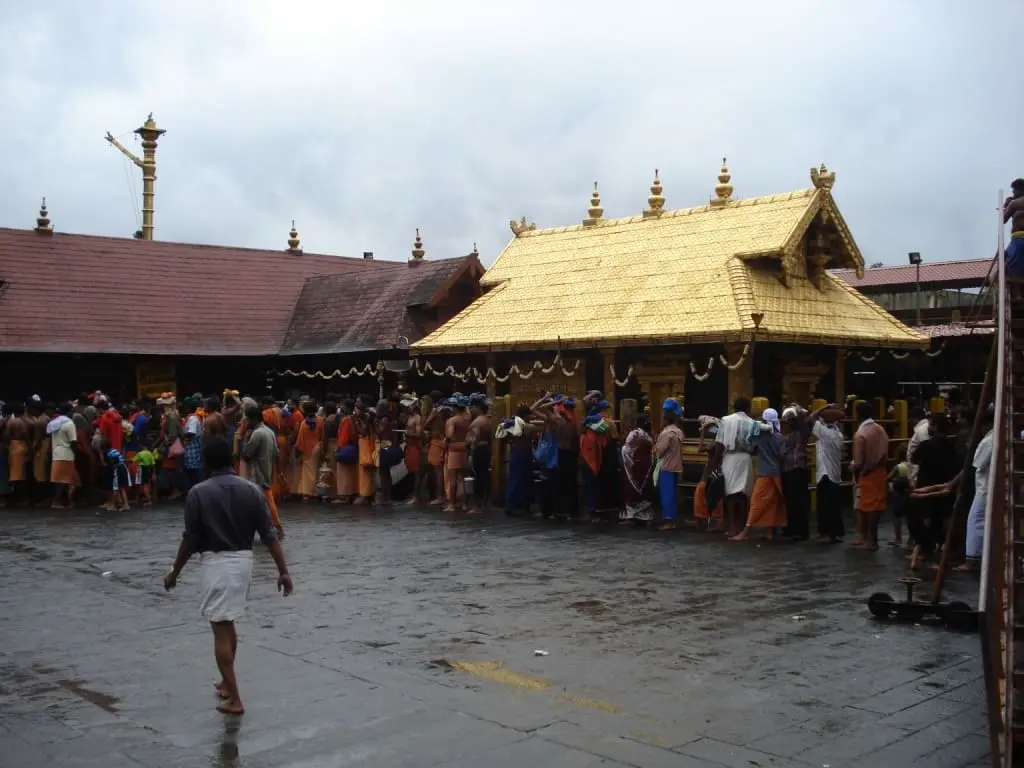
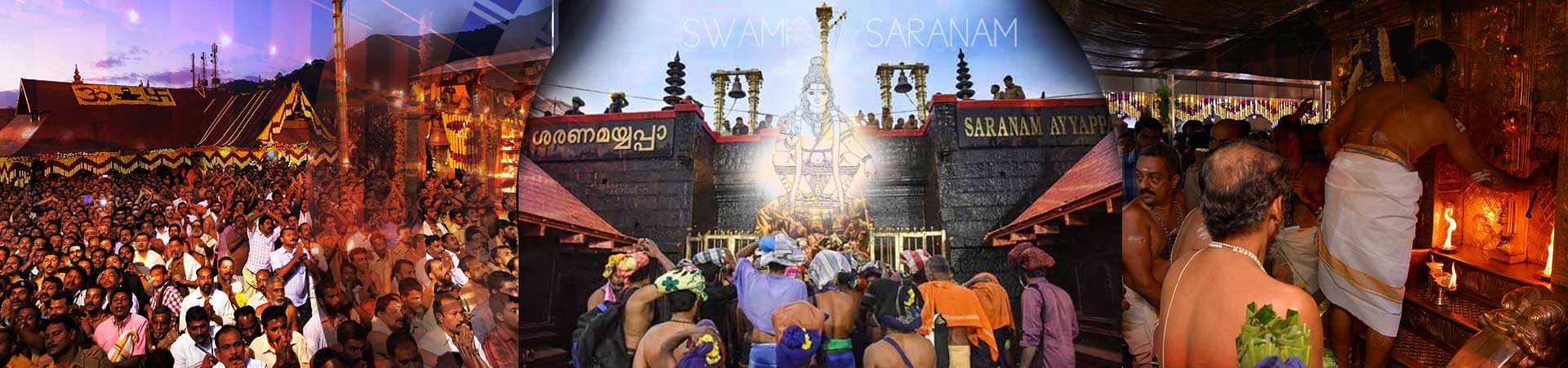
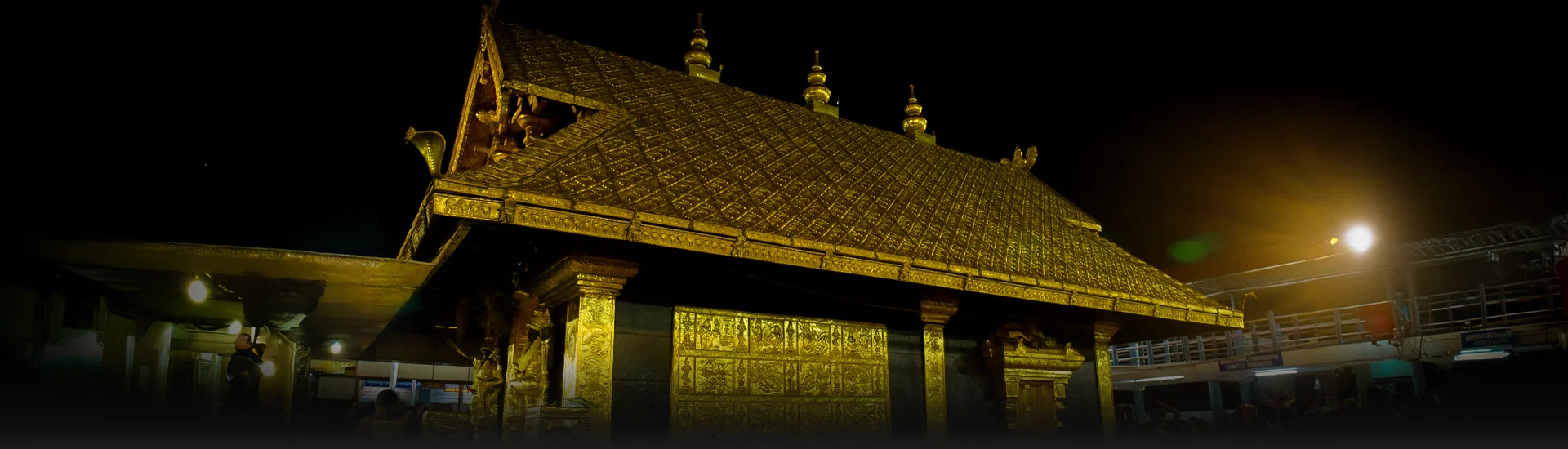
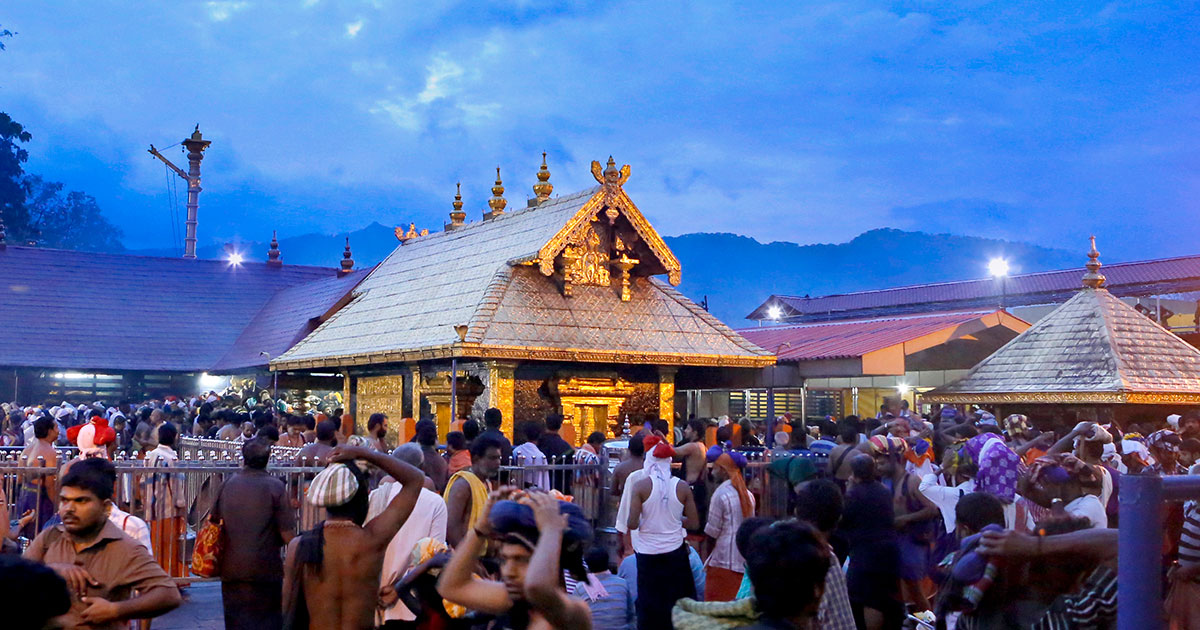
High in the forested Western Ghats of Pathanamthitta, wrapped in the Periyar Tiger Reserve and reachable only on foot, Sabarimala is the hilltop shrine of Lord Ayyappa — and the stage for one of the largest annual human gatherings on Earth. In the Mandala–Makaravilakku season, millions of black-clad pilgrims chant ‘Swamiye Saranam Ayyappa’ up the trek from Pamba, an irumudikettu balanced on the head, to climb the sacred eighteen golden steps into the sanctum.
The story of Sabarimala Temple
Sabarimala is not a place you casually ‘tour’ — it is a vow you complete. The temple sits at roughly 468 metres (indicative — confirm locally) on a hill named for Sabari, the tribal devotee of the Ramayana, deep inside dense forest that is open to pilgrims only during defined seasons. There is no motorable road to the sanctum itself; every devotee, from labourer to chief minister, arrives on foot, and that shared hardship is the whole point.
The journey begins long before the hill. A devotee undertakes a 41-day vratham (indicative — confirm locally) — a period of austerity in which he wears black or dark-blue clothing, goes barefoot, abstains from meat, alcohol, tobacco and sexual activity, keeps clean living and daily prayer, and addresses fellow pilgrims as ‘Ayyappa’ or ‘Swami’, dissolving caste and rank into a single brotherhood. Through this fast the pilgrim is meant to become, in spirit, Ayyappa himself.
At the end of the vratham comes the kettunira — the ceremonial filling of the irumudikettu, a two-pouch cloth bundle carried on the head. The front pouch holds offerings for the deity, chiefly the ghee-filled coconut (neyy thengaa) that will be poured over the idol as abhishekam; the rear pouch holds the pilgrim’s own provisions for the road. Only one who carries the irumudi is permitted to ascend the eighteen holy steps — so the bundle is both luggage and passport.
The classic devotional route runs through Erumeli, where pilgrims first pay respects at the Vavar mosque and the Sree Dharmasastha temple, many performing the exuberant, painted ‘Petta Thullal’ dance (indicative — confirm locally), before setting out on the long forest path via Azhutha, Karimala and other rises to Pamba. Most modern pilgrims instead drive to Pamba, the base by the river of the same name, bathe there, and undertake the shorter but steep climb up Neelimala to Sannidhanam, the temple complex.
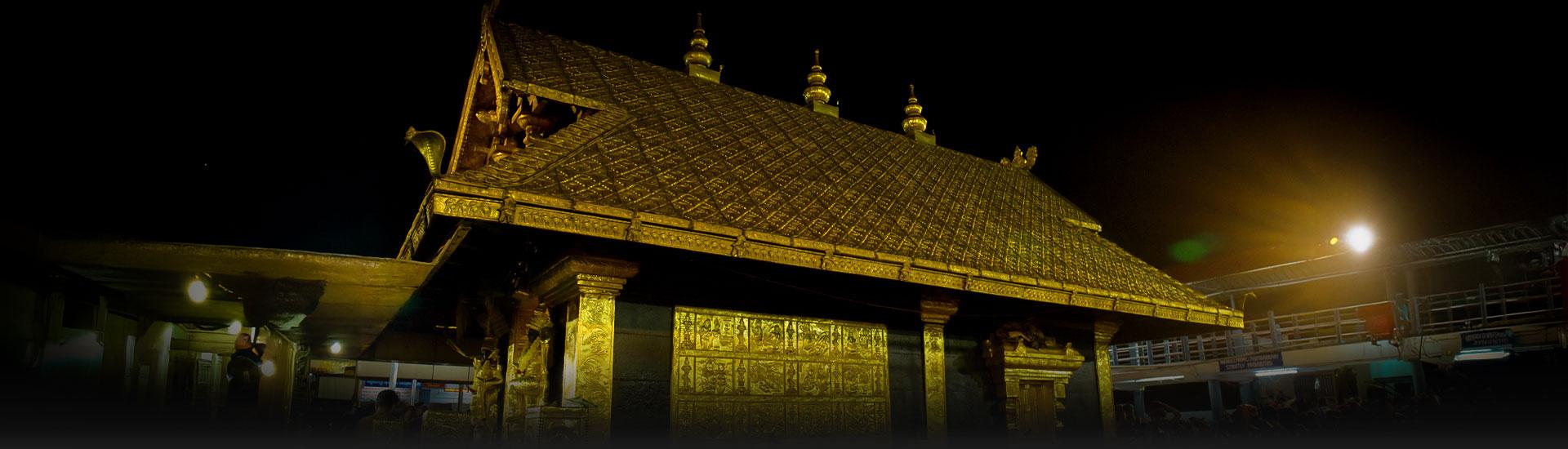
The climax of the ascent is the Pathinettam Padi — the eighteen steps — clad since 1985 in panchaloha, an alloy of five metals (indicative — confirm locally). Only irumudi-bearers may climb them, and they are climbed with reverence, often after breaking a coconut. Beyond the steps waits the small sanctum where Ayyappa sits in the yogic ‘veerasana’ posture, hands on knees, eternally youthful — the god who, in legend, was a prince who came to the forest and never left.
Above all Sabarimala is famous for Makaravilakku — the night in mid-January when, as the Makara Jyothi star is sighted, a distant light called the Makaravilakku appears three times on the far Ponnambalamedu hill and a vast crowd erupts in ‘Saranam’ chants. Temple authorities have publicly acknowledged that the Makaravilakku flame is a human-lit ritual fire (indicative — confirm locally), a candour that has only deepened, rather than diminished, the devotion of those who make the journey.
Legend & myth
The central legend tells of Manikandan, a radiant infant found on the banks of the Pampa by the childless king of Pandalam, who raised him as his own. The boy was in truth an incarnation of Dharma Sastha — born, in the Puranic account, of the union of Vishnu in his enchantress form Mohini and Shiva, and therefore called Hariharaputra, the son of both. When a younger prince was later born, a scheming minister and the queen conspired to remove Manikandan, and the queen feigned an illness that, she declared, could be cured only by the milk of a tigress.
The boy volunteered to fetch it. He crossed the forest, subdued the demoness Mahishi — a buffalo-headed she-demon whom the gods could not otherwise kill — in a great dance-battle on the banks of the Azhutha, and returned riding a tigress with tiger cubs in tow. The terrified court realised his divinity; the king begged forgiveness. Manikandan revealed his true nature, asked that a shrine be built where his arrow fell — Sabarimala — and instructed that pilgrims come to him only after the vratham and along the forest path, carrying the irumudi.
Woven into the story is Vavar — remembered as a Muslim warrior (variously an Arab traveller or a defeated adversary turned devoted friend) whom Ayyappa vanquished and then embraced as a companion. It is why the pilgrimage honours the Vavar mosque at Erumeli alongside the temple, and why the Ayyappa tradition is cherished as a living emblem of Hindu–Muslim amity. This is legend, not documented history, but it is legend the pilgrimage enacts every single year.
History
The antiquity of a shrine at Sabarimala is genuinely old but hard to date precisely; tradition links it to the erstwhile Pandalam royal house, and the deity Dharma Sastha (Ayyappa) has been worshipped across the Western Ghats for centuries (indicative — confirm locally). The forest setting, the tribal association with Sabari, and the Sastha cult all point to deep roots predating written record.
A pivotal modern chapter is the fire of 1950, when the shrine was damaged in an arson attack; the rebuilt sanctum and the consecration of a new idol shaped the temple seen today. Through the 20th century the pilgrimage grew from a regional forest devotion into a pan-Indian mass movement, drawing devotees from Tamil Nadu, Andhra Pradesh, Karnataka and far beyond, and today it is counted among the world’s largest annual pilgrimages.
The shrine is administered by the Travancore Devaswom Board, which manages the seasonal openings, the Pamba and Sannidhanam infrastructure, crowd control, virtual queue booking and the Makaravilakku arrangements. The sheer scale — tens of millions across a season — has made logistics, safety and sanitation in a protected tiger reserve a continuing challenge, and stampede tragedies in past decades have driven major crowd-management reforms (indicative — confirm locally).
The temple’s traditional restriction on the entry of women of menstruating age — customarily described as roughly 10 to 50 — is tied to the belief that the deity is an eternal celibate (Naishtika Brahmachari), and it became the subject of a landmark legal contest. On 28 September 2018 a Supreme Court Constitution bench, by majority, held the restriction unconstitutional and permitted women of all ages to enter; the ruling was met with large-scale protests in Kerala and remained deeply contested on the ground.
Review petitions against that judgment were subsequently referred to a larger bench, and the underlying questions have been taken up by a nine-judge Constitution bench; as of 2026 the matter remained under hearing, with the traditional restriction argued by many as an essential religious practice and denominational right. Because the legal and practical position has shifted more than once and is still evolving, any prospective visitor should confirm the current position locally before planning a visit.
Why visit
To witness — or to make — one of the world’s great pilgrimages. The scale is staggering: a river of black-clad devotees, barefoot, calm and disciplined, chanting ‘Swamiye Saranam Ayyappa’ up a forest mountain. Even as an observer it is one of the most moving mass expressions of faith you can encounter in India.
For the trek itself. The climb from Pamba up Neelimala to Sannidhanam winds through the Periyar Tiger Reserve, with forest air, hill views and the electric hum of thousands of pilgrims — a rare pairing of pristine Western Ghats wilderness and total human devotion in one path.
For the eighteen golden steps. The Pathinettam Padi, clad in five-metal panchaloha, is one of the most iconic sacred stairways in the Hindu world, each step read as a spiritual layer — the senses, the emotions, the gunas, knowledge and ignorance — to be transcended on the way to the sanctum.
For the story of amity. The Ayyappa–Vavar friendship, honoured at the Erumeli mosque on the traditional route, makes this a pilgrimage that deliberately reveres a Muslim companion alongside a Hindu god — a living, walking symbol of shared devotion that is increasingly rare and worth understanding.
For Makaravilakku. To stand in the crowd at Sannidhanam on the Makaravilakku night as the Makara Jyothi is sighted and the distant hill-light appears, amid a roar of ‘Saranam’, is an unforgettable sensory and spiritual crescendo — the emotional peak of the entire season.
And for what the vratham does to the pilgrim. Unlike most sights you simply arrive at, Sabarimala asks something of you first — weeks of austerity, barefoot walking, plain living — so that reaching the sanctum feels earned rather than bought. That transformation, more than the shrine, is what devotees return for.