A multi-tiered forest cascade hidden a two-kilometre trek up the Kallar stream, where the water tumbles through the Agasthyamala foothills on the winding road to Ponmudi hill station.
The story of Meenmutty Falls
There are two Meenmutty Falls in Kerala, and the famous one is in Wayanad — but this is the other, quieter twin, tucked into the deep forests of Thiruvananthapuram district about forty-five kilometres from the state capital. It lies off the Vithura–Ponmudi road at the little settlement of Kallar, the last point a vehicle can reach before the trees close in. From here the falls can only be earned on foot, which is exactly why generations of Malayali trekkers have kept it close to their hearts.
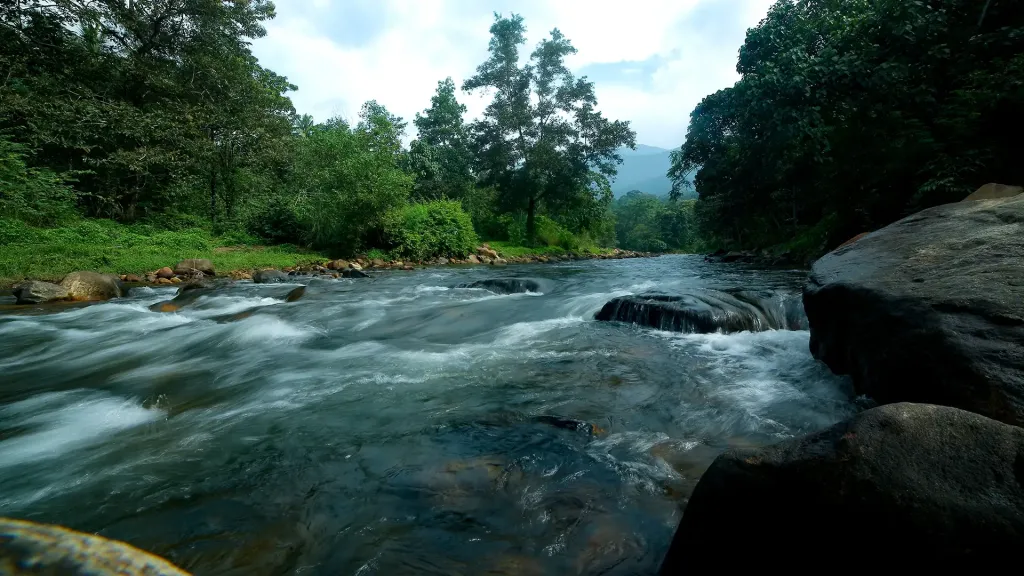
The walk to the falls follows the Kallar stream through roughly two kilometres of dense tropical woodland, a trail that many rate among the finest short forest treks near Thiruvananthapuram. The name Kallar itself is honest geography — kallu means stone and aaru means river — and true to that, the watercourse is a jumble of huge smooth boulders and glinting pebbles, its banks flanked by giant trees whose looping branches and roots knit a green canopy overhead. On one side the river runs downstream beside you; on the other, the forest wall rises thick with bamboo and birdcall.
At the head of the trek the stream gathers itself and drops in a series of tiers, spilling white over dark rock into a plunge pool below. The falls sit within the upper riparian reaches of the Vamanapuram river system, high in the foothills of the Agasthyamala range, and the surrounding forest is part of the Agasthyavanam and Agastya Mala Biosphere Reserve landscape — one of the richest pockets of biodiversity in the southern Western Ghats. The greenery is emphatic and the air cool, a genuine reward at the end of a sweaty climb.
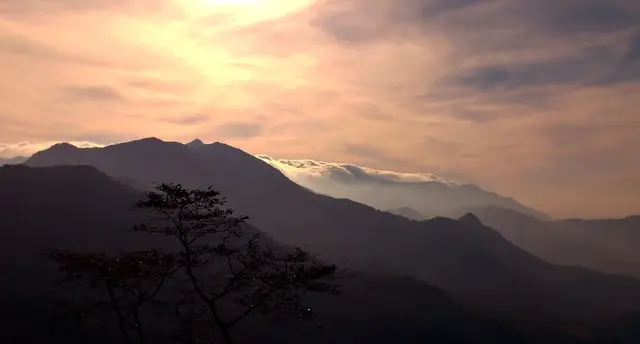
Most visitors fold Meenmutty into a full day out to Ponmudi, the golden-tinted hill station that crowns this stretch of the Ghats. The classic itinerary is to leave Thiruvananthapuram in the morning, break at Kallar to trek up to the falls and dip your feet in the river, and then carry on up the hairpin bends to reach Ponmudi by evening. Kallar and its waterfall make the perfect wilderness pause on the ascent, turning a simple hill-station drive into a proper forest adventure.
The name Meenmutty is the falls telling you what it does. In Malayalam meen means fish and muttu means blocked or stopped — Meenmutty is the point at which fish swimming up from downstream can go no further, halted by the sheer drop of the cascade. Waterfalls that mark such a natural barrier to migrating fish carry this name across Kerala, and it is a piece of plain riverine observation rather than any invented legend. Stand at the pool and you understand it instantly: no fish is climbing that wall of falling water.
For all its beauty, this is a wild place and not a manicured tourist park. A forest-department presence and a local guide culture have grown up around it precisely because the pool is deceptively dangerous and the stream can rise fast. Visited with respect — a guide, sensible timing, and a healthy fear of the water — it offers something increasingly rare so close to a state capital: a genuine forest trek to a genuine hidden waterfall, with the promise of Ponmudi waiting just up the hill.
History
The falls take their name from Malayalam river-lore that is descriptive rather than mythic: meen is fish and muttu is to be blocked or halted, so Meenmutty is literally the point beyond which fish migrating upstream cannot pass, stopped by the vertical drop of the cascade. Several waterfalls in Kerala bear this same name for the same reason, which is why the Thiruvananthapuram falls shares its name with the far better known Meenmutty of Wayanad.
Geographically the falls lie along the upper course of the Vamanapuram river system, fed by the Kallar — a boulder-strewn hill stream whose own name simply means stone-river. The cascade sits in the foothills of the Agasthyamala massif, within the broader landscape of the Agastya Mala Biosphere Reserve and the Agasthyavanam forest, an internationally recognised biodiversity hotspot of the southern Western Ghats known for its endemic flora and medicinal plants.
Access is anchored on Kallar, a small settlement on the Vithura–Ponmudi road that serves as the roadhead. Roughly half the approach can be covered by vehicle before the metalled road gives out; the remaining stretch — commonly cited as about two kilometres — must be walked through reserve forest along the stream, making Meenmutty a trekking waterfall rather than a drive-up viewpoint.
Because the trail runs through protected forest, movement here falls under the Kerala Forest Department, and visitors are generally expected to enter through the check-post, sometimes with permission and a nominal fee, and increasingly with a guide. Trekking guides for the Kallar–Meenmutty route have long been arranged through the District Tourism Promotion Council (DTPC), reflecting the falls status as an officially promoted but carefully managed forest attraction.
The falls have entered the regional travel record chiefly as a stop on the Ponmudi hill-station circuit rather than as a standalone destination, celebrated in Kerala Tourism material and in trekkers accounts as one of the best short forest walks near Thiruvananthapuram. That same wildness, however, has kept it firmly in the category of an adventure spot, with entry to the water restricted during high flows for reasons of safety.
Why visit
A rewarding two-kilometre forest trek along the Kallar stream, rated among the finest short jungle walks near Thiruvananthapuram.
A genuine multi-tiered waterfall hidden deep in the woods, invisible from any road and earned only on foot.
Set within the Agasthyamala biosphere landscape, a Western Ghats biodiversity hotspot rich in birds, bamboo and towering canopy trees.
The perfect wilderness pause on a day trip up to Ponmudi hill station, pairing forest, river and hill views in one outing.
Boulder-strewn Kallar river spots along the way where you can rest, cool your feet and take in the green wilderness.
An accessible taste of real Western Ghats trekking just forty-five kilometres from the state capital, ideal for a morning-to-evening escape.