The story
On the coastal belt south of Alappuzha stands one of Kerala’s most beloved Krishna shrines — a temple whose fame travels further than its modest size, carried on the sweetness of a single offering. The Ambalappuzha Sree Krishna Temple is where the god is worshipped as Unnikkannan, the child Krishna, in the majestic Parthasarathy form of the Mahabharata, and where a warm cup of Palpayasam has been ladled out to pilgrims for close to five centuries.
The story of Ambalappuzha Sree Krishna Temple
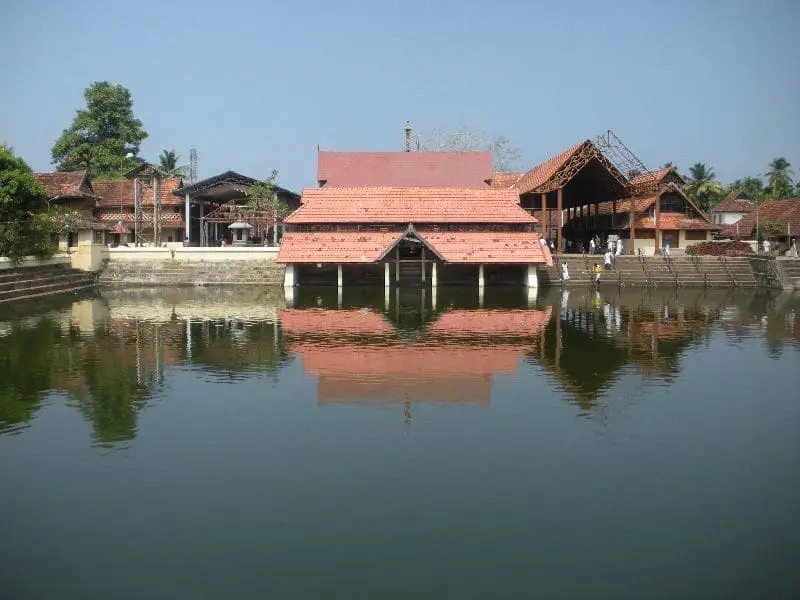
The temple sits in the little town of Ambalappuzha, a short drive south of Alappuzha along the backwater coast. From the road it announces itself in the classic Kerala idiom — sloping tiled roofs, whitewashed walls, a broad walled compound and a tall gopuram — rather than with towering stone. Within lies the srikovil, the sanctum, where the deity is enshrined. Here Krishna is beheld not as the flute-playing cowherd but as Parthasarathy, the divine charioteer of Arjuna, the idol shown holding a whip in the right hand and a conch, the shankhu, in the left. Yet devotees also address him with unmistakable tenderness as Unnikkannan, little Krishna, and it is this blend of cosmic grandeur and childlike intimacy that gives the shrine its particular warmth.
What draws lakhs of visitors, however, is a taste. The temple’s signature offering is the Ambalappuzha Palpayasam, a sweet milk-and-rice porridge simmered slowly to a thick, caramel-tinged richness that has become almost mythic across South India. It is prepared fresh each day and distributed to devotees as prasadam, and its reputation is such that many pilgrims plan their entire visit around receiving a portion. The recipe and method are guarded closely by the temple, and part of the payasam’s legend is that no kitchen outside these walls can quite reproduce it.
The temple’s antiquity is bound up with the Chembakassery kingdom, a small principality that once flourished on this stretch of the Kerala coast. Its ruler, Pooradam Thirunal Devanarayanan Thampuran, is credited with building the temple, traditionally dated to around the fifteenth century (some accounts stretch the period to the seventeenth — the exact chronology is uncertain). The Chembakassery rajas were devout patrons, and under them Ambalappuzha grew into a centre of worship, learning and the performing arts.
It is that artistic legacy that gives the temple a second, quieter claim to fame. Ambalappuzha is remembered as the birthplace of Ottamthullal, the vivid solo dance-storytelling form invented by the eighteenth-century poet Kunchan Nambiar, who is traditionally said to have first performed it within this temple’s premises. The shrine also has deep associations with Kerala’s classical stage, and to this day its festival calendar keeps temple arts alive under the tiled eaves and lamp-lit courtyards.
There is, too, a thread that ties Ambalappuzha to Guruvayur, the greatest Krishna temple of Kerala. During the turbulence of Tipu Sultan’s campaigns in the region in 1789, the processional idol of Guruvayur is said to have been carried here for safekeeping and sheltered at Ambalappuzha until the danger passed. For devotees this episode only deepened the temple’s sanctity — the place that guarded Guruvayur’s Krishna in its hour of peril. Between the payasam, the poetry and this history of refuge, a visit to Ambalappuzha feels less like sightseeing and more like stepping into a living current of faith.
Legend & myth
The most cherished legend at Ambalappuzha explains why the Palpayasam is offered here every single day — and, as legend, it is told with a smile as much as with reverence. The story goes that Krishna once appeared in the court of the local king in the guise of an old sage and challenged him to a game of chaturanga, the ancestor of chess. The king, himself a keen player, happily agreed and asked the sage to name his prize should he win.
The sage’s request seemed almost comically modest. He wanted only some rice, counted out upon the chessboard in a simple doubling: one grain on the first square, two on the second, four on the third, and so on, doubling each time to the sixty-fourth square. The king, seeing only a handful of grains, laughed and consented — and then lost the game.
As the counting began, the trap in the arithmetic revealed itself. By the twentieth square the figures had climbed into the lakhs; by the fortieth they were beyond the royal granaries; and the sixty-fourth square alone would have demanded more rice than the kingdom, or indeed the world, could ever produce — a number running to eighteen quintillion grains. The king, aghast, realised he could never honour the debt.
At this the sage revealed himself as Krishna and told the king not to despair. He need not pay all at once; instead he could discharge the debt slowly, by serving Palpayasam free to every pilgrim who came to the temple, day after day, until the account was settled. Since the debt can never truly be paid in full, the offering has continued unbroken — and, the legend teaches, will continue for all time. Beneath the charm of the tale lies its moral: a lesson in humility, in the folly of pride, and in the boundlessness of divine grace.
Other legends cluster around the deity himself — stories of Krishna appearing to devotees and of the sanctity of the idol brought, by tradition, from an older shrine. Whatever a visitor makes of these tales, they are told here not as dry history but as living faith, and they are best received in that spirit.
History
The temple’s origins lie with the Chembakassery dynasty, the Devanarayana rulers of a small kingdom that once controlled this part of coastal Travancore. Tradition credits the founding of the shrine to Pooradam Thirunal Devanarayanan Thampuran, generally placed in the fifteenth century, though the temple as it stands reflects centuries of accretion and rebuilding. The Chembakassery rajas were noted for their piety and their patronage of temples, and Ambalappuzha became the spiritual heart of their realm.
According to temple tradition, the deity was brought to Ambalappuzha from an older Krishna shrine in the region, and the consecration here established what would become one of the great Vaishnava temples of Kerala. The temple is counted among the most important Krishna sites in the state and is listed among the traditional Abhimana Kshetrams, shrines of special sanctity in Vaishnava lore.
A defining chapter in the temple’s history came in 1789, during the invasions associated with Tipu Sultan. As his forces advanced through the region, the sacred processional idol of the Guruvayur temple was, by tradition, carried south to Ambalappuzha and sheltered here for safekeeping until the threat receded. That the region’s premier Krishna shrine entrusted its idol to Ambalappuzha speaks to the temple’s standing, and the episode remains a proud strand of its story.
Ambalappuzha also occupies a singular place in the cultural history of Kerala. It is remembered as the cradle of Ottamthullal, the satirical, fast-paced solo performance art created by the poet Kunchan Nambiar in the eighteenth century, traditionally said to have been staged for the first time within this temple. The shrine’s long association with Kathakali and other temple arts made it a hub where devotion and performance met.
Today the temple is administered by the Travancore Devaswom Board and remains a busy centre of pilgrimage. Its two great annual observances — the Aaraattu festival in the Malayalam month corresponding to March–April, and the Chambakulam Moolam water festival, held to commemorate the arrival of the deity — draw large crowds and keep the temple’s ancient rhythms alive.
Why visit
Taste the legendary Ambalappuzha Palpayasam — the sweet milk-rice payasam whose fame spreads across South India, prepared fresh daily and given out as prasadam. For many pilgrims, this single offering is reason enough to make the journey.
Behold Krishna in his rare Parthasarathy form, the charioteer of the Mahabharata bearing whip and conch, worshipped here with the affectionate name Unnikkannan — a distinctive iconography among Kerala’s Krishna shrines.
Experience a textbook example of traditional Kerala temple architecture — tiled roofs, whitewashed walls, a lamp-lit courtyard and gopuram — in a setting that is atmospheric without being overwhelming.
Stand where Ottamthullal was born: Ambalappuzha is celebrated as the birthplace of Kunchan Nambiar’s satirical dance-storytelling art, and the temple keeps Kerala’s classical performing traditions alive through its festivals.
Connect with the Guruvayur story — this is the temple that, by tradition, sheltered Guruvayur’s idol during Tipu Sultan’s 1789 campaign, adding a layer of history and sanctity to your visit.
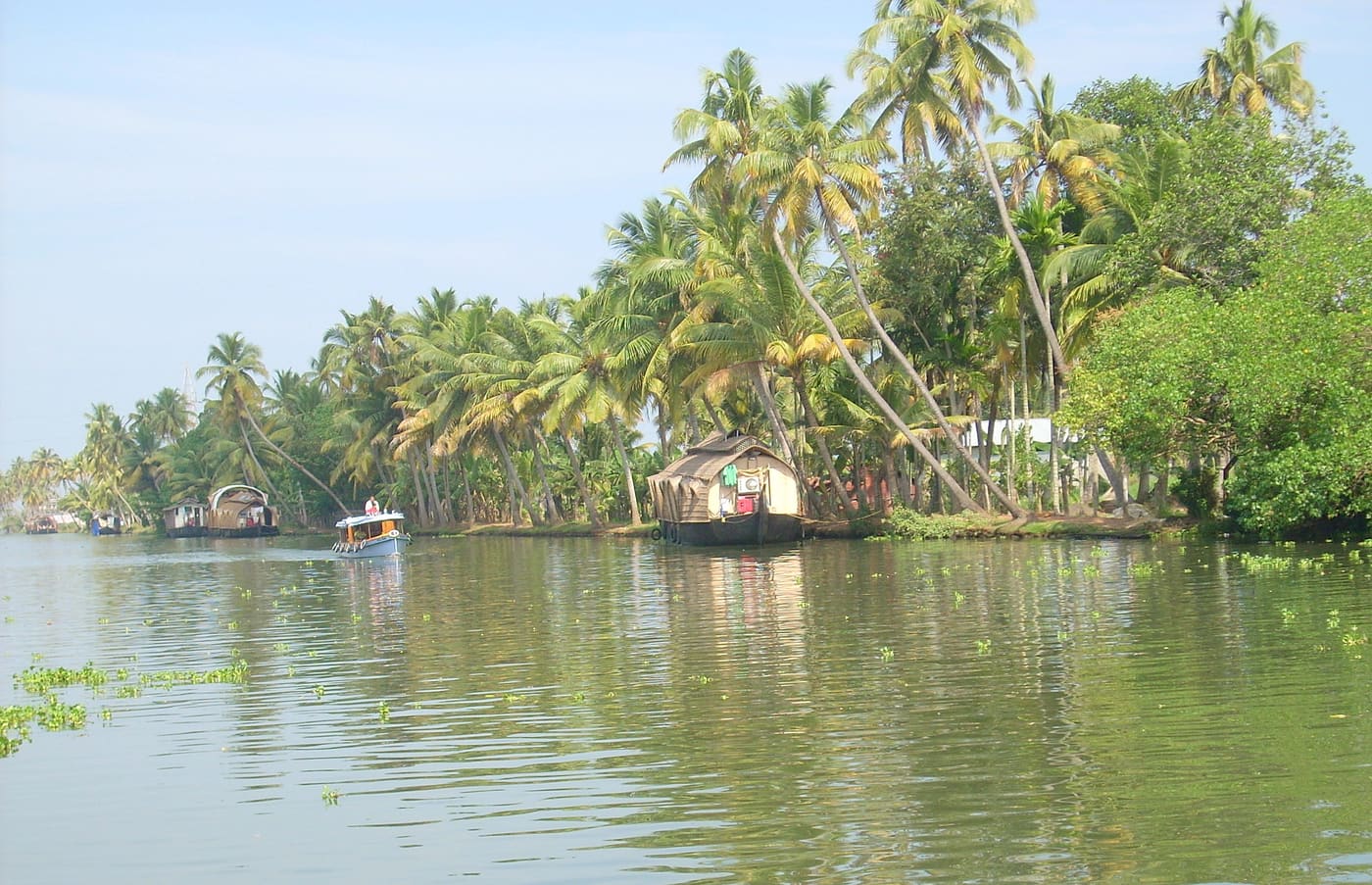
Combine it easily with an Alappuzha backwater trip — the temple sits just a short drive south of Alappuzha town, making it a natural, meaningful stop on a Kuttanad or houseboat itinerary.