Mannarasala Temple

Mannarasala Temple is one of the guidebook places to plan around Haripad and Mannarasala, with practical planning organized from the nearest town/base and verified local listings when available.

Mannarasala Temple, Haripad and Mannarasala
Practical guide

Plan Mannarasala Temple

Typeheritage
Nearest baseHaripad and Mannarasala
Best timeNovember to February and early mornings are best for walking
Time needed1 to 3 hours
EntryThere is normally no charge for darshan; ritual offerings such as Uruli Kamazhthal, sarpabali and pujas are paid and priced by the temple (indicative — confirm current rates and offering procedures on site).
Nearest town/baseHaripad and Mannarasala
DistrictAlappuzha
Place typeheritage
Time needed1 to 3 hours.

Mannarasala Temple is one of the guidebook places to plan around Haripad and Mannarasala, with practical planning organized from the nearest town/base and verified local listings when available.

Mannarasala Temple belongs under Haripad and Mannarasala, one of the practical travel bases in Alappuzha district. Use Haripad and Mannarasala for stays, food, local transport and operators, then plan this place as a focused stop rather than an isolated pin.

The story

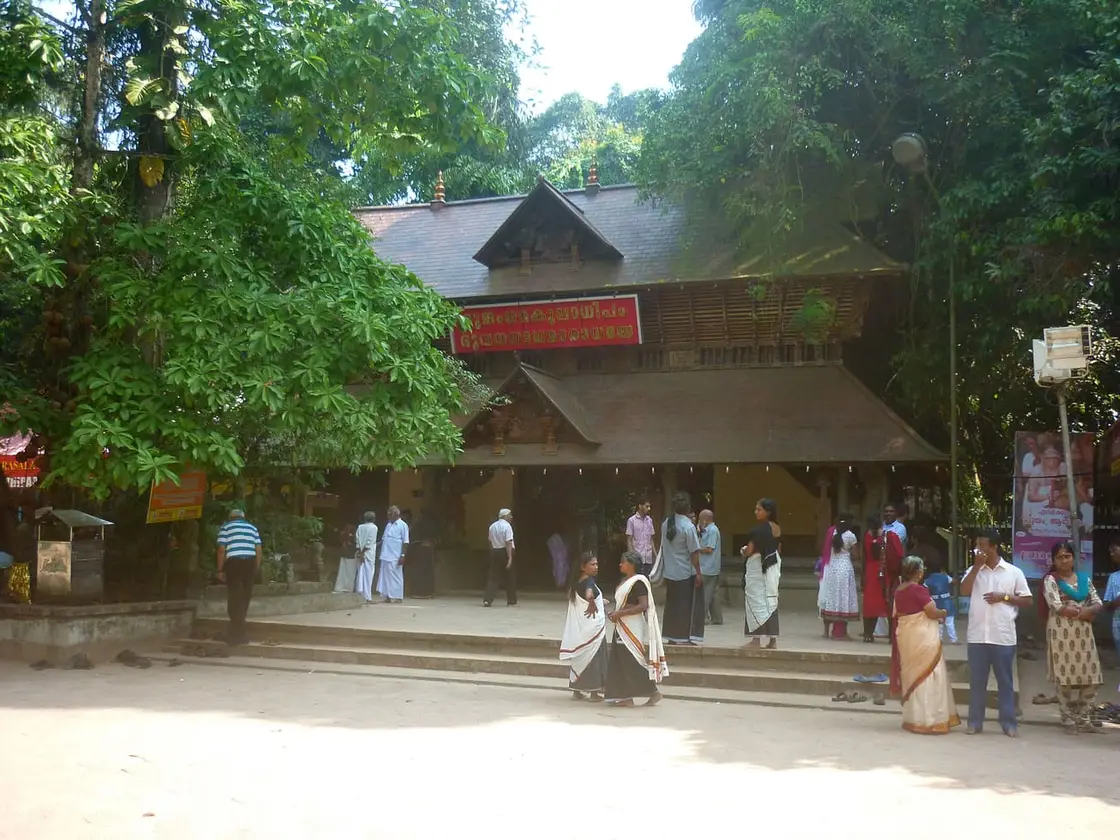
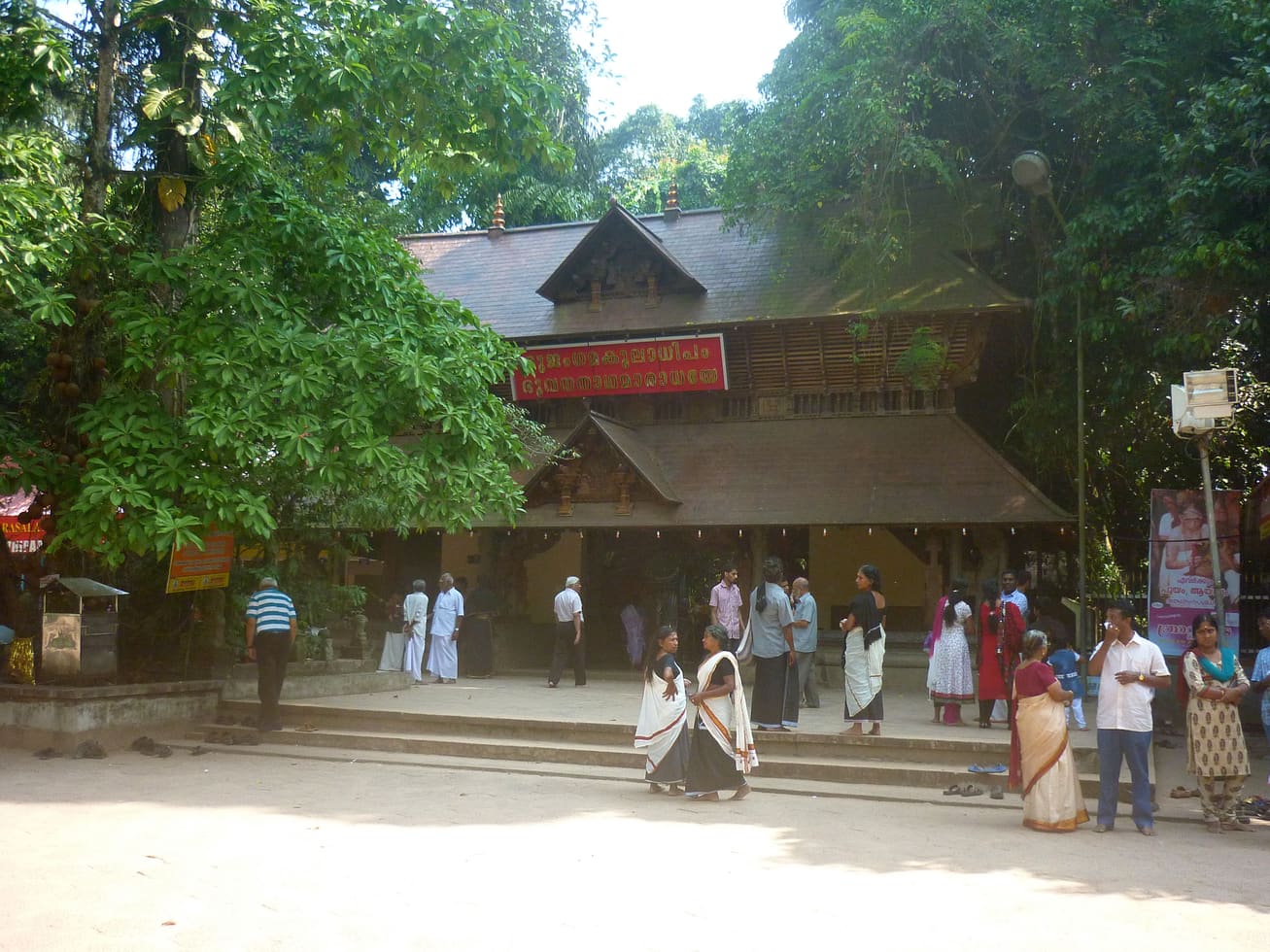
Beneath a canopy of ancient trees near Haripad, tens of thousands of stone serpents coil along the shaded forest paths of Mannarasala — Kerala’s most revered Naga shrine, where, uniquely, the chief priest is a woman.

The story of Mannarasala Temple

Mannarasala Sree Nagaraja Temple sits within a dense, centuries-old sacred grove (kavu or sarpakavu) a few kilometres from the town of Haripad in Alappuzha district. It is widely regarded as the foremost serpent temple in Kerala, drawing devotees from across India and abroad who come to worship the Naga king in a setting that feels less like a conventional temple compound and more like a living forest sanctuary. The presiding deity is Nagaraja, the serpent king, worshipped here as embodying both the cosmic serpent Ananta (associated with Vishnu) and aspects of Shiva; alongside him is venerated the serpent goddess Nagayakshi (also given as Sarpayakshi), regarded as his consort and a powerful feminine Naga presence.

What sets Mannarasala apart at first sight is the sheer multitude of serpent images. Stone idols of snakes — of many sizes, ages and postures — stand in clusters beneath the trees, line the walkways and gather around the shrines, their number commonly cited as around thirty thousand (indicative — confirm locally). Many were installed by families over generations as votive offerings, and the effect of walking the grove is of moving through an unbroken congregation of serpents, weathered and moss-touched, watched over by the forest itself. The grove is treated as genuinely sacred ground, and its trees and idols are protected rather than cleared, preserving something of the ancient Kerala tradition of the household sarpakavu writ very large.

The most remarkable living tradition at Mannarasala is its matriarchal priesthood. The temple is looked after by the Mannarasala Illam, a Namboodiri Brahmin family, and its chief priest is a woman — the Valia Amma (Valiya Amma), reverently called simply Amma. In a religious landscape where temple priesthood is almost universally male, the office of a presiding female priest at a major temple is rare and much remarked upon. The Amma is regarded as the spiritual mother of the shrine and its serpent deities, and during the great festivals it is she who carries the idol of Nagaraja in procession from the family Illam to the temple.

Devotees come to Mannarasala for many reasons, but it is especially associated in popular belief with prayers for children. Childless couples perform the ritual of Uruli Kamazhthal — offering a bronze or bell-metal cooking vessel (uruli) which is placed upside-down near the shrine as a petition to the Naga deities for the blessing of a child. According to the devotional custom, when a couple’s prayer is believed to have been answered with a birth, they return to have the uruli turned upright again and to give thanks. This should be understood as a matter of faith and devotional belief rather than as a proven outcome; similar beliefs attach to prayers for relief from skin ailments and other troubles.

The temple’s ritual calendar turns on the star Ayilyam (Ashlesha), the lunar asterism associated with serpents. The principal festivals fall on the Ayilyam days of the Malayalam months of Kanni (around September–October) and Thulam (around October–November), the latter celebrated far and wide as the famous Mannarasala Ayilyam (indicative dates — confirm locally). On these occasions the serpent idols and the deity are honoured with elaborate offerings, and a ceremonial procession (ezhunnallathu) carries Nagaraja from the Illam to the temple, accompanied by traditional Kerala percussion and wind instruments.

For the visitor, Mannarasala offers an experience quite distinct from the great Dravidian temple towns. It is quiet, green and inward-looking, its power residing in the atmosphere of the grove and the antiquity of its serpent worship rather than in towering gopurams. Many pair a visit here with the nearby Haripad Sree Subrahmanya Swamy Temple, one of Kerala’s important Murugan shrines, making the Haripad–Mannarasala area a meaningful stop for those interested in the state’s temple heritage and its distinctive tradition of Naga devotion.

Legend & myth

By legend, the worship of serpents in this land is traced to Parashurama, the axe-wielding sage-warrior said to have raised Kerala from the sea. As the story goes, the newly reclaimed coastal land was saline and unfit for habitation, and Parashurama is believed to have propitiated the Nagas and established serpent worship so that the earth might be detoxified and made fertile and liveable. Mannarasala is counted among the sacred grounds where, in this telling, Naga devotion was rooted in Kerala’s very beginnings. This is related here as sacred legend, not as documented history.

The temple’s own founding legend centres on the Mannarasala Illam. It is told that a great fire once swept the forest, scorching many serpents, and that a pious but childless couple of the family — often named as Vasudeva and Sreedevi — tended the injured snakes, soothing their burns with turmeric, honey and coconut water. Moved by their compassion, Nagaraja is said to have blessed them with children, and to have promised that he himself would be born as one of their sons. Sreedevi accordingly gave birth to two sons — a human child and a divine serpent child. The serpent son, an incarnation of Nagaraja, is believed to have remained with the family as its guardian deity, retiring into a chamber (nilavara) of the Illam, and the presence of this divine serpent son is woven through the traditions of Mannarasala to this day. These accounts are cherished as the temple’s devotional lore.

History

Mannarasala is generally described as an ancient temple of considerable antiquity, its origins reaching back many centuries and bound up with the very old Kerala practice of maintaining sacred serpent groves. Precise founding dates are not securely documented, and much of what is known comes through the traditions of the Mannarasala Illam and long-standing devotional accounts rather than dated inscriptions (details indicative — confirm through scholarly or temple sources).

The sacred grove is the heart of the site. Rather than being cleared for construction, the kavu has been preserved as a wooded sanctuary in which the serpent idols stand among living trees, reflecting the ecological ethos of the traditional Kerala sarpakavu, where groves were left undisturbed as the abode of the Nagas. The figure commonly given for the serpent images is around thirty thousand, accumulated over generations as votive installations by devotee families (indicative — confirm locally).

The temple’s governance by the Mannarasala Illam, a Namboodiri Brahmin family, and its distinctive female priesthood are among its most historically notable features. The office of the Valia Amma — a woman serving as the temple’s chief priest and the custodian of its serpent worship — is widely cited as a rare, perhaps singular, arrangement among Kerala’s major temples, and it is closely tied to the family’s founding legend of the divine serpent son.

Ritual practice has long included the votive offering of the uruli (Uruli Kamazhthal) by couples seeking children, together with serpent-worship rites such as Sarpabali and, at very long intervals, the elaborate Sarpam Pattu (serpent song) ceremony said to be conducted only once in many decades (interval indicative — confirm locally). The Ayilyam festivals in Kanni and Thulam anchor the annual calendar, with the Thulam Ayilyam in particular famed across Kerala and historically associated with patronage from the Travancore royal house.

Today Mannarasala functions as both a living centre of Naga devotion and a well-known heritage destination, promoted by Kerala Tourism and visited by pilgrims and travellers alike. Visitors are asked to respect its character as an active place of worship and a protected sacred grove, observing local customs regarding access, dress and photography (confirm current rules on site).

Why visit

See Kerala’s foremost serpent temple, with tens of thousands of Naga idols set through an ancient forest grove (count indicative — confirm locally).

Experience the rare tradition of a temple led by a female chief priest, the Valia Amma of the Mannarasala Illam.

Walk the shaded sarpakavu paths — an atmospheric, green setting quite unlike conventional temple compounds.

Learn about the devotional ritual of Uruli Kamazhthal and the temple’s association with prayers for children.

Time a visit with the celebrated Ayilyam festivals for processions, percussion and elaborate serpent worship (dates indicative — confirm locally).

Combine it with the nearby Haripad Sree Subrahmanya Swamy Temple for a fuller taste of the area’s temple heritage.
Visiting

Mannarasala Temple — at a glance

TimingsDarshan is generally available in the morning and again in the evening, with a midday closure typical of Kerala temples (for example, roughly early morning until around midday, reopening in the late afternoon into the evening) — timings are indicative and change on festival days, so confirm locally.
Best timeThe cooler, drier months from roughly October to February are comfortable for visiting; the Ayilyam festival periods in Kanni (Sept–Oct) and Thulam (Oct–Nov) are especially atmospheric but crowded (indicative — confirm locally).

Entry: There is normally no charge for darshan; ritual offerings such as Uruli Kamazhthal, sarpabali and pujas are paid and priced by the temple (indicative — confirm current rates and offering procedures on site).

Dress code: Traditional, modest temple dress is expected — many temples in Kerala prefer men in a mundu/dhoti and women in a saree or salwar; dress conservatively and follow any instructions given on site (indicative — confirm locally).

Festivals: The main festivals are the Ayilyam celebrations on the Ayilyam star in Thulam (Oct–Nov, the famed Mannarasala Ayilyam) and in Kanni (Sept–Oct), featuring the ezhunnallathu procession; serpent-worship rites such as Sarpabali are also observed, with the rare Sarpam Pattu conducted only at long intervals (dates indicative — confirm locally).

Photography: Photography is commonly restricted, especially inside the sanctum and within the sacred grove and Illam; assume limits apply and seek permission or check posted rules before photographing (indicative — confirm locally).

Getting here

How to reach Mannarasala Temple

  • ✈︎ By air The nearest major airports are Kochi (Cochin International, roughly 100 km plus to the north) and Thiruvananthapuram (Trivandrum International, to the south), each around a two-to-three-hour drive depending on traffic (distances indicative — confirm locally).
  • 🚆︎ By train Haripad railway station is the closest and is only a few kilometres from the temple; Kayamkulam is another nearby station on the same line, and both lie on the busy Thiruvananthapuram–Ernakulam route (indicative — confirm locally).
  • 🚗︎ By road From Haripad the temple is a short drive of a few kilometres; it is well signposted and easily reached by road from Alappuzha, Kayamkulam and the NH66 coastal highway (indicative — confirm locally).
  • 🚌︎ By bus KSRTC and private buses serve Haripad frequently from Alappuzha, Kollam and beyond; from Haripad town, local buses, autos and taxis run to Mannarasala (indicative — confirm locally).
Do

Things to do

  • Take darshan of Nagaraja at the main shrine.
  • Walk the sacred serpent-grove paths lined with tens of thousands of Naga idols (count indicative).
  • Learn about and, if seeking a child, understand the Uruli Kamazhthal offering.
  • Visit the Nagayakshi / Sarpayakshi shrine.
  • Observe the traditions surrounding the Valia Amma and the Mannarasala Illam.
  • Time your trip with an Ayilyam festival procession if possible.
  • Combine with the nearby Haripad Sree Subrahmanya Swamy Temple.

Mannarasala is a living place of worship and a protected sacred grove, not a tourist attraction alone. Please treat the shrine, idols and trees with respect, observe silence and local custom, follow dress and photography rules, and remember that the fertility and healing associations are matters of faith and devotional belief.

What to expect

Highlights

  • Heritage experience at Mannarasala Temple
  • Architecture, local stories and old trade/cultural routes
  • Good fit for guided walks and nearby cafes/shops
Getting there

How to visit

  • Base yourself in Haripad and Mannarasala or a nearby town in Alappuzha, then confirm the last-mile route locally before leaving.
  • Walkable heritage areas are best done slowly; combine nearby streets, museums, markets and food stops.
  • If the visit depends on forest, temple, boat, ferry, weather or seasonal access, check the official/local rule on the day before travel.

Distance by road

  • Kochi55 km
  • Thiruvananthapuram154 km
  • Kozhikode226 km
  • Coimbatore235 km
  • Madurai281 km

Road km to Alappuzha; ghat roads and traffic vary — allow extra.

Timing

Best time

November to February and early mornings are best for walking; avoid midday heat where possible.

Visitor notes

  • Use a local guide when the value is in stories rather than just the building.
  • Check closure days for museums or protected monuments nearby.
Safety

Good to know

  • Watch traffic on narrow heritage streets.
  • Keep valuables close in crowded markets.
Stay · eat · do · rent · see · shop

Stays, food & things to do near Mannarasala Temple

Verified hotels, homestays, restaurants, experiences, sights, shops and rentals around Mannarasala Temple — commission-free, with direct contact. Filter by what you need.

Mannarasala Sree Nagaraja Temple Official — Official temple source in Haripad and Mannarasala
Verified
Official temple source · Haripad and Mannarasala
Mannarasala Sree Nagaraja Temple Official

see option in Haripad and Mannarasala: Official Mannarasala Sree Nagaraja Temple record for darshan, rituals and temple-contact planning. Key details: Mannarasala P.O., Haripad, Alappuzha, Kerala 690514 · Price range: Check current temple rules locally · Amenities: Mannarasala, Haripad, Nagaraja temple. Use Mannarasala Sree Nagaraja Temple Official as a see option in Haripad and Mannarasala, Ernakulam, kerala, India. plan visit duration, crowd timing and transport links.

View guide
D
Drivequix Rent a car & Bike
Vehicle rental
Top pick Verified
Self-drive car rental · Haripad and Mannarasala
Drivequix Rent a car & Bike
5.0 (103)

Self-drive car rental in haripad and mannarasala — confirm vehicles, rates, documents and deposit directly. (vehicle rental option in Haripad and Mannarasala)

Commission-freeView details
R
ROAMSPACE RENT A CAR AND BIKE
Vehicle rental
Top pick Verified
Self-drive car rental · Haripad and Mannarasala
ROAMSPACE RENT A CAR AND BIKE
4.9 (29)

Self-drive car rental in haripad and mannarasala — confirm vehicles, rates, documents and deposit directly. (vehicle rental option in Haripad and Mannarasala)

Commission-freeView details
R
ROAMSPACE CAR AND BIKE RENTAL - VAZHUVADI,CHENGANNUR ,THIRUVALLA,
Vehicle rental
Top pick Verified
Bike & scooter rental · Haripad and Mannarasala
ROAMSPACE CAR AND BIKE RENTAL - VAZHUVADI,CHENGANNUR ,THIRUVALLA,
4.9 (28)

Bike & scooter rental in haripad and mannarasala — confirm vehicles, rates, documents and deposit directly. (vehicle rental option in Haripad and Mannarasala)

Commission-freeView details
R
Rental Logics Kerala – Rent a bike in Thiruvalla | Royal-Enfiled Bikes & Scooters Rental
Vehicle rental
Top pick Verified
Bike & scooter rental · Haripad and Mannarasala
Rental Logics Kerala – Rent a bike in Thiruvalla | Royal-Enfiled Bikes & Scooters Rental
4.6 (10)

Bike & scooter rental in haripad and mannarasala — confirm vehicles, rates, documents and deposit directly. (vehicle rental option in Haripad and Mannarasala)

Commission-freeView details
K
KSRTC Haripad Bus Station
Things to do
Top pick Verified
Official transport support · Haripad and Mannarasala
KSRTC Haripad Bus Station

do option in Haripad and Mannarasala: KSRTC Haripad Bus Station is a Official transport support option for do planning in Haripad and Mannarasala, Ernakulam, kerala, India. Use KSRTC Haripad Bus Station as a do option in Haripad and Mannarasala, Ernakulam, kerala, India. book timing, permits and local support before heading out. Key details: Office of the Assistant Transport Officer, KSRTC Haripad, Haripad, Kerala 690514 · Price range: Contact direct / check current rates · Amenities: do, Official transport support, KSRTC Haripad Bus Station.

Commission-freeView details
S
Sanchari by Chef Pillai Haripad
Where to eat
Verified
Kerala restaurant · Haripad and Mannarasala
Sanchari by Chef Pillai Haripad

eat option in Haripad and Mannarasala: Chef Pillai-linked multi-cuisine restaurant in Haripad for Mannarasala temple and town meals. Key details: M Lal Cineplex Complex, Madhava Junction Road, Haripad, Alappuzha, Kerala 690514 · Price range: Contact direct / check current rates · Amenities: eat, Kerala restaurant, Sanchari by Chef Pillai Haripad. Use Sanchari by Chef Pillai Haripad as a eat option in Haripad and Mannarasala, Ernakulam, kerala, India. compare menus, pricing and location against your route.

Commission-freeView details
L
Leela's 7th Heaven Resort Haripad
Place to stay
Verified
Resort and activity stay · Haripad and Mannarasala
Leela's 7th Heaven Resort Haripad

stay option in Haripad and Mannarasala: Direct-source Erickav/Haripad resort with stay, kayaking, fishing and booking-contact evidence. Key details: Erickav, Haripad, Alappuzha, Kerala 690516 · Price range: Contact direct · Amenities: Haripad, Erickav, Resort. Use Leela's 7th Heaven Resort Haripad as a stay option in Haripad and Mannarasala, Ernakulam, kerala, India. book your stay, transport and nearby food stops.

Commission-freeView details
M
Mandaram Guest House Mannarasala
Place to stay
Verified
Temple guest house · Haripad and Mannarasala
Mandaram Guest House Mannarasala

stay option in Haripad and Mannarasala: Mandaram Guest House Mannarasala is a Temple guest house option for stay planning in Haripad and Mannarasala, Ernakulam, kerala, India. Use Mandaram Guest House Mannarasala as a stay option in Haripad and Mannarasala, Ernakulam, kerala, India. book your stay, transport and nearby food stops. Key details: Mannarasala P.O., Haripad, Alappuzha, Kerala 690514 · Price range: Contact temple guest house · Amenities: Mannarasala, Guest house, Pilgrimage stay.

Commission-freeView details

Roampedia is commission-free — own or know a stay, eatery, guide or shop near Mannarasala Temple? List it and it appears here once verified.

Add a nearby business
Good to know

Mannarasala Temple — frequently asked

When is the best time to visit Mannarasala Temple?

November to February and early mornings are best for walking; avoid midday heat where possible.

What are the entry fee and timings at Mannarasala Temple?

Entry: There is normally no charge for darshan; ritual offerings such as Uruli Kamazhthal, sarpabali and pujas are paid and priced by the temple (indicative — confirm current rates and offering procedures on site).. Timings: Darshan is generally available in the morning and again in the evening, with a midday closure typical of Kerala temples (for example, roughly early morning until around midday, reopening in the late afternoon into the evening) — timings are indicative and change on festival days, so confirm locally.. Fees and timings are indicative — confirm on site before you travel.

How do I reach Mannarasala Temple?

Base yourself in Haripad and Mannarasala or a nearby town in Alappuzha, then confirm the last-mile route locally before leaving. Walkable heritage areas are best done slowly; combine nearby streets, museums, markets and food stops. If the visit depends on forest, temple, boat, ferry, weather or seasonal access, check the official/local rule on the day before travel.

How much time do I need for Mannarasala Temple?

1 to 3 hours.

What should I know before visiting Mannarasala Temple?

Watch traffic on narrow heritage streets. Keep valuables close in crowded markets.

Image credits