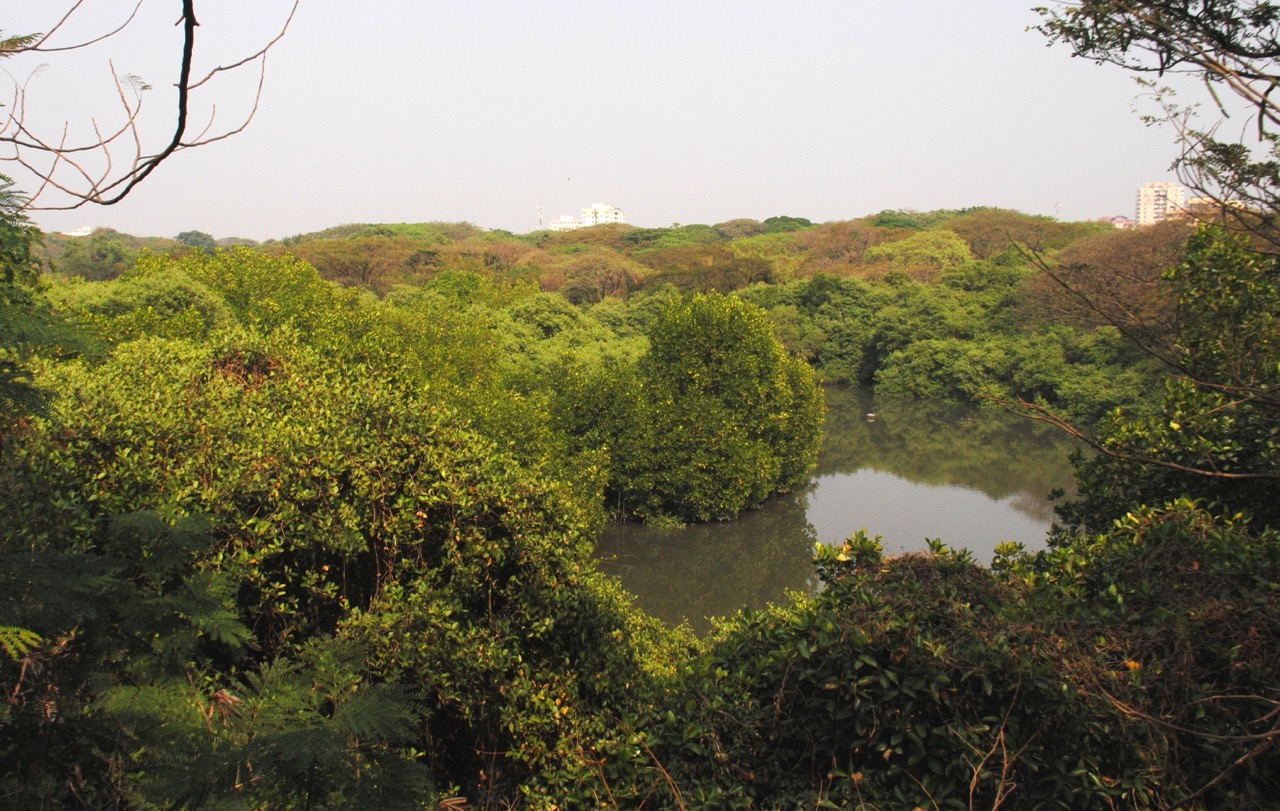
At the northern tip of Vypin Island, where the Periyar river spills into the Arabian Sea, Munambam is where you watch Kerala’s coast do real work — a busy fishing harbour, blue-hulled trawlers, and an estuary sky full of kites rather than a manicured leisure strand.
The story of Munambam Beach
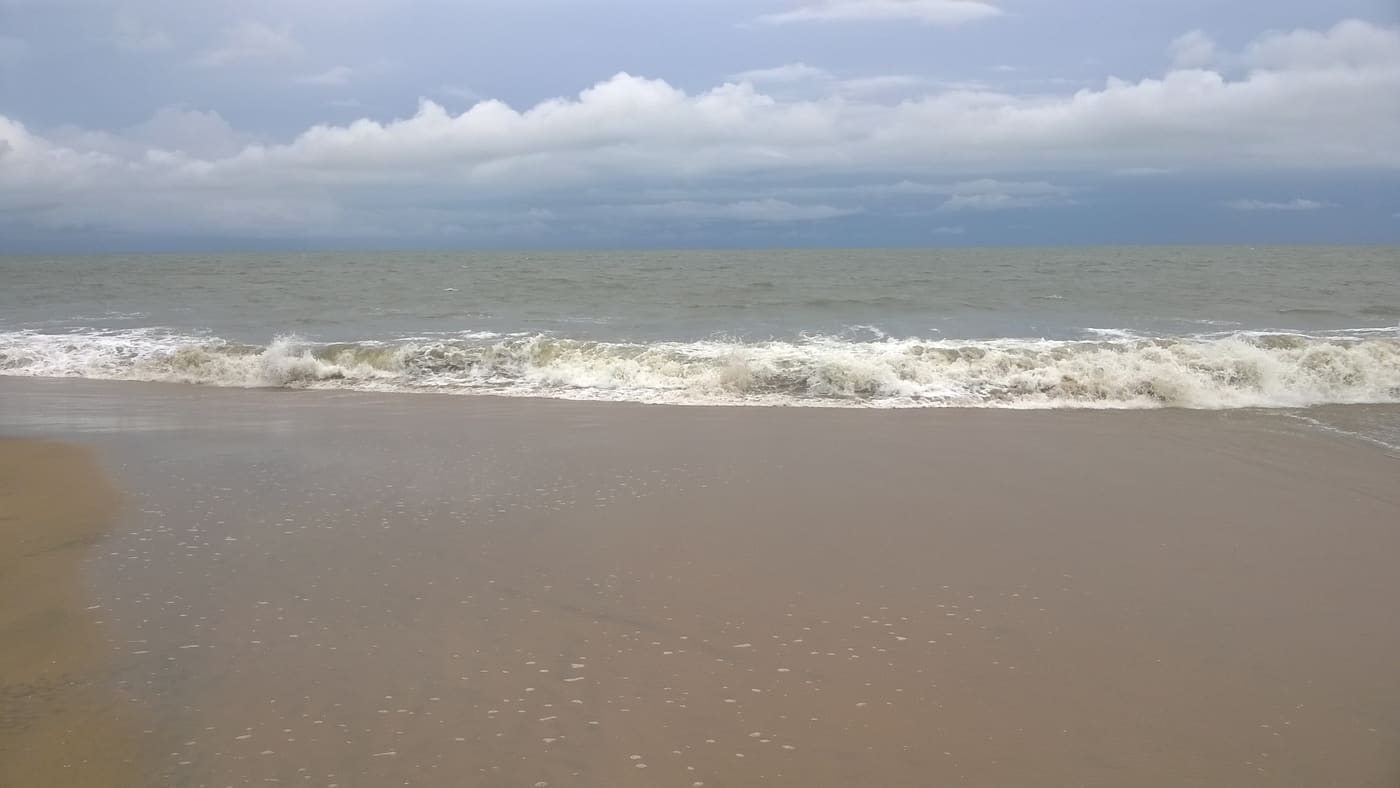
Munambam sits at the very end of Vypin, the long barrier island that shelters Kochi from the open sea. Here the land simply runs out: the Arabian Sea presses in from the west, the Periyar river slides down the eastern edge, and to the north the two meet in a wide, restless river-mouth. Standing on the sand you are looking at an estuary rather than a straightforward beach — brown river water braiding into blue-grey sea, sandbars shifting with the tide, and the far bank of Azheekode shimmering across the water.
It is a working coast, and that is exactly its character. Munambam is quieter and far less commercial than its famous neighbour Cherai, a few kilometres south. There are no rows of shacks or deckchairs; instead you get long, uncluttered sand, a scatter of local families, and the constant background rhythm of the fishing harbour just behind the shore. Kerala Tourism markets the stretch as the ‘Muziris Golden Beach’, tying it to the ancient Muziris port heritage of this coast, but the day-to-day scene is unpolished and genuine.
The signature sight is the fishing life. Traditional Chinese fishing nets — the cantilevered, spider-like contraptions that have become an emblem of Kochi — dip and rise along the water, worked by hand by local fishermen. Alongside them, the estuary is a highway for country boats, ferries and the big steel trawlers heading out to sea or coming home heavy with catch. Kite-flying is a genuine local pastime here, the open, breezy river-mouth filling with colour on clear evenings.
Because the river meets the sea here, Munambam is a good place for birdlife and for simply watching the water. Where fresh and salt water mingle, fish gather and so do gulls, terns and waders, especially in the cooler months. The light at the river-mouth is beautiful in the last hour of the day, and sunsets over the Arabian Sea — with silhouetted nets and returning boats in the foreground — are the reason many people make the trip out this far.
It is important to be honest about what Munambam is not. This is not primarily a swimming or splashing beach. The river-mouth carries strong, unpredictable currents where the Periyar drains into the sea, and the shore doubles as the approach to a busy commercial harbour with boat traffic and breakwaters. People come to look, to walk, to photograph and to soak up the atmosphere — not to bathe. Treated on its own terms, as a raw estuary and a window onto Kerala’s fishing economy, it rewards the visit.
Munambam pairs naturally with the rest of northern Vypin. Cherai Beach, with its calmer swimmable stretches and backwater edge, is just down the road; the old Pallippuram Fort and the Vypin lighthouse are close by; and the ferry crossings over the estuary give a cheap, memorable ride with locals and their cycles and motorbikes. Come for a half-day, combine it with Cherai, and you see two very different faces of the same island.
History
Vypin itself is a relatively young island by geological standards — the sandbar is traditionally said to have formed after a great flood in the early sixteenth century, and it has been a fishing and trading coast ever since. Munambam, at its northern point, grew up entirely around the water: fishing and boat-building have been the mainstay of its people for generations, and the village remains overwhelmingly a fishing community today.
The great change came with the modernisation of Kerala’s fishery. The Indo-Norwegian Project of 1954, which introduced mechanised offshore fishing to the state, set in motion a transformation from small wooden catamarans working a day or two offshore to large steel trawlers that stay at sea for weeks. Munambam rode that wave, and its shoreline of boat-building yards and repair slips reflects a craft that has been handed down and steadily scaled up.
Today Munambam Fishing Harbour is one of the major, government-owned fishing harbours of Kerala and among the busiest fishing ports in the state. Reports describe a fleet of several hundred vessels — a mix of large trawlers, gill-netters and traditional craft — and thousands of people whose livelihoods depend on the harbour, both directly at sea and in the auction halls, ice plants, processing sheds and transport that surround it. A separate mini-harbour operates nearby at Pallippuram.
The harbour is a serious commercial and export operation, not just a local landing point. Munambam is noted as an inspection-approved harbour for seafood export, sending catch onward to markets including Europe. The modern trawlers here can run to enormous lengths with powerful engines, GPS and refrigeration, and much of the crewing is now done by migrant workers from Tamil Nadu, West Bengal, Odisha and Andhra Pradesh, with a boat’s syrang, or captain, holding authority at sea — a snapshot of how India’s coastal labour has changed.
For the visitor, all of this history is on open display rather than tucked away in a museum. The early-morning auction, the queues of trawlers, the painted licence numbers and colour-coded hulls (Kerala’s boats traditionally blue), and the endless mending of nets on the sand are a living record of a fishing economy that has powered this corner of Ernakulam for centuries.
Why visit
You see a real, working fishing harbour up close — one of Kerala’s major landing centres, with trawlers, country boats and the whole busy choreography of a coast that earns its living from the sea.
The estuary setting is genuinely special: this is the exact point where the Periyar river meets the Arabian Sea, with braided water, sandbars and shifting light that you do not get at an ordinary beach.
It is calm, uncrowded and uncommercial — a welcome contrast to busier Kerala beaches, ideal if you want long empty sand and local life rather than shacks and stalls.
Sunsets over the sea, framed by Chinese fishing nets and returning boats, are a photographer’s dream, and the breezy river-mouth is a well-loved local kite-flying spot.
Where fresh and salt water mix you get good birdlife — gulls, terns and waders — especially in the cooler months, making it rewarding for quiet nature-watching.
It combines beautifully with the rest of northern Vypin — Cherai Beach, Pallippuram Fort and the Vypin lighthouse are all close — plus an inexpensive, atmospheric ferry ride across the estuary.