Behind a plain, fortress-like façade in the spice-scented lanes of Mattancherry hides one of India’s great secrets — a royal palace whose walls blaze with some of the finest Hindu mural paintings ever put to plaster.
The story of Dutch Palace
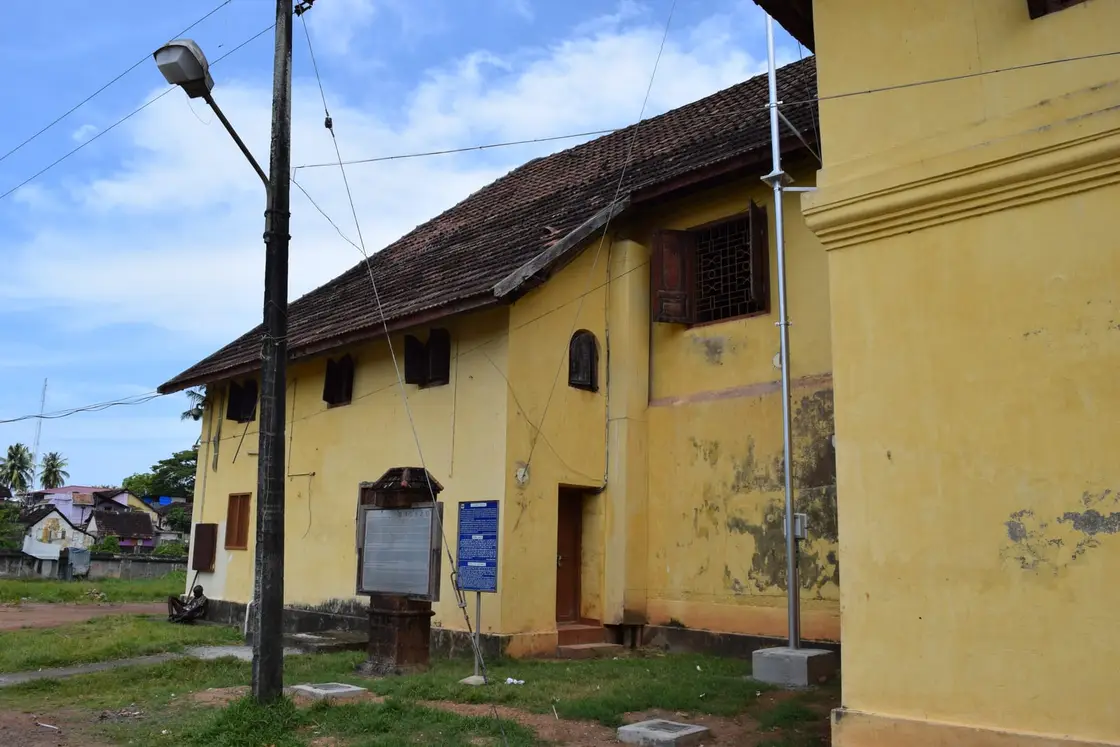
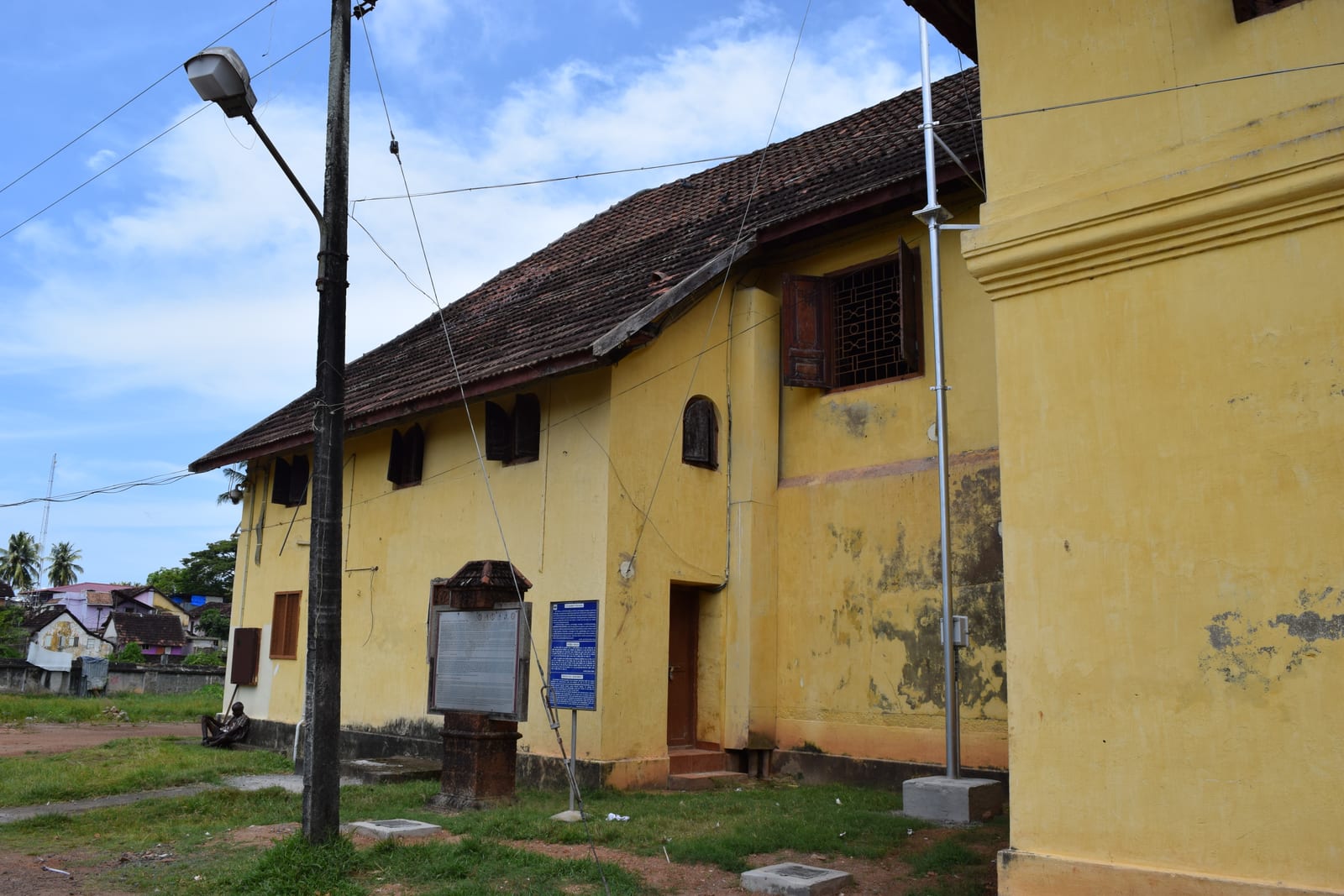
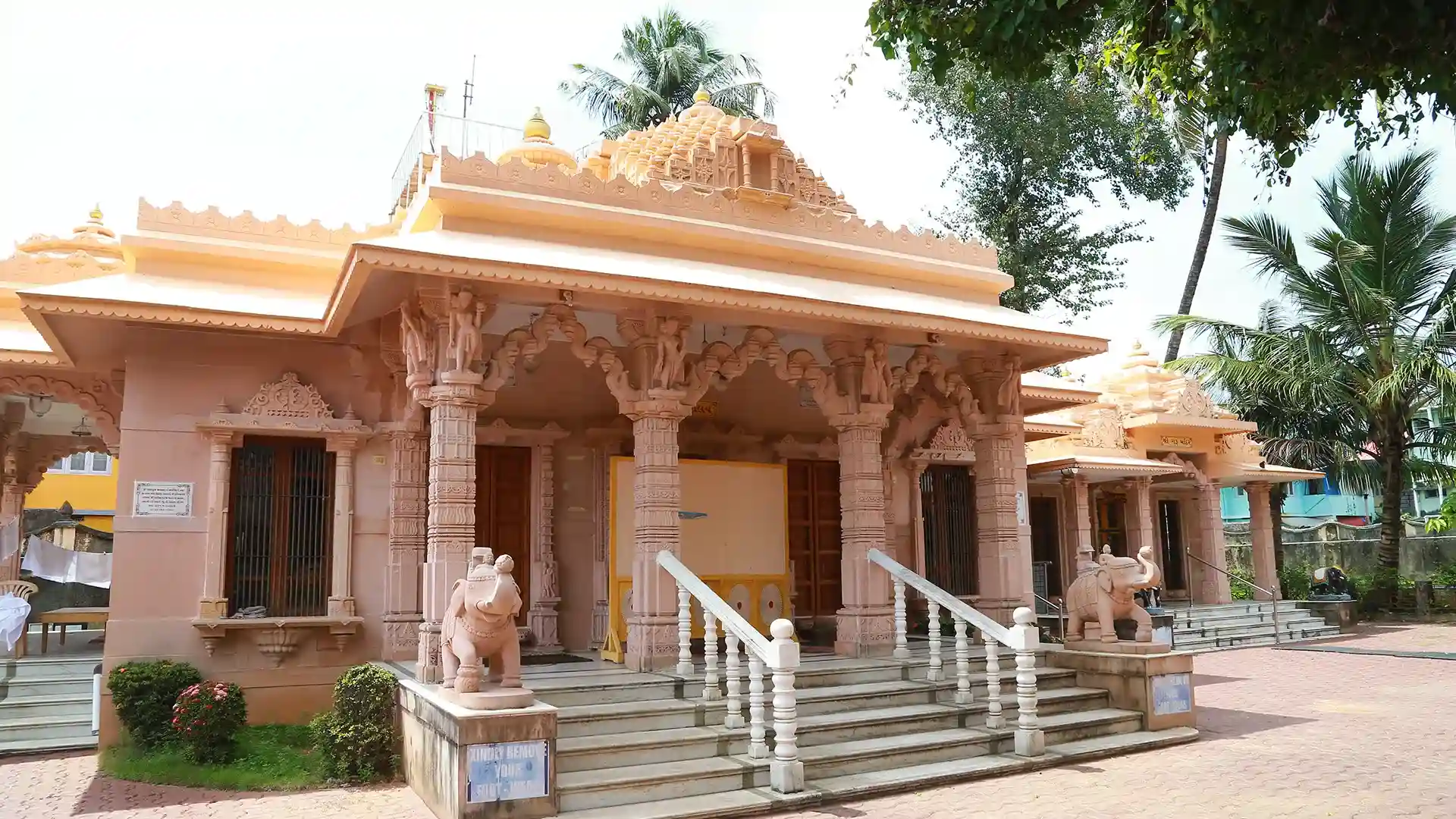
The Dutch Palace is a study in deception, and that is precisely its charm. From the street it seems almost austere — a long, whitewashed, tile-roofed building that could pass for a colonial warehouse. Step through its doors, however, and you enter the ceremonial heart of the old Kingdom of Cochin, where Rajas were crowned, where sacred epics unfurl across the walls in glowing tempera colour, and where the layered history of Kerala’s spice-coast rulers, Portuguese traders and Dutch merchants is written into the very architecture.
The palace is built on the traditional Kerala plan known as nālukettu — a rectangular structure wrapped around a central open courtyard, with rooms opening onto all four sides. That courtyard shelters a small temple dedicated to Pazhayannur Bhagavati, the protective family deity of the Cochin royal house, and two further shrines to Krishna and Shiva stand on either flank of the palace. The genius of the building is how quietly it blends worlds: an essentially Kerala temple-house layout, softened here and there with European touches such as arches and altered chamber proportions.
But visitors do not come chiefly for the architecture. They come for the murals. Covering hundreds of square metres across several chambers, these paintings are among the richest surviving examples of Kerala’s temple-mural tradition. Executed in warm mineral pigments and a distinctive tempera technique, they crowd the walls with gods and heroes — the sweeping narrative of the Ramayana, episodes from the life of Krishna, and scenes drawn from the wider body of Hindu myth. The colours glow with ochres, reds and greens, the figures curl and interlock with almost no empty space, and the effect is overwhelming in the best sense.
The most celebrated chamber is the royal bedroom, whose walls carry the entire story of the Ramayana in a dense, continuous sweep of small panels — a visual retelling you can almost walk through scene by scene. Elsewhere, a much-loved painting shows Krishna in an unabashedly sensuous, multi-armed pose surrounded by adoring gopis, while other panels depict Vishnu reclining as Anantha-shayana and the fused form of Shiva and Parvati as Ardhanareeshwara. To stand in these rooms is to understand why art historians speak of Mattancherry in the same breath as Kerala’s great temple walls.
Upstairs lies the Coronation Hall, the room where the Rajas of Cochin were formally invested with power. Along its walls hangs a gallery of royal portraits, painted in a European manner, together with palanquins, ceremonial weapons, coins, stamps, royal dress and other regalia — the material memory of a dynasty. The wooden ceilings, carved with rosette and cupola motifs, are worth tilting your head back for. Together the hall and its treasures turn the palace into a genuine museum of Cochin kingship.
Today the palace survives as a protected monument and museum, cared for jointly by the Archaeological Survey of India and the State, its murals painstakingly conserved. It sits in the thick of Mattancherry’s most atmospheric quarter — a short walk from the Paradesi Synagogue and Jew Town’s antique shops, the Chinese fishing nets and the spice markets — so that a visit here folds naturally into a wider wander through one of the oldest, most cosmopolitan corners of the Indian coast.
History
The palace was raised by the Portuguese, most sources placing its construction around the mid-1550s (commonly cited as 1555, with some accounts a decade earlier), and presented as a gift to the Raja of Cochin. Tradition holds that the Portuguese offered the palace partly as a gesture of goodwill to secure trading privileges on the spice coast, and partly to make amends after damaging a temple in the vicinity — a peace-offering wrapped in diplomacy and self-interest in equal measure.
Despite its later nickname, the building is Portuguese in origin. The name Dutch Palace attached itself only after 1663, when the Dutch supplanted the Portuguese as the dominant European power in Cochin and carried out extensions and substantial repairs and renovations to the structure. It was this Dutch phase of improvement that gave the palace the popular name by which it is still best known, even though the Dutch built comparatively little of the original fabric.
For generations the palace functioned as a ceremonial seat of the Cochin royal house. Its upstairs Coronation Hall was the setting for the investiture of the Rajas, and the portraits ranged along its walls — depicting Cochin rulers from the nineteenth century onward in a Western painterly style — record the dynasty across the decades. The palace thus served less as an everyday residence than as a stage for kingship, ritual and the display of royal legitimacy.
The murals that make the palace famous are generally dated by scholars to roughly the seventeenth and eighteenth centuries, painted in the mature Kerala temple-mural idiom. Spread across the bedchamber, the halls and other rooms, they translate the Ramayana, the Krishna story and other Puranic themes into dense, jewel-toned tableaux. Their survival across some three centuries, in a humid coastal climate, is itself a small marvel of both craft and later conservation.
In the modern era the palace passed into public custodianship. It was declared a centrally protected monument in the mid-twentieth century and is today looked after under the Archaeological Survey of India, with the murals and structure the subject of careful restoration work — including a major conservation programme carried out in the late 2000s. It now operates as a museum, one of the anchor heritage sites of historic Kochi.
Why visit
Some of the finest Hindu temple-style mural paintings in all of India, glowing across the palace walls.
The royal bedchamber, where the entire Ramayana unfolds in a single continuous sweep of panels.
The Coronation Hall of the Rajas of Cochin, with its portrait gallery, carved ceilings and royal regalia.
A rare, atmospheric survivor of the Portuguese–Dutch–Cochin encounter on the spice coast.
Traditional Kerala nālukettu architecture wrapped around a serene courtyard temple.
Steps from Jew Town, the Paradesi Synagogue and Mattancherry’s spice markets — an easy add to a heritage walk.