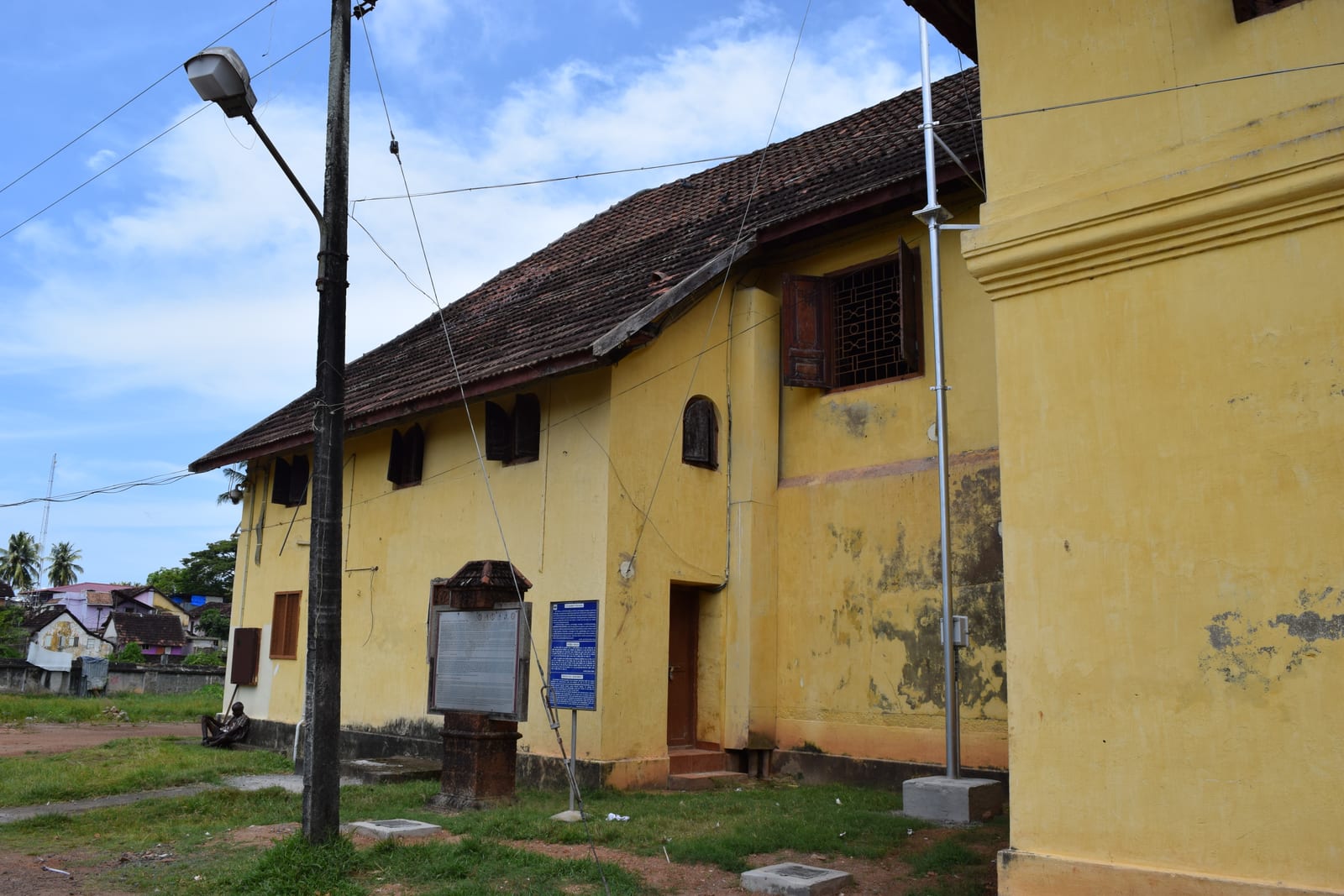
Paradesi Synagogue

Paradesi Synagogue is one of the guidebook places to plan around Mattancherry, with practical planning organized from the nearest town/base and verified local listings when available.

Paradesi Synagogue, Mattancherry
Practical guide

Plan Paradesi Synagogue

Typeheritage
Nearest baseMattancherry
Best timeNovember to February and early mornings are best for walking
Time needed1 to 3 hours
EntryA small entry ticket of around ₹5–₹10 per person is commonly quoted, though some sources report no charge (indicative — confirm locally, as fees change).
Nearest town/baseMattancherry
DistrictErnakulam
Place typeheritage
Time needed1 to 3 hours.

Paradesi Synagogue is one of the guidebook places to plan around Mattancherry, with practical planning organized from the nearest town/base and verified local listings when available.

Paradesi Synagogue belongs under Mattancherry, one of the practical travel bases in Ernakulam district. Use Mattancherry for stays, food, local transport and operators, then plan this place as a focused stop rather than an isolated pin.

The story

Tucked at the end of a narrow lane in Mattancherry’s old Jew Town, the Paradesi Synagogue is a small, luminous room that carries an outsized story. Built in 1568, it is the oldest active synagogue in the Commonwealth, and stepping barefoot onto its cool, blue-and-white Chinese tiled floor beneath a glimmering canopy of Belgian glass chandeliers feels like walking straight into four centuries of Kerala’s cosmopolitan past.

The story of Paradesi Synagogue

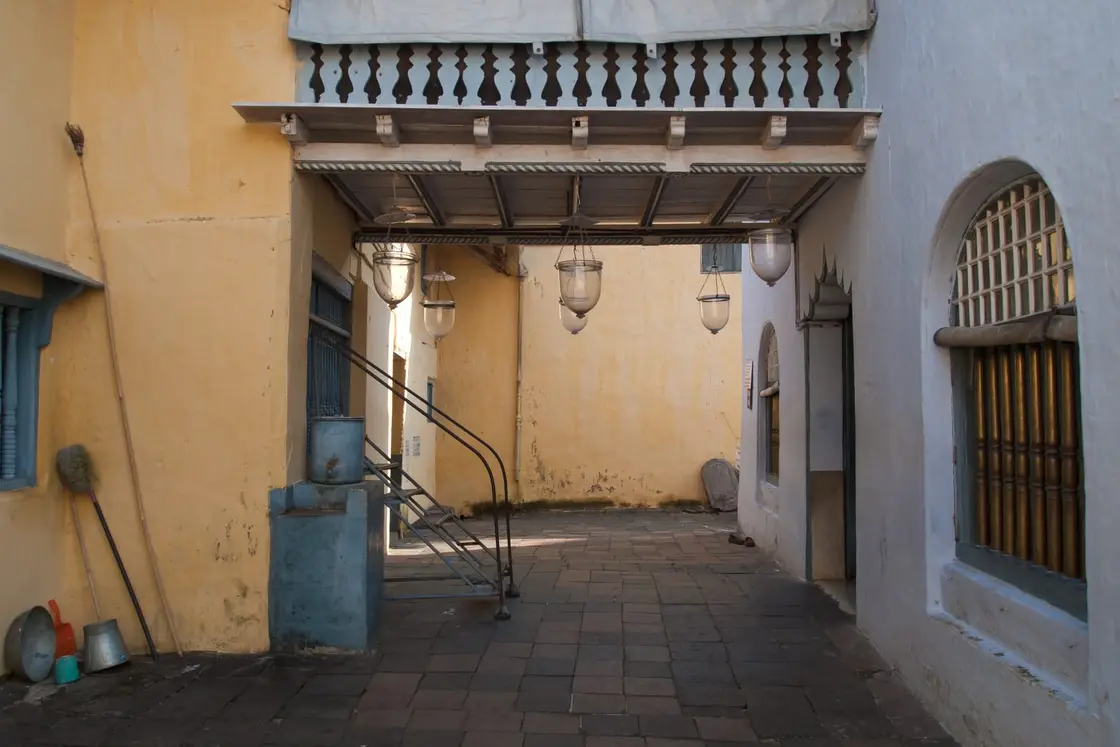
You reach the synagogue by wandering down Synagogue Lane, a slender, sun-dappled street where antique dealers, spice traders and curio shops trade under signs in half a dozen scripts. The lane funnels you gently towards a whitewashed clock tower and a modest doorway — there is no grand façade, no towering spire. The Paradesi Synagogue keeps its wonders inside, and that restraint is part of its magic. For centuries this quiet corner beside the Raja’s palace was the beating heart of a thriving Jewish trading community that helped make Kochi one of the great spice ports of the world.

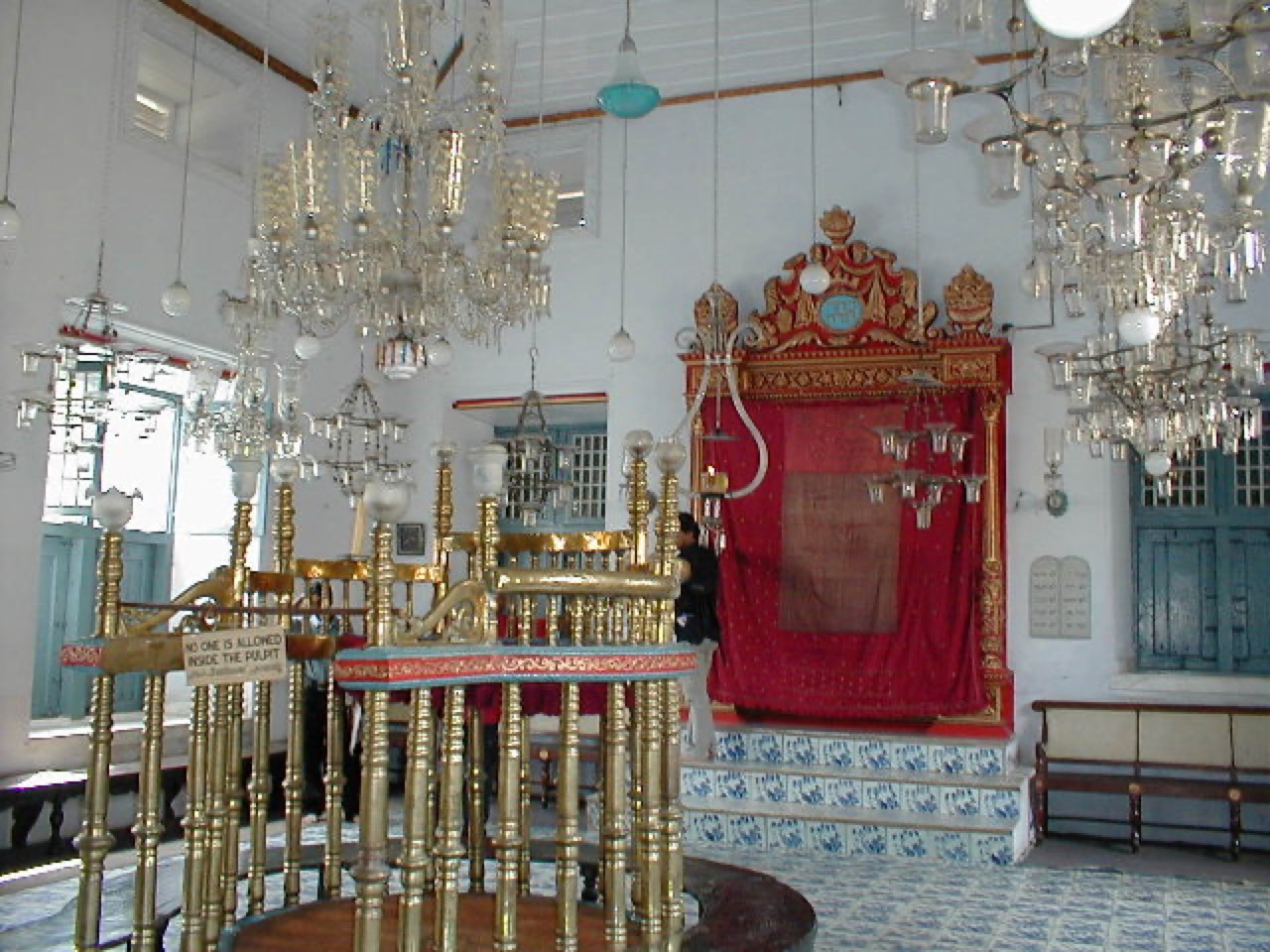
Slip off your shoes at the threshold — everyone enters barefoot — and the first thing that stops you is the floor. It is paved with over a thousand hand-painted, blue-and-white willow-pattern porcelain tiles brought from Canton in China in the eighteenth century. Look closely and you notice something uncanny: no two tiles are quite alike. Lotus and plum blossom, chrysanthemum and willow, peony and rock — each little scene shifts subtly from the next, so that the floor reads like a slow, silent story told a thousand times over in cobalt blue.

Raise your eyes and the room glows. A tier of Belgian cut-glass chandeliers, each of a different colour and design, hangs low over the prayer hall, catching light from the tall windows and scattering it across the tiles. In the centre stands the bimah, the raised pulpit ringed with a polished brass rail, and against the eastern wall the carved teak ark holds the Torah scrolls, some sheathed in silver and gold and crowned with jewelled ornaments gifted over the generations. An Oriental rug, said to have been presented by the Ethiopian emperor Haile Selassie, adds one more thread to the room’s tapestry of far-flung gifts.

For all its beauty, the synagogue is above all a survivor. The community that built it were the Paradesi — the word simply means ‘foreigners’ in Malayalam — Sephardic Jews with roots in Spain, Portugal, the Middle East and beyond, who had joined the far older Malabar Jewish community already settled on the Kerala coast. They prospered here as merchants and diplomats under the protection of the Rajas of Cochin, building homes, warehouses and this small jewel of a prayer house within sight of the royal palace.

Today the congregation has all but vanished. Waves of emigration, above all to Israel after 1948, thinned a community that once numbered in the thousands down to a mere handful of elderly members. The synagogue is no longer filled with the everyday bustle of a living neighbourhood at prayer, yet it is lovingly kept, still consecrated, and still opened to a stream of visitors from around the world. To stand quietly inside is to feel both the richness of what flourished here and the poignancy of its fading.

That mixture — dazzle and melancholy, the exotic and the intimate — is what makes the Paradesi Synagogue unforgettable. It is not a vast monument but a jewel box, a single room that holds Chinese porcelain, Belgian glass, Dutch woodwork, Hebrew scripture and Kerala hospitality all at once. Few places anywhere tell the story of India’s openness to the world so movingly in so small a space.

Legend & myth

The most beloved tale attached to the synagogue concerns its Chinese floor tiles, and it is best enjoyed as folklore rather than documented fact. As the story goes, the exquisite hand-painted tiles brought from Canton were originally destined for the palace of the Raja of Cochin, not for the Jewish community at all. A resourceful member of the community, so the legend runs, quietly whispered to the Hindu ruler that the glaze on the tiles had been mixed with cow’s blood. Horrified at the thought of so impure a material beneath his feet, the Raja is said to have rejected the whole consignment — whereupon the Jewish community happily acquired the tiles for their synagogue. Historians treat the anecdote with a smile and considerable caution, but it is retold on almost every visit, a charming parable of wit outmanoeuvring wealth.

The tiles carry a second layer of legend in the scenes they depict. Local guides love to point out that the little willow-and-pavilion patterns echo an old Chinese romance of two lovers separated in life and reunited only as a pair of doves, while others read the same designs as the wandering spirits of monks from a burned monastery journeying towards paradise. Whichever version you are told, it lends the floor a quiet, story-laden hush — a reminder that these tiles travelled thousands of miles carrying tales of their own before they came to rest in Kerala.

History

The Jewish presence on the Malabar coast is ancient, with tradition holding that Jewish traders reached Kerala more than a thousand years ago and settled first at Cranganore (Kodungallur). The community’s cherished copper plates — engraved sheets kept in the synagogue and often described as being some sixteen centuries old — record privileges granted by a Kerala ruler, associated with the figure of Joseph Rabban, giving the Jewish community rights, honours and a measure of self-governance. These plates remain among the synagogue’s most treasured possessions and a founding charter of Jewish life on the coast.

After the Portuguese arrived and pressures grew at Cranganore in the early sixteenth century, many Jews moved south to Kochi, settling beside the Raja of Cochin’s palace under his protection. It was here, in 1568, that families of the community secured land near the palace and built the Paradesi Synagogue — the ‘foreigners’ synagogue’ — a name reflecting the Sephardic and other newcomers who had arrived from Europe and the Middle East and worshipped alongside the long-established Malabar Jews.

The community’s fortunes turned violent during the era of Portuguese dominance, when the Inquisition’s reach and hostility to the Jewish faith brought a turbulent period to Kochi. In 1662 Portuguese forces attacked Mattancherry and set the synagogue ablaze, leaving it badly damaged. Deliverance came with a shift in colonial power: the Dutch, who took Cochin from the Portuguese, were far more tolerant, and under their rule the synagogue was rebuilt in the years immediately following, restoring the prayer house that survives today.

Under Dutch protection the community flourished again through the eighteenth century, and it is to this prosperous era that the synagogue owes its most famous adornments. The wealthy merchant and community leader Ezekiel Rahabi is credited with adding the distinctive clock tower around 1760–61, its several faces bearing the hours in different scripts, and with importing the celebrated blue-and-white hand-painted tiles from Canton that pave the floor. The glittering Belgian glass chandeliers were added later, in the nineteenth century, completing the interior’s remarkable blend of Chinese, European and Kerala craftsmanship.

In the twentieth century the community that sustained the synagogue dwindled sharply. Emigration, especially the mass movement to the newly founded state of Israel after 1948, reduced a once-vibrant congregation to a tiny remnant of elderly Paradesi Jews. Recognised as a heritage treasure of Kerala, the synagogue is today carefully preserved and remains open to visitors, standing as the oldest active synagogue in the Commonwealth and one of the most eloquent surviving monuments to India’s long tradition of religious welcome.

Why visit

It is a genuine ‘oldest’: built in 1568 and still consecrated, the Paradesi Synagogue is the oldest active synagogue in the Commonwealth, a rare living link to a Jewish community that has called Kerala home for well over a thousand years.

The hand-painted Chinese floor is a wonder in itself — over a thousand blue-and-white willow-pattern porcelain tiles from Canton, no two identical, forming a cool, story-filled carpet of cobalt that visitors invariably remember long after.

The interior is an intimate treasure box: a low canopy of multicoloured Belgian glass chandeliers, a brass-railed bimah, a carved teak ark with silver-and-gold-clad Torah scrolls, jewelled crowns and an Oriental rug said to be a gift from Emperor Haile Selassie of Ethiopia.

The setting is half the pleasure. The synagogue anchors Jew Town and Synagogue Lane, one of the most atmospheric streets in South India, lined with antique dealers, spice warehouses and curio shops — a slow, sensory wander through Kochi’s trading past.

It is deeply moving as well as beautiful. With the community now reduced to a handful, a quiet visit carries real poignancy — a chance to honour a vanishing culture and to reflect on India’s long history of sheltering those who came from far away.

It pairs perfectly with nearby heritage — the Dutch (Mattancherry) Palace with its famous murals is right beside it, and Fort Kochi’s Chinese fishing nets, churches and waterfront are a short hop away, making it an easy centrepiece of a heritage day in old Kochi.
Visiting

Paradesi Synagogue — at a glance

TimingsGenerally open Sunday to Thursday, roughly 10 a.m.–12 noon and 3 p.m.–5 p.m. (indicative — confirm locally); closed for the midday break and often opening only in the morning on some days.
Best timeOctober to March, when Kerala’s weather is cooler and drier, is the most comfortable season; mornings are best to beat the heat and the crowds in Jew Town. Avoid the peak of the monsoon (June–September) if you dislike heavy rain.

Entry: A small entry ticket of around ₹5–₹10 per person is commonly quoted, though some sources report no charge (indicative — confirm locally, as fees change).

Dress code: Modest dress covering shoulders and knees is expected at this active place of worship, and all visitors must remove their shoes and enter barefoot; keep voices low inside.

Festivals: As a functioning synagogue with only a tiny remaining congregation, it observes the Jewish calendar, including the Sabbath (Friday evening to Saturday) and festivals such as Rosh Hashanah, Yom Kippur, Sukkot, Hanukkah and Passover, on which it is generally closed to visitors (indicative — confirm locally, as dates shift each year).

Photography: Photography is generally prohibited inside the synagogue and it is often described as having a strict no-camera policy within the compound; you may photograph the exterior, clock tower and lane (verify and respect posted signs and staff instructions).

Getting here

How to reach Paradesi Synagogue

  • ✈︎ By air The nearest airport is Cochin International Airport (COK) at Nedumbassery, roughly 40–45 km away (indicative — around 1.5 hours by road depending on traffic); pre-paid taxis and app cabs run to Mattancherry and Fort Kochi.
  • 🚆︎ By train Ernakulam is the main railhead, with Ernakulam Town (North) and Ernakulam Junction (South) stations both around 10–14 km away (indicative); from the city you can continue by taxi, auto-rickshaw or, more scenically, by ferry across the harbour.
  • 🚗︎ By road Mattancherry’s Jew Town is well connected by road within Kochi; taxis and auto-rickshaws reach Synagogue Lane easily, though the final lanes are narrow and best covered on foot — parking near the synagogue is limited (indicative).
  • 🚌︎ By bus Local buses and the government ferry service both serve Mattancherry and Fort Kochi from Ernakulam; the harbour ferry from Ernakulam’s main boat jetty is a popular and inexpensive way to arrive, followed by a short auto-rickshaw ride or walk to Jew Town (indicative — check current ferry timings locally).
Do

Things to do

  • Admire the floor of over a thousand hand-painted Chinese porcelain tiles and try to spot how no two designs are quite alike.
  • Look up at the tier of multicoloured Belgian glass chandeliers and take in the carved teak ark, brass-railed bimah and jewelled Torah crowns.
  • Step outside to see the whitewashed Dutch-style clock tower, built around 1760 by the merchant Ezekiel Rahabi.
  • Wander Synagogue Lane and Jew Town, browsing antique shops, curio stores and old spice warehouses for a taste of Kochi’s trading past.
  • Visit the neighbouring Dutch (Mattancherry) Palace next door to see its celebrated Ramayana murals and royal portraits.
  • Soak up the aromas of the historic spice market in Mattancherry, one of the oldest trading quarters on the Malabar coast.
  • Combine the visit with nearby Fort Kochi — the Chinese fishing nets, St Francis Church and the breezy waterfront are a short drive away.

The synagogue is generally closed on Fridays, Saturdays (the Jewish Sabbath) and Jewish holidays, and observes a midday break; hours, ticket price and holiday closures can change at short notice, so confirm locally or by phone before you set out (verify). Please treat it as a living place of worship — dress modestly, remove shoes, keep quiet and avoid photography inside.

What to expect

Highlights

  • Heritage experience at Paradesi Synagogue
  • Architecture, local stories and old trade/cultural routes
  • Good fit for guided walks and nearby cafes/shops
Getting there

How to visit

  • Base yourself in Mattancherry or a nearby town in Ernakulam, then confirm the last-mile route locally before leaving.
  • Walkable heritage areas are best done slowly; combine nearby streets, museums, markets and food stops.
  • If the visit depends on forest, temple, boat, ferry, weather or seasonal access, check the official/local rule on the day before travel.

Distance by road

  • Kozhikode175 km
  • Coimbatore190 km
  • Thiruvananthapuram206 km
  • Madurai278 km
  • Mysuru348 km

Road km to Ernakulam; ghat roads and traffic vary — allow extra.

Timing

Best time

November to February and early mornings are best for walking; avoid midday heat where possible.

Visitor notes

  • Use a local guide when the value is in stories rather than just the building.
  • Check closure days for museums or protected monuments nearby.
Safety

Good to know

  • Watch traffic on narrow heritage streets.
  • Keep valuables close in crowded markets.
Stay · eat · do · rent · see · shop

Stays, food & things to do near Paradesi Synagogue

Verified hotels, homestays, restaurants, experiences, sights, shops and rentals around Paradesi Synagogue — commission-free, with direct contact. Filter by what you need.

Mattancherry Paradesi Synagogue — Synagogue in Mattancherry
Top pick Historic
Synagogue · Mattancherry
Mattancherry Paradesi Synagogue
4.6 (1,315) Open · till 5:00 pm

see option in Mattancherry: Mattancherry Paradesi Synagogue is a Synagogue option for see planning in Mattancherry, Ernakulam, kerala, India. Use Mattancherry Paradesi Synagogue as a see option in Mattancherry, Ernakulam, kerala, India. plan visit duration, crowd timing and transport links. Key details: Palace Road, Mattancherry, Kochi · Rated 4.6 from 1,315 local reviews.

DirectionsView guide
Mattancherry Palace Kerala Tourism — Official palace source in Mattancherry
Verified
Official palace source · Mattancherry
Mattancherry Palace Kerala Tourism

Official source for Mattancherry Palace / Dutch Palace, useful for timing heritage walks around Jew Town and Fort Kochi. (see option in Mattancherry)

View guide
D
Dutch Palace
Sight
Top pick Historic
Museum · Mattancherry
Dutch Palace
4.2 (19,605) Open · till 5:00 pm

see option in Mattancherry: Dutch Palace is a Museum option for see planning in Mattancherry, Ernakulam, kerala, India. Use Dutch Palace as a see option in Mattancherry, Ernakulam, kerala, India. plan visit duration, crowd timing and transport links. Key details: mattancherry · Rated 4.2 from 19,605 local reviews · Amenities: Wheelchair access.

DirectionsView guide
M
Mattancherry Dutch Palace Complex
Sight
Top pick Historic
Palace · Mattancherry
Mattancherry Dutch Palace Complex
4.2 (19,605)

see option in Mattancherry: Mattancherry Dutch Palace Complex is a Palace option for see planning in Mattancherry, Ernakulam, kerala, India. Use Mattancherry Dutch Palace Complex as a see option in Mattancherry, Ernakulam, kerala, India. plan visit duration, crowd timing and transport links. Key details: mattancherry · Rated 4.2 from 19,605 local reviews.

DirectionsView guide
S
Spice Holidays (Homestay)
Place to stay
Top pick
Hotel · Mattancherry
Spice Holidays (Homestay)
4.6 (78)

stay option in Mattancherry: Spice Holidays (Homestay) is a Hotel option for stay planning in Mattancherry, Ernakulam, kerala, India. Use Spice Holidays (Homestay) as a stay option in Mattancherry, Ernakulam, kerala, India. book your stay, transport and nearby food stops. Key details: 1/422, Burgher Street, Fort Kochi, 682001 · Rated 4.6 from 78 local reviews.

Directions Commission-freeView details
D
Dream ride bike rent kochi
Vehicle rental
Top pick Verified
Bike & scooter rental · Mattancherry
Dream ride bike rent kochi

vehicle rental option in Mattancherry: Bike & scooter rental in mattancherry — confirm vehicles, rates, documents and deposit directly. Key details: Valiyathara, Mundamveli, Kochi, Kerala 682507, India · Amenities: bike rental, scooter rental, self drive. Use Dream ride bike rent kochi as a rent option in Mattancherry, Ernakulam, kerala, India. check vehicle availability, documents and the security deposit before you book.

Commission-freeView details
S
Synagogue Lane
Sight
Historic
Attraction · Mattancherry
Synagogue Lane

see option in Mattancherry: Synagogue Lane is a Attraction option for see planning in Mattancherry, Ernakulam, kerala, India. Use Synagogue Lane as a see option in Mattancherry, Ernakulam, kerala, India. plan visit duration, crowd timing and transport links. Key details: mattancherry.

DirectionsView guide
G
Ginger House Museum Restaurant Mattancherry
Where to eat
Verified
Museum restaurant · Mattancherry
Ginger House Museum Restaurant Mattancherry

eat option in Mattancherry: Museum restaurant in Jew Town/Mattancherry, paired with the Ginger House heritage-hotel complex. Key details: Jew Town, Mattancherry, Kochi, Kerala · Price range: Contact direct / check current rules · Amenities: mattancherry, eat, Museum restaurant. Use Ginger House Museum Restaurant Mattancherry as a eat option in Mattancherry, Ernakulam, kerala, India. compare menus, pricing and location against your route.

Commission-freeView details
D
DTPC Ernakulam Tourist Information
Things to do
Verified
Official district tourism information · Mattancherry
DTPC Ernakulam Tourist Information

Official DTPC Ernakulam contact for Mattancherry, Jew Town, Fort Kochi and Kochi heritage-route checks. (do option in Mattancherry)

Commission-freeView details
P
Paradesi Synagogue Mattancherry Kerala Tourism
Sight
Verified
Official synagogue source · Mattancherry
Paradesi Synagogue Mattancherry Kerala Tourism

Official heritage source for Paradesi Synagogue in Jew Town, useful for respectful visit planning and current access checks. (see option in Mattancherry)

View guide
J
Jew Town Mattancherry Kerala Tourism
Sight
Verified
Official heritage destination source · Mattancherry
Jew Town Mattancherry Kerala Tourism

Kerala Tourism source for Jew Town at Mattancherry, useful for heritage walks, antique-shop context and synagogue-area planning. (see option in Mattancherry)

View guide
G
Ginger House Museum Hotel
Place to stay
Verified
Hotel · Mattancherry
Ginger House Museum Hotel

stay option in Mattancherry: Ginger House Museum Hotel is a Hotel option for stay planning in Mattancherry, Ernakulam, kerala, India. Use Ginger House Museum Hotel as a stay option in Mattancherry, Ernakulam, kerala, India. book your stay, transport and nearby food stops. Key details: Ginger House Building, Jew Town, Mattancherry, Ernakulam, Kerala 682002 · Price range: Contact direct · Amenities: Mattancherry, Jew Town, Museum hotel.

Commission-freeView details

Roampedia is commission-free — own or know a stay, eatery, guide or shop near Paradesi Synagogue? List it and it appears here once verified.

Add a nearby business
Good to know

Paradesi Synagogue — frequently asked

When is the best time to visit Paradesi Synagogue?

November to February and early mornings are best for walking; avoid midday heat where possible.

What are the entry fee and timings at Paradesi Synagogue?

Entry: A small entry ticket of around ₹5–₹10 per person is commonly quoted, though some sources report no charge (indicative — confirm locally, as fees change).. Timings: Generally open Sunday to Thursday, roughly 10 a.m.–12 noon and 3 p.m.–5 p.m. (indicative — confirm locally); closed for the midday break and often opening only in the morning on some days.. Fees and timings are indicative — confirm on site before you travel.

How do I reach Paradesi Synagogue?

Base yourself in Mattancherry or a nearby town in Ernakulam, then confirm the last-mile route locally before leaving. Walkable heritage areas are best done slowly; combine nearby streets, museums, markets and food stops. If the visit depends on forest, temple, boat, ferry, weather or seasonal access, check the official/local rule on the day before travel.

How much time do I need for Paradesi Synagogue?

1 to 3 hours.

What should I know before visiting Paradesi Synagogue?

Watch traffic on narrow heritage streets. Keep valuables close in crowded markets.

Image credits