The story
Panchalimedu is a mist-wrapped grassland hill and viewpoint high in the Peermade highlands of Idukki, reached by a rough jeep climb above Kuttikkanam and named — so local legend says — for Panchali, or Draupadi, wife of the five Pandavas, who is believed to have sheltered here during their forest exile.
The story of Panchalimedu
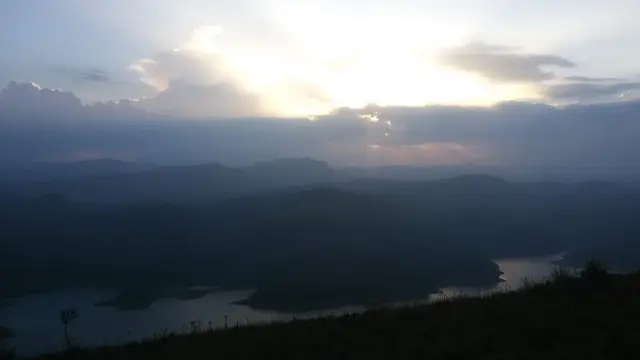
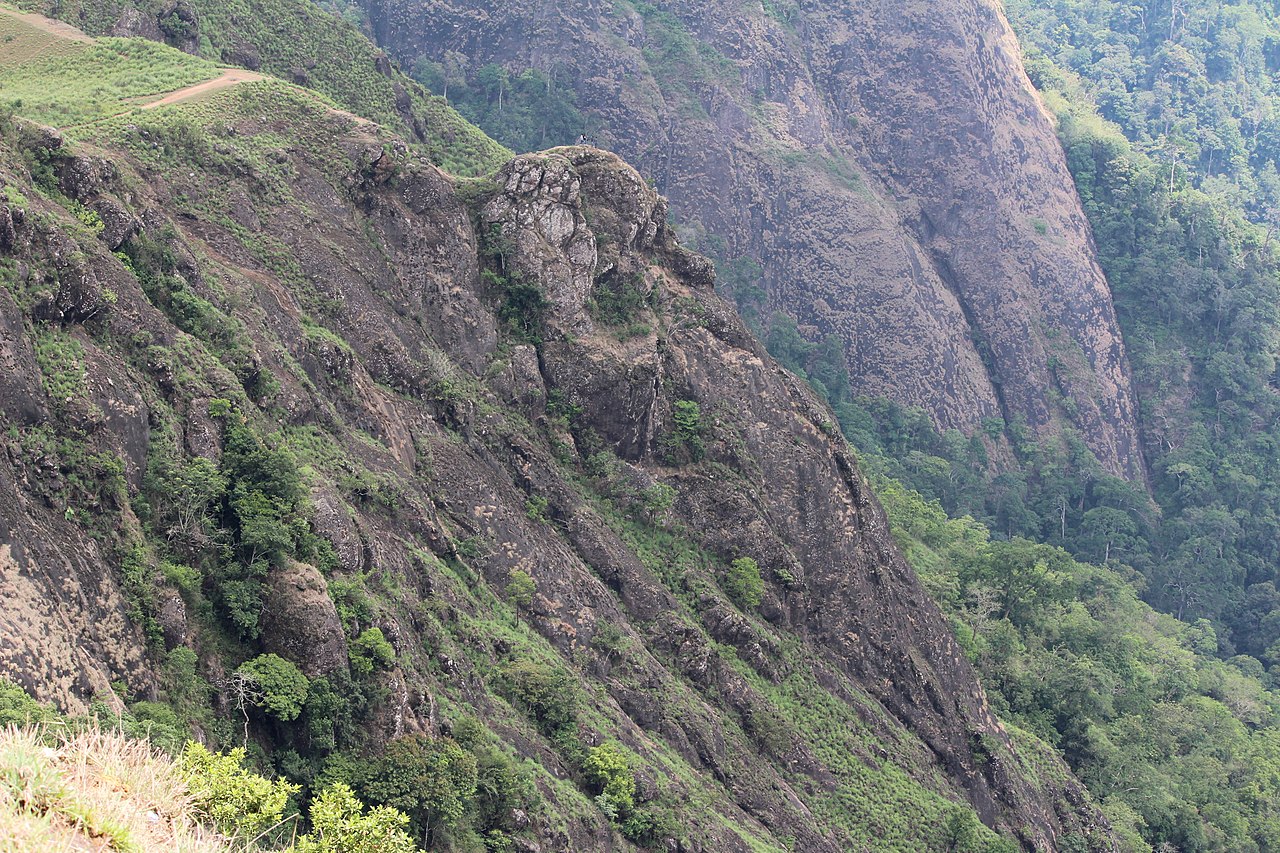
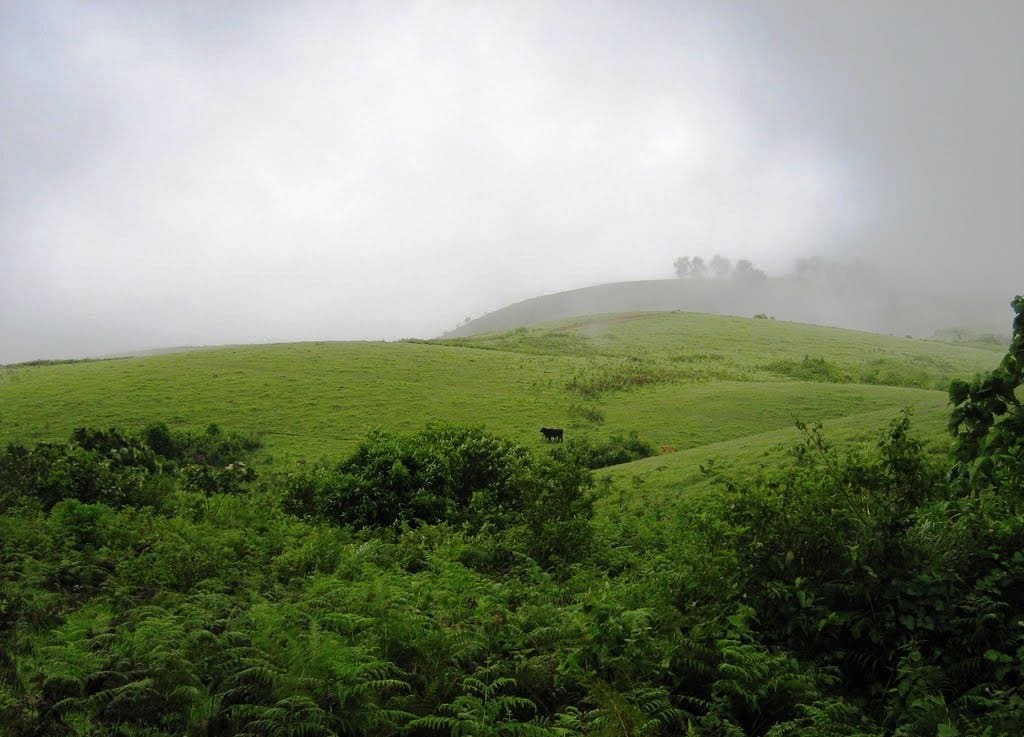
Panchalimedu sits in the folds of the Western Ghats above Kuttikkanam and Peermade, a rolling shoulder of open grassland and meadow that seems to float above the tea and rubber country of central Idukki. For most of the year it is a place of mist — cloud rolls up the valley walls in the afternoon and swallows the ridge, then peels back to reveal deep green gorges, the Koruthodu valley and its plantations, and rank after rank of blue hills fading towards the horizon. It is this combination of altitude, silence and shifting weather that gives the hill its particular hold on visitors.
The name itself is the beginning of the story. Panchali is another name for Draupadi, the shared wife of the five Pandava brothers of the Mahabharata, and medu is the Malayalam word for a hill or a raised piece of ground. Panchalimedu therefore means, quite simply, Panchali’s hill — and the whole landscape here is read through the lens of that ancient association, with a pond, a cave and a shrine each tied by tradition to the exiled brothers and their queen.
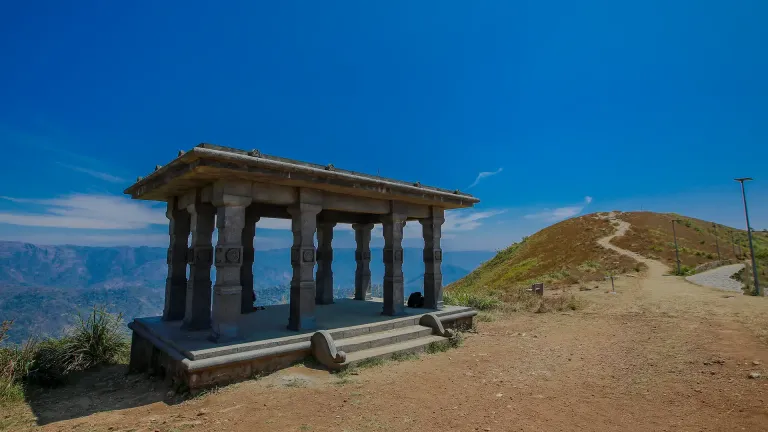
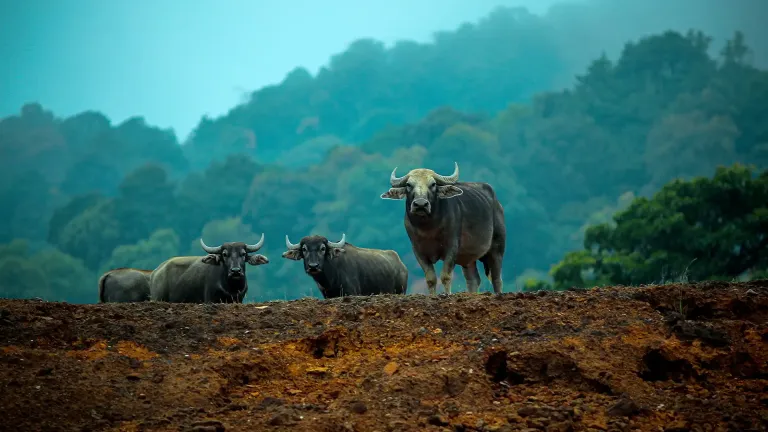
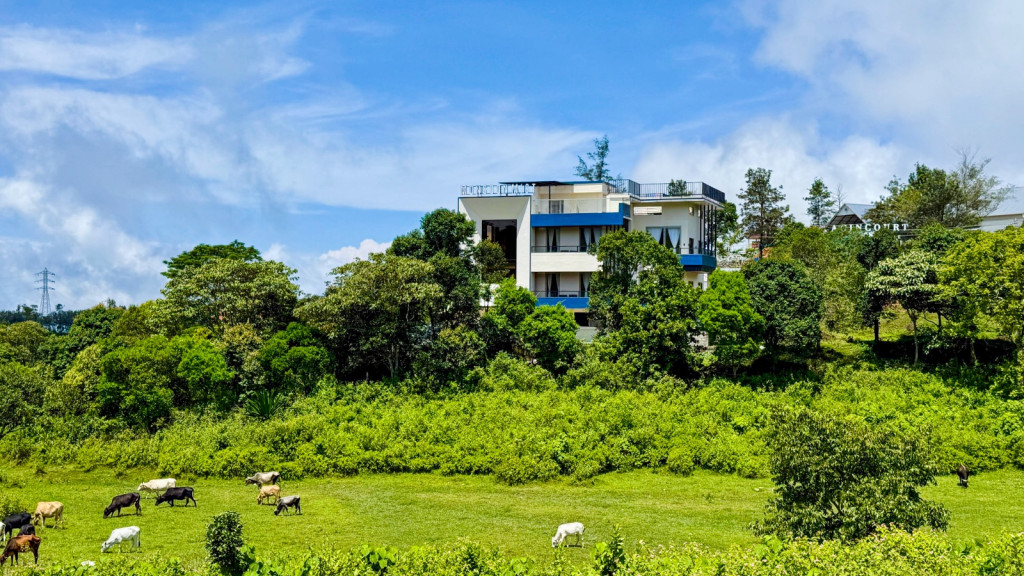
Physically the hill is more a gentle walk than a hard trek. From the point where jeeps drop visitors, a rock-laid path with benches and rest spots leads up across the meadows to the summit ridge, where the land opens out to panoramic views on every side. The grass is cropped and springy, cattle sometimes graze the slopes, and the whole place has the feel of a high common rather than a manicured park. On clear mornings the light is extraordinary; by mid-afternoon the mist usually returns.
The summit is quietly ecumenical. One knoll carries a Hindu shrine associated with the goddess Bhuvaneswari, its administration in recent years passing to the Travancore Devaswom Board, while a nearby rise carries Christian crosses — a small, unremarked symbol of how Idukki’s hill communities of different faiths have long shared the same high ground. Neither structure is grand; both draw pilgrims and walkers who climb for the view as much as for devotion.
Panchalimedu also has a particular place in the geography of Sabarimala. The hill is counted as part of the wider Poonkavanam, the sacred forest landscape around the Ayyappa temple, and it serves as one of the vantage points from which devotees try to glimpse the Makaravilakku, the sacred flame seen near Ponnambalamedu on Makara Sankranti in mid-January. On that night the ordinarily lonely ridge fills with pilgrims waiting in the cold for the distant light.
For the ordinary traveller, though, the appeal is simpler: a remote, uncommercialised viewpoint a short but rough drive off the Kottayam–Kumily road, where you can stand in the wind on an open hilltop, watch cloud pour over the Ghats, and feel a long way from anywhere. It rewards those who make the effort to get up the last steep stretch — and it stays refreshingly free of the crowds that fill better-known Idukki hill stations.
Legend & myth
The story attached to Panchalimedu is a legend, part of the living folklore of the Idukki hills rather than documented history, and it is best enjoyed in that spirit. According to that tradition, when the five Pandava brothers of the Mahabharata were driven into exile and forced to wander the forests, they and their wife Panchali — better known as Draupadi — climbed into these high grasslands and took shelter here for a time, and it is from her that the hill is said to take its name.
Local lore fills in the details. A small pond near the summit, the Panchalikulam, is pointed out as the very place where Panchali is said to have bathed; tradition holds that it never runs dry even in the height of summer, which only deepens its aura. A cave on the hill, the Pandavaguha, is linked to the brothers, and one account claims it bears the footprints of the mighty Bhima, strongest of the five — again, a matter of belief handed down locally rather than anything that can be verified.
Another strand of the legend says that in gratitude for the help of the hill’s tribal people during their stay, the Pandavas gifted an idol of the goddess Durga to the tribal chief, an image later said to have moved to Valliyamkavu nearby — a small tale that ties the epic wanderers to the everyday sacred landscape of the region. Whether or not any of it happened, the naming is old and the association is heartfelt.
Travellers should treat all of this as devotional folklore rather than fact. There is no historical or archaeological evidence that the Pandavas passed this way, and similar Pandava-exile legends cling to many hills across southern India. What matters is that at Panchalimedu the myth is woven into the very ground — into the name of the hill, the pond and the cave — so that walking here is, for many pilgrims, a way of stepping briefly into the world of the Mahabharata.
History
Beyond the legend, Panchalimedu’s real history is the history of the Peermade highlands around it — a cool, high tableland of the Western Ghats between Kuttikkanam and Thekkady that for centuries was thinly peopled forest and grassland, the domain of tribal communities and grazing cattle rather than settled cultivation.
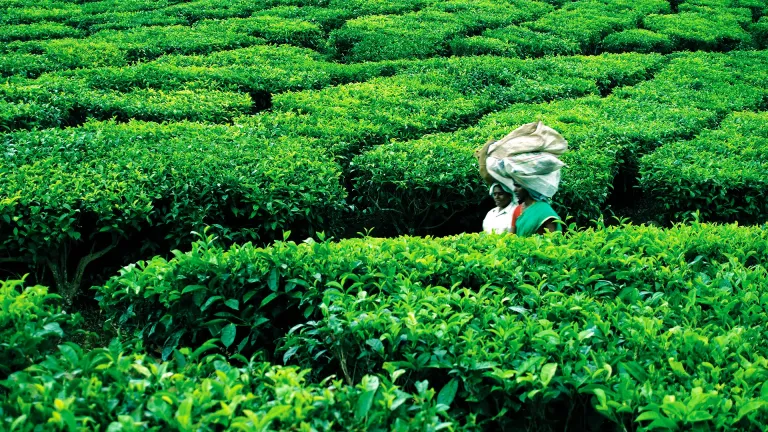
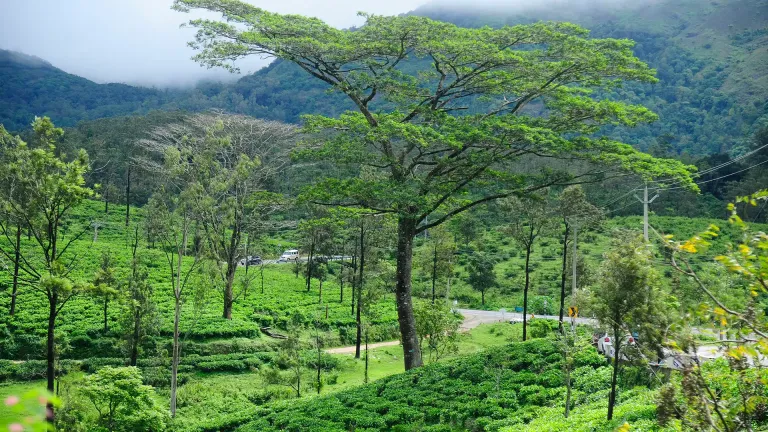
The modern shape of the region was set in the colonial era, when British and European planters, drawn by the temperate climate at around 900 metres and above, opened the Peermade and Kuttikkanam highlands to tea, coffee, cardamom and rubber from the later nineteenth century onward. The plantations, planters’ bungalows and hill retreats of that period gave the wider area its enduring character, and the tea slopes and rubber estates that surround Panchalimedu today are the direct descendants of that plantation economy.
Kuttikkanam and Peermade themselves grew into small highland centres on the Kottayam–Kumily route, once favoured as a summer resort by the rulers of the erstwhile Travancore state, who valued the bracing climate. Panchalimedu, lying just off this axis above Murinjapuzha, remained a remote upland — visited by pilgrims and herders but never developed into a plantation township — which is much of why it stays so unspoilt.
In more recent decades the hill has been promoted gently as a soft-adventure and viewpoint destination by the District Tourism Promotion Council, with a laid rock path, benches and basic visitor facilities added on the approach and summit. Its identity as part of the Sabarimala Poonkavanam and its role as a Makaravilakku viewing point have also kept it on the pilgrim map, so that its story is really two histories entwined — a plantation-era highland and an old sacred hill.
Elevation figures quoted for Panchalimedu vary between sources, from around 940 metres to figures cited locally of roughly 2,500 feet and above, reflecting how loosely the high grassland is measured; whatever the exact number, it stands well above the surrounding valleys, which is why the views are so expansive and the air so cool.
Why visit
For one of the most atmospheric and least crowded viewpoints in Idukki — an open, windswept grassland hilltop where mist pours over the Western Ghats and deep green valleys fall away on every side.
For the pull of the legend: to stand on Panchali’s hill, seek out the Panchalikulam pond and the Pandavaguha cave, and feel the Mahabharata woven into the very ground beneath your feet.
For a gentle summit walk rather than a hard trek — a rock-laid path with benches leads up across the meadows, so the panoramic views are within reach of most reasonably fit visitors once you have made the rough jeep climb.
For the quietly shared sacred summit, where a Bhuvaneswari shrine and Christian crosses sit within sight of one another, and for the hill’s role as part of the Sabarimala Poonkavanam and a viewing point for the Makaravilakku flame.
For a genuine off-the-beaten-track feel close to Peermade and Thekkady — an uncommercialised highland that rewards the effort of getting there and pairs naturally with the plantations, viewpoints and wildlife of central Idukki.
For photographers and lovers of big skies: the changing light, rolling cloud and layered blue ridgelines make dawn and the hours after rain unforgettable on the open meadow.