A slender ribbon of golden sand where a palm-fringed backwater lake and the Arabian Sea run side by side before finally spilling into one another — Kappil is Varkala’s quiet counterpoint, all stillness and open sky.
The story of Kappil Beach
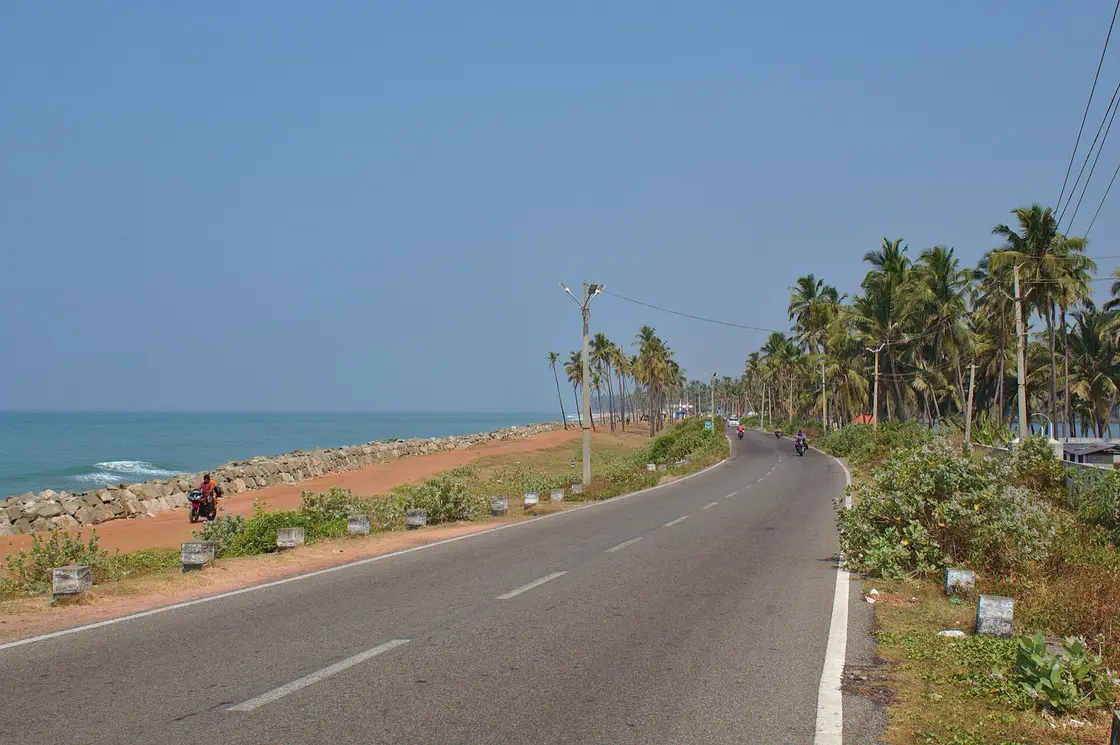
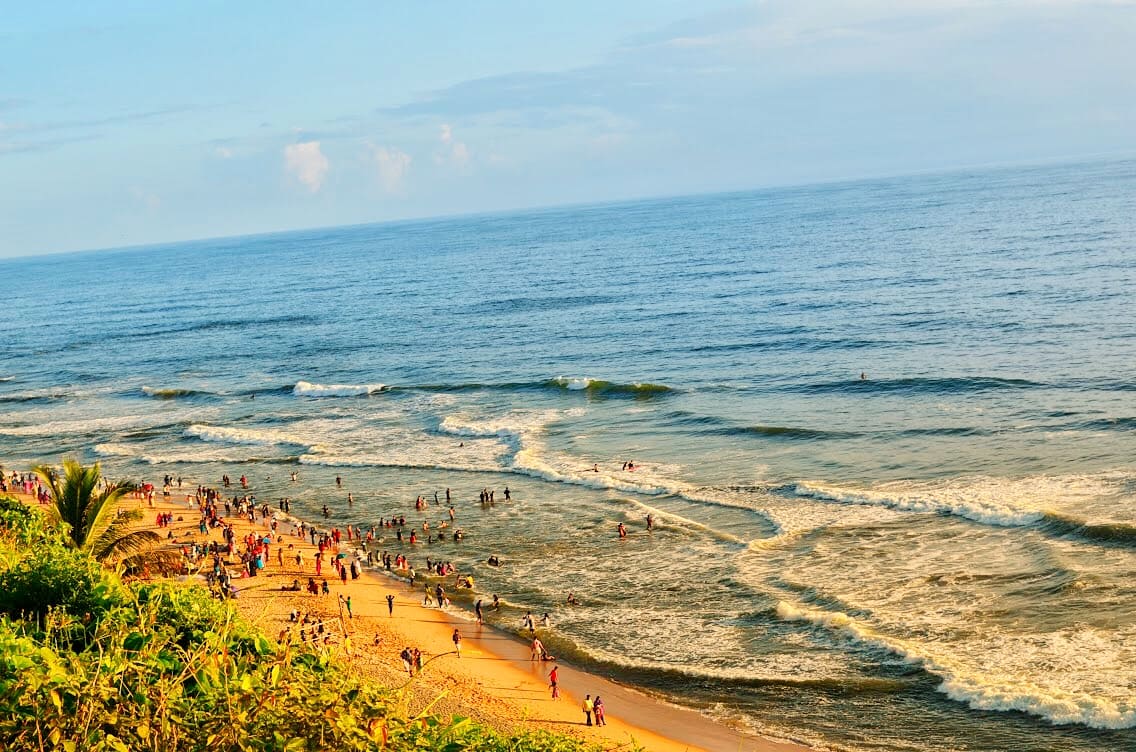
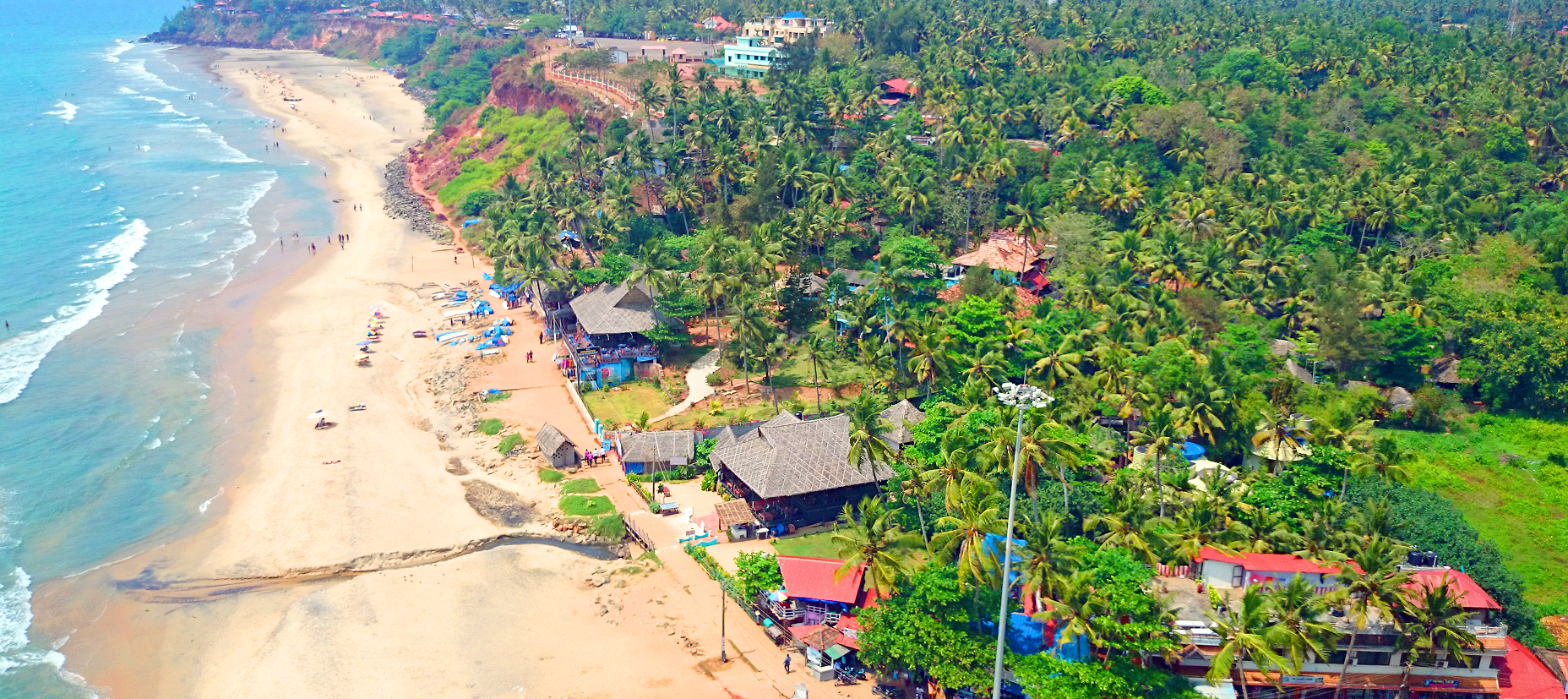
Roughly seven to ten kilometres north of Varkala town, the road threads through coconut groves and sleepy village lanes before it suddenly opens onto Kappil — a place best understood as two waters held apart by a whisper of sand. On one side lies the Edava–Nadayara backwater, often called Kappil Lake, its surface glassy and green under the palms. On the other, a few strides away across a spit barely a kilometre long, the Arabian Sea rolls in with a steadier, saltier rhythm. To stand on that narrow tongue of beach is to have the calm of the backwater at your back and the surf breaking at your feet — a geography that feels almost improbable until you are standing in it.
The magic of Kappil is the confluence itself. For much of the year the lake and the sea are separated by the sand bar, two moods of water refusing to mingle; then, where the estuary finally breaks through, the fresh backwater slips into the brine and the whole landscape reveals its logic. Locals and guidebooks alike describe this as the spot where the backwater meets the sea, and it is precisely this meeting — quiet lagoon on one hand, restless ocean on the other — that draws travellers who have had their fill of Varkala’s crowds.
And Kappil is deliberately, gloriously unhurried. Varkala, six or seven kilometres south, is a carnival of cliff-top cafés, yoga studios and sunset crowds spilling along the North Cliff. Kappil is its inverse: no bustling promenade, no rows of shacks, just fishermen mending nets, a handful of small boats, and the long empty sweep of sand. People who make the short trip north almost always describe the shift in register — from busy to becalmed — as the whole point of coming.
Water is the star, and the way to meet it is by boat. A small boat club runs cruises out onto the backwater, gliding past coconut palms, mangroves and reed beds while herons, kingfishers and other water birds go about their business. A leisurely paddle or a longer safari across the lake carries you into pockets of the estuary the road never reaches, the only sounds the dip of the oars and the wind in the palms. It is the sort of outing that fills half a golden afternoon and asks nothing of you but that you sit still and look.
Arching over the lake is the Kappil bridge, and it is from here that the whole tableau composes itself. Stand at the middle of the span and the backwater curls away inland on one side, the sea glints beyond the sand on the other, and the palm-lined shoreline stitches the two together. It is the single best vantage point at Kappil, the frame that most photographs and postcards of the place are taken from — a small piece of infrastructure that has become, almost by accident, the beach’s finest viewpoint.
For all its beauty, Kappil keeps a low profile, and that is its lasting charm. There are no grand temples or monuments here, no ticketed spectacle — only sand, lake, sea and sky arranged with unusual grace. Travellers come for a slow beach walk, a boat ride, a sunset that turns the water molten, and the simple pleasure of a coast that has not yet been paved over. In a state famous for its backwaters and its beaches, Kappil offers the rare gift of both at once.
History
Like much of Kerala’s Arabian Sea coast, Kappil’s story begins with fishing and the backwaters. The Edava–Nadayara lake and the estuary behind the sand spit have long supported small fishing communities, whose traditional boats and shoreline huts still lend the beach its lived-in, working-coast character. Long before it appeared on any tourist map, this was simply a stretch of productive water and shore for the villages tucked among the coconut groves.
The wider region carries deep historical resonance. A little to the south lies Anchuthengu (Anjengo), where the English East India Company established one of its earliest footholds on the Malabar coast in the late seventeenth century, its fort still standing near the Nadayara backwaters. Kappil sits within this old maritime hinterland of estuaries and lagoons that shaped how people traded, fished and travelled along this coast for centuries.
For a long time Kappil remained overshadowed by its celebrated neighbour. Varkala’s fame rests on the red laterite Papanasam cliffs, the Janardanaswamy temple and its long tradition as a place of pilgrimage and healing, and the town drew the crowds while Kappil stayed a quiet fishing shore just up the coast. Its very obscurity preserved the unspoilt, undeveloped feel that visitors now prize.
As Varkala grew into a busy backpacker and wellness destination, travellers began looking for calmer corners nearby, and Kappil — an easy short hop north — emerged as the natural escape. The introduction of backwater boating, with a small boat club offering cruises and pedal boats across the lake, gave day-trippers a reason to linger, and the Kappil bridge became a favoured viewpoint. Kerala tourism promotion increasingly featured the beach-meets-backwater confluence, nudging it from local secret toward gentle getaway.
Today Kappil occupies a deliberate niche: promoted as a serene, low-key alternative to Varkala’s cliff, valued precisely because it has resisted heavy development. It remains a place of fishermen and boat rides rather than resorts and nightlife — a coast whose recent history is really the story of Varkala’s overflow discovering, and so far largely respecting, its quieter northern neighbour.
Why visit
The headline draw: the rare spot where a palm-fringed backwater lake and the Arabian Sea run alongside each other and finally meet, giving you lagoon calm and ocean surf within a few steps.
It is the antidote to Varkala’s bustle — a quiet, unspoilt, largely undeveloped beach where you can walk long stretches of sand with barely another soul around.
Backwater boating on the Edava–Nadayara lake: leisurely cruises, safari boats and pedal boats glide past coconut palms and reed beds, ideal for birdwatching and slow afternoons.
The Kappil bridge is one of the finest natural viewpoints on this coast, framing the lake, the sand spit and the sea in a single sweep — a photographer’s favourite.
Uncrowded sunsets over the Arabian Sea, with the water turning gold and copper, make it a favourite with couples and anyone seeking a peaceful evening.
It pairs beautifully with a Varkala trip: a short, scenic drive north through coconut groves and village lanes delivers a completely different, gentler coastal mood in under twenty minutes.