The story
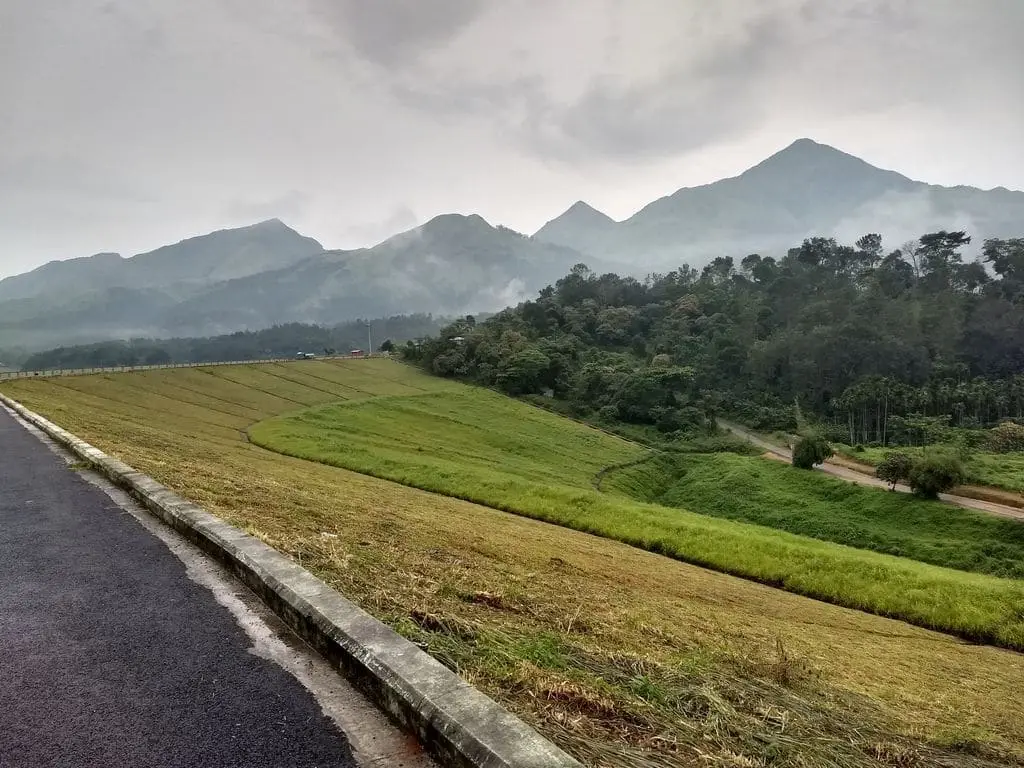
Cradled in the folds of the Banasura hills near Padinjarathara in Wayanad, Banasura Sagar Dam is a colossal wall of packed earth and rock holding back a shimmering, island-freckled reservoir — reputedly the largest earthen dam in India and among the largest in Asia, and one of the district’s most-photographed sights.
The story of Banasura Sagar Dam
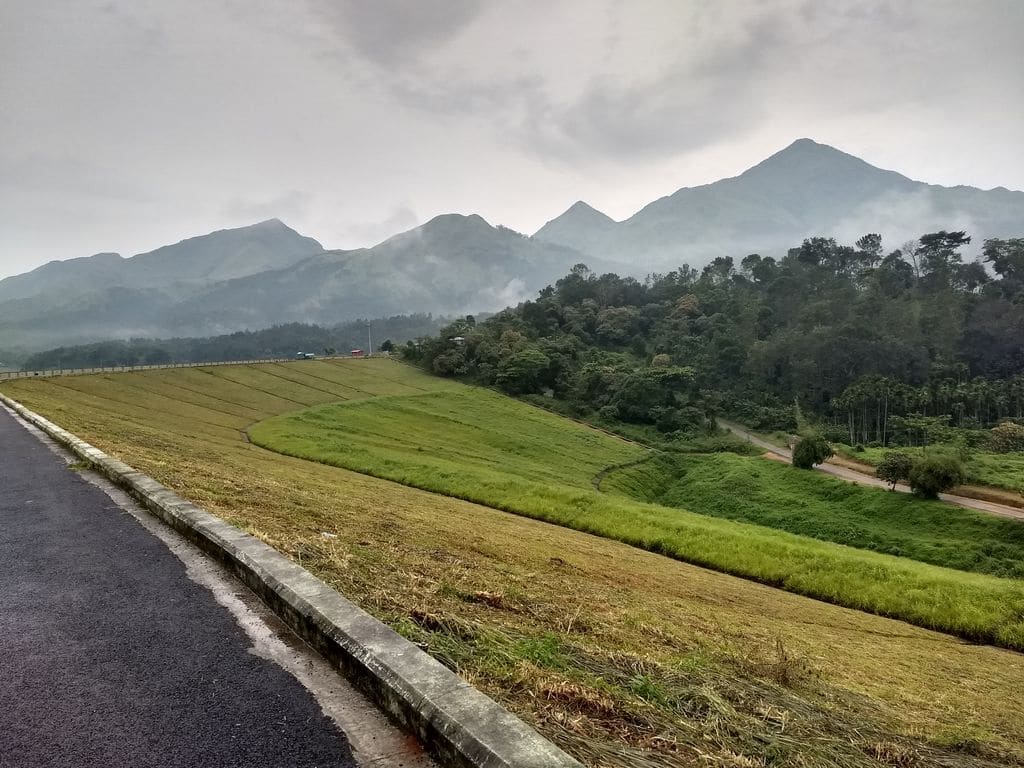
The first thing that strikes most visitors is the sheer scale of the thing. Rather than a soaring concrete arc, Banasura Sagar is a broad, sloping rampart of compacted earth and rubble — an embankment so long and so wide that walking its crest feels less like standing on a dam and more like crossing a green-brown ridge that someone rolled out between two hills. Sources widely describe it as the largest earthen dam in India and the second largest of its kind in Asia; treat the ‘second in Asia’ ranking as the popular local claim rather than a precisely audited fact.
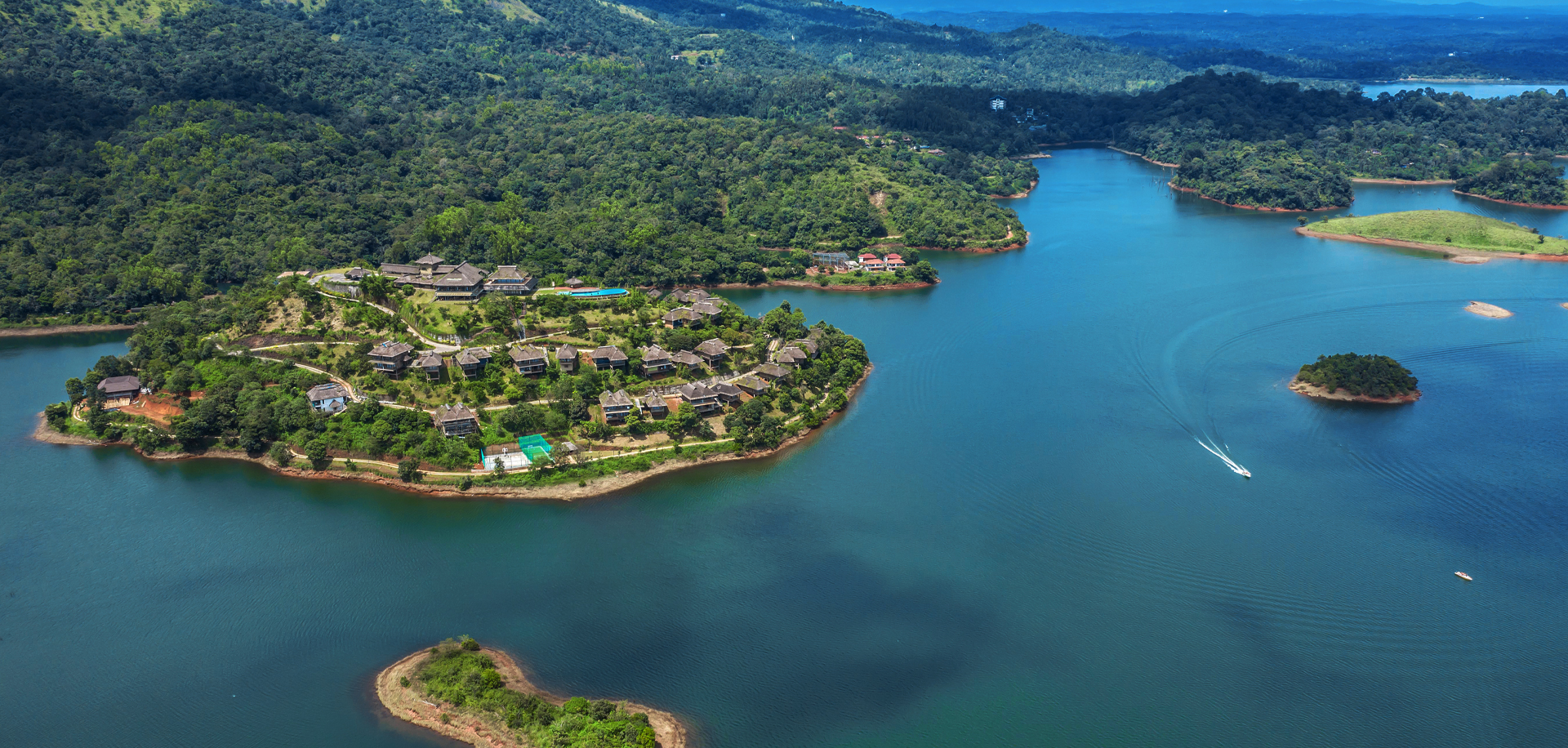
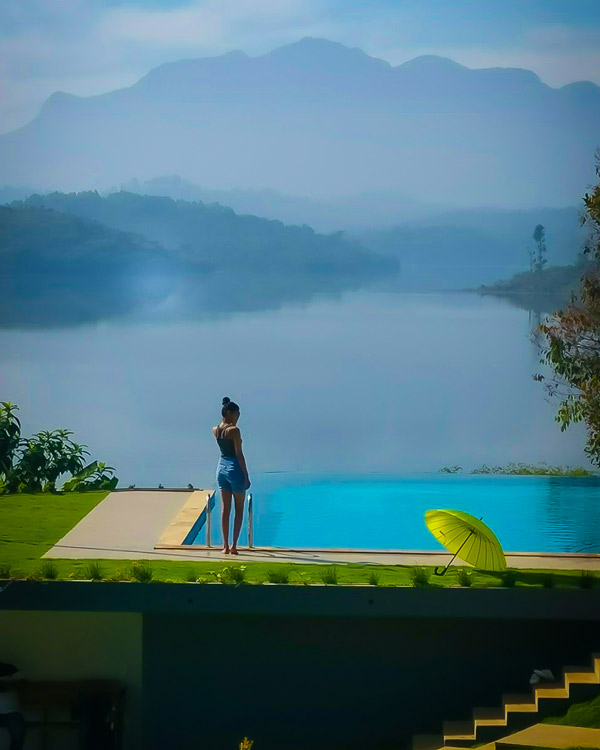
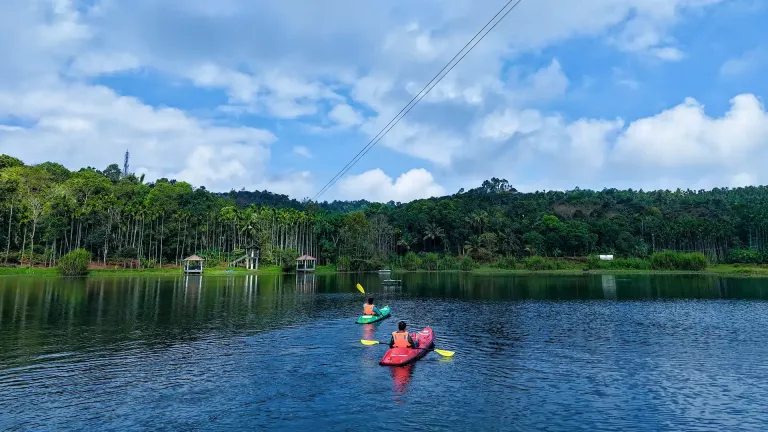
Behind the wall lies the real showstopper. As the reservoir filled, the rising water crept up the flanks of the surrounding hills and drowned the low ground, leaving only the higher knolls standing proud above the surface. The result is a scatter of tiny green islands floating on steel-blue water, with the dark ridge of the Banasura hills rising behind them. On a clear morning, with mist peeling off the ridgeline and the islands mirrored in the still water, it is one of the most quietly cinematic views in Wayanad.
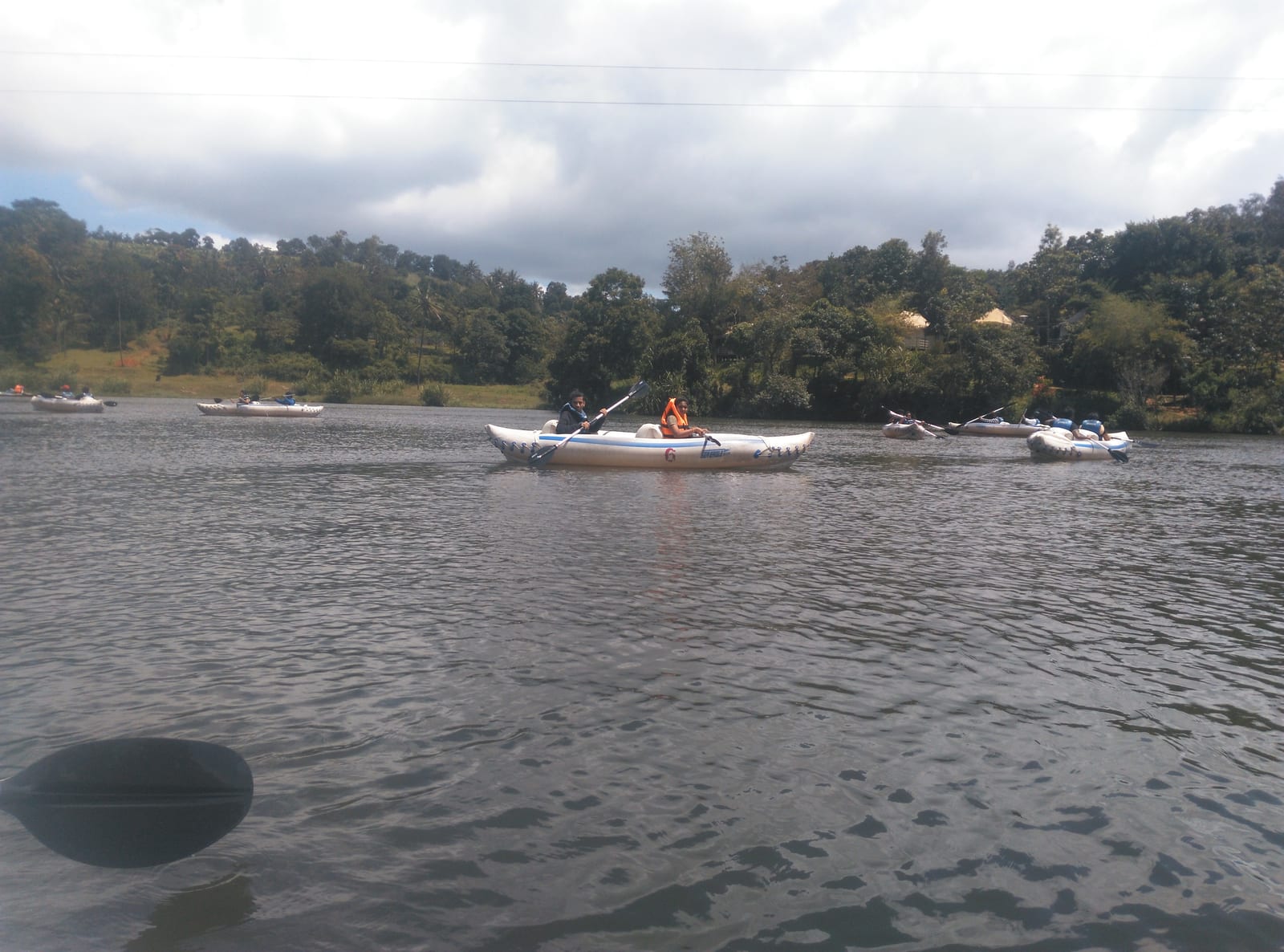
Getting out onto that water is half the fun. Operators run speed-boat rides that skim between the islands in a thrilling few minutes, alongside gentler pedal boats and, at times, other craft for those who prefer to drift. Boarding is usually from a jetty a short walk in from the main entrance — often a pleasant stroll of a kilometre or so through greenery, which itself sets the mood before the water even comes into view.
On land, the site is set up for an easy half-day out rather than a rushed photo stop. There is typically a children’s park, shaded walkways and viewpoints along the embankment, a hanging bridge, and small refreshment stalls near the entrance. Families spread out, couples wander the crest for the panorama, and photographers hunt the best angle on the islands. It is the kind of place where you can do as much or as little as you like.
For the more energetic, the dam is also the gateway to Banasura Peak — reckoned among the highest summits in Wayanad — whose trek climbs through grassland and shola into big, sweeping views back down over the very reservoir you have just been boating on. That combination of an engineering marvel, a serene island-studded lake and a proper hill trek, all wrapped in the Banasura hills, is what keeps the place near the top of most Wayanad itineraries.
A word on rhythm: this is a working reservoir, so its mood shifts with the seasons. After the monsoon the water is high and the islands sit low and lush; through a dry summer the level drops, mudflats widen, and the islands stand taller on exposed slopes — a different, starker kind of beauty. Boating and viewing conditions vary accordingly, so it is always worth checking locally before you set out.
Legend & myth
The name carries an old and dramatic story, told here as legend rather than history. ‘Banasura’ refers to the mythological asura (demon) king Banasura, traditionally described as a son of the great and benevolent king Mahabali — the same Mahabali whose homecoming Kerala celebrates at Onam. Banasura was said to be a thousand-armed warrior and a fervent devotee of Lord Shiva, who in return was believed to guard his kingdom.
The tale that made him famous turns on love. Banasura’s daughter, Usha, is said to have fallen for Aniruddha — grandson of Lord Krishna — who was spirited into her quarters. When the furious king discovered the young man and imprisoned him, Krishna marched on Banasura’s stronghold, and there followed one of mythology’s most extraordinary confrontations, with Krishna on one side and Shiva, protecting his devotee, on the other.
As the legend concludes, Krishna overpowered Banasura and shore away his many arms with the Sudarshana Chakra, but spared his life when Shiva intervened on the devotee’s behalf — leaving Banasura humbled and the lovers free to wed. Local tradition links the Banasura hills to the penance the asura king is said to have performed here, and it is from that association that the hills, and in turn the dam and its reservoir, are believed to take their name.
History
The dam is the centrepiece of the Banasurasagar Project, a multi-purpose scheme built across the Karamanthodu (Karamanathodu), a tributary of the Kabini River, in the highlands of Wayanad. The reservoir it created is designed to store monsoon water for use through the drier months.
Work on the project is generally dated to a start around 1979, with the dam completed in the mid-2000s (about 2004 by most accounts). Because published dates vary between sources, the exact figures are best confirmed with official records; the broad picture — a long build spanning the late twentieth century into the early 2000s — is well established.
In form it is an embankment (earthfill) dam rather than a masonry or concrete structure, built up from compacted earth and rock. It is commonly cited at roughly 38.5 metres high and around 685 metres long, dimensions that account for its reputation as India’s largest earthen dam; take precise measurements as indicative pending official confirmation.
Its purpose is threefold. The reservoir supports irrigation for farmland downstream and supplies drinking water to a region that faces seasonal shortages, while the stored water also feeds hydro-electric generation — the project is associated with the Kakkayam / Kuttiyadi hydro-electric works that harness the flow off these hills. Verify the precise scheme linkages locally, as the region’s water infrastructure is interconnected.
Environmentally, the dam sits in a sensitive Western Ghats landscape of forest, grassland and shola, and the reservoir has reshaped the local hydrology — the drowned valley and its islands are the most visible result. That same setting is what gives the place its beauty, and it is a reminder that the serene tourist attraction is first and foremost a piece of living water infrastructure serving the farms and homes of Wayanad.
Why visit
The signature view: a broad blue reservoir dotted with tiny green islands, framed by the Banasura hills — one of Wayanad’s most photogenic panoramas, especially in the soft light of early morning.
The scale of the dam itself: walking the crest of what is billed as India’s largest earthen dam is a genuinely different experience from visiting a conventional concrete dam.
Boating between the islands — a quick, exhilarating speed-boat run or a gentler pedal-boat drift — puts you right out on the water for the best angles on the scenery.
A ready-made half-day for families, with a children’s park, shaded walks, a hanging bridge and viewpoints, plus refreshment stalls near the entrance.
The launch point for the Banasura Peak trek, among the highest climbs in Wayanad, rewarding the effort with sweeping views back over the reservoir.
An easy add-on to a wider Wayanad trip — roughly 21 km from Kalpetta via Padinjarathara — that pairs a marvel of engineering with the calm of a mountain lake and a dose of Malayalam legend.