A steep, guided climb through coffee and forest that opens onto one of Wayanad’s most electrifying panoramas — a green valley falling away beneath your feet and the silver thread of Meenmutty Falls glinting across it.
The story of Neelimala View Point
Neelimala earns its name — literally “the blue mountain” — in the half-light before dawn, when a cool haze settles over the ridges and turns the whole hillside the colour of woodsmoke and slate. The viewpoint sits above the little junction town of Vaduvanchal, deep in the tea-and-coffee country of southern Wayanad, and reaching it is part of the reward. Most visitors first bump up a rough track by hired jeep, then swap wheels for feet and follow a guided trail the rest of the way to the crown of the hill.
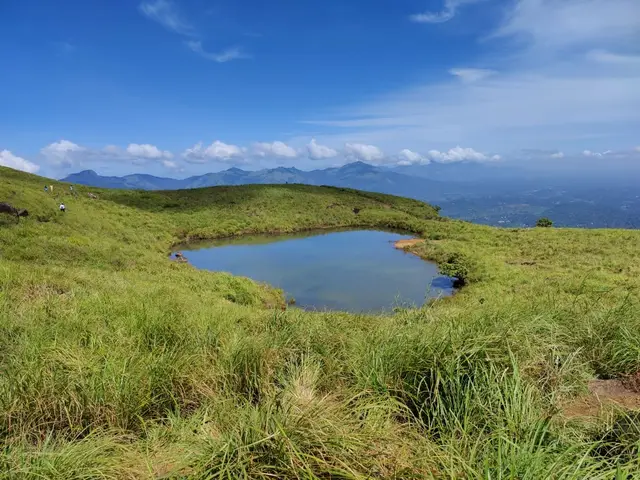
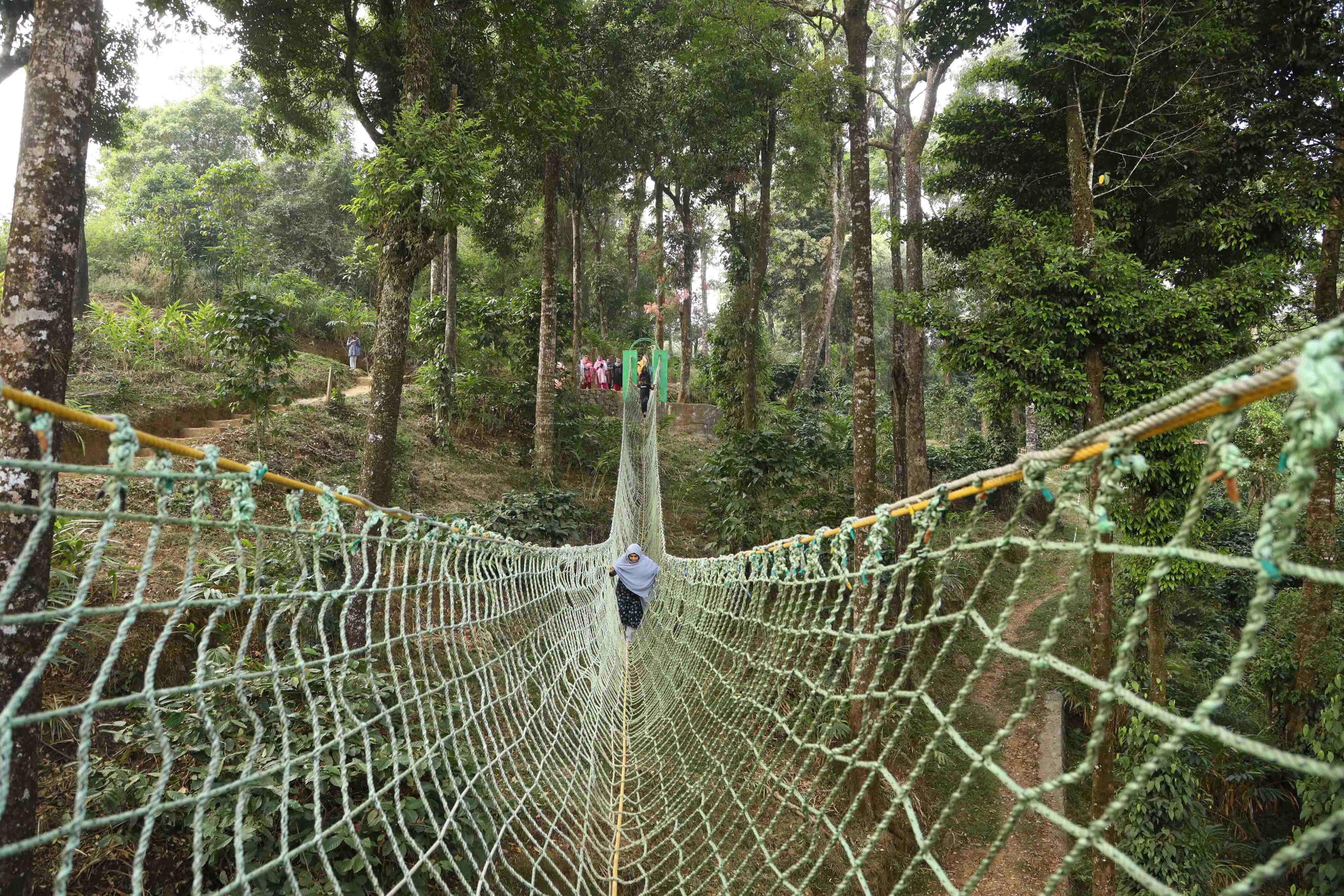
The walk itself is short but honest work — a narrow, steadily steepening path that threads through shaded coffee plantations, patches of virgin forest and open meadows scattered with wildflowers. Birdsong follows you the whole way up, and the smell of damp leaf-litter and blossom hangs in the air. It is the kind of climb that leaves you a little breathless, so that the first sight of the open summit lands with real force.
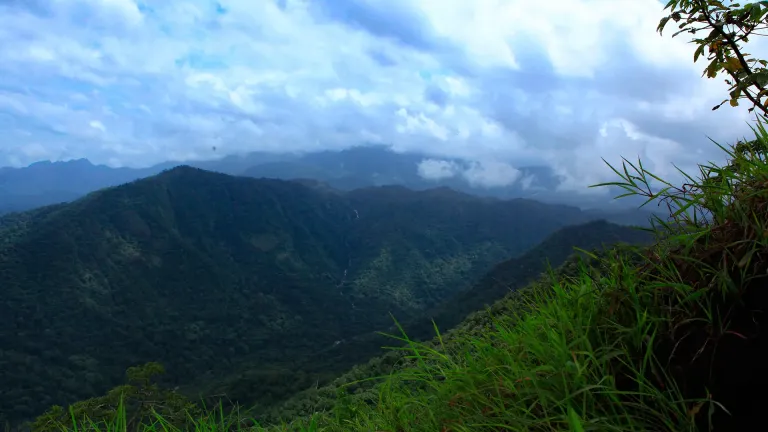
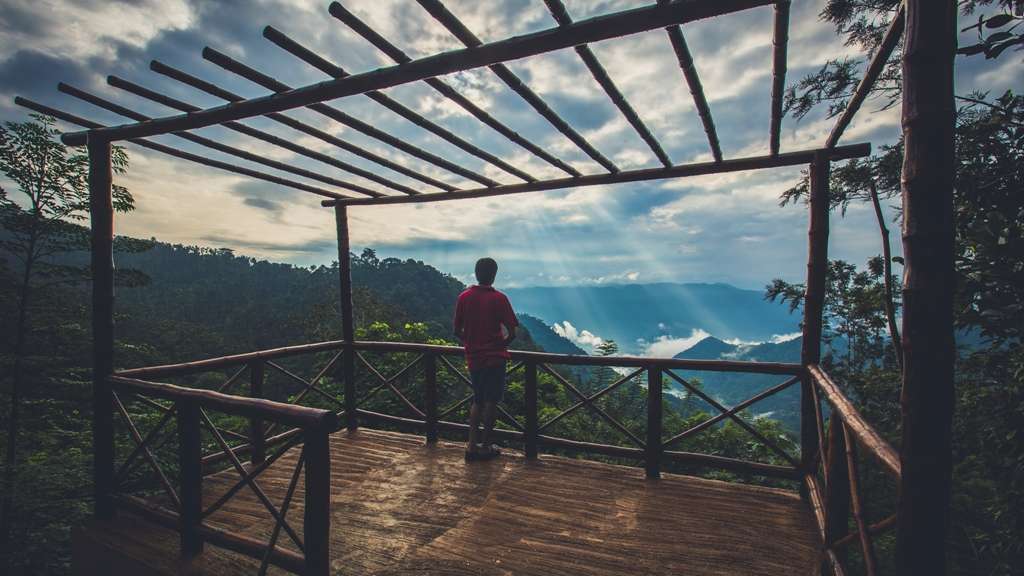
And what a sight it is. From the grassy shoulder at the top the land simply drops away, and a vast bowl of a valley unfolds — rolling green hills stacked to the horizon, dense forest canopy, and, on a clear morning, the distant white ribbon of Meenmutty Falls tearing down through the folds of the ranges. Travellers often say the falls look like a milky streak or a strand of the Milky Way stitched across the deep foliage, and from Neelimala you take in the whole scene at once rather than standing at the base of a single cascade.
Sunrise is the hour Neelimala is built for. Arrive early, before the crowds and before the mist burns off, and you watch the first light spill across the valley and set the ridgelines glowing orange and pink while the lowlands are still wrapped in cloud. On the right mornings the cloud sits below you, so the hilltops float like islands and the whole panorama feels suspended. Photographers treat it as one of Wayanad’s prize vantage points precisely because so much drama is packed into a single frame — sky, mist, mountains and waterfall together.
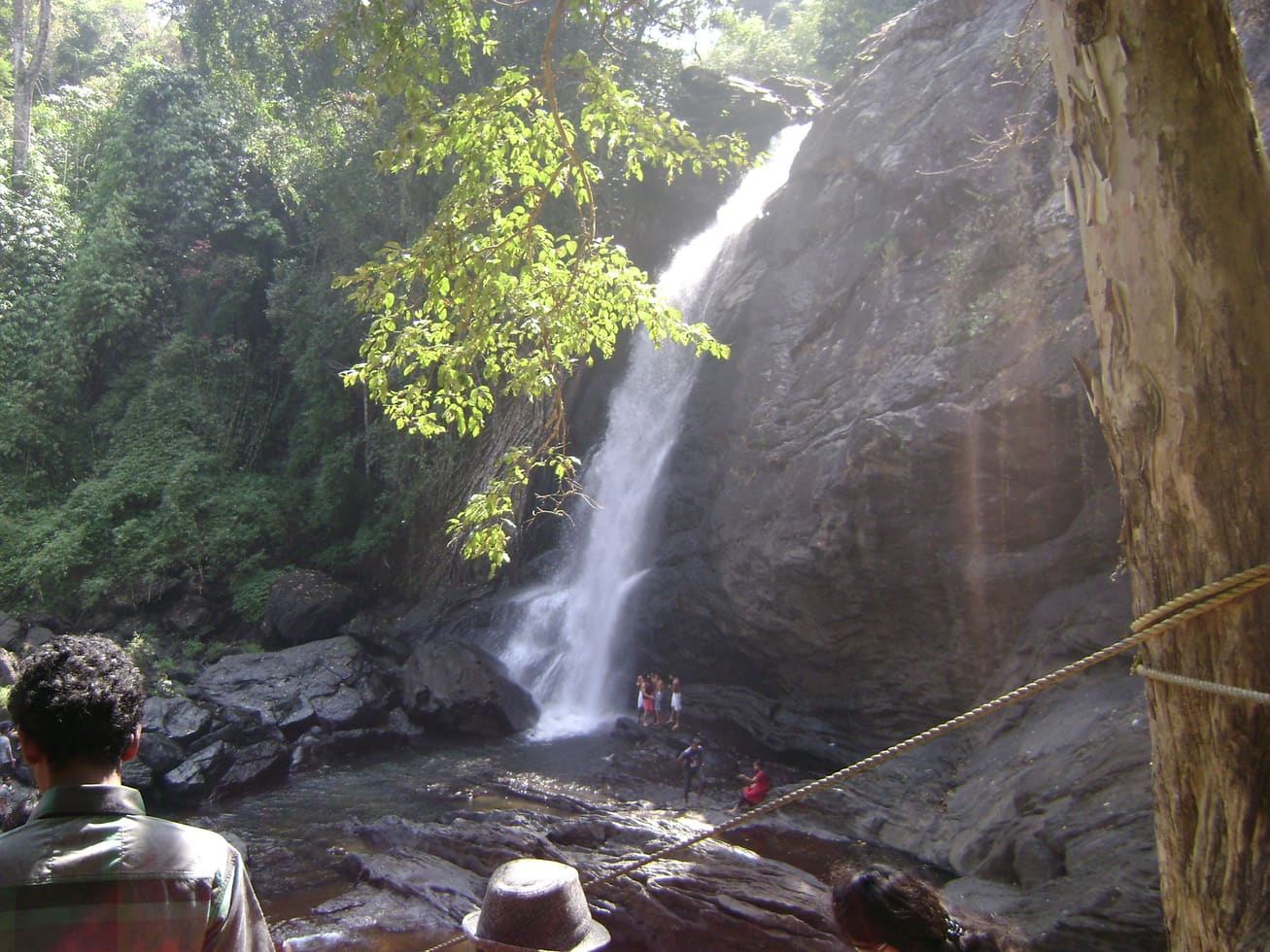
The landscape around the viewpoint is quintessential Wayanad: manicured tea slopes and coffee estates giving way abruptly to wilder forest, with the high wall of the Western Ghats behind. Chembra Peak, the tallest summit in Wayanad, rises only a short distance away, and the same belt of country holds Soochipara (Sentinel Rock) Falls and the Meenmutty catchment. It is an area that rewards slow travel — the sort of place where the drive, the climb and the view are all part of the same unhurried pleasure.
For all its beauty, Neelimala is a working hillside rather than a manicured tourist balcony, and that is much of its charm. The trail can be muddy and slick, the jeep track jolting, and the last stretch demands sensible shoes and a bit of stamina. But those small frictions keep the summit quiet and unspoiled, and mean that the people who make it to the top tend to have the panorama largely to themselves in the cool early hours.
History
Wayanad sits on a high plateau in the northern reaches of Kerala, cradled by the Western Ghats and averaging roughly 700 to 2,100 metres in elevation across the district. This altitude gives the region its famously cool, misty climate and its patchwork of forest, grassland and cultivated hill — the physical stage on which viewpoints like Neelimala exist. The name Neelimala, “blue mountain”, comes directly from the bluish haze that drapes these slopes at dawn and dusk.
The country around Vaduvanchal and Meppadi was reshaped over the nineteenth and twentieth centuries by plantation agriculture. British-era planters recognised that Wayanad’s cool uplands were ideal for tea, coffee, cardamom and pepper, and estates spread across the hills, clearing and terracing slopes that had been forest. The coffee plantations and tea gardens the modern trekker walks through on the way up Neelimala are a living legacy of that plantation era, which remains the backbone of the local economy.
Neelimala’s emergence as a named viewpoint is a more recent, tourism-driven story rather than an ancient one. As Wayanad grew into one of South India’s most popular hill destinations, the hilltop above Vaduvanchal became valued for the single thing it does better than almost anywhere else in the district — offering a sweeping, elevated view over the valley and across to Meenmutty Falls. Local jeep operators and guides organised access up the rough track, and the spot settled into the regional trekking and sightseeing circuit.
Its identity is tightly bound to the surrounding geography. Neelimala overlooks the Meenmutty catchment — Meenmutty is among Wayanad’s largest waterfalls, dropping in stages through the forest — and lies within the same rugged belt as Chembra Peak and the Vellarimala range that straddles the Wayanad–Kozhikode boundary. Rather than a standalone attraction, it functions as the aerial vantage point for a whole landscape of falls, forest and high ridges.
Because it has grown organically as a viewpoint rather than being formally developed, hard documentary history for Neelimala itself is thin, and practical details such as jeep charges and access arrangements are set locally and change over time. What is firm is the setting: a plantation hillside on the edge of protected Western Ghats forest, in one of India’s most biodiverse and heavily visited hill regions.
Why visit
One of Wayanad’s finest sunrise vantage points, with light flooding the valley below you.
A rare elevated view of distant Meenmutty Falls, glinting like a silver thread across the forest.
A short but genuinely scenic climb through coffee estates, forest and wildflower meadows.
Cloud-below-you mornings when the mist sits in the valley and the hilltops float.
A photographer’s dream frame — sky, mist, mountains and waterfall in one shot.
Close to Chembra Peak, Soochipara Falls and the wider Meppadi hill circuit for a full day out.