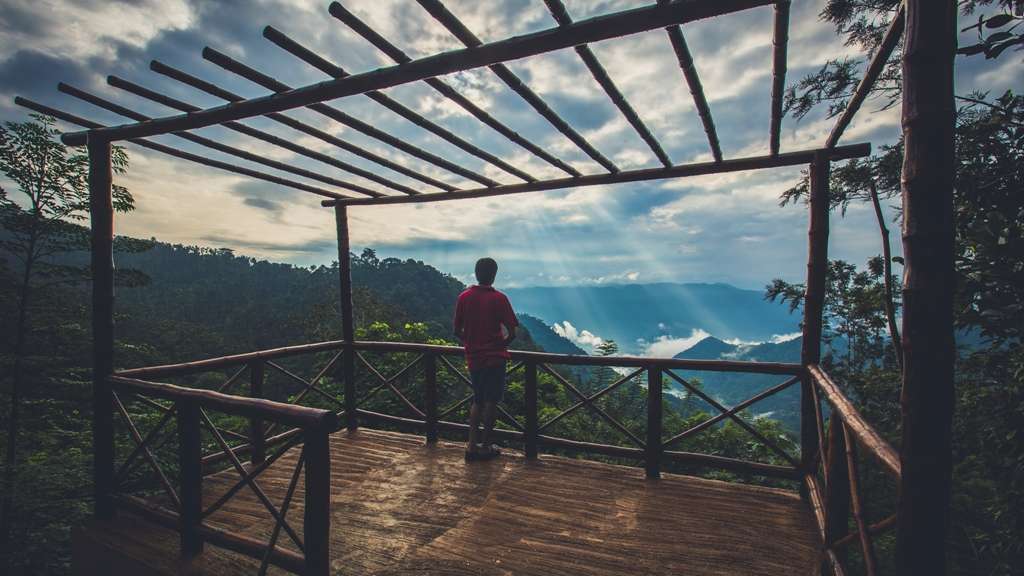
A forest path spills you out at the foot of a roaring three-tiered curtain of water, where a needle-sharp rock stands sentinel over a swimmable green pool.
The story of Soochipara Waterfalls
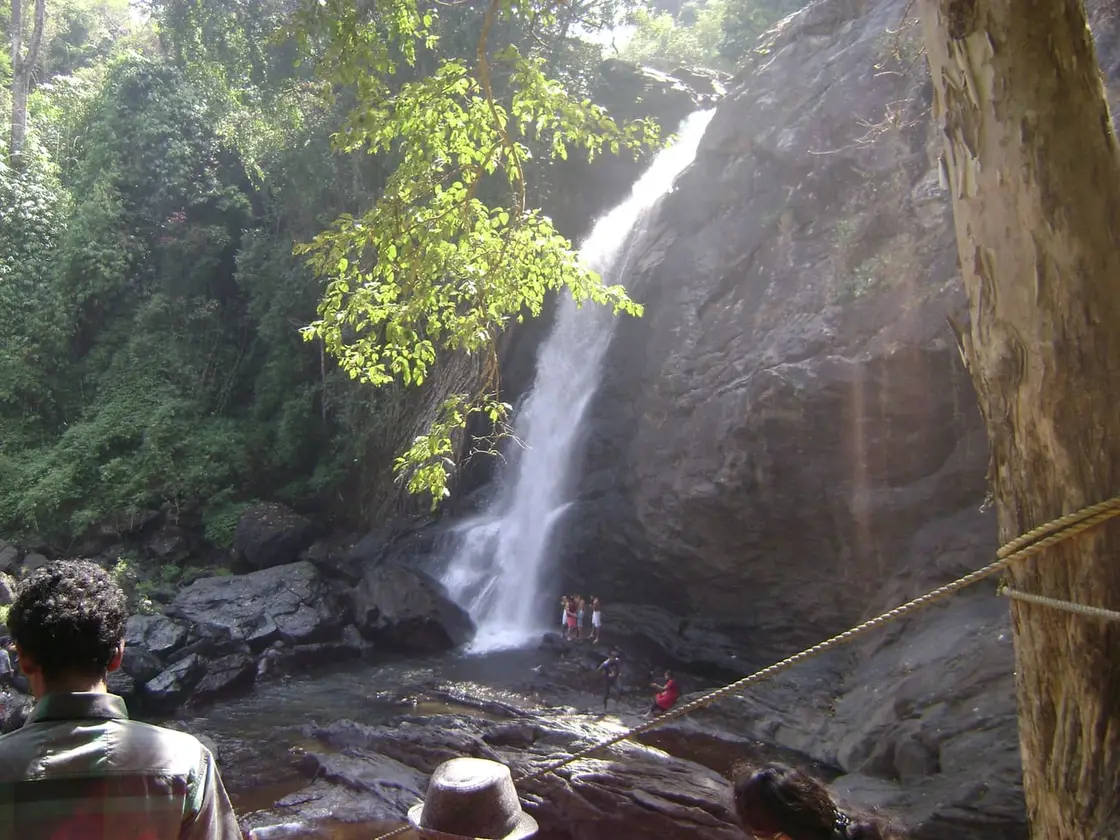
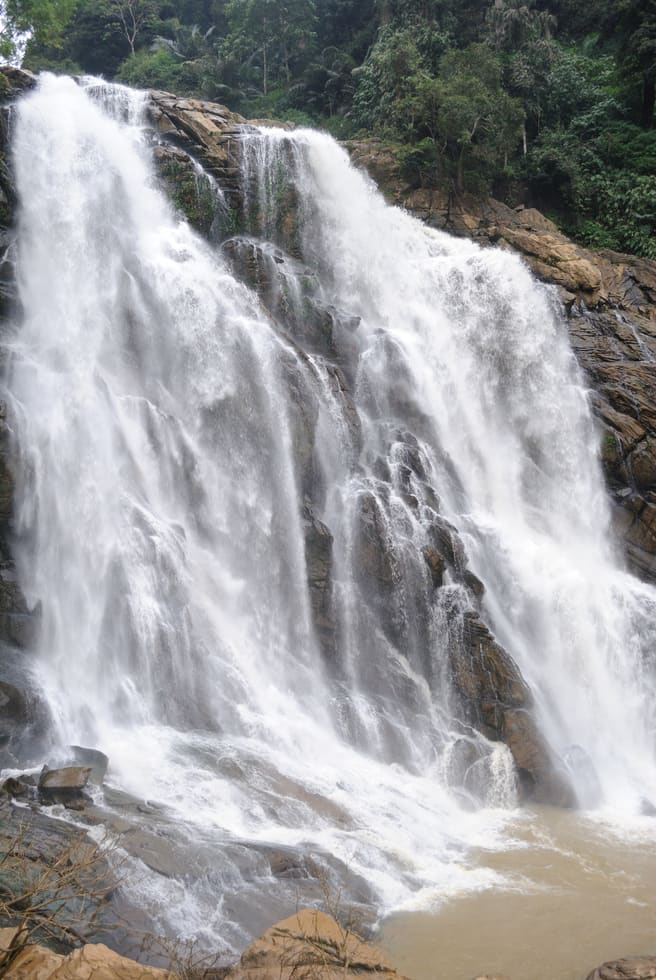
Soochipara Waterfalls — officially signposted as Sentinel Rock Waterfalls — is one of Wayanad’s most loved cascades, tumbling roughly 200 metres in three distinct tiers down the flank of the Vellarimala range near Meppadi. The name is pure Malayalam geography: “Soochi” means needle and “Para” means rock, a nod to the sharp, needle-like rock formations that frame the falls and give the “Sentinel Rock” its brooding, watchful character.
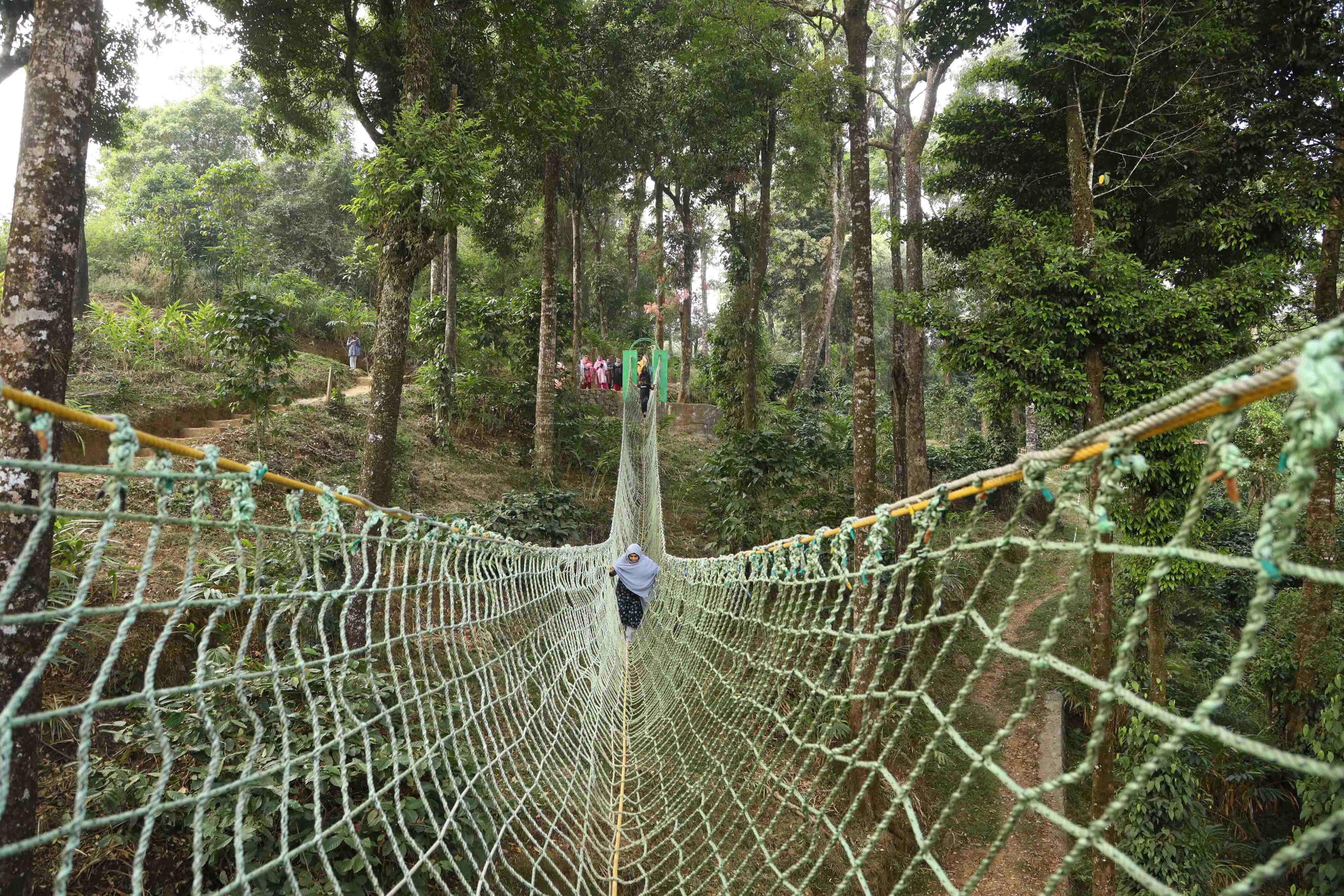
Getting to the water is half the adventure. From the entrance and car park you follow a well-laid forest trail that drops roughly 1.2 to 2 kilometres down through deciduous, evergreen and montane forest, a walk that most visitors cover in about fifteen to thirty minutes one way. The path is shaded and scenic, but the descent is deceptively easy — it is the climb back up, on tired legs and often in humid air, that people remember.
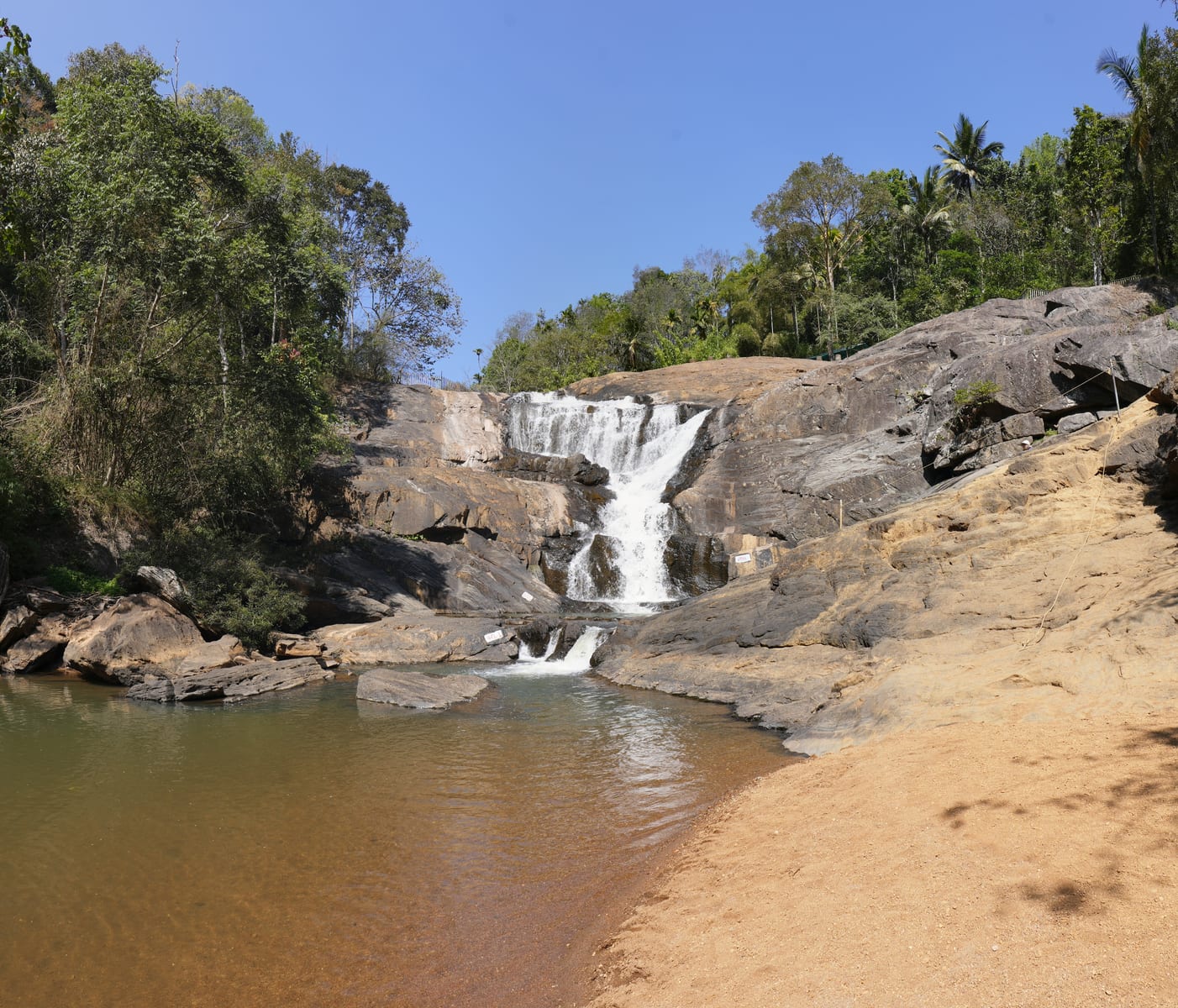
The reward at the bottom is theatrical. The stream arrives in three stages, each ledge throwing the water outward before it gathers into a broad, deep pool at the base. When flow and conditions are safe, that pool is the star attraction: a cool, forest-ringed basin where visitors wade, swim and bathe under the spray. Local guards and forest staff manage crowds and monitor conditions, and swimming is restricted or closed outright when the water is high and the current dangerous.
Beyond the swim, Soochipara has built a reputation as an adventure spot. The surrounding cliff face is popular for rock climbing, and the gorge is spanned by a thrilling zipline — often billed as one of Kerala’s longest — that sends riders soaring across the ravine with the falls as a backdrop. Zip-cycling across the valley is also on offer for those who want the height without the plunge.
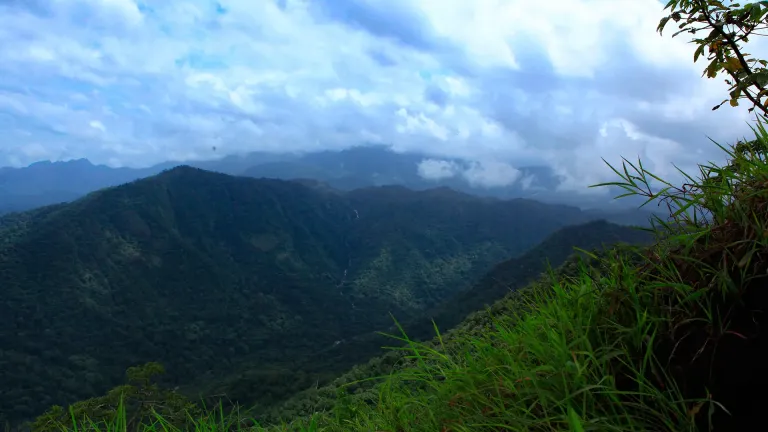
The setting elevates the whole experience. The drive in from Meppadi threads through some of Wayanad’s finest tea estates, with the great massif of Chembra Peak — the district’s highest mountain — rising in the distance. The falls sit within the Vellarimala hills, and the water that thunders past eventually feeds into the Chaliyar (also called the Chulika) river system, linking this single cascade to a much larger watershed.
Because it is fed by monsoon-swollen hill streams, Soochipara is a creature of the seasons. In the rains and immediately after, it is a full-throated torrent; by the dry pre-monsoon months of March to June the flow thins dramatically and the pool shrinks. That rhythm — ferocious and swimmable in turn — is exactly why regulars insist on timing their visit rather than just turning up.
History
Vellarimala, the range that cradles Soochipara, is part of the Western Ghats escarpment that walls off Wayanad’s plateau from the plains of Kozhikode and Malappuram below. This is high-rainfall, high-relief country: steep forested ridges, montane grassland and a tangle of hill streams that the monsoon turns into waterfalls. Soochipara is one of the most accessible of these, which is a large part of why it became a headline attraction rather than a hidden one.
For much of its modern history the wider Meppadi belt has been plantation country. The colonial-era push into Wayanad’s highlands cleared and planted vast tracts with tea, coffee and cardamom, and the estates you drive through to reach the falls are a living remnant of that landscape. The falls themselves, tucked into the forest edge beyond the tea, remained a local secret long before they were formally opened to tourists.
Wayanad is also one of Kerala’s most tribal districts, home to communities such as the Paniya, Kurichiya, Kuruma and Adiyar peoples whose traditional lands lie across these forests and hills. The needle-rock landmark and the streams around it were known to local and forest-dependent communities long before signboards and ticket counters arrived, and that older, lived relationship with the land underlies the site’s place-names and character.
As Wayanad grew into one of South India’s favourite hill destinations, Soochipara was developed into a managed, ticketed spot with a marked trail, security check, plastic-free enforcement and staff at the pool. Oversight sits with the district tourism and forest authorities, and the “Sentinel Rock Waterfalls” branding you see on official Kerala Tourism listings dates from this formalisation — an English rendering of the same needle-and-guardian imagery captured by the Malayalam name.
Today the falls anchor a small adventure economy — zipline, zip-cycling and rock climbing operators, guides, parking and refreshment stalls — that sits alongside the older tea-estate world. It remains, at heart, a monsoon-fed Ghat waterfall whose fortunes rise and fall with the rains, but it now does so as one of the district’s signature stops.
Why visit
A genuine three-tiered, roughly 200-metre cascade — one of Wayanad’s most dramatic waterfalls.
A cool forest trek down through evergreen and montane forest to reach the pool.
A large natural plunge pool for swimming and bathing when conditions are declared safe.
A high zipline across the gorge — reputedly among Kerala’s longest — plus zip-cycling.
Cliff faces popular for rock climbing beneath the “Sentinel Rock”.
A scenic tea-estate drive in from Meppadi with Chembra Peak on the horizon.