Rising white and Gothic above an ocean of paddy that lies below sea level, Edathua Church is Kuttanad’s great pilgrim beacon — where each spring hundreds of thousands come by road, rail and boat to St George.
The story of Edathua Church
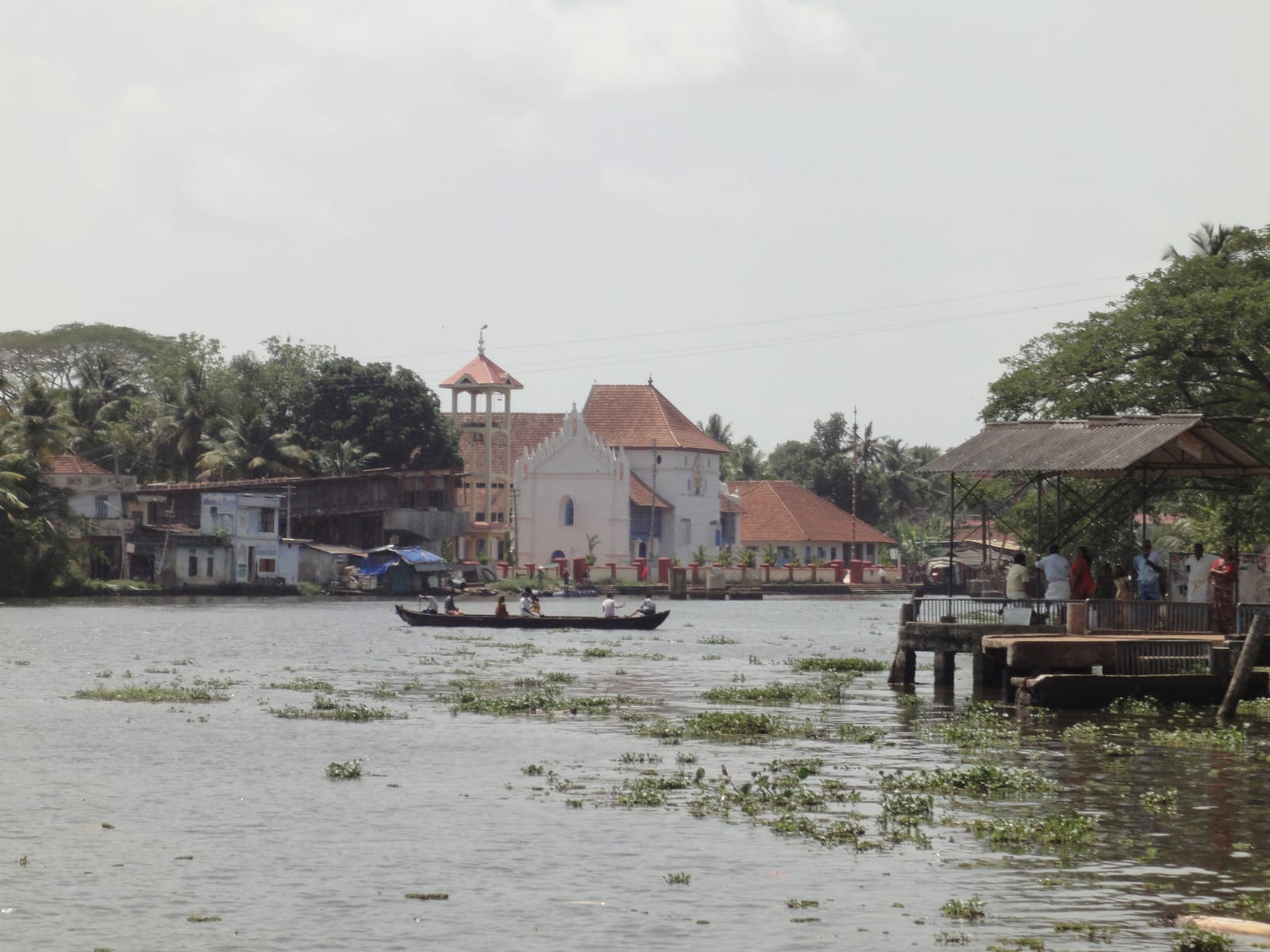
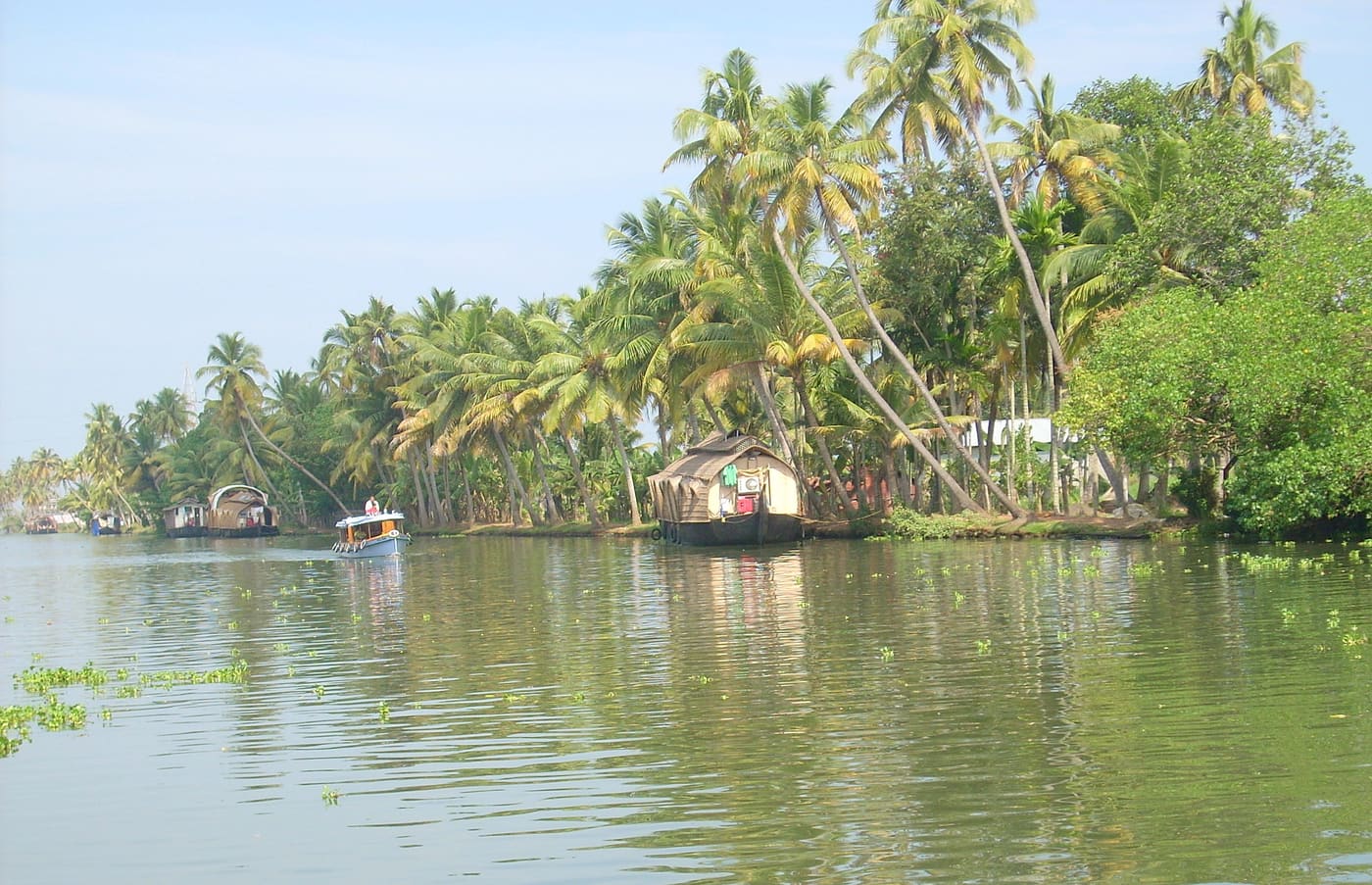
Set on the banks of the River Pamba, deep in the watery heartland of Kuttanad in Alappuzha district, St George Forane Church at Edathua — known locally as Edathua Valiapally — is one of the most visited Christian pilgrim centres in southern India. Its tall, pale façade and steep Gothic arches stand almost startling amid the surrounding green, a landscape of paddy fields, coconut groves and glinting canals that lies famously below sea level. For many travellers the first sight of the church is from the water itself, as the backwater channels of Kuttanad thread right up towards it.
The church is dedicated to St George — venerated here as Marth Gewargis, the soldier-saint and dragon-slayer — and it is his feast that has made Edathua a household name across Kerala and beyond. The annual celebration, the Edathua Perunnal, is one of the largest gatherings of its kind in the region, drawing pilgrims not only from the Syro-Malabar Catholic community but from every faith, all seeking blessing, thanksgiving and relief from their troubles.
At the heart of the devotion is the statue of St George, which during the feast is adorned in gold and jewels and carried out in solemn procession before being returned to its place within the church. Devotees traditionally bring offerings — many in the shape of body parts, moulded in gold or silver — in gratitude for cures they believe they have received. The interior, arranged in the classic nave-and-sanctuary plan with its altars, holds relics associated with the saint (details are best confirmed with the parish), and the air during the novena days is thick with candle smoke, incense and prayer.
Edathua carries a long-held popular reputation as a place of healing, and it is especially associated in local devotion with those suffering mental distress and afflictions of the mind. Families have for generations brought loved ones here to pray and to keep vigil, and the tradition is held with great seriousness and tenderness by the community. Roampedia records this as a genuine and respected devotional belief — it is not medical advice, and anyone facing illness, mental or physical, should always seek proper professional and medical care alongside their faith.
Beyond the great feast, Edathua rewards the quieter visitor too. The church sits amid some of the most photogenic scenery in Kerala — the endless paddy polders of Kuttanad, the slow country boats, the herons wading in the shallows. Many pilgrims combine a visit with a backwater cruise or a stop at nearby Champakulam, home to its own ancient churches and to the famous snake-boat traditions of the region.
To arrive at Edathua is to feel the particular character of Kuttanad: water everywhere, life lived close to the flood line, and a faith that has endured here for more than two centuries. Whether you come in the roar and colour of the Perunnal or on an ordinary morning when only the fans turn and a few candles burn, the church holds a stillness at its centre that pilgrims of every kind have long come seeking.
History
The origins of the parish are traced to 1810, when a group of believers is said to have separated from the older Champakulam church and established their own place of worship at Edathua; local accounts place the laying of the first foundation stone on 29 September 1810, on the feast of St Michael the Archangel (indicative — confirm locally). From these beginnings the community grew steadily along the Pamba.
The great church seen today is generally dated to the mid-19th century: the foundation stone of the present structure is recorded as being laid on 15 November 1839, with the main altar completed around 1861 (indicative dates — confirm locally). It was raised in a European Gothic idiom — soaring arches, tall pillars and a long, aisled interior — and is popularly said to have been modelled on European basilica architecture, a claim often repeated locally though the precise model should be treated as tradition rather than documented fact.
As a Forane (or Valiapally, literally ‘big church’) it holds a senior administrative rank, historically serving as the mother church for a cluster of surrounding parishes. It falls under the Syro-Malabar Catholic Archeparchy of Changanassery (indicative — confirm current jurisdiction).
Devotion to St George is what carried Edathua from a local parish to a pan-regional pilgrimage. As reports of answered prayers and cures spread, the church drew ever-larger crowds, and the annual feast grew into the vast gathering it is today — one of the defining religious events of the Kuttanad calendar and among the best-known St George feasts in India.
Over the generations the site has been developed with facilities for the enormous feast-time crowds, while retaining its historic church at the centre. It remains an active parish and a living pilgrimage destination, not a museum — worship continues daily, and the great procession of the gold-adorned saint each spring links today’s pilgrims to more than two hundred years of unbroken devotion.
Why visit
One of southern India’s most famous St George pilgrimage churches, alive with genuine devotion.
Striking European-Gothic architecture rising dramatically above the below-sea-level paddy fields of Kuttanad.
The spectacular Edathua Perunnal feast — gold-adorned statue, processions, fireworks and vast crowds of many faiths.
A rare chance to reach a landmark church by backwater boat through classic Kuttanad scenery.
A deeply respected, centuries-old healing tradition and an atmosphere of heartfelt faith.
An easy pairing with Champakulam, Alappuzha backwaters and Kuttanad’s paddy-and-canal landscape.