The story
In the very heart of Kochi’s mainland, where Shanmugham Road meets the shimmer of the backwaters, stands the Ernakulathappan Temple — the presiding Shiva shrine of Ernakulam and, by tradition, the very reason the city bears its name. Its west-facing sanctum looks out across the water, and once a year the whole city seems to gather at its gates for the thunder of the Ernakulathappan Utsavam.
The story of Ernakulathappan Temple
The Ernakulathappan Temple is the principal temple of Ernakulam city, the mainland half of Kochi, and it is dedicated to Shiva worshipped here as Ernakulathappan — literally the Lord of Ernakulam. For generations of Kochiites the deity is not a distant god but the guardian and patron of the town itself, the presence around whom the modern city grew. To be from Ernakulam is, in a quiet cultural sense, to be a child of Ernakulathappan.
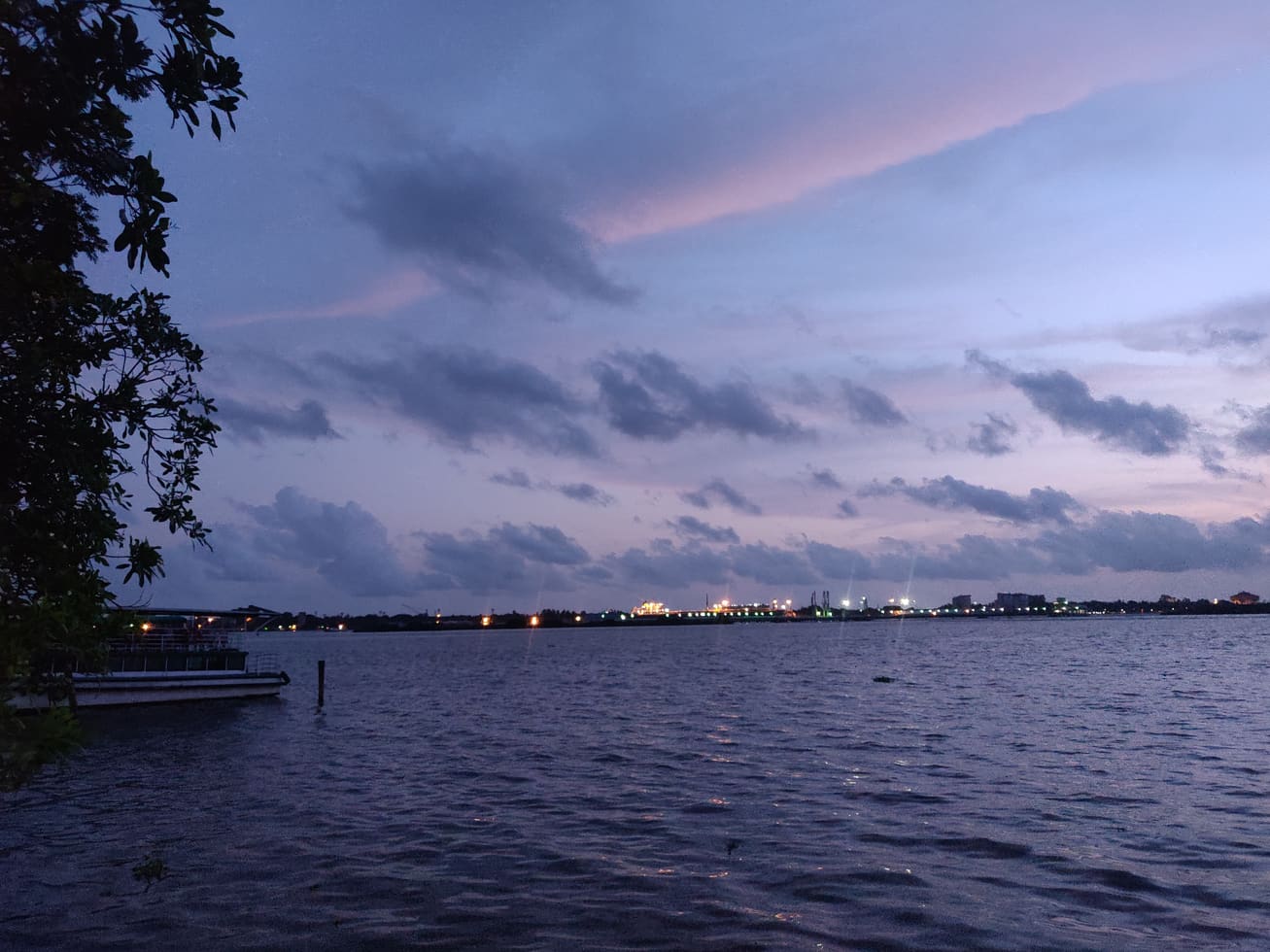
The temple occupies one of the most central and recognisable spots in the city, on the eastern shore of the backwaters close to the Durbar Hall Ground, Shanmugham Road and Marine Drive. The sanctum is unusual in that the deity faces west, gazing out over the water towards the Arabian Sea — a west-facing Shiva of a kind considered especially auspicious in Kerala temple tradition. Around the shrine lies a large temple pond, a survivor of the older, watery landscape from which the city rose.
Locally the deity is understood in the benevolent Gaurishankara form — Shiva together with Parvati — and worship here follows the classic Kerala pattern of oil lamps, floral offerings and the rhythms of the daily poojas. Despite sitting amid traffic, shopping streets and government offices, the compound holds on to an unhurried temple calm, and devotees drift in through the day between errands for a quick darshan of Ernakulathappan.
The temple is one of the historic royal temples associated with the erstwhile Kingdom of Cochin, and today it is managed by the Cochin Devaswom Board, the state body that administers many of the region’s major Hindu temples. Its fortunes have long been braided together with the story of the city itself — as Ernakulam grew from a temple town on the water into the commercial and cultural capital of central Kerala, the shrine at its centre grew with it.
What lifts the temple from a beloved neighbourhood shrine to a genuine landmark is its festival. The eight-day Ernakulathappan Utsavam, held in the Malayalam month of Makaram (roughly January to February), is among the biggest temple festivals in the city — a spectacle of caparisoned elephants, panchavadya and melam, temple percussion, fireworks and huge crowds, culminating in the arattu procession that carries the deity down to the backwaters for a ceremonial bath.
For the visitor, Ernakulathappan Temple offers something rare: a living, working Shiva temple that is genuinely woven into the fabric of a busy Indian city rather than set apart from it. You can pair a few minutes of darshan with a stroll along Marine Drive, a look at the Durbar Hall Ground and the surrounding heritage buildings, and a feel for how the old sacred core still anchors the everyday life of Ernakulam.
Legend & myth
Tradition holds that the city’s very name is a memory of a legend told at this temple. In ancient days, it is said, the place was known as Rishinagakulam — the pond (kulam) of the serpent-sage (rishi-naga) — and it is from this, worn smooth over centuries of speech, that the name Ernakulam is believed to have descended, with the Lord himself once called Rishinagakulathappan.
The legend runs like this: a devotee — remembered in some tellings as Devala — was cursed and made to carry the body of a serpent. Crawling in his suffering through the forest that then covered this shore, he is said to have found a Shiva lingam sunk and hidden in the mud, and there, half-snake, he settled into a deep penance for release from the curse. Villagers who glimpsed the strange serpent-bodied ascetic are said to have called him Rishi Nagam, the saint-serpent.
Moved by his devotion, Shiva and Parvati are believed to have appeared before him in their true form and bid him bathe in the pond beside the lingam. As legend has it, the moment he immersed himself in the water he was freed of the curse and restored — and the spot, sanctified by that miracle, became Rishinagakulam, the pond of the serpent-sage, from which both the temple and the city are said to take their name.
A second strand of tradition offers a gentler etymology, deriving Ernakulam from Erayanarkulam — where Erayanar is a name of Shiva and kulam a pond or tank — so that the word itself would mean the pond of the Lord, a nod to the sacred water beside the shrine. These are traditional explanations, lovingly retold rather than documented history; scholars debate the true origin of the name, but at the temple the story of the serpent-sage and his pond is the one that endures.
History
The temple’s recorded history is bound up with the Kingdom of Cochin, which held sway over this coast for centuries. Ernakulathappan is counted among the royal temples patronised by the Cochin royal house, and as the ruling family shifted the centre of its activity towards the Ernakulam side of the backwaters, the shrine at the heart of the town gained corresponding importance.
The temple as seen today owes much to a major reconstruction in the mid-nineteenth century. Tradition and local records credit the work to the Cochin Diwan (chief minister) Sri Edakkunni Sankara Warrier, who is said to have rebuilt the temple in the 1840s — the works are usually placed around 1843 to 1846 (indicative dates — confirm locally) — raising it in traditional Kerala temple style with gopura mandapams, or entrance-tower pavilions.
Through this period the temple functioned as a royal temple of the Cochin state, its rituals, festival and upkeep supported by the crown. Its position beside the Durbar Hall — the seat of Cochin ceremonial life in the city — underlines how closely the shrine sat to the machinery of the old kingdom.
After Indian independence and the integration of the princely states, administration of the temple passed from royal hands to a public body. The Ernakulathappan Temple has been managed by the Cochin Devaswom Board since around the mid-twentieth century (indicative — confirm locally), the statutory board that today oversees the temple’s worship, its landmark annual festival and its finances.
Across all this change the temple has remained the ritual anchor of the city, even as Ernakulam transformed around it into the bustling commercial capital of central Kerala. Marine Drive was reclaimed from the backwaters, high-rises and shops crowded the old lanes, yet the west-facing Shiva by the water endured as the town’s presiding presence — the constant at the centre of a city that never stopped growing.
Why visit
It is the presiding temple of Ernakulam — the shrine that, by tradition, gives the whole city its name and identity, making it the single most meaningful stop for anyone wanting to understand the soul of mainland Kochi.
The atmosphere of a genuinely urban temple: a serene, working Shiva shrine with an unusual west-facing sanctum and a large old pond, tucked right into the heart of a busy modern city rather than hidden away in the countryside.
The Ernakulathappan Utsavam — if your visit falls in Makaram (January to February), you can witness one of the biggest temple festivals in the city, with caparisoned elephants, panchavadya, melam, fireworks and the arattu procession to the backwaters.
Its unbeatable central location: the temple sits beside the Durbar Hall Ground and within an easy walk of Marine Drive, the backwater boat jetties, Shanmugham Road and the city’s shopping and dining heart, so it slots naturally into a day of exploring Ernakulam.
The layered legend of the serpent-sage and the pond of Rishinagakulam — a story that ties the temple to the origin of the city’s very name and rewards visitors who like their sightseeing steeped in myth and meaning.
A quiet moment of devotion and calm in the middle of the city — a place to light a lamp, walk the pradakshina and feel the older, sacred rhythm still beating beneath the traffic and commerce of modern Kochi.