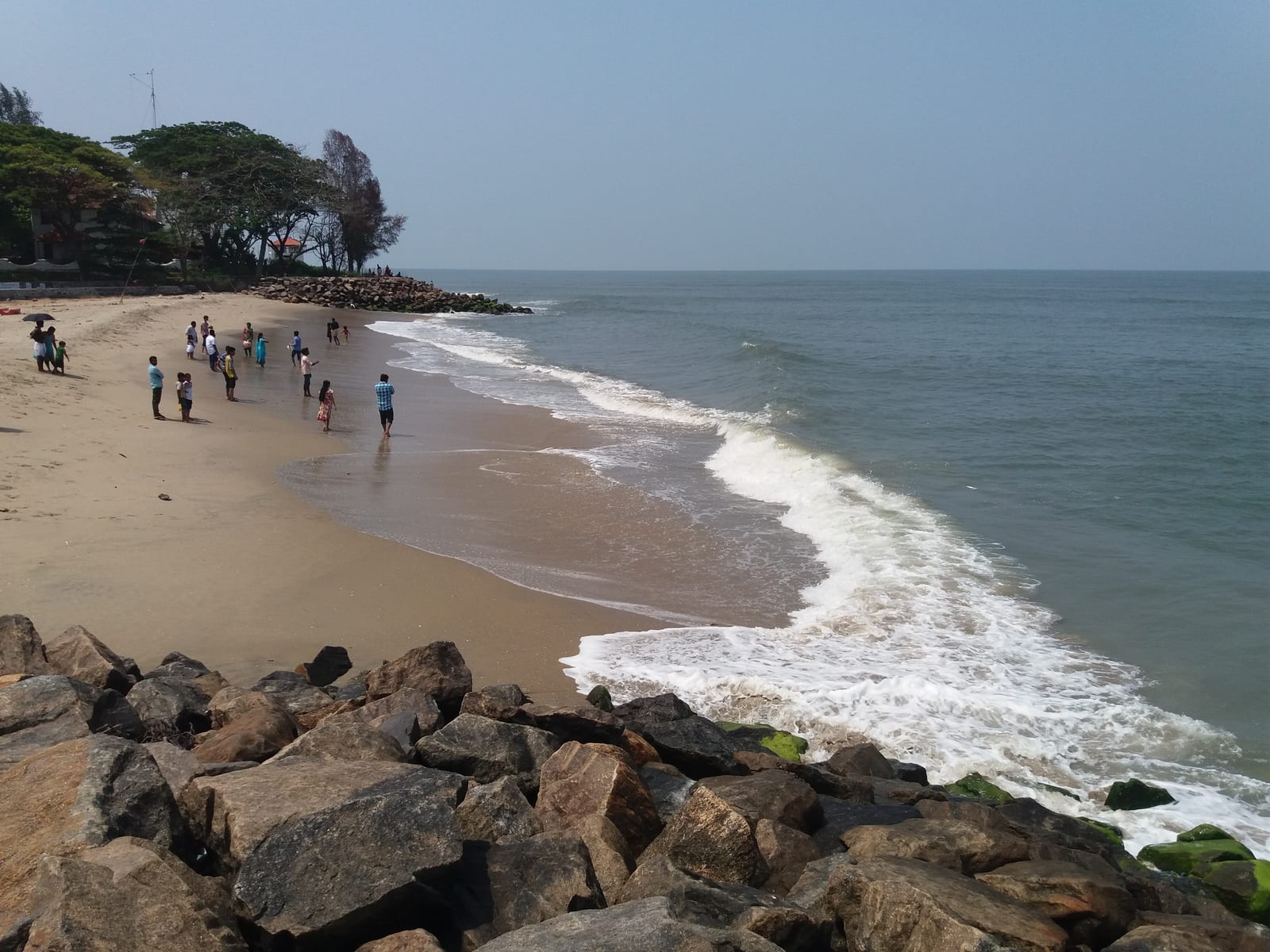
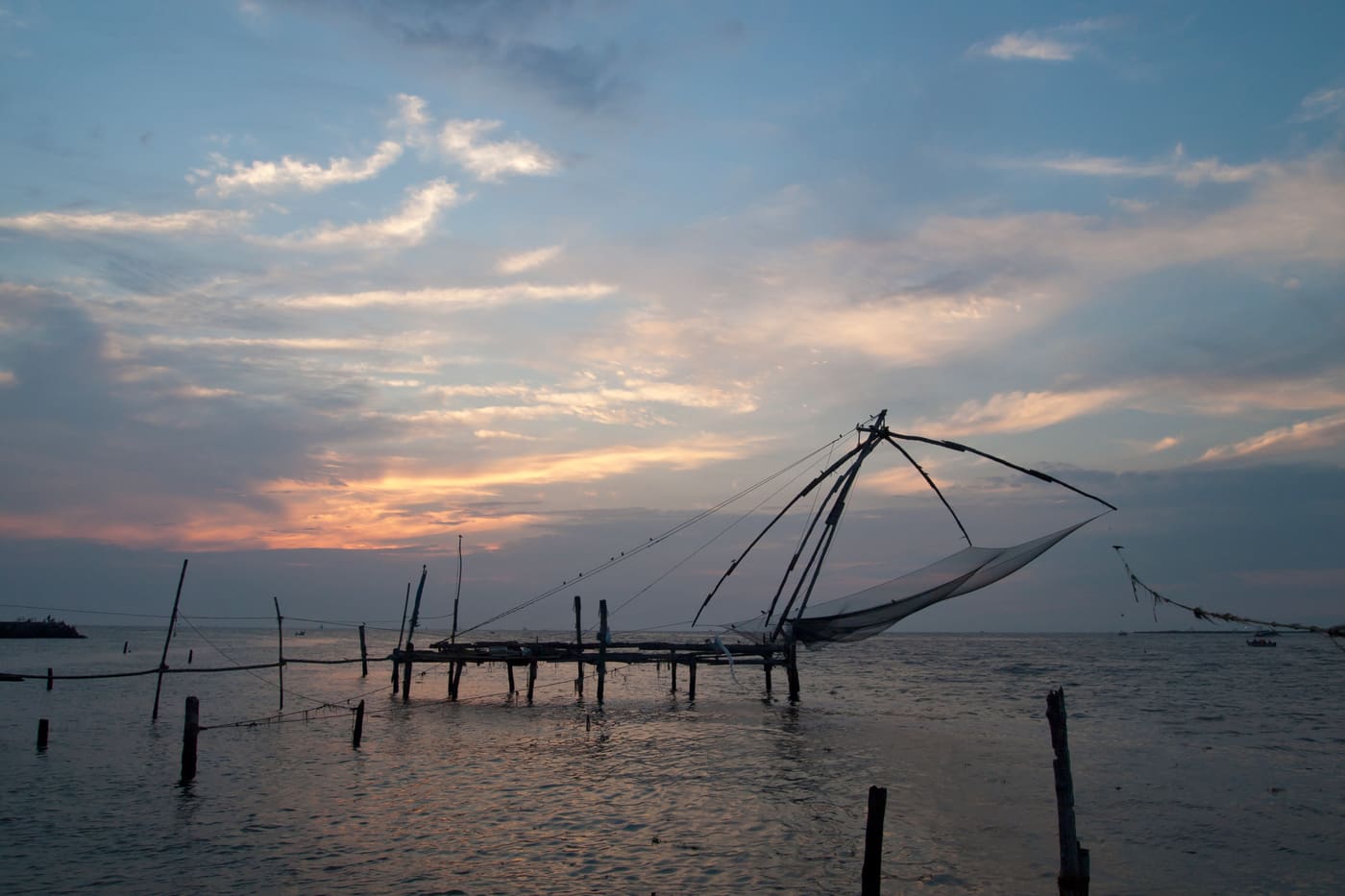
A crescent of grey-gold sand where cantilevered Chinese fishing nets dip into the Arabian Sea against the burning colours of a Kochi sunset — a promenade to walk, not to swim.
The story of Fort Kochi Beach
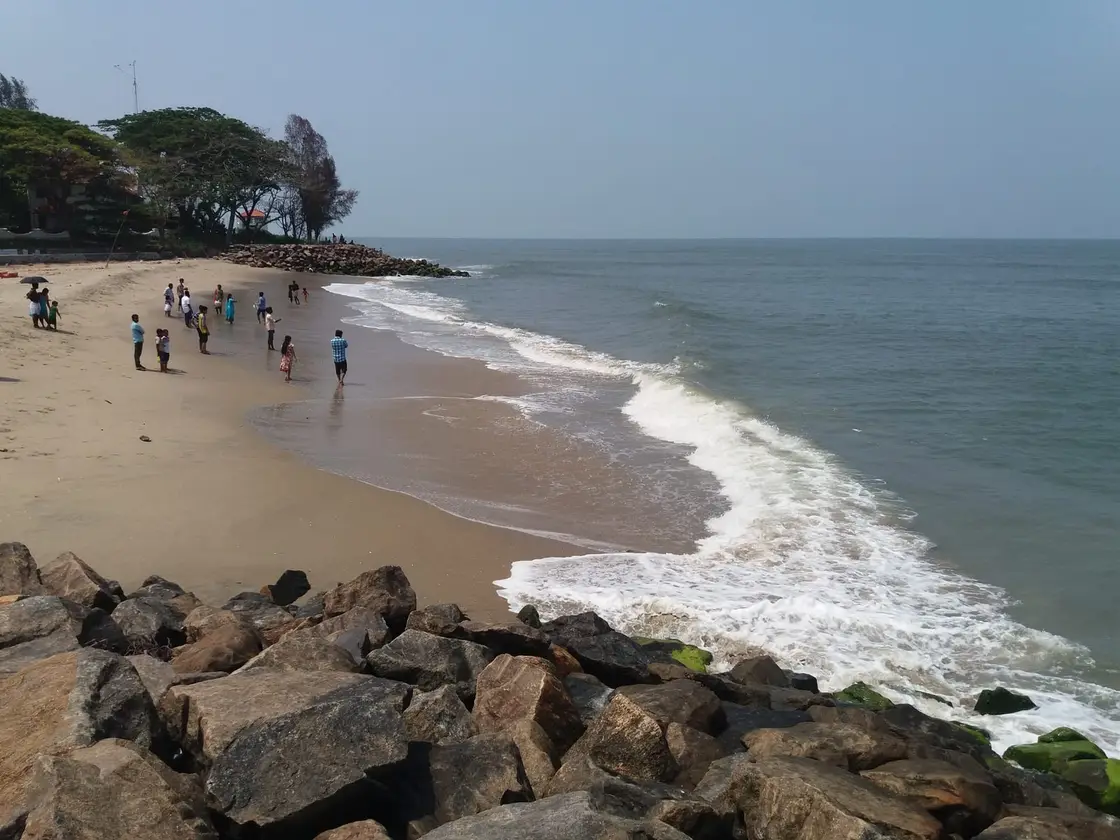
Fort Kochi Beach is less a bathing beach than a living seafront — a curving ribbon of sand and sea wall on the northern lip of the peninsula, where the backwaters spill out into the Arabian Sea. People come here not to plunge into the water but to walk, to sit on the granite kerb, to buy roasted peanuts and cut fruit, and above all to watch the light change over the harbour mouth as the day folds into evening.
The beach owes its fame to the row of Chinese fishing nets — the cheena vala — that stand silhouetted along the waterline like the ribs of great wooden birds. Each net is a cantilever of teak and bamboo weighted with stones, lowered into the tide and hauled up by a small team of fishermen leaning on the counterweights. Their spidery frames, strung with fairy lights after dark, have become the single most photographed image of the whole of Kerala, and they turn the seafront into an open-air theatre of an old, patient craft.
Behind the nets runs Vasco da Gama Square, a thin strip of promenade lined with stalls. Here the morning catch is sold within arm’s reach of the sea — prawns, squid, karimeen and reef fish laid out on ice — and a cluster of shacks will cook whatever you pick, tossed in chilli and curry leaves while you wait. The smell of frying fish, the calls of the vendors and the slap of waves on the sea wall give the beach a working, unpolished character that the glossier resorts nearby cannot fake.
The sand itself is narrow and, near the nets, often strewn with the debris of a busy harbour — driftwood, fishing rope, the odd plastic bag carried in on the tide. This is not a place of sunbathing and swimming; the water is churned by strong currents and crossed by the ships, tugs and ferries that thread the entrance to one of India’s great natural harbours. What the beach offers instead is atmosphere: the throb of a real port town at the edge of the ocean.
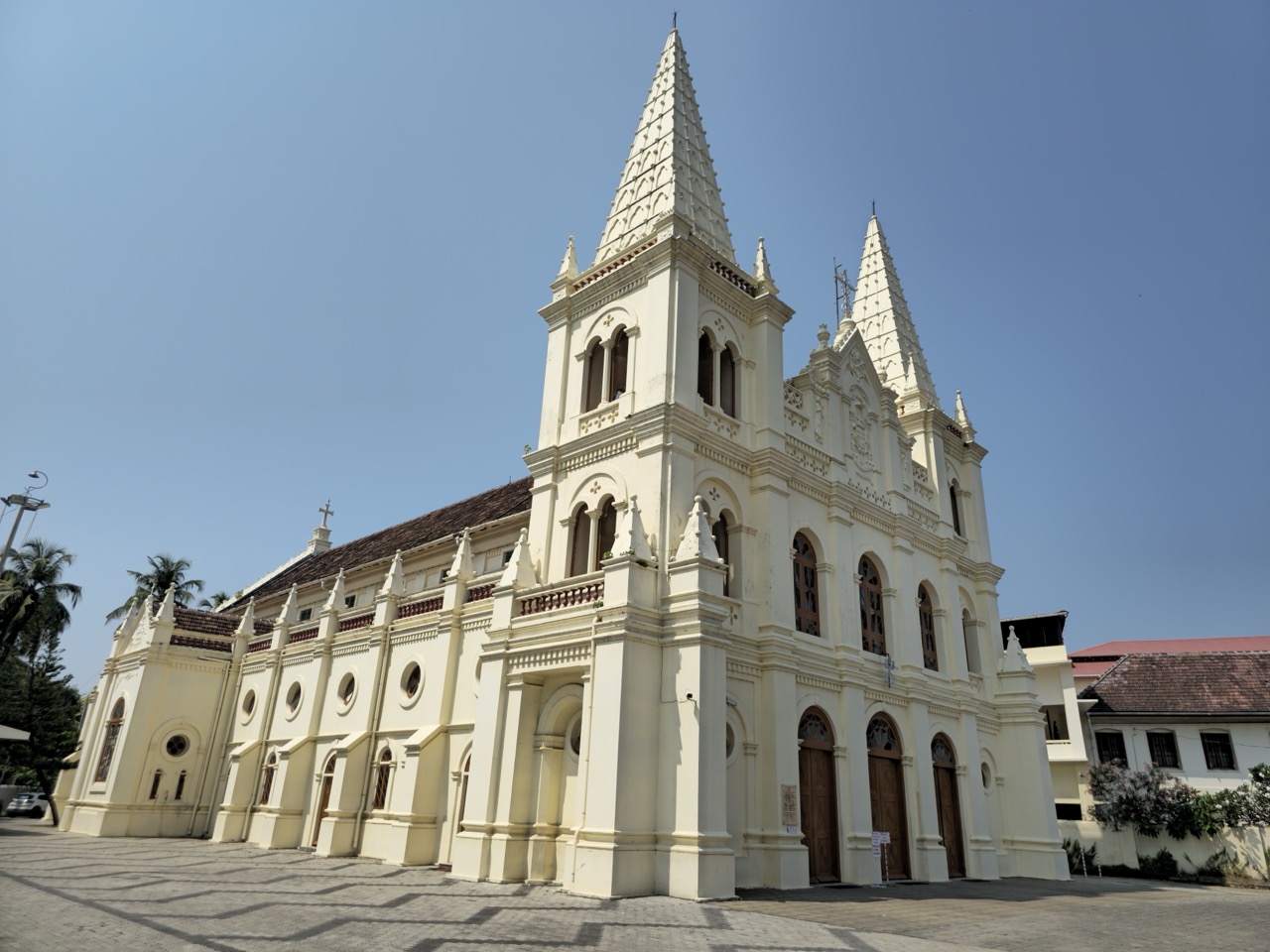
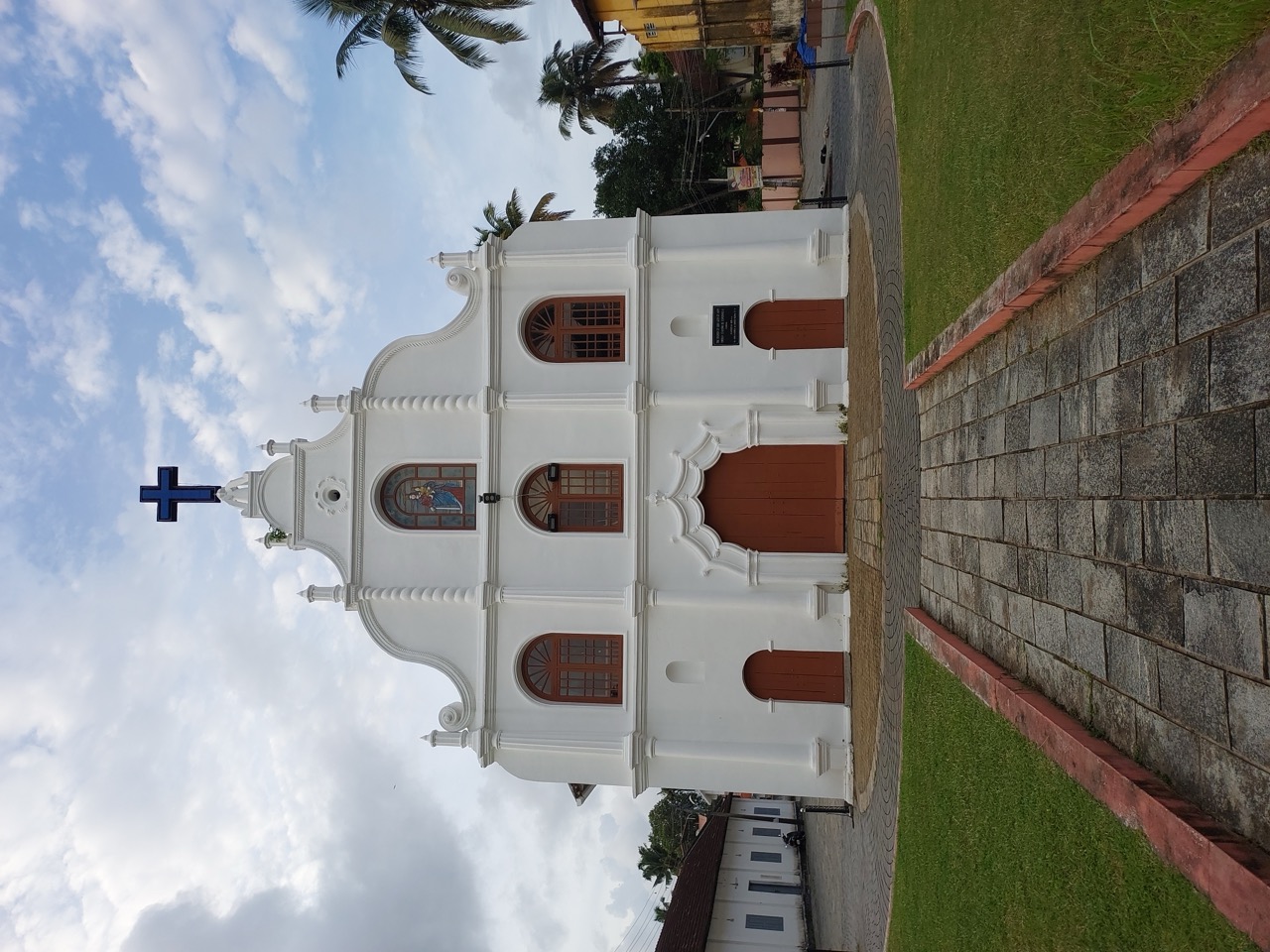
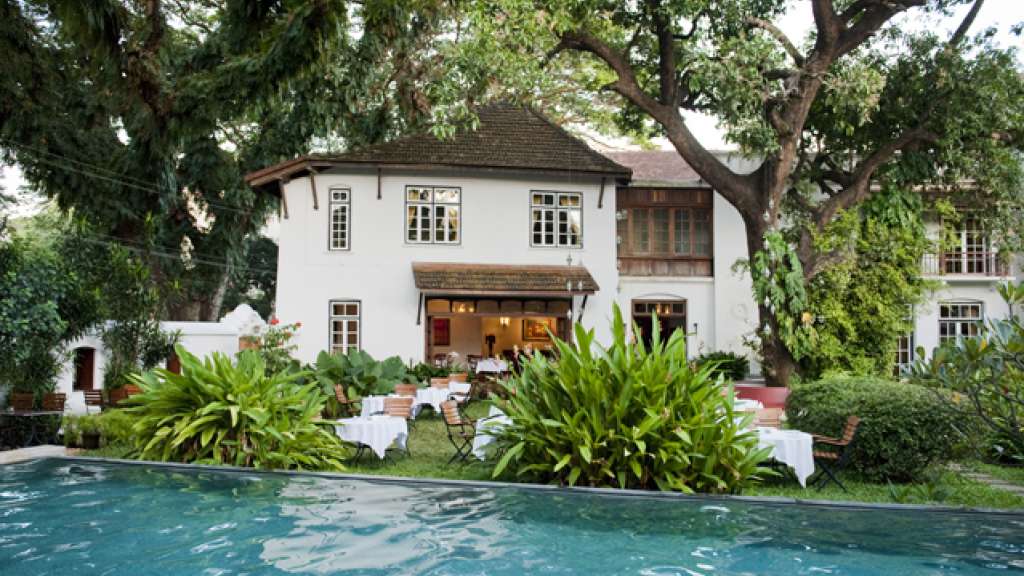
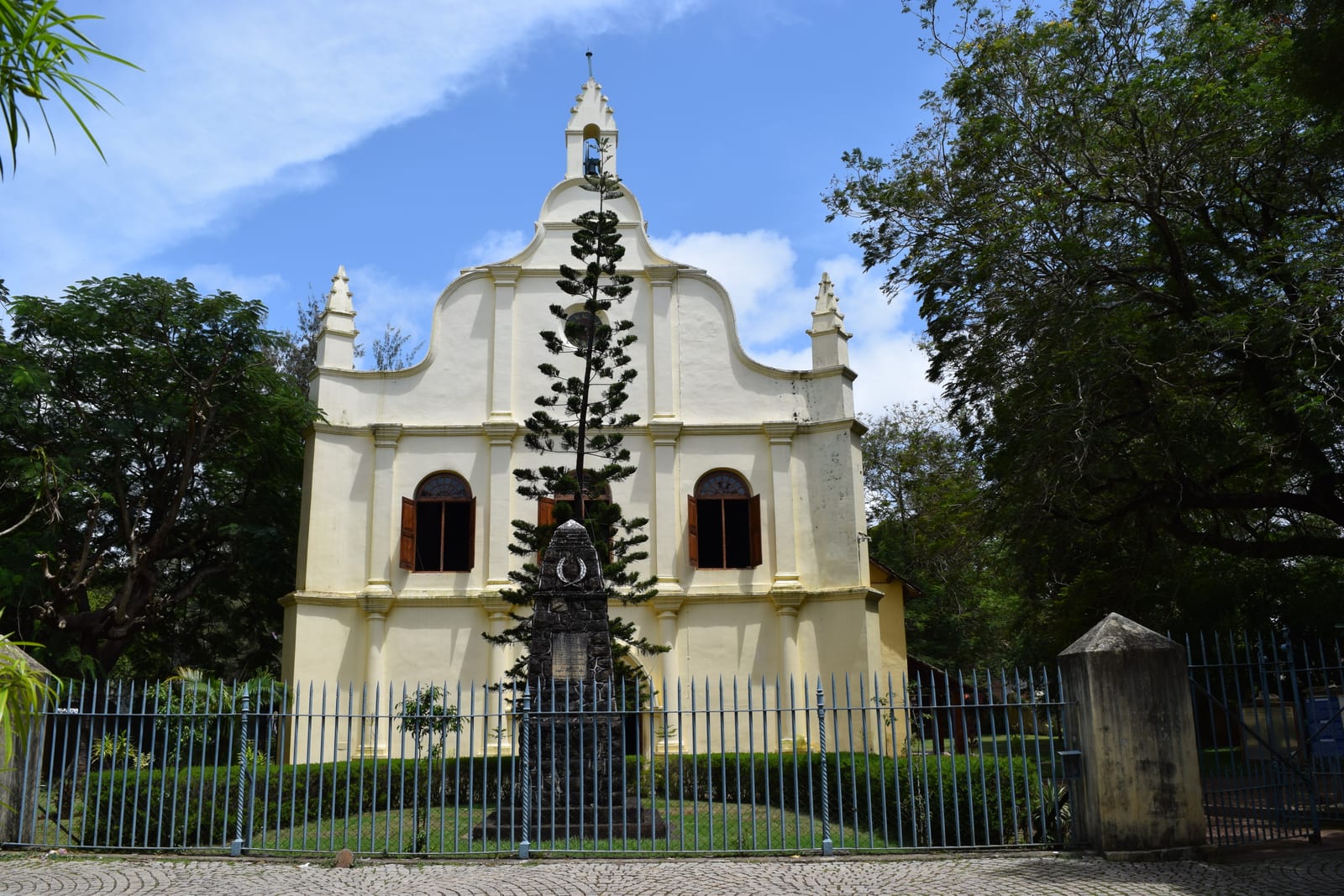
All of this sits against the backdrop of the colonial quarter — a low skyline of tiled roofs, church spires and merchant houses left by the Portuguese, Dutch and British. A few minutes on foot from the sand stand St Francis Church, the Santa Cruz Basilica and, across the peninsula, the Mattancherry (Dutch) Palace and the old Jew Town, so a sunset stroll on the beach can easily unspool into an afternoon of heritage-walking.
In recent years the seafront has taken on a second life as the beating heart of the Kochi-Muziris Biennale, South Asia’s largest contemporary-art festival, whose venues cluster in the warehouses and yards of Fort Kochi. During the Biennale months the promenade fills with artists, students and travellers, and installations spill out towards the water, so the same stretch of sand that frames the ancient nets also frames some of the most talked-about art in the country.
History
Fort Kochi is often called the first European township in India, and the beach is its front door to the sea. In 1503 the Portuguese, granted permission by the Raja of Cochin, raised Fort Emmanuel on this shore — named after King Manuel of Portugal and consecrated on 1 October 1503 — with St Francis Church built close behind it. The settlement that grew around the fort gave the quarter its enduring name.
Power on this seafront changed hands with the wider fortunes of the spice trade. The Portuguese held Fort Kochi until 1663, when the Dutch stormed the town, seized the harbour and dismantled much of the Portuguese establishment, keeping only a few churches. The Dutch strengthened the fort and ran the port for well over a century.
In 1795 the British defeated the Dutch and took Fort Kochi, anglicising the name to Fort Cochin and developing it into a major naval and commercial base of the Malabar Coast. The layers of these three colonial regimes — Portuguese, Dutch and British — remain legible in the churches, cemeteries, godowns and bungalows that stand just inland from the sand, making the beach the threshold to an unusually intact European heritage quarter.
The Chinese fishing nets that define the shore are older still than the Europeans. They are traditionally said to have been introduced to the Malabar coast in the 14th–15th centuries, popularly attributed to Chinese traders and to the fleets of the admiral Zheng He, whose voyages between 1405 and 1433 anchored at Kochi and are credited with spreading the technique; the nets are thought to have established themselves here roughly between 1350 and 1450. A competing scholarly view holds that they were brought later by Portuguese Casado settlers from Macau. Whatever their exact route, they gave Kochi its most recognisable emblem and are locally known as cheena vala.
For centuries the nets and the shore belonged to the fishing community, who worked the harbour mouth as they still do today. As tourism grew, the working seafront was gradually reimagined as a heritage promenade — Vasco da Gama Square laid out beside the nets, the sea wall repaired, and the beach woven into the walking circuit of the old town — even as the fishermen continued to lower and lift their great wooden frames with the tide.
Why visit
See the iconic Chinese fishing nets — Kerala’s most photographed sight — worked by hand against the open sea.
Catch one of the finest sunsets on the Kerala coast, with the nets silhouetted against the sky and the harbour lights coming on.
Eat fish at its freshest: pick your catch at the seafront stalls and have it cooked on the spot.
Step straight from the sand into the colonial quarter — St Francis Church, Santa Cruz Basilica, Dutch Palace and Jew Town are all within a short walk or cycle.
Soak up the atmosphere of a genuine working harbour, with ferries, ships and fishermen framing the view.
Visit during the Kochi-Muziris Biennale, when the seafront becomes the hub of South Asia’s largest contemporary-art festival.