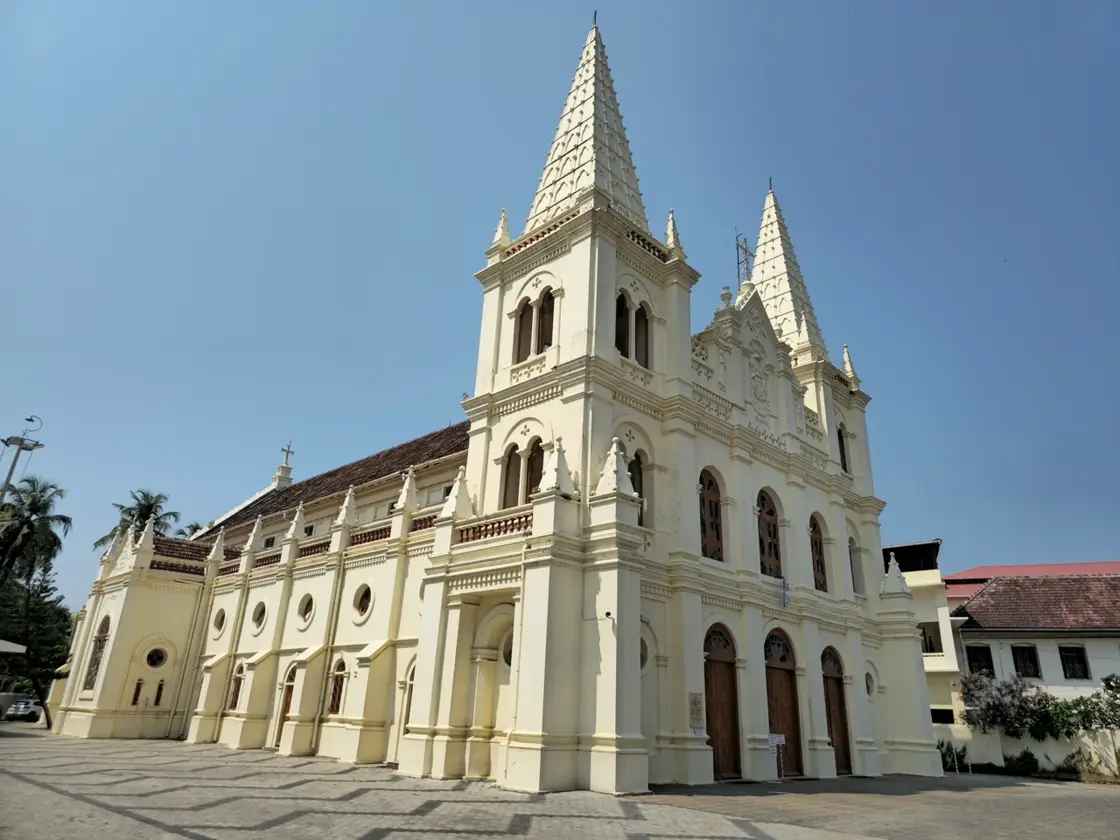
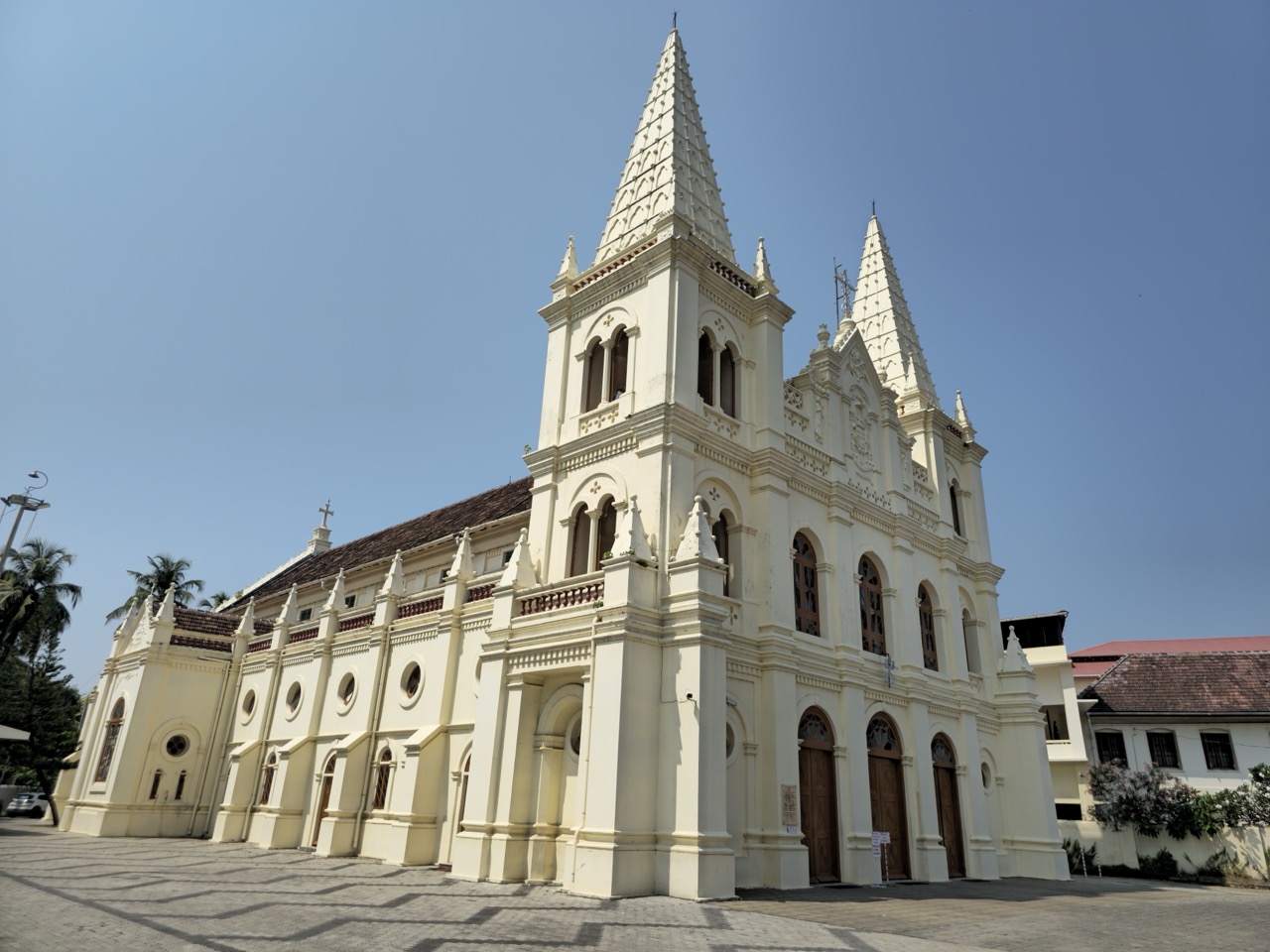
Rising in soft pastel over the lanes of Fort Kochi, Santa Cruz Cathedral Basilica is one of only eight basilicas in India and among the finest churches in the country — a five-century story of Portuguese, Dutch and British Cochin written in stone, and an interior so richly painted that visitors often fall silent the moment they step inside.
The story of Santa Cruz Cathedral Basilica
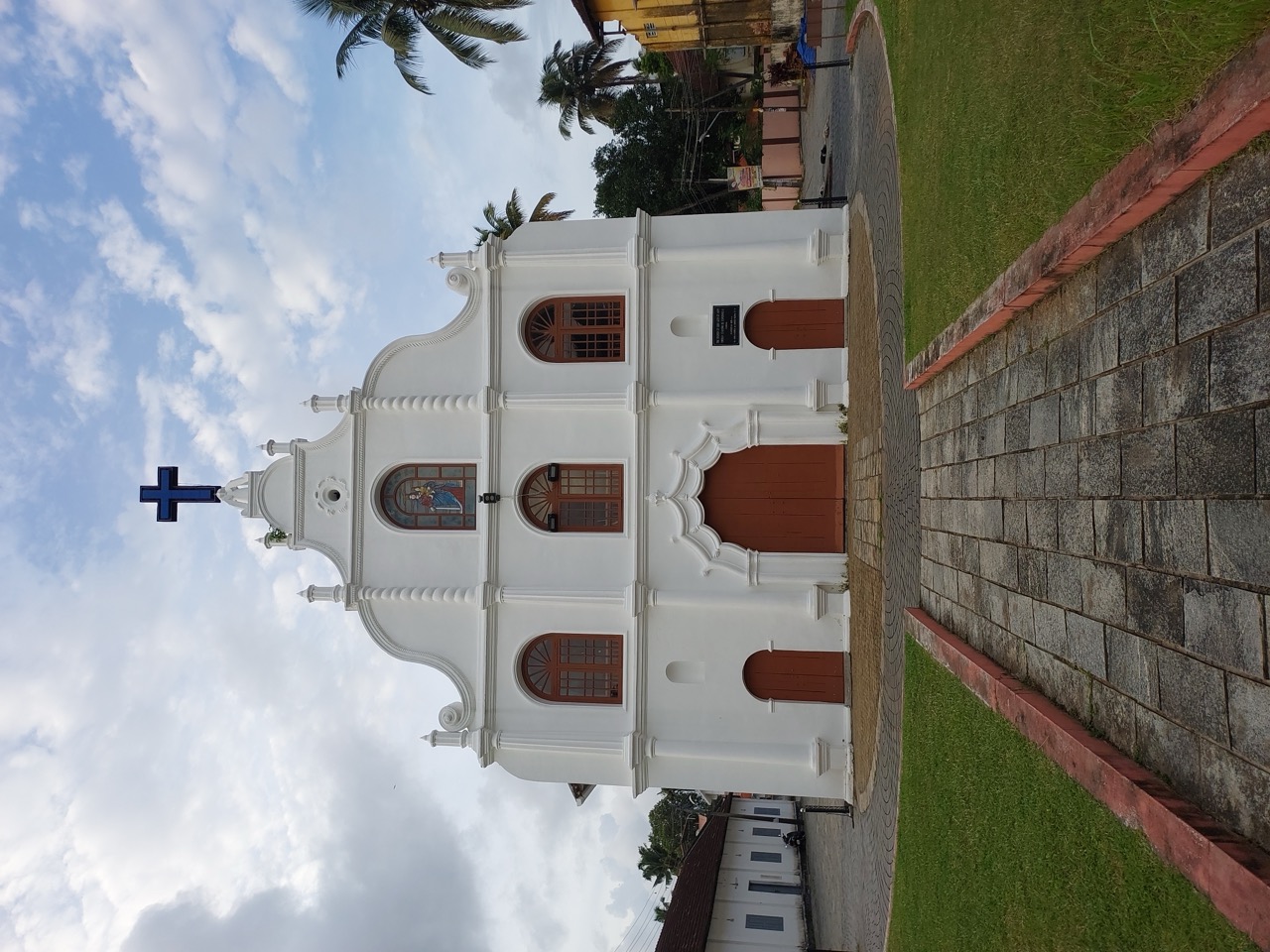
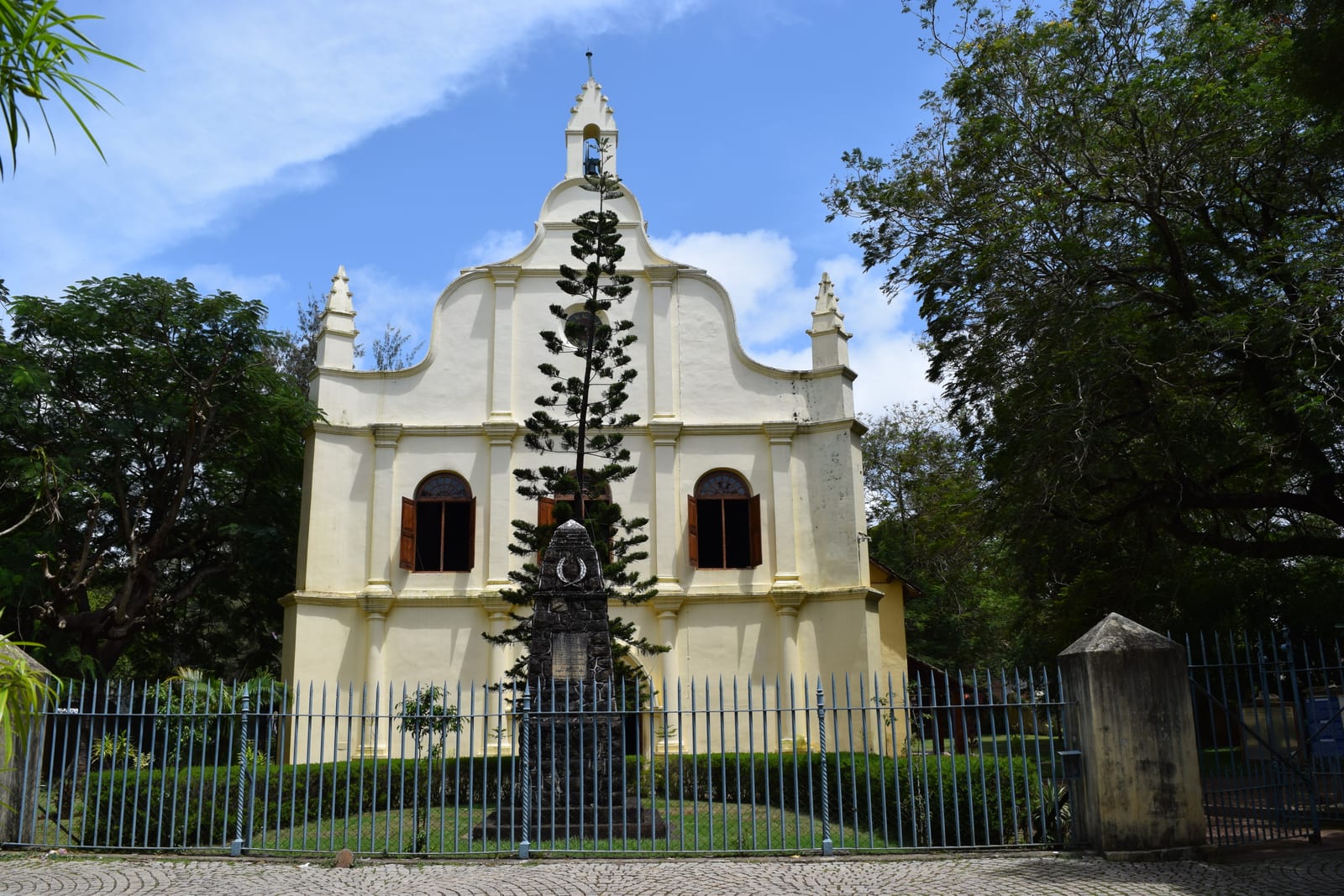
From the outside, Santa Cruz gives little away. Its whitewashed façade and twin towers glow almost buttermilk-pale in the Fort Kochi light, and the two spires guide you in from streets lined with old godowns and spice merchants. Then you cross the threshold and the whole mood changes: the interior opens into a long, high-ceilinged nave washed in gentle pastels, ribbed with marble-look columns, and crowned by a painted ceiling that draws every eye upward.
The great treasure here is the artwork. The interior murals and ceiling paintings are attributed to the Italian Jesuit painter Fra Antonio Moscheni of Bergamo, working with his Indian disciple (recorded as a Mr De Gama). Along the columns run frescoes; across the ceiling unfold scenes from the Passion — the road to Calvary, Christ on the day of his crucifixion — and above the altar Moscheni painted his masterwork on the theme of the passion and death on the Cross.
Flanking the nave hang seven large canvases depicting the passion and death of Christ, a sequence that reads almost like a slow, painted procession through the Basilica. Among the interior artworks is a much-loved reproduction of Leonardo da Vinci’s Last Supper. Stained-glass windows filter the Kerala sun into coloured pools on the floor, and the overall effect — Gothic bones dressed in warm Indo-European colour — is unlike any other church in Kochi.
There is a poignant footnote to the art. Moscheni is said to have died in Kochi on 15 November 1905, only days before the newly rebuilt church was consecrated — so the man who filled these walls with the story of the Cross reportedly never saw the finished cathedral open its doors. Look up at the ceiling with that in mind and the paintings carry an extra weight.
Santa Cruz is not a museum piece; it is a living cathedral basilica, seat of the Roman Catholic Diocese of Cochin, with regular Mass and a steady rhythm of worshippers who come to pray beneath the same painted ceiling that dazzles the tourists. That mix — sacred and celebrated, working parish and heritage marvel — is exactly what makes it special.
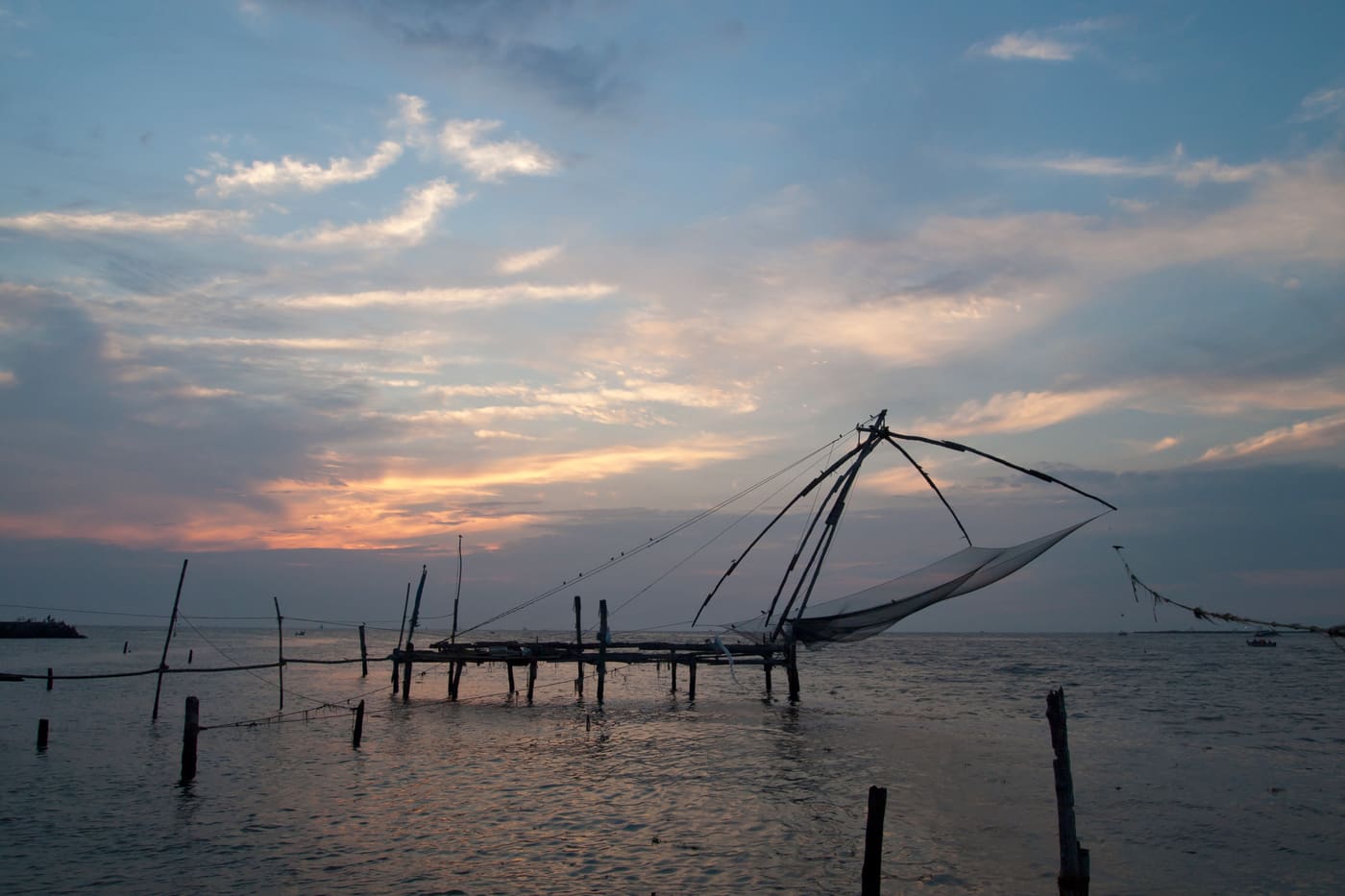
It also sits at the heart of Fort Kochi’s colonial heritage walk. A short stroll away stands St Francis Church (where Vasco da Gama was once buried) and the iconic Chinese fishing nets on the waterfront, so the Basilica is usually woven into a slow, on-foot day exploring the old European quarter.
History
The church’s origins reach back to the very dawn of Portuguese India. When Dom Francisco de Almeida, the first Portuguese viceroy, obtained the King of Cochin’s permission to build in stone, the foundation of a church here was laid in 1505 — most sources place it on 3 or 4 May, aligning with the feast of the Invention of the Holy Cross, from which the church took its name, Santa Cruz (Holy Cross).
In 1558 Pope Paul IV raised Santa Cruz to the status of a cathedral, making Cochin one of the earliest dioceses in India, with a jurisdiction that at its height was said to stretch across a vast swathe of the East. For a century and a half it stood as one of the principal churches of Portuguese Cochin.
The colonial tides then turned. When the Dutch captured Cochin in 1663 they demolished many Catholic institutions, but — remarkably — Santa Cruz and the nearby St Francis Church were spared. The Dutch are recorded as having put the building to secular use, reportedly as a warehouse or arms storehouse rather than destroying it, and so the old cathedral survived the Protestant century largely intact.
Its luck ran out under the British. After the British took Cochin, they demolished the structure — sources differ on the exact year, giving either 1795 or 1806 — leaving Santa Cruz in ruins for much of the nineteenth century. Only decades later did reconstruction begin: Bishop João Gomes Ferreira (recorded in some accounts under variant spellings) initiated the rebuilding around 1887, and the work was carried forward and completed under his successor.
The new Gothic church was consecrated in 1905 (widely given as 19 November 1905) by Dom Sebastião José Pereira, Bishop of Damão. The final honour came in the modern era: on 23 August 1984, Pope John Paul II proclaimed Santa Cruz a Basilica, making it one of only eight basilicas in India and setting the seal on a building that had risen, fallen and risen again across nearly five centuries.
Why visit
One of only eight basilicas in India, and widely rated among the finest and most beautiful churches in the country — a genuine bucket-list church, not just a local landmark.
The painted interior is the headline: a soaring painted ceiling, column frescoes and Passion scenes attributed to the Italian master Fra Antonio Moscheni and his Indian disciple, an art programme you simply do not expect from the plain pastel exterior.
The seven large canvases of the Passion, plus a beloved reproduction of Leonardo’s Last Supper, turn a walk down the nave into a slow, painted meditation on the story of the Cross.
Gothic architecture in an Indo-European key — twin towers, a luminous whitewashed façade and a pastel, stained-glass-lit interior — makes it one of the most photogenic and atmospheric heritage buildings in Fort Kochi.
Half a millennium of history you can stand inside: Portuguese founding, Dutch warehouse years, British demolition and a triumphant modern rebuild — a living timeline of colonial Cochin.
Its position on the Fort Kochi heritage circuit: pair it easily on foot with St Francis Church and the Chinese fishing nets for a compact, richly layered day out.