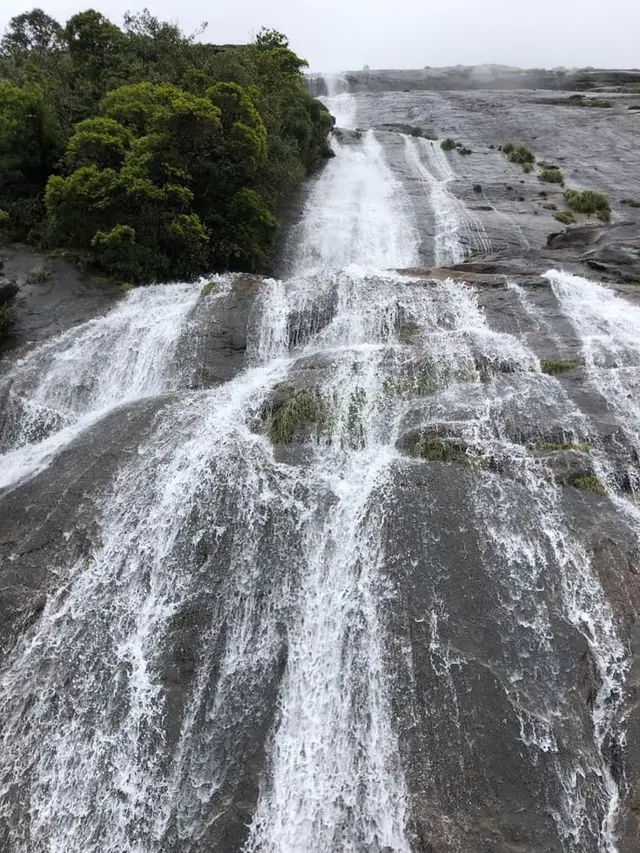
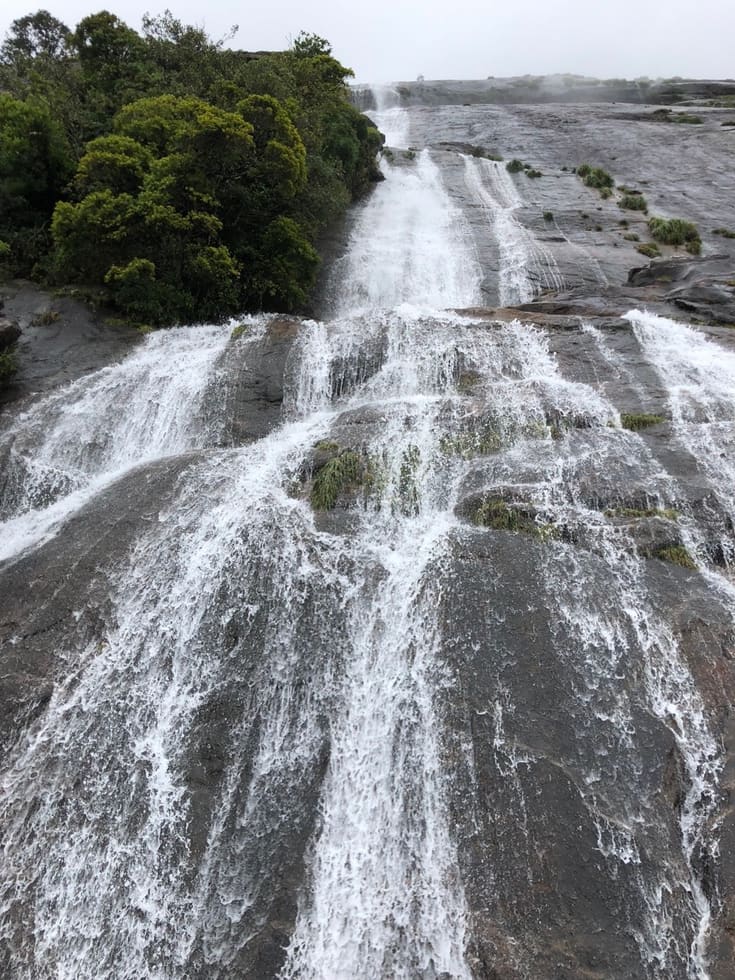
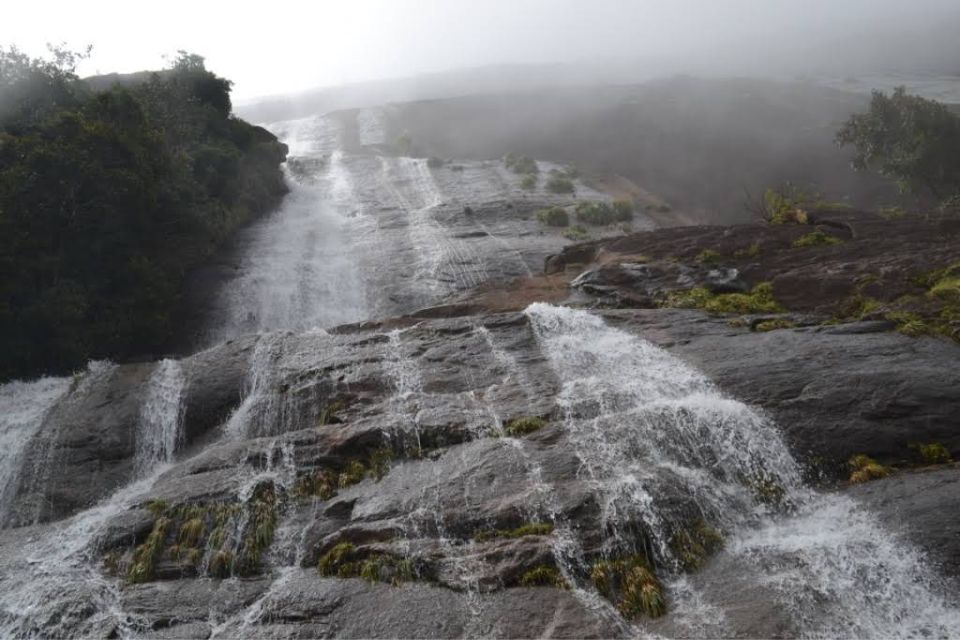
Tucked into the hills between Munnar and Pallivasal, Attukad Waterfalls is a broad, stepped cascade that slides down a wall of dark, weather-smoothed rock into a pool at its foot, framed on every side by tea gardens, spice slopes and patches of dense jungle. In the weeks during and just after the monsoon it turns into a roaring sheet of froth; in the dry months it thins to gentler threads — which is exactly why locals will tell you the season you choose matters more here than at almost any other stop around Munnar.
The story of Attukad Waterfalls
The approach sets the mood before you ever see the water. Turning off the Munnar–Pallivasal road, you drop through folds of manicured tea and wilder forest, the air cooling and thickening with the smell of wet earth and crushed leaf. Then the sound reaches you — a low, steady rush that grows until you round the last bend and the cascade opens up, a wide curtain of white pouring over stepped grey rock into the valley below.
Attukad is not a single sheer plunge but a series of tumbling drops, the stream breaking and re-gathering as it works its way down roughly a hundred feet of rock face. That stepped shape is part of its charm: the water fans out, catches the light, and throws up a fine drifting mist that hangs over the pool and keeps the surrounding ferns and mosses a vivid, dripping green.
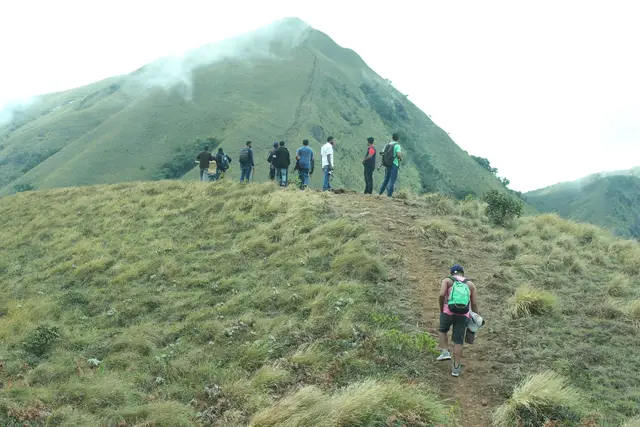
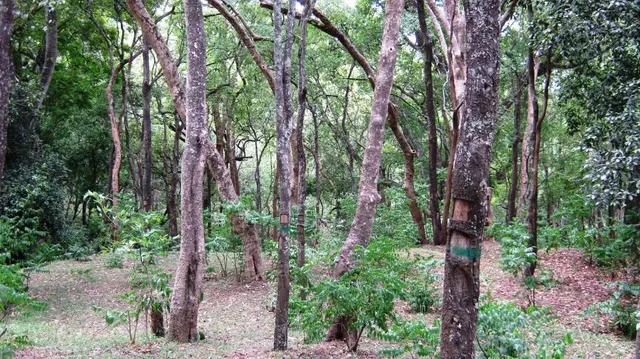
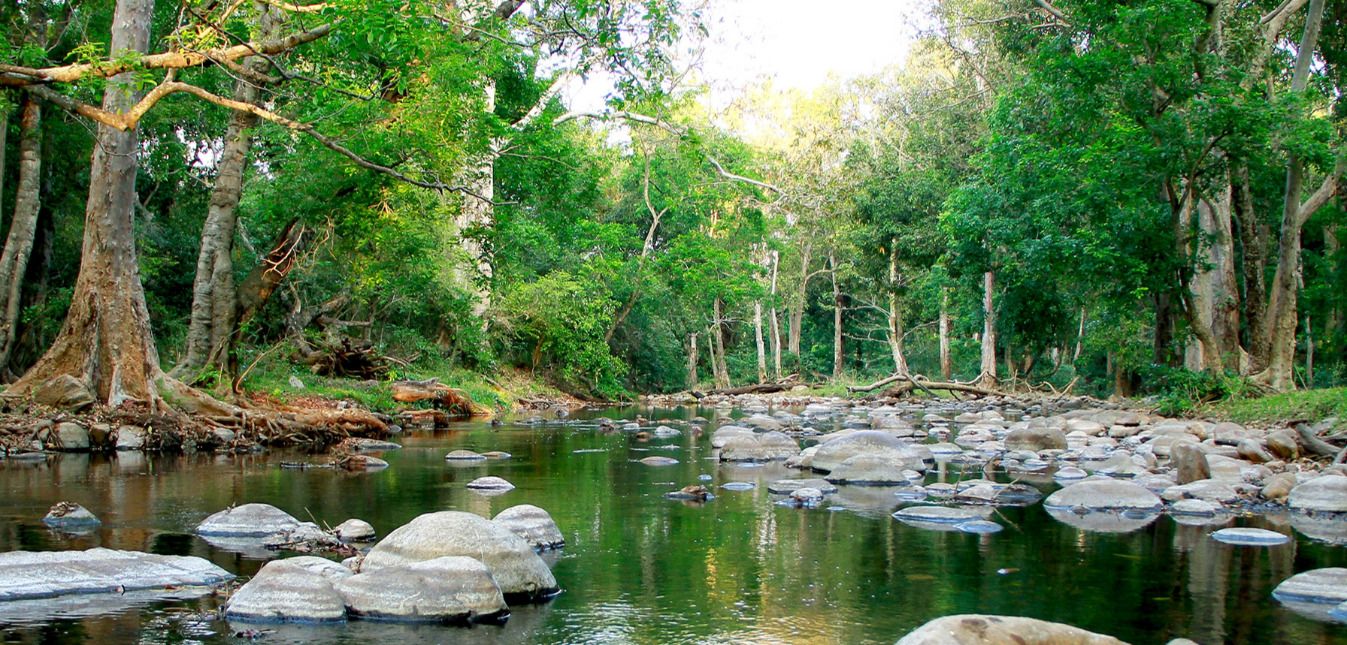
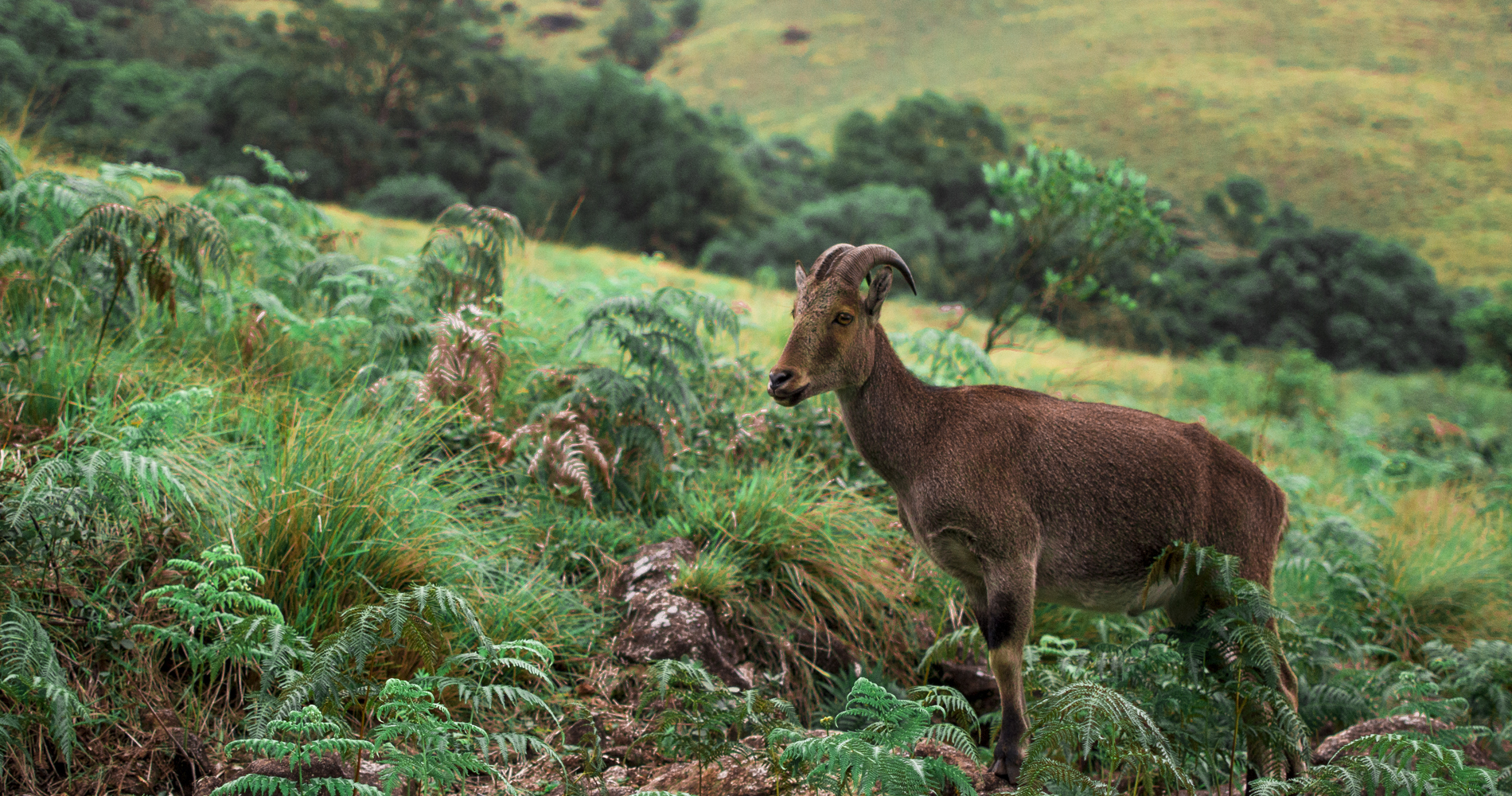
It has long been a favourite with trekkers rather than a manicured tourist stop. Trails thread through the hills around the falls, past sparkling side-streams and stands of medicinal plants, with the chance of spotting birds and the occasional flash of shy forest wildlife. Many visitors come as much for the walk in — cool air, plantation views, the smell of cardamom and eucalyptus — as for the cascade itself.
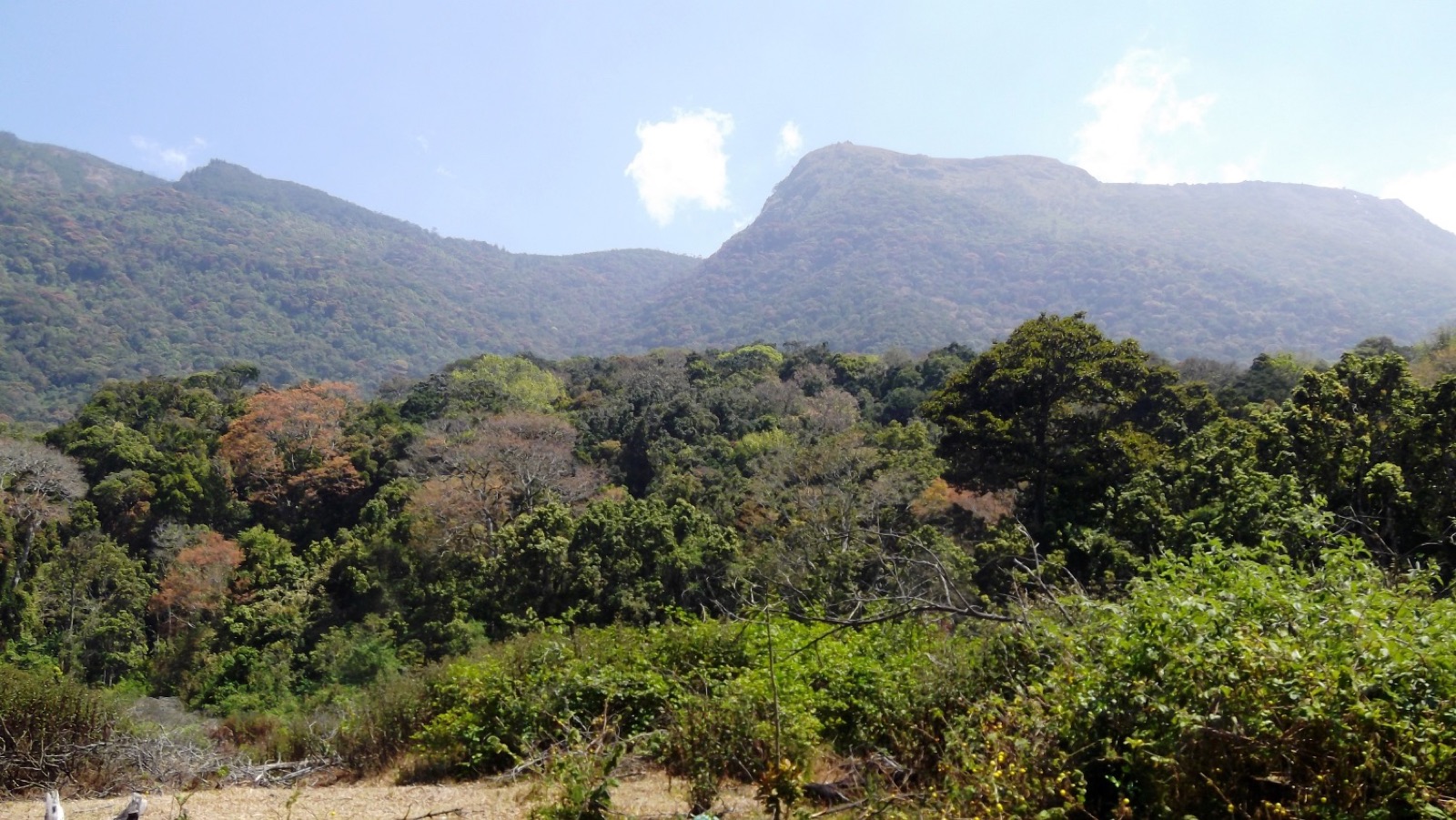
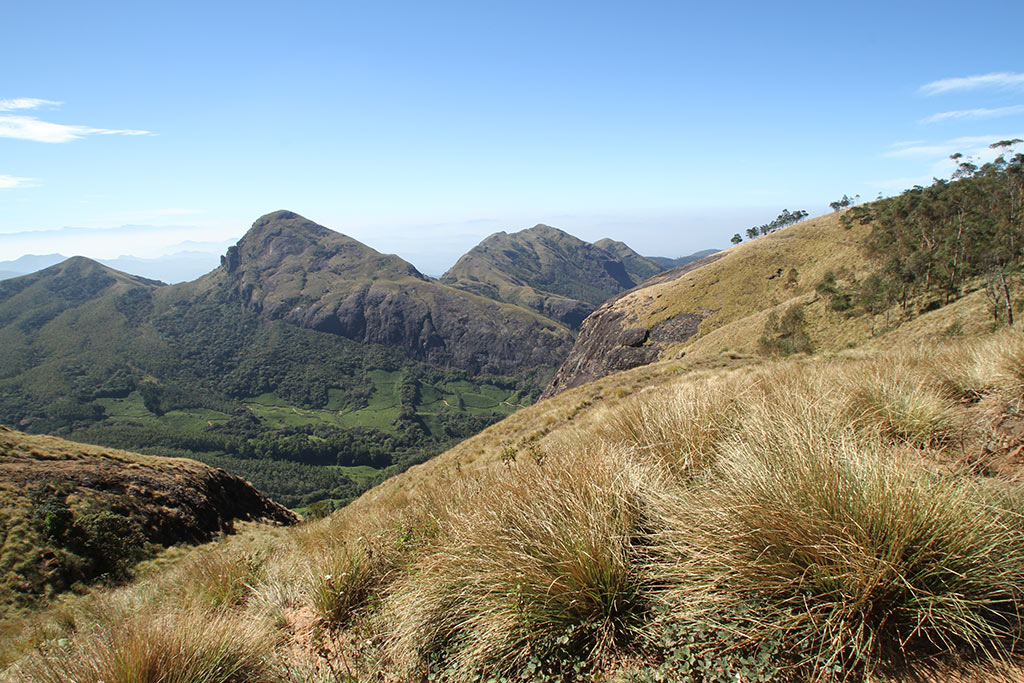
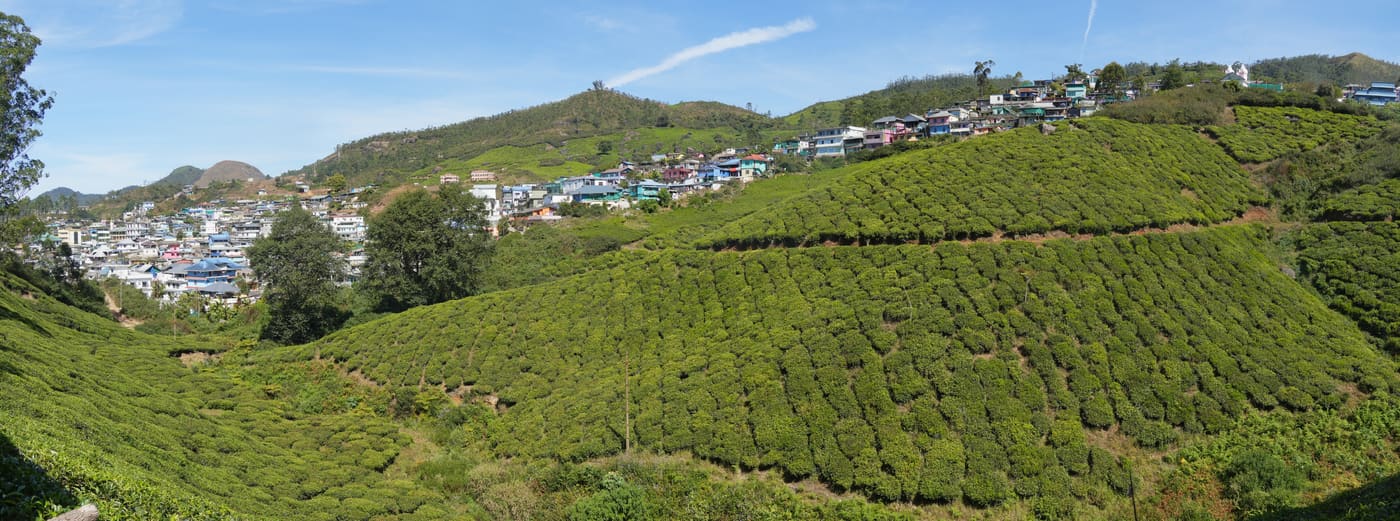
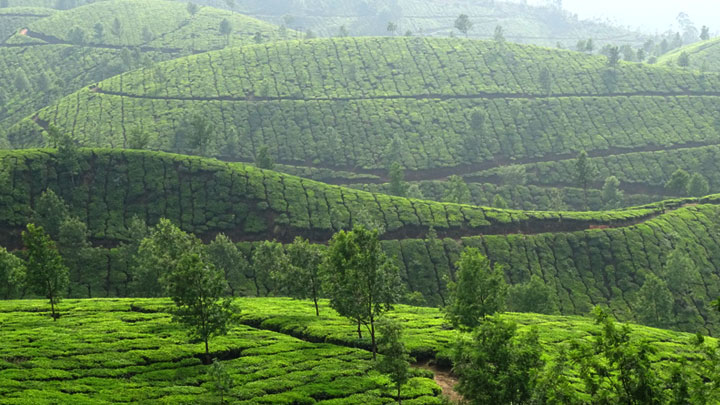
The setting is quintessential Munnar: undulating tea-clad ridgelines, spice gardens, and a moist, cloud-brushed climate that keeps everything lush. Attukad sits within this larger high-range landscape of the Western Ghats, where the same heavy rains that feed the plantations also feed the streams, and where a waterfall can go from a trickle to a torrent within a single wet week.
Timing transforms the experience completely. During the south-west monsoon and the weeks that follow, the fall swells into a thundering, frothy wash of white that can be heard well before it is seen, and the whole gorge is alive with spray and noise. In the drier months from roughly late winter into early summer, the flow narrows and the rock steps show through — quieter and more contemplative, but far less dramatic.
That seasonal swing also carries a warning. The rocks are worn glassy-smooth by years of running water, and in spate the pool and channels below can be deceptively powerful. Attukad is loveliest admired from the safe viewing area and the paths — a place to sit, watch and photograph the water rather than to wade carelessly into it, especially when the monsoon has it in full roar.
History
Attukad belongs to the high ranges of Idukki district, in the plantation country that grew up around Munnar during the late nineteenth and early twentieth centuries. When British planters opened the hills to tea, they reshaped these slopes into the terraced greenscape seen today, and the waterfall — long known to the region’s hill communities — became one of the natural landmarks dotted among the estates.
Geographically the fall is a product of the Western Ghats and their monsoon regime. The Ghats intercept the south-west monsoon sweeping in from the Arabian Sea, wringing enormous rainfall from it across June to September, and a second, gentler pulse from the retreating north-east monsoon later in the year. This water gathers in hillside streams that cut through the rock, and Attukad is one place where such a stream steps down a resistant rock face on its way to the valley.
Its immediate neighbourhood carries a notable footnote in Kerala’s development history. The falls lie close to Pallivasal, site of the Pallivasal Hydro Electric Project — widely described as the first hydroelectric scheme in the state — which harnessed the same abundant high-range waters to generate power. The proximity underscores how central these monsoon-fed streams have been to the region, valued for energy as well as scenery.
For most of its life Attukad has been a locals’ and trekkers’ spot rather than a heavily engineered attraction, reached along the Munnar–Pallivasal road and appreciated for its trails and its dramatic wet-season flow. Kerala Tourism promotes it today as a trekking destination set amid streams, medicinal flora and forest, keeping it firmly within Munnar’s wider circuit of tea gardens, viewpoints and cascades.
The waterfall’s character is therefore inseparable from its climate. Everything that makes Attukad worth the trip — the lush greenery, the thundering monsoon torrent, the thin dry-season threads — is dictated by where it sits in the Ghats and by the rhythm of the rains, a reminder that in this landscape the calendar shapes the view.
Why visit
It is one of the more dramatic cascades within easy reach of Munnar town — a wide, stepped fall that, in the right season, roars down some hundred feet of rock in a sheet of white froth.
The setting is postcard Munnar: tea-clad ridges, spice slopes and forest all around, with cool, mist-freshened air that makes even the short walk in a pleasure.
It is a genuine trekkers’ favourite, with trails winding past side-streams, medicinal plants and birdlife rather than a paved, crowded overlook.
Photographers are spoiled — the fanning water, drifting spray and green backdrop give endlessly changing light, especially in the hours around midday when the falls are best lit.
There is generally no entry fee to view the falls, making it an easy, low-cost addition to a Munnar itinerary of viewpoints and plantations.
In full monsoon and post-monsoon flow it delivers a raw, elemental spectacle — the kind of thundering water that you hear long before you see, and remember long after.