The story
The Tea Museum at Nallathanni, a few kilometres from Munnar town, is where the High Range tells the story of how it became tea country. Run by Kanan Devan Hills Plantations (KDHP) — the plantation company with historic Tata links — it gathers old machinery, faded photographs and estate curios under one roof, adds a working demonstration of how a green leaf becomes the cup in your hand, and finishes with a tasting. It is a modern, curated, ticketed attraction rather than an ancient site, and on a busy afternoon it can feel briskly commercial; but for anyone who wants to understand the landscape of clipped green hedges rolling to every horizon, it is one of the most rewarding stops in Munnar.
The story of Tea Museum
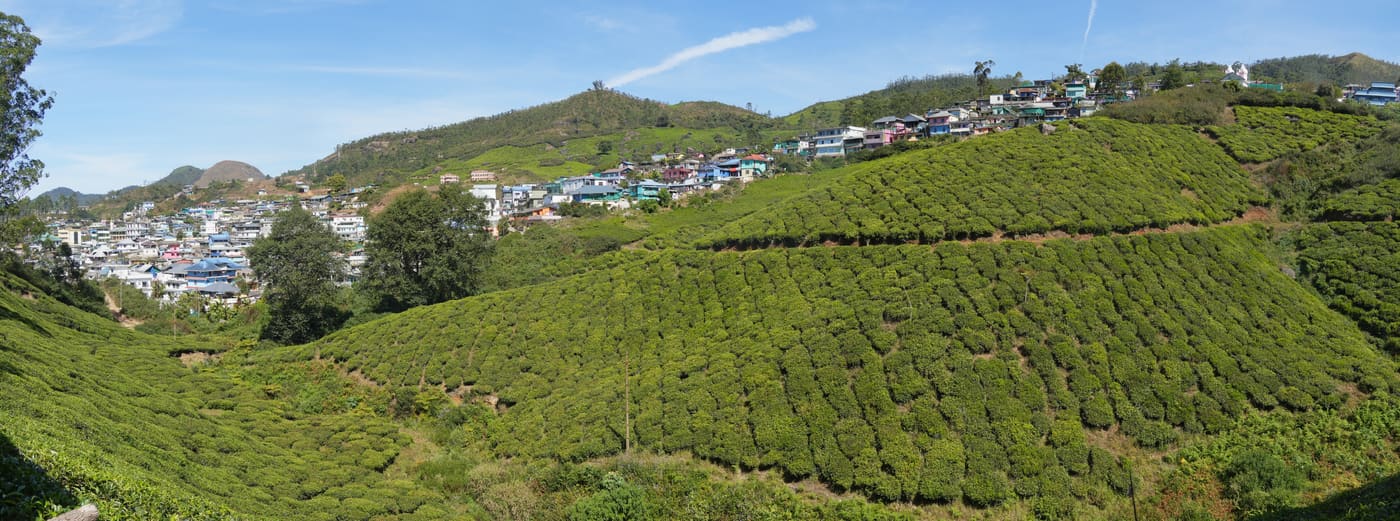
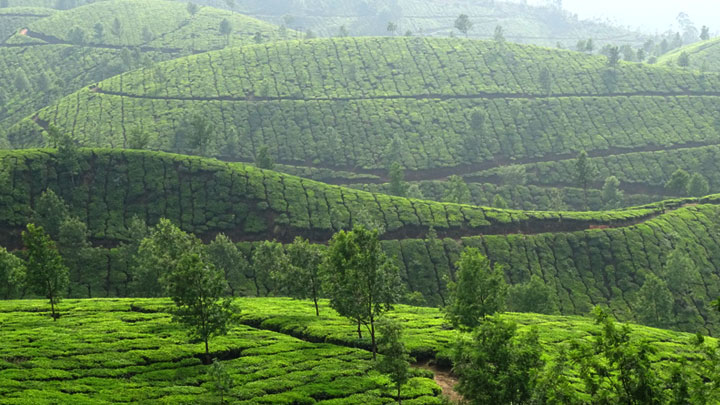
Most visitors arrive at the Tea Museum already saturated with the sight of tea — the terraced slopes, the pluckers with cane baskets, the neat contour lines that make the Kannan Devan hills look combed. What the museum offers is the story behind the scenery. Set inside the working Nallathanni Estate, it is arranged as a walk-through: a low-slung building, a curated audio-visual room, galleries of artefacts, and a demonstration and tasting section, all threaded so that a first-time visitor leaves knowing roughly how Munnar came to be and how tea is actually made.
The heart of the experience is the collection of old machinery and estate relics, many of them more than a century old. Among the prized exhibits is an original tea roller said to date from around 1905 (indicative — confirm on site), a Pelton wheel that once helped generate power on the estates in the 1920s, and a Rotorvane — an early machine associated with the CTC (crush, tear, curl) style of processing. At the entrance stands a granite sundial, reportedly built in 1913 by the Art Industrial School at Nazareth in Tamil Nadu (indicative — confirm on site), a small marvel of colonial-era engineering that still tells the time by the Munnar sun.
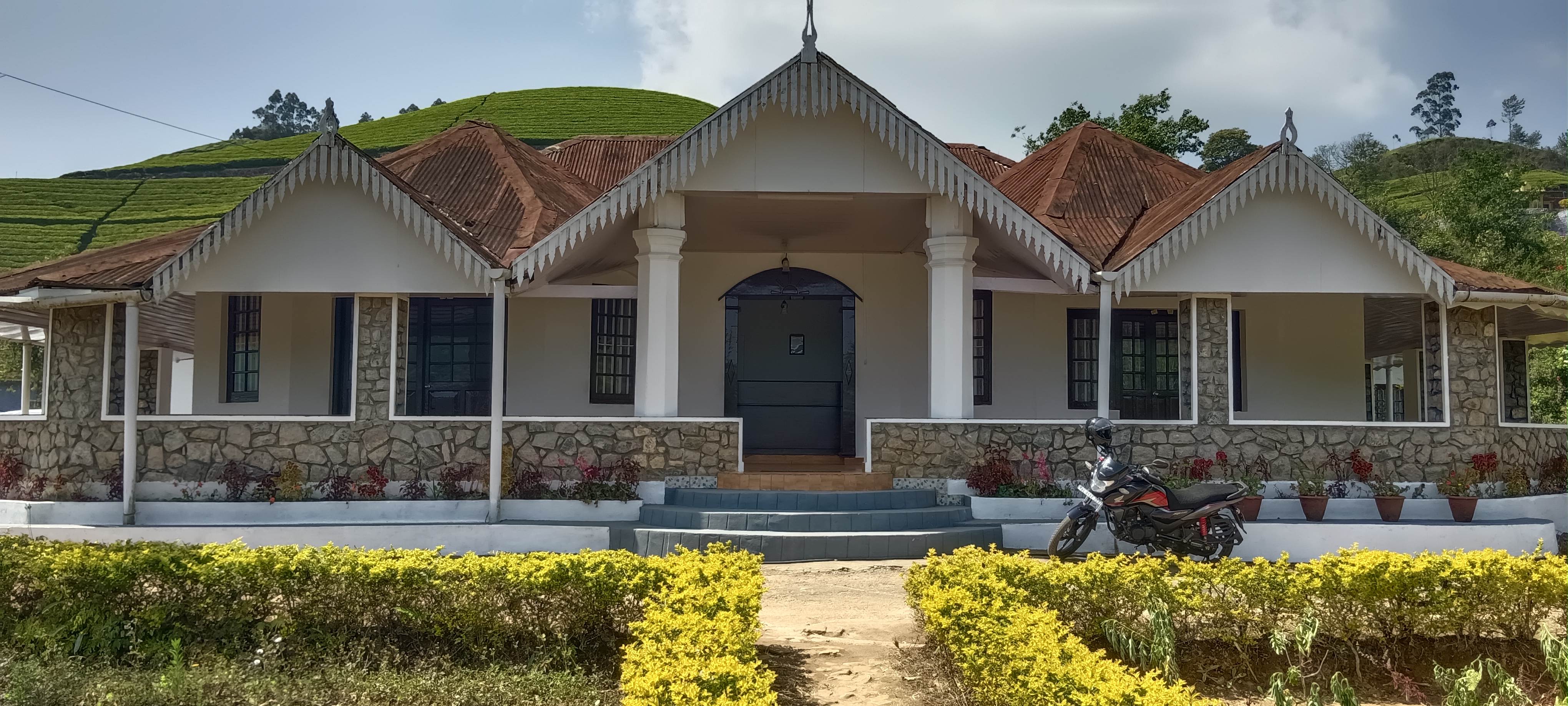
Elsewhere the museum leans into the texture of plantation life. One room is furnished like an old planter’s bungalow, with period furniture, a heavy cash safe, a magneto telephone, a wooden bathtub and a firewood-fired iron oven — the domestic world of the British managers who ran these estates. Antique photographs line the walls, and a rail engine or railway wheel recalls the long-vanished Kundaly Valley Light Railway, the narrow-gauge line that once hauled tea and supplies across the ridges before roads reached the High Range. Together these pieces turn abstract history into something you can stand beside.
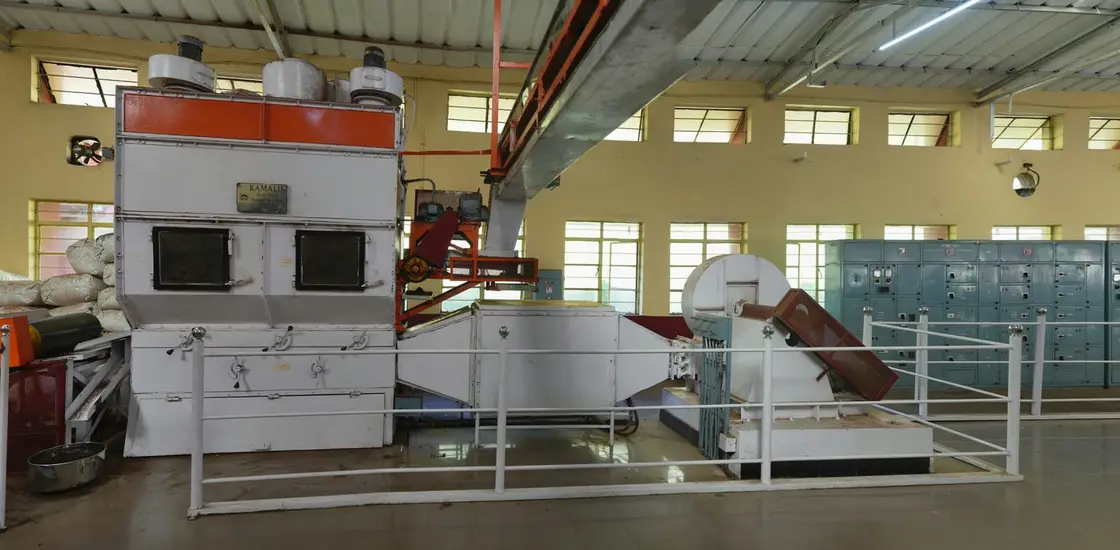
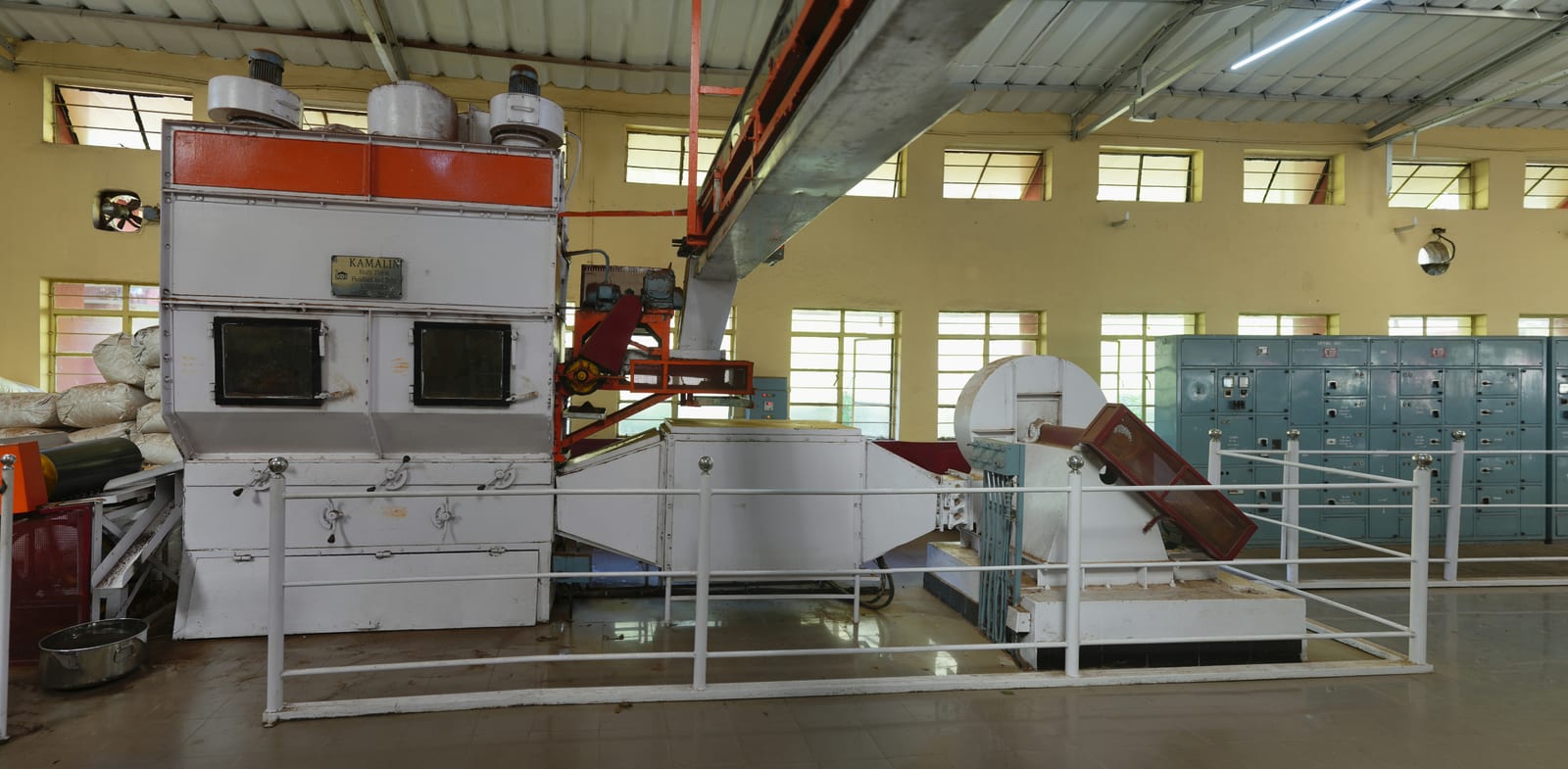
The most popular section for many visitors is the live demonstration. A compact processing set-up — often described as a mini-CTC and an Orthodox unit — shows how the plucked leaf is withered, rolled or cut, fermented (oxidised), dried and sorted into grades. Watching leaf turn to made tea in miniature makes sense of the machinery in the galleries next door. Staff or a curator typically walk visitors through the steps, and there is usually a short audio-visual presentation on Munnar’s plantation history to set the scene.
The visit generally ends with a tasting, where you can sample and often buy KDHP’s teas — a chance to notice how a hill-grown Munnar tea differs from the mass-market blends most people know. It is, of course, also a shop and a brand showcase, and it is honest to say so; the tasting doubles as marketing. Even so, sipping a fresh cup while looking out at the estate that grew it is a genuinely pleasant full stop to the tour.
As an experience the Tea Museum works best as a 60-to-90-minute primer, ideally taken early in a Munnar trip so that the plantations you drive through afterwards mean more. It is compact, it can get crowded when tour buses coincide, and the artefact labels do most of the talking — but it fills the gap between admiring tea and understanding it, which is exactly what a first-time visitor to the High Range wants.
History
The museum was opened on 1 April 2005 (indicative — confirm locally), established by Tata Tea, which then owned the sprawling Kannan Devan estates around Munnar. It was promoted as the first tea museum of its kind in India, created to record and display the more-than-a-century-old story of tea cultivation in the Idukki hills and to explain the craft of tea processing to the visiting public.
That same period marked a change of ownership that the museum quietly reflects. In 2005 Tata Tea restructured its South India plantations into an employee-owned company, Kanan Devan Hills Plantations Company (KDHP), in which the workers and staff hold a majority stake and Tata retained a minority interest. The museum, set in the Nallathanni Estate, passed into KDHP’s care, and it remains a KDHP-run attraction today — which is why it is sometimes called the Tata Tea Museum and sometimes the KDHP Tea Museum.
The deeper history the museum commemorates begins in the 1870s and 1880s, when the Kannan Devan Hills — a high, cool, then largely forested plateau — were opened up for planting. Tradition credits the Scottish planter J.D. Munro, who negotiated rights over the Kannan Devan hills with the Poonjar chief in the late 1870s, and the pioneering planter A.W. Turner, among the Europeans who first cleared and experimented on these slopes (indicative — confirm locally). Early attempts at coffee, cinchona and other crops gave way to tea, which suited the altitude and climate of the High Range far better.
Growing tea in such remote hills demanded ingenuity, and the exhibits are really monuments to that effort. The Kundaly Valley Light Railway and a network of ropeways and cart roads were built to move tea and stores across ridges and ravines; Pelton wheels harnessed the abundant hill streams to generate power for the factories; and machines such as rollers and Rotorvanes mechanised what had begun as hand labour. Over time the estates consolidated under companies including James Finlay (Finlay Muir), later Tata-Finlay and then Tata Tea, before the KDHP transition of 2005.
For a first-time visitor it is worth knowing what the museum is and is not. It is a curated brand museum, telling the plantation story largely from the estate’s point of view, and it does not dwell much on the harder social history of plantation labour. Taken for what it is — a well-kept, accessible introduction to how Munnar’s tea country came to be, with real century-old machinery to show for it — it is a genuinely useful and enjoyable stop.
Why visit
It is the single best place in Munnar to understand the landscape you have come to see — how these hills were opened up, and how the green leaf on the slopes becomes the tea in your cup.
The live tea-processing demonstration, showing withering, rolling or cutting, oxidation and drying on a mini-CTC and Orthodox unit, turns an abstract industry into something you watch happen in a few minutes.
The collection of genuine century-old artefacts — an early-1900s tea roller, a 1920s Pelton wheel, a Rotorvane, and the 1913 granite sundial at the entrance — gives a rare, tactile sense of colonial-era plantation engineering.
The tasting at the end lets you compare and buy KDHP’s hill-grown teas, a nice sensory pay-off and an easy source of edible souvenirs to take home.
It is compact, well-signposted and undemanding — a good 60-to-90-minute activity that suits families, older travellers and rainy afternoons, and works well as an early stop that makes the rest of your Munnar sightseeing richer.
The old photographs, planter’s-bungalow room, and relics of the Kundaly Valley Light Railway make the human story of Munnar’s pioneers vivid in a way no viewpoint or garden can.