The story
About 7 km from Munnar, cradled in the folds of the High Range at roughly 1,800 m above sea level (indicative — confirm locally), lies a quiet sheet of water the hills have kept a soft secret for generations. This is Sita Devi Lake at Devikulam — the very name meaning “pool of the goddess” — a mirror-calm tarn ringed by clipped tea gardens, silver-oak shade trees and mist that rolls in without warning. Pilgrims come for a legend, planters’ descendants come for memory, and most travellers simply come to breathe. It is not a manicured attraction so much as a mood: still water, cool air and a story older than the tea.
The story of Devikulam / Sita Devi Lake
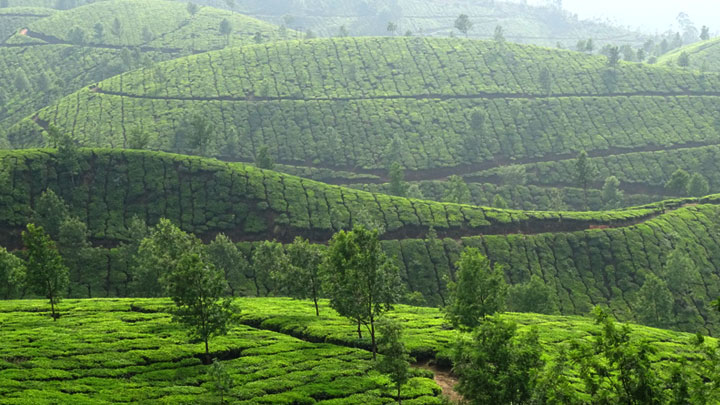
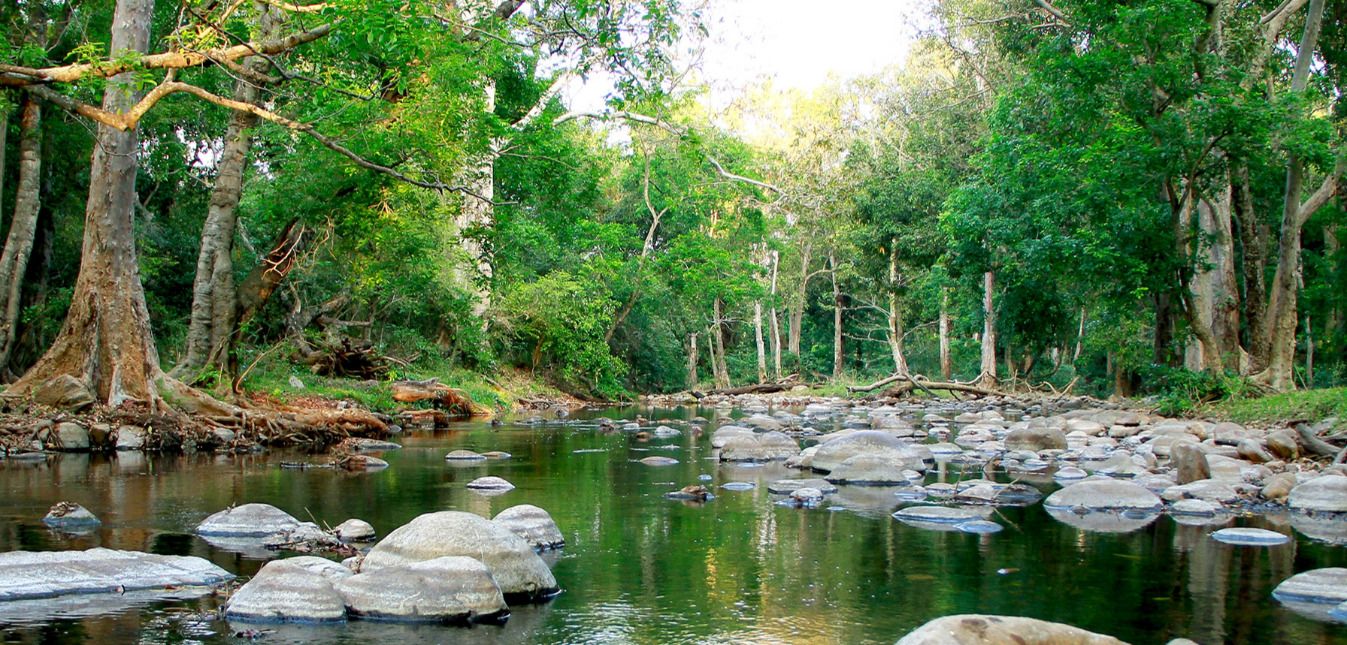
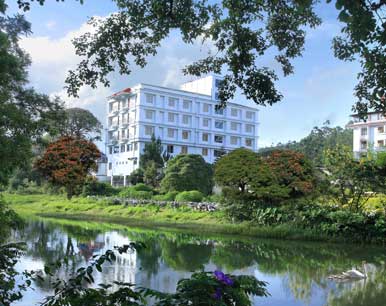
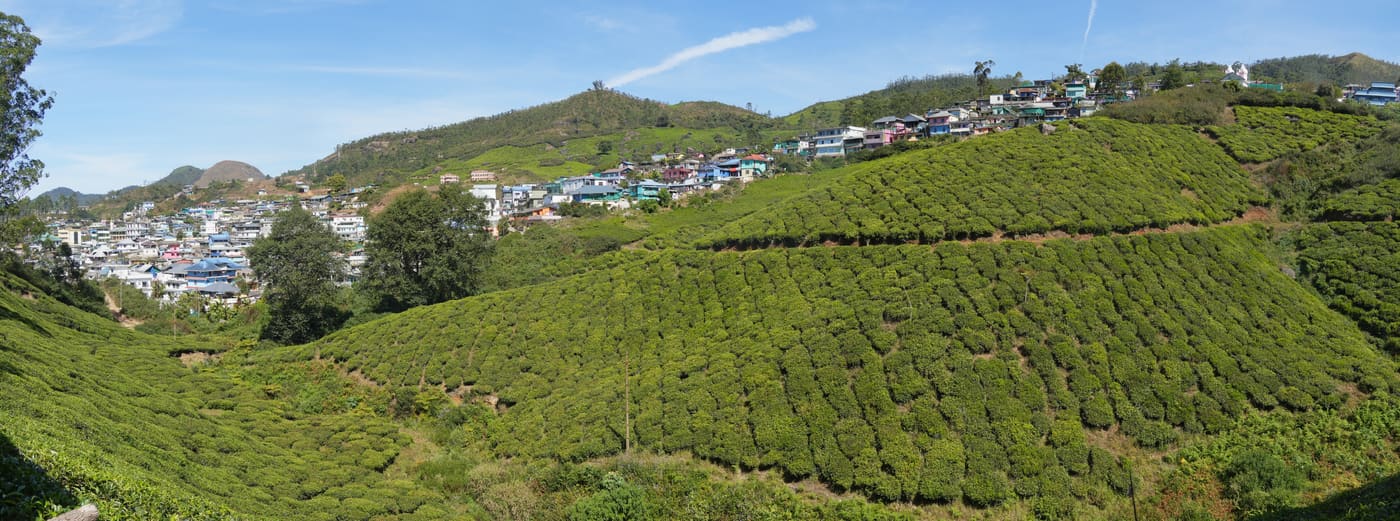
Devikulam does not announce itself. The turn off the Munnar–Devikulam stretch of NH85 is easy to miss, and the lake reveals itself only after the road drops through corridors of tea, the bushes trimmed to a green so even they look combed. Then the trees part and there it is — a dark, glassy oval held in a bowl of hills, so sheltered from wind that on a clear morning the reflected sky seems more convincing than the real one overhead.
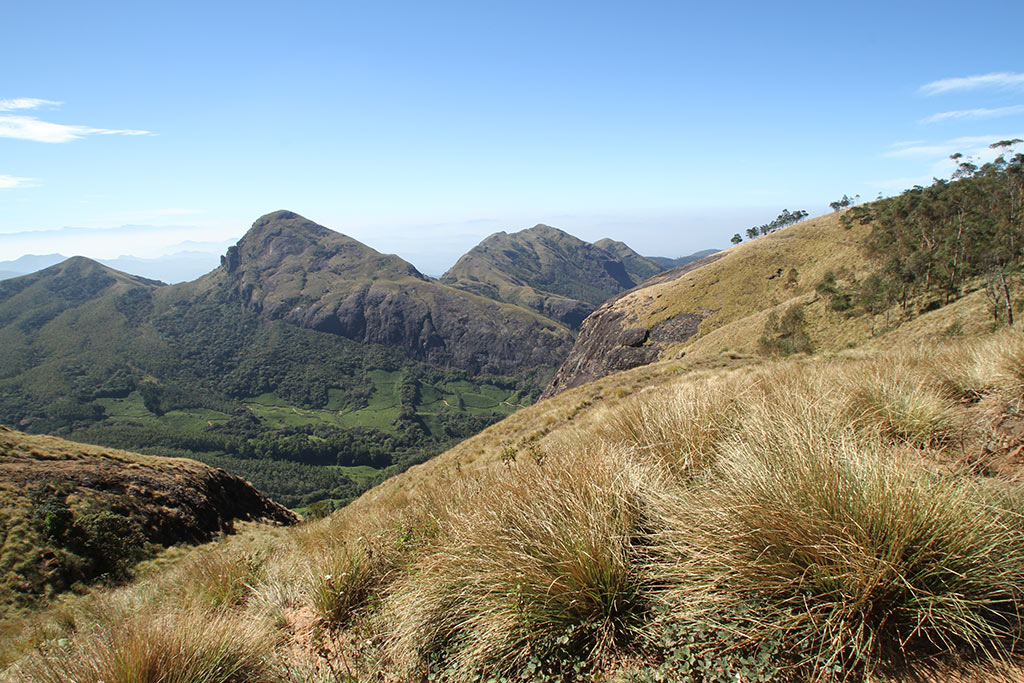
The setting is the star. Tea gardens climb the slopes on every side, stitched with the narrow footpaths pluckers use, and above them the ridgelines fade into layers of blue. Grevillea and eucalyptus lean over the banks; the air carries that unmistakable High Range smell of wet earth, crushed leaf and woodsmoke. Bird calls carry a long way across the water. Even when a handful of visitors are about, voices seem to drop of their own accord — the place asks for quiet and usually gets it.
For most of the year the lake is at its loveliest early, when mist sits on the surface and burns off slowly as the sun clears the eastern ridge. A slow walk along the accessible banks, a flask of Munnar tea, a long look at the reflections — this is the whole experience, and it is enough. Photographers linger for the way the light works the water; couples and older travellers like it precisely because there is nothing to rush toward.
The waters carry a double reputation. Devotees hold them sacred because of the Sita legend (see the myth below), and local lore has long credited the lake with a curative, mineral quality — the belief that a dip or a splash carries some healing virtue (framed as belief, not verified — confirm locally). Whether that draws from a genuine spring chemistry or simply from the aura of the goddess, no traveller need decide; the reverence itself is part of what you have come to feel.
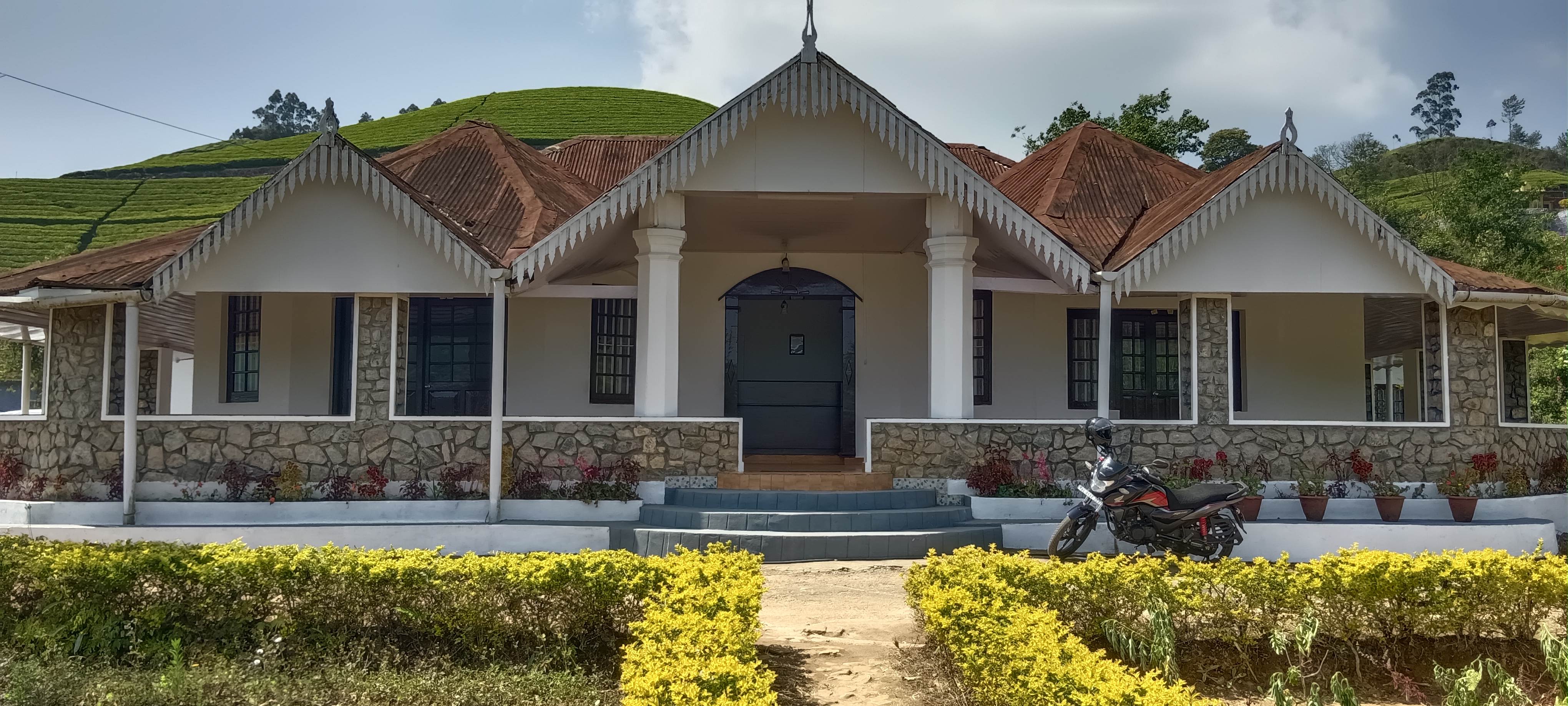
Devikulam also wears its plantation past openly. This was one of the oldest European settlements in the High Range, a cool refuge where early planters camped and later built, and the tidy estates around the lake are its direct inheritance. That layering — Ramayana legend beneath colonial tea history beneath present-day quiet — is exactly what makes the spot feel deeper than its modest size suggests.
A word of honesty befitting the place: this is a low-key, sometimes lightly managed lake, not a landscaped boating park. Parts of the shoreline can be marshy or weed-choked depending on the season, access is not always open or free of formality, and there is no guarantee of trout, boats or facilities on any given day. Come for stillness, tea-country beauty and a good story, and Devikulam rewards you generously; come expecting a polished resort lake and you may be puzzled. (Confirm current access, activities and conditions locally before setting out.)
Legend & myth
The name tells the tale before any guide does. “Devi” is the goddess and “kulam” is a pool or tank, so Devikulam is literally the goddess’s pool — and the goddess in question is Sita Devi of the Ramayana. Legend holds that during the long years of exile, when Rama, Sita and Lakshmana wandered the forests of the south, Sita bathed in these very waters, and the lake has been hallowed as her bathing pool ever since (recounted as legend, not history).
It is from this act, the story goes, that the waters draw both their sanctity and their fabled healing virtue — the belief that Sita’s touch left the lake with a sacred, mineral, curative quality that persists to this day. That is why devotees still treat the water with reverence, and why some visitors seek it out for more than its scenery. Roampedia records the tradition faithfully as tradition; the therapeutic claim is folk belief rather than a verified medical fact (confirm locally, and treat the water with common sense).
As with the many Sita and Rama sites scattered across the Deccan and the Western Ghats, the point of the legend is not a courtroom-grade claim of where the exile actually passed, but the way it stitches a small Kerala hill lake into the vast geography of the Ramayana — turning a quiet tarn among the tea gardens into a place where an epic once, so the hills insist, paused to rest.
History
Long before it was a name on a tourist map, Devikulam was one of the earliest footholds of European settlement in the High Range. When planters first climbed the eastern flank of the Western Ghats in search of cool, cultivable uplands in the closing decades of the nineteenth century, Devikulam’s elevation and gentle bowl of land made it a natural camp and, before long, a settlement — one of the oldest hill outposts in the region that would become Munnar (indicative — confirm locally).
The wider story around it is the story of Munnar itself. In the 1870s the Poonjar chief leased a vast tract of these hills — on the order of 1.3 lakh acres — to British interests associated with John Daniel Munro, opening the High Range to plantation experiment. Coffee, cinchona and cardamom were tried first; it was the tea bush, planted from about 1880, that finally took to the climate and soil and remade the entire landscape you now see around the lake (dates indicative — confirm locally).
By the 1890s the settlement was established enough to carry the institutions of a permanent community: the first post office in the High Range is said to have opened on Devikulam Estate around 1892, a small but telling marker that this was a working, lived-in place and not merely a passing camp (indicative — confirm locally). The consolidation of dozens of scattered estates under the Kannan Devan Hills Produce Company by the late 1890s set the corporate frame for the tea country that still surrounds the lake today.
Something of that colonial hill-station character clung to Devikulam long after independence — the cool climate, the ordered estates, the sense of a retreat above the plains. Today Devikulam is also an administrative name in the district, and the lake sits within a working tea landscape rather than a museum, which is part of its charm: the history is not roped off but underfoot, in the estate roads, the plucking paths and the old shade trees leaning over the water.
Put the two histories together — the mythic and the mercantile — and Devikulam becomes a rare kind of place: a lake sanctified by a goddess of the Ramayana and, in the same breath, one of the cradle sites of Kerala’s tea economy. Few small ponds anywhere carry both an epic and an empire on their banks.
Why visit
For serenity above all. Sita Devi Lake is one of the quietest, least commercialised stops around Munnar — a place to slow down, walk gently and let the High Range work on you, rather than tick off a crowded viewpoint.
For the tea-country setting. The lake is ringed by some of the most photogenic tea gardens near Munnar, with mist, shade trees and layered ridgelines that reward early risers and photographers especially.
For the legend. Standing at a lake said to have been Sita’s bathing pool during the Ramayana exile — and long held sacred and healing for it — gives an ordinary stroll an extraordinary backstory (told as legend, not history).
For the history underfoot. As one of the oldest hill settlements in the High Range and an early node of Kerala’s tea story, Devikulam lets you feel the plantation past in the very roads and estates around the water.
For the quiet activities. Gentle lakeside walking, birdwatching, photography and — with prior permission where available — trout angling make this a restful half-stop rather than an adrenaline outing (confirm availability locally).
For its position. Just about 7 km from Munnar on the Munnar–Devikulam road, it slots easily into a Munnar itinerary as a peaceful counterpoint to busier attractions, without a long detour.