High in the rugged Western Ghats of Kozhikode district, Kakkayam Dam holds back the Kuttiyadi River in a dramatic forested gorge, its still green reservoir ringed by mist-wrapped ranges, waterfalls and rare Malabar wildlife — a place equally loved for its trekking and haunted by a dark chapter of Indian history.
The story of Kakkayam Dam
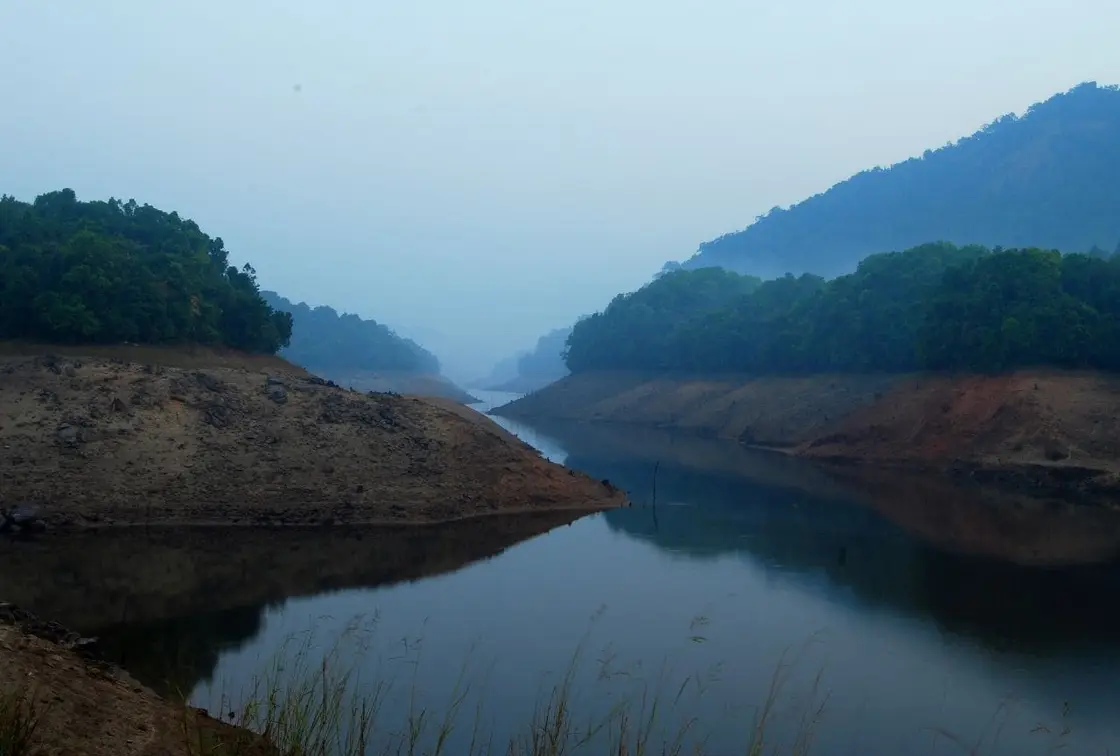
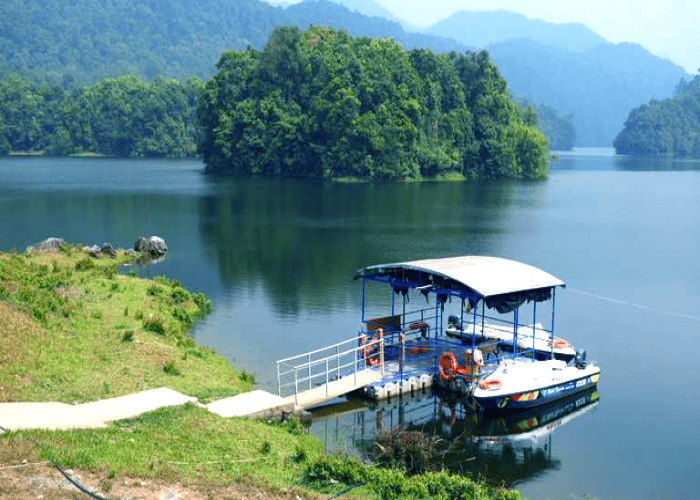
The road to Kakkayam climbs steadily out of the plains through Balussery, Koorachundu and the last plantation villages before the tar gives way to a Forest and KSEB checkpost and the hills close in. At roughly 750 metres above sea level, the land suddenly opens onto the reservoir — a long sheet of dark green water pressed between steep, forest-clad ridges of the Western Ghats. The Kakkayam Dam itself is a working hydro-electric structure, not a manicured tourist park, and that is precisely its appeal: this is raw Malabar high country, where cloud snags on the peaks and the only sounds are wind, water and birdsong.
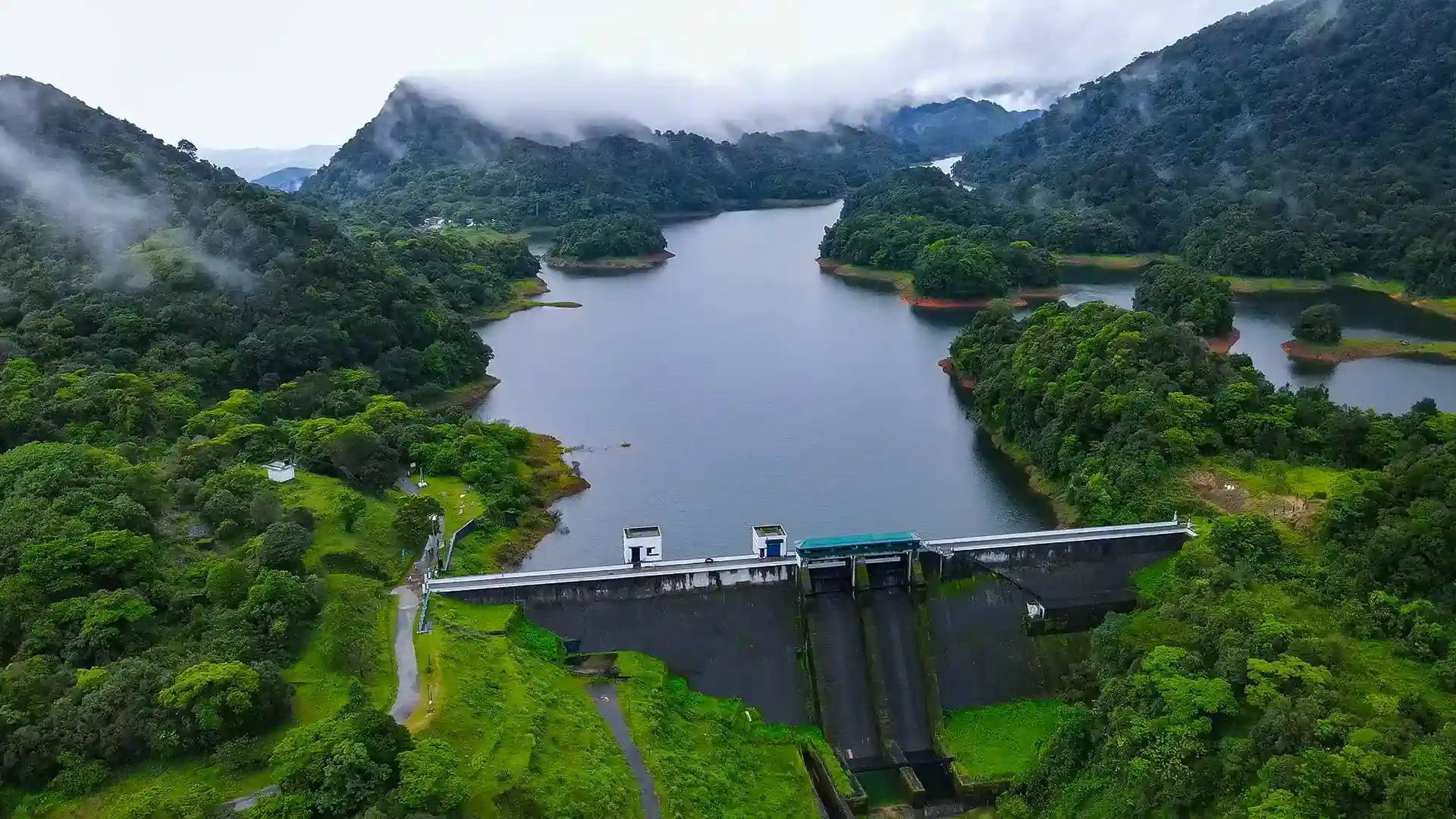
The dam is the storage heart of the Kuttiyadi Hydro Electric Project, one of Kerala's important power schemes. Water impounded here is carried through tunnels and steep penstocks down to the Kuttiyadi powerhouse, which drives the state grid, before the tail water is eventually returned to irrigate the plains below around Peruvannamuzhi. Standing on the bund, you sense that scale — the engineering that tamed a wild mountain river — while all around the landscape stays defiantly untamed.
Kakkayam sits on the edge of the Malabar Wildlife Sanctuary, and the valley is famous among naturalists for its biodiversity. Wild elephants move through these forests, along with gaur (Indian bison), deer, wild boar and a rich cast of birds and butterflies; the slopes shelter rare orchids and medicinal herbs prized by botanists. The area's ecological richness has drawn conservation attention for years, and much of the terrain beyond the reservoir is protected forest that can only be entered with permission and a guide.
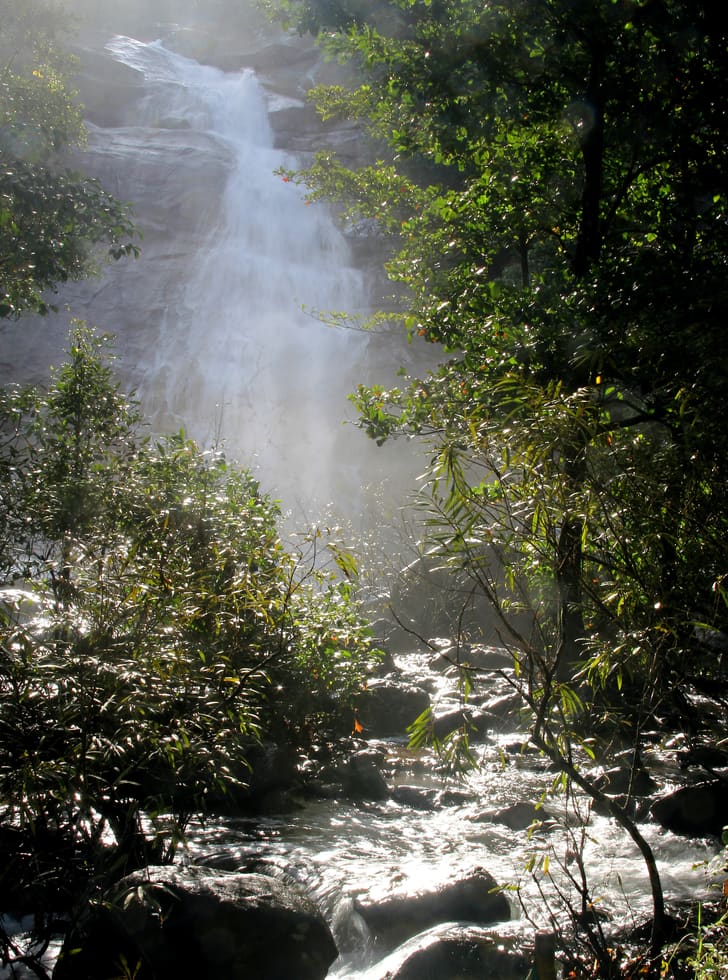
For the adventurous, Kakkayam is above all a trekking destination. Trails thread through dense jungle and grassland to viewpoints such as Kariyathumpara (Kariyathan Rock), where the whole gorge unfolds below, and onward towards the celebrated cascade at Urakkuzhi Falls, where water pours through a rock chute into clear pools. Rock faces around the reservoir also make it a spot for rock climbing and rappelling, and calm-weather boating on the reservoir offers a gentler way to feel the immensity of the surrounding ranges.
Because so much of Kakkayam is reservoir land and reserve forest, access is deliberately controlled. The dam-site and the eco-tourism treks operate to fixed daytime hours under the Forest Department and KSEB, and the deeper trails are opened only in safe seasons and closed in heavy monsoon. It is a place best approached with patience: confirm access before you set out, respect the checkposts, and let the sheer scale of the gorge and the quiet of the water do the rest.
Yet Kakkayam carries a weight that most scenic dams do not. In the forests near this reservoir stood a police camp that became infamous during the Emergency of 1975–77, the site of one of independent India's most notorious custodial-death cases. Visitors today come for the waterfalls and the wildlife, but the name Kakkayam also endures in Kerala's memory as a byword for a grim episode of state excess — a history worth knowing quietly as you take in the beauty.
History
Kakkayam's modern story is inseparable from hydro-power. The dam impounds the Kuttiyadi River as the storage reservoir of the Kuttiyadi Hydro Electric Project, whose main powerhouse has an installed capacity of about 225 MW. From the dam, water is led through tunnels and penstocks down the mountain to generate electricity, and smaller downstream stations use the same flow before the water is passed on for the Peruvannamuzhi irrigation scheme in the plains.
The project grew over decades. Later augmentation and extension schemes were added to capture more of the catchment's heavy annual inflow, including works to divert additional water into the Kakkayam reservoir and expand generating capacity. This continuing development is why the site remains an active, guarded power installation as much as a beauty spot, with the Kerala State Electricity Board (KSEB) and the Forest Department jointly controlling access to the dam and surrounding forest.
The valley's most sombre history belongs to the Emergency imposed across India in 1975–77. Deep in the Kakkayam forest, the police ran an interrogation camp used against suspected Naxalites. On 1 March 1976, P. Rajan, a student of the Regional Engineering College (REC) Calicut, was taken into custody in connection with an attack on the nearby Kayanna police station and brought to the Kakkayam camp, where he was subjected to brutal torture — including the notorious uruttal (rolling a heavy wooden log over the body) — and died. His body was never handed over and was secretly disposed of.
What followed became one of India's landmark civil-liberties cases. Rajan's father, T. V. Eachara Warrier, refused to let the matter rest and pursued a habeas corpus petition to discover his son's fate, a quest that ruined him financially but stirred the conscience of Kerala. After the Emergency ended, the case exposed the machinery of custodial torture; the political fallout was so severe that it forced the resignation of the then Chief Minister, K. Karunakaran, shortly after he had taken office in 1977.
The Kakkayam torture camp and the Rajan case have since been memorialised in books, journalism and Malayalam cinema, and they remain a defining reference point when Indians discuss the abuses of the Emergency. For the traveller, this means Kakkayam is a place of two truths held together — a spectacularly scenic Western Ghats reservoir, and a site whose forests witnessed a documented tragedy that Kerala has chosen never to forget.
Why visit
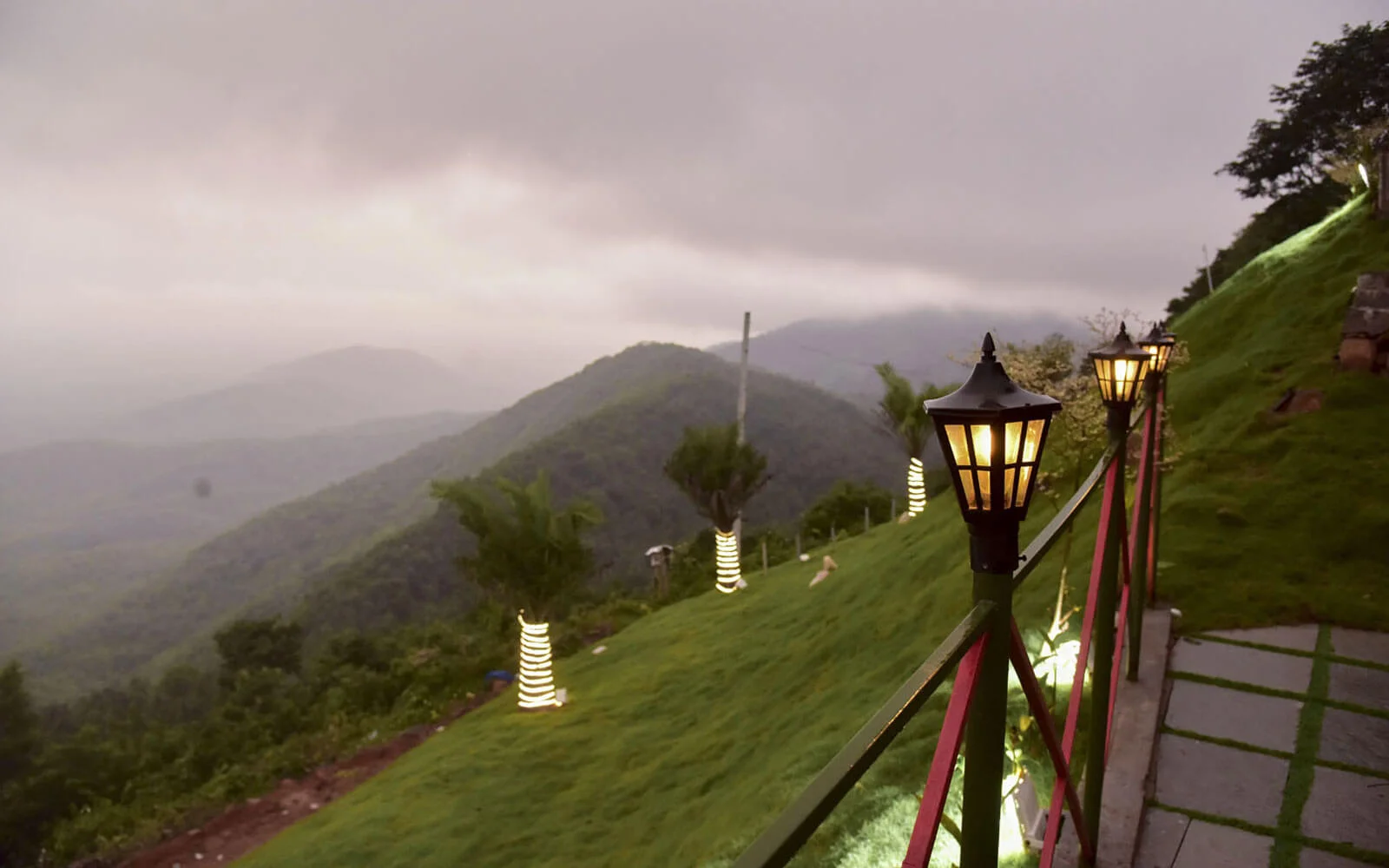
Dramatic Western Ghats gorge scenery — a large green reservoir at around 750 metres elevation, hemmed by steep, forested ranges and drifting cloud, with sweeping views from the dam bund.
One of Kerala's best high-country trekking bases, with jungle trails to the Kariyathumpara (Kariyathan Rock) viewpoint and the beautiful Urakkuzhi Falls.
Rich Malabar biodiversity on the edge of the Malabar Wildlife Sanctuary — wild elephants, gaur (bison), deer, birds, butterflies and rare orchids and medicinal plants.
Adventure activities including rock climbing and rappelling on the surrounding rock faces, and calm-weather boating on the reservoir (subject to conditions).
A genuinely off-beat, uncommercialised destination — a working KSEB hydro-power site rather than a crowded tourist park, so it rewards travellers who like quiet, wild places.
A place of real historical significance: the forests here hold the memory of the Emergency-era Kakkayam camp and the Rajan case, giving a visit unexpected depth for those interested in modern Indian history.