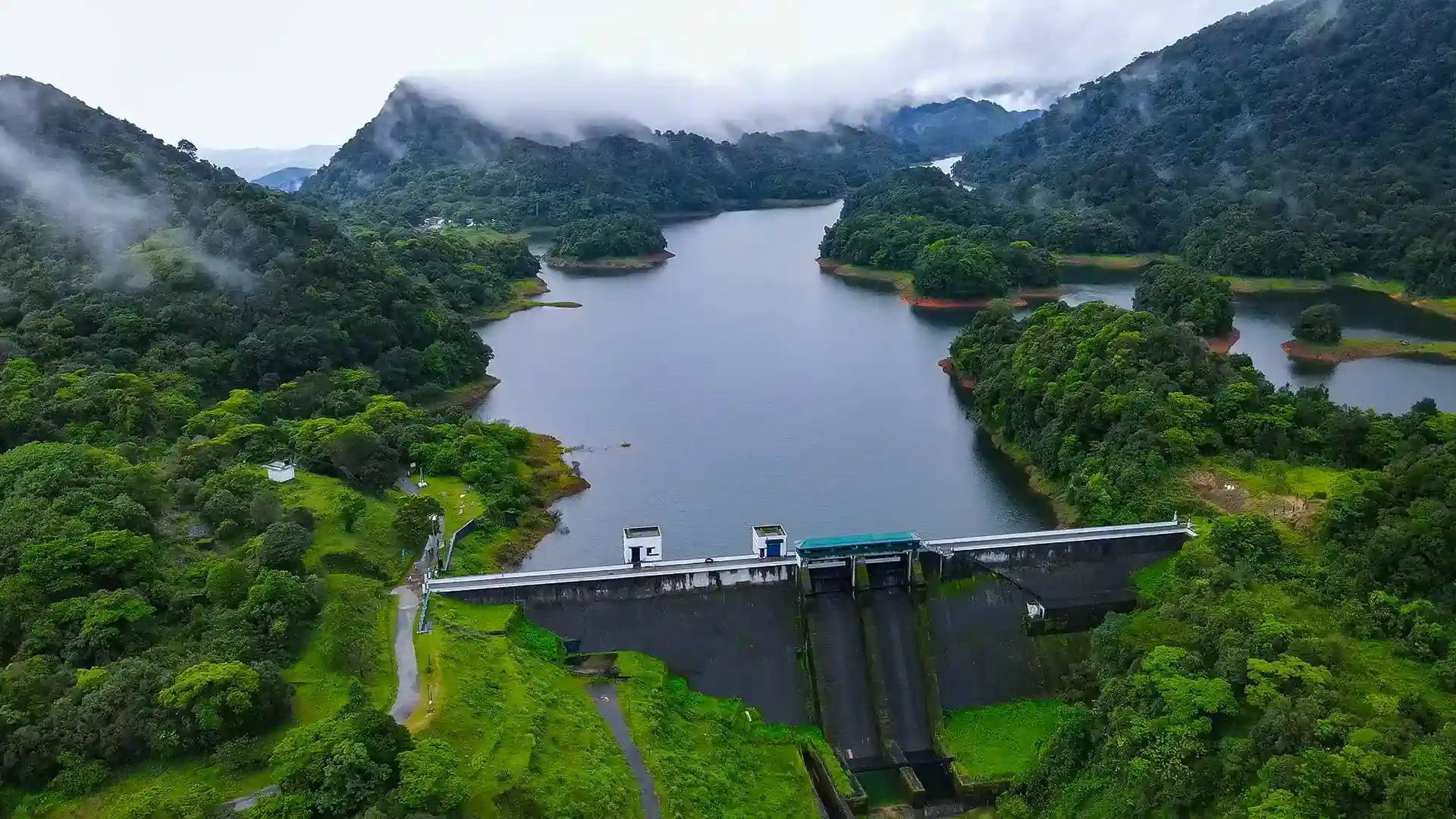
Cupped in the spice-green foothills of the Western Ghats, roughly 60 km east of Kozhikode town (indicative — confirm locally), Peruvannamuzhi Dam is Malabar’s favourite day-outing on the water — a broad, island-dotted reservoir where speed boats fan white wakes across the calm, a crocodile farm and bird sanctuary sit on a low green isle, and a memorial garden honours the region’s freedom fighters. Built as the storage heart of the Kuttiadi Irrigation Project, it is a working dam wearing a holiday face: part engineering, part wildlife, all forest and quiet.
The story of Peruvannamuzhi Dam
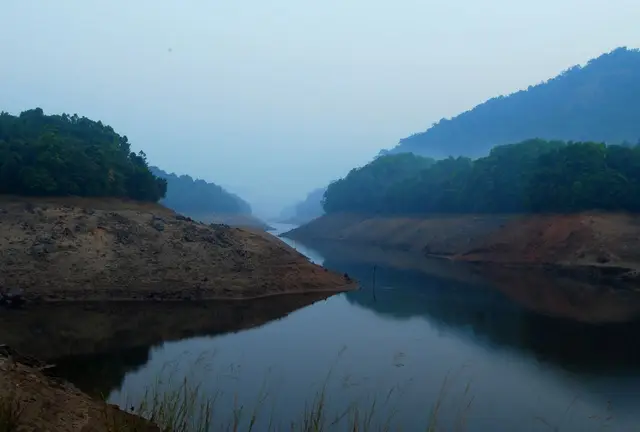
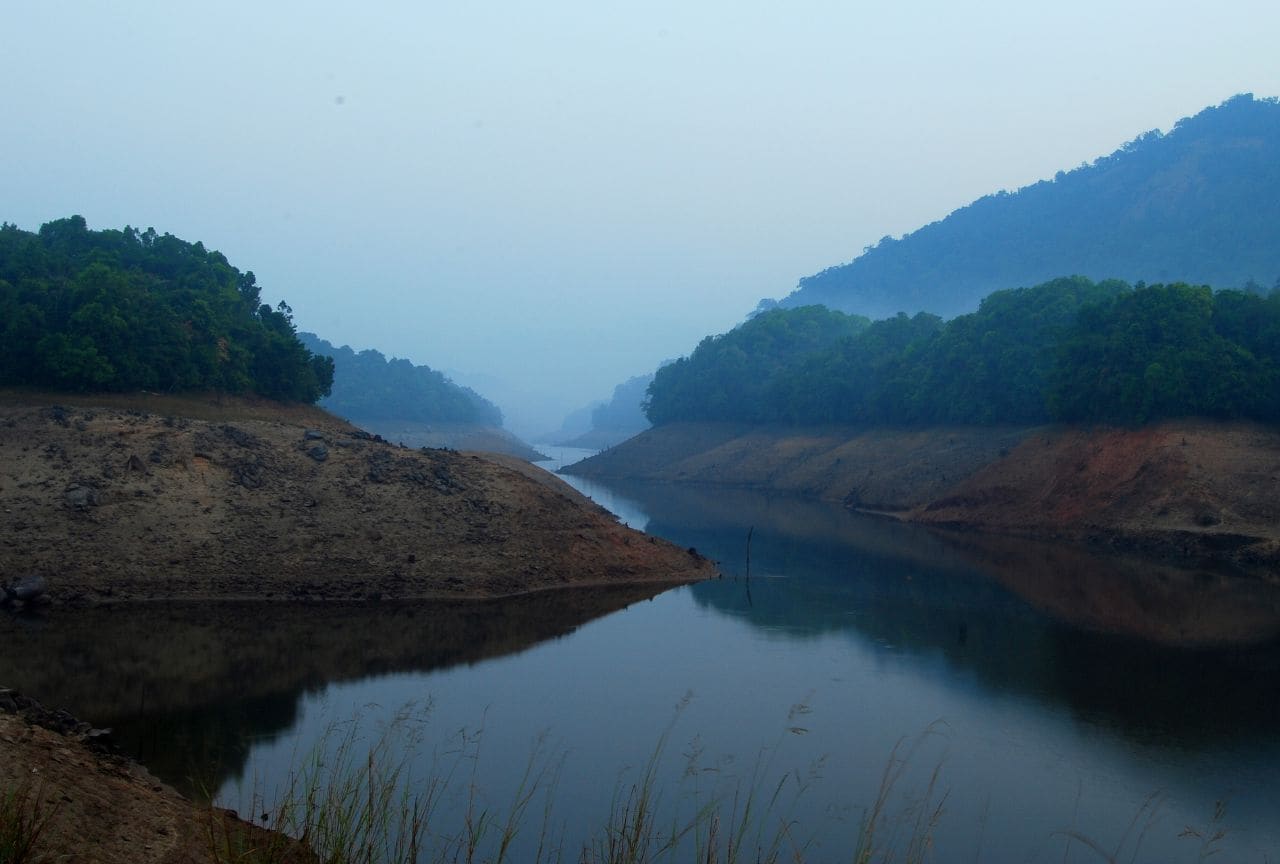
The first thing you notice at Peruvannamuzhi is the stillness of a very big sheet of water. The reservoir spreads out behind the dam wall like a flooded valley — because that is exactly what it is — its arms reaching back between wooded ridges until they vanish into blue haze. Low islands rise out of the calm, some no bigger than a clump of trees, and the whole scene sits inside a bowl of the Western Ghats. On a bright morning the water mirrors the hills so completely that it is hard to say where the forest ends and its reflection begins.
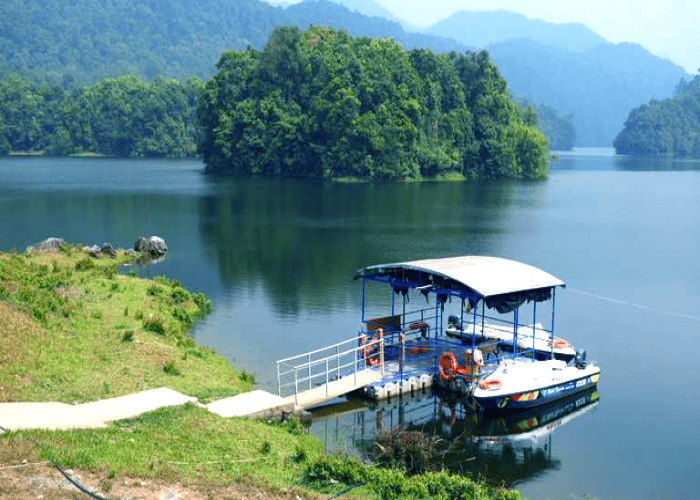
Most visitors come for the boating, and it is the right instinct. Speed boats wait at the little jetty for those who want the thrill — the sudden lurch, the spray, the ridge lines wheeling past — while slower row boats and passenger launches suit families and photographers who would rather drift (rides are ticketed separately and depend on water level and weather — confirm on the day). Out on the reservoir the temperature drops, kingfishers dart low over the surface, and the engine noise gives way, when you cut it, to birdsong rolling off the shore.
The heart of the outing is a small green island in the reservoir that houses a bird sanctuary and a crocodile farm, reached by boat. The sanctuary is said to shelter dozens of species — cormorants and darters drying their wings on snags, herons stalking the shallows, and forest birds calling from the canopy (species counts vary by source — treat as indicative). Nearby, the reptile enclosures and a small aquarium turn the island into an easy, child-friendly nature walk, while a wild-animal rehabilitation facility associated with the area cares for injured and orphaned creatures.
One island carries a quieter weight. A memorial garden — the Smrithivanam or Smaraka Thottam — was laid out in memory of the freedom fighters of this region, so that a boat ride here becomes, for a few minutes, an act of remembrance rather than recreation. Landscaped and green, ringed by water on every side, it is the kind of place people fall silent in without quite deciding to. Between the birds, the crocodiles and this garden, a single boat trip stitches together nature, novelty and history.
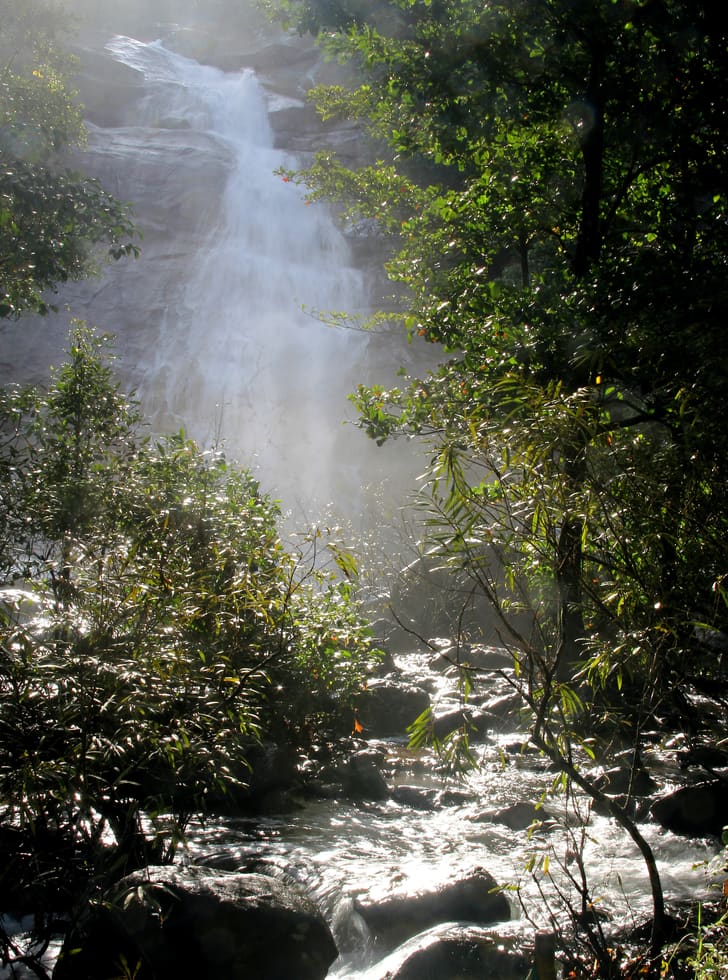
Around the water, the land does the rest of the work. The catchment climbs into cardamom and pepper country, and the drive in threads past spice smallholdings, rubber slopes and pockets of evergreen forest that belong to the wider Malabar wilderness. Peruvannamuzhi is also the natural staging post for Kakkayam — the higher dam-and-trekking zone deeper in the hills — so many travellers pair a calm morning on the reservoir with an afternoon among Kakkayam’s waterfalls, viewpoints and eco-tourism trails.
What makes the place linger is how unhurried it feels. There are no crowds shouting for your attention, no strip of shops — just water, forest, a jetty, and the long green islands. Come on a weekday and you may share the reservoir with little more than a fisherman’s canoe and a wheeling raptor. It is a destination that rewards slowness: a boat ride, a walk among the birds, a packed lunch under the trees, and the road home through the spice hills as the light goes gold.
History
Peruvannamuzhi Dam belongs to the Kuttiadi (Kuttiyadi) Irrigation Project, one of the most important irrigation schemes in the Malabar region and, historically, the principal one in Kozhikode district. The project was conceived to harness the Kuttiadi river’s upland flow — impounding the monsoon so that water could be released steadily through the dry months for farmland across the northern plains.
Work is generally dated to the early 1960s, with the scheme reported as commenced around 1962, partially commissioned in the early 1970s, and brought to fuller operation over the following decades as canal networks were extended (dates indicative — confirm locally). The reservoir it created is a large one — commonly cited at over a thousand hectares of water spread with a gross storage in the region of 120 million cubic metres, behind a dam wall in the mid-30-metre height range (figures indicative — confirm against official records).
The water stored at Peruvannamuzhi is put to double use — irrigation for the fields downstream and a contribution to power generation within the broader Kuttiadi water system — and its command area is understood to reach across parts of the Kozhikode, Malappuram and Kannur districts (details indicative — confirm locally). This is the everyday, unglamorous purpose that shaped the landscape visitors now come to enjoy: the islands, the wide calm surface and the flooded valley arms are all products of the impoundment.
The reptile farm, bird sanctuary, aquarium and boating facilities were developed later to open the reservoir to visitors, turning a functional waterbody into one of Kozhikode district’s better-known picnic and nature spots. The memorial garden for the region’s freedom fighters added a commemorative layer, tying the site to Malabar’s long tradition of resistance during the independence struggle.
Peruvannamuzhi should not be confused with the higher Kakkayam Dam deeper in the same hills, which is tied more directly to the Kuttiadi hydroelectric works. The two sit in the same upland catchment and are often visited together, but they are distinct structures with distinct roles — Peruvannamuzhi the broad, accessible leisure-and-irrigation reservoir, Kakkayam the steeper, wilder dam-and-trekking zone above it.
Why visit
The boating is the headline. Few reservoirs in north Kerala offer speed boats, row boats and launch rides on water this calm and this scenic — a genuine on-the-water experience with the Western Ghats rising on every side, suited equally to thrill-seekers and to families who just want to drift (rides ticketed separately — confirm on the day).
It is a rare three-in-one nature stop. A single boat ride reaches an island with a bird sanctuary, a crocodile and reptile farm and a small aquarium, so children and adults get birds, crocodiles and a scenic cruise in one easy, low-effort outing.
The setting is the real luxury — a large island-studded reservoir cradled by spice hills and forest, with the cool air, birdsong and mirror-still water that make Malabar’s uplands special, and none of the crowding of Kerala’s marquee hill stations.
There is quiet meaning here too. The Smrithivanam memorial garden island, laid out for the region’s freedom fighters, gives the visit a reflective note you do not expect at a boating spot and ties the landscape to Malabar’s independence-era history.
It is the perfect base for Kakkayam. Peruvannamuzhi pairs naturally with the higher Kakkayam eco-tourism and trekking zone — a calm morning on the reservoir followed by an afternoon of waterfalls, viewpoints and forest trails in the hills above.
And it is deeply local and unhurried — a working irrigation dam that Malabar families have long used as a picnic ground, so it feels authentic rather than packaged, especially on a weekday when the water is nearly your own.