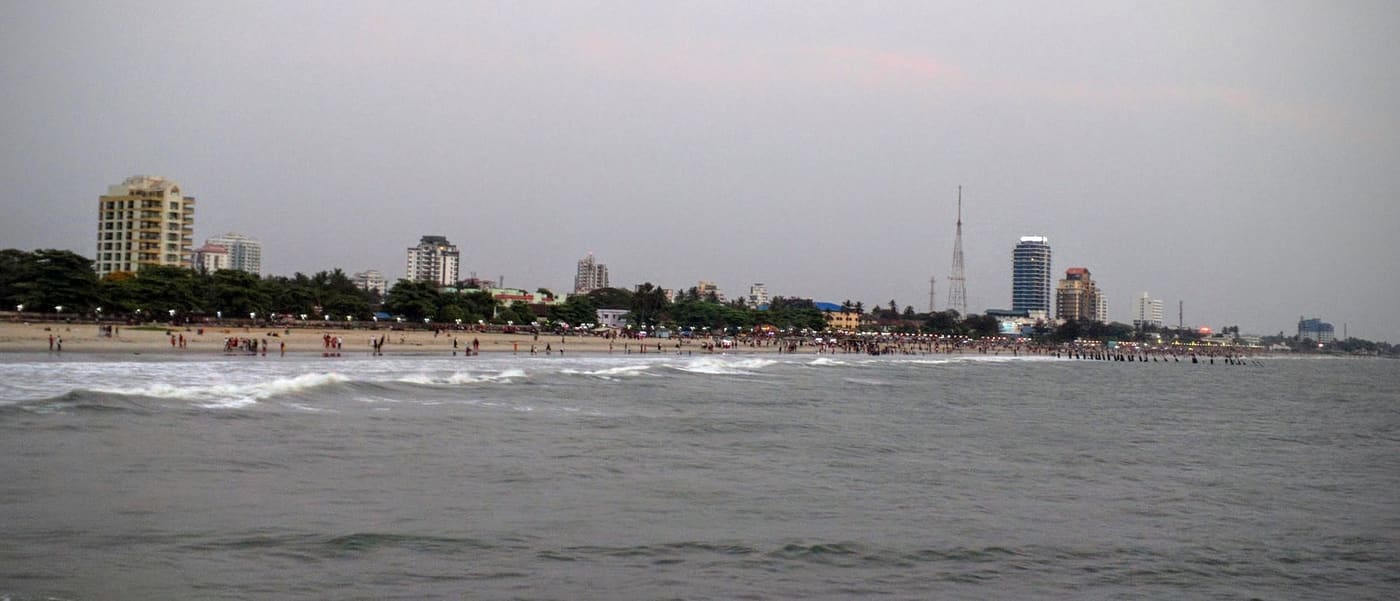
Kozhikode Beach — long known as Calicut Beach — is the seafront heart of a city that was once the greatest spice port on the Malabar Coast. Two crumbling iron piers reach out into the Arabian Sea, a lighthouse and Lions Park sit along the shore, and every evening the sand fills with families, walkers and street-food carts gathered to watch the sun drop into the water.
The story of Kozhikode Beach
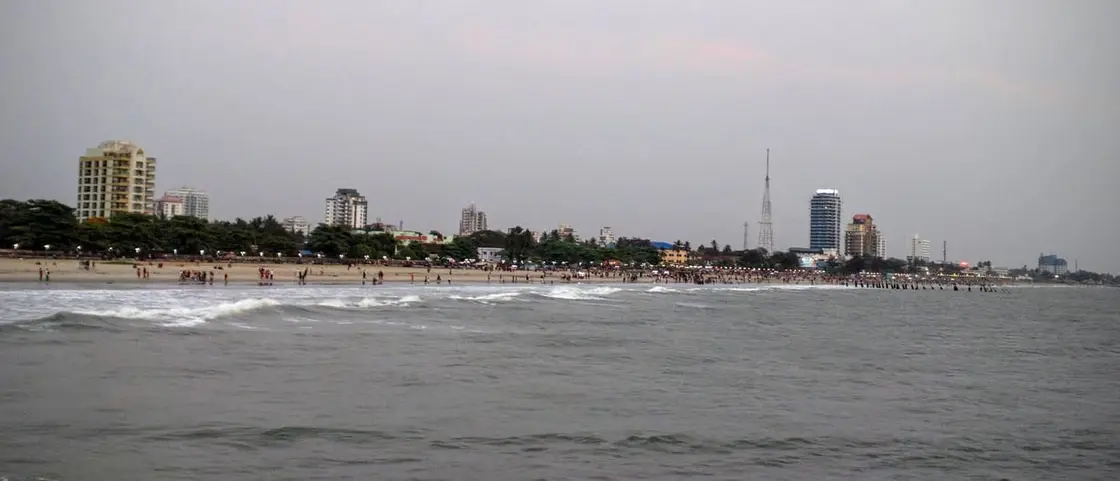
The beach runs as a broad, straight ribbon of dark sand along the western edge of Kozhikode city, edged by a paved promenade that has become the town's favourite gathering place. It is not a swimming beach so much as a social one — people come to walk, to sit on the sea wall, to let children run, and above all to watch the sun sink into the Arabian Sea. On weekends and holidays the crowds swell into the thousands, and the whole shoreline takes on the feel of an open-air fair.
Its most distinctive features are the two old piers that jut out toward the middle of the sea, both more than a century old and now weathered into skeletal ruins. Once used to load and unload cargo and passengers when Calicut was a busy working port, they have long since fallen out of use, their ironwork rusted and their decks broken. Today they survive as brooding silhouettes against the sunset — a favourite subject for photographers and a reminder that this quiet shore was once a place of ships and commerce.
As dusk approaches the beach comes alive with food. Carts and stalls line the promenade selling Kozhikode's beloved snacks — spicy fried fish and squid, unnakkaya, pazham pori (banana fritters), bhajjis, cut fruit, roasted peanuts, kadala, and the sweet, milky local tea. The street-food culture here is part of the draw in a city famous for its cuisine, and the smell of frying and grilling drifts along the shore as families settle onto the sand with paper plates.
Beside the beach stands Lions Park, a small children's amusement park set up next to the lighthouse, with rides, play equipment and green space that make the seafront especially popular with families. The lighthouse itself, the marine aquarium and the park together turn a simple stretch of sand into an evening outing where children can play, parents can relax, and everyone can catch the same golden sunset.
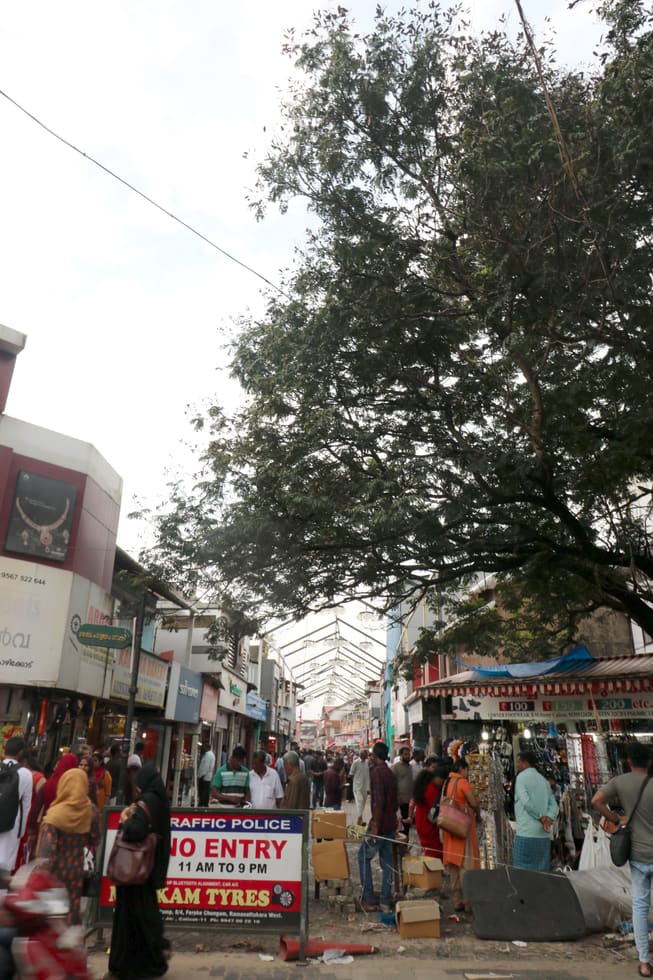
The beach carries the atmosphere of an old port city rather than a resort. Behind the promenade lie the streets of a historic trading town — the SM Street market, spice warehouses, and old mosques and temples — and the shore has always been the point where that city meets the sea. There is a lived-in, everyday quality to Kozhikode Beach: fishermen, joggers, couples, hawkers and holidaymakers all sharing the same sand, with none of the polish of a manicured tourist strand.
For most visitors the beach is best treated as a leisurely evening destination — a place to stroll the promenade, sample the street food, photograph the ruined piers against the sky, and sit out the sunset. The nearby beach of Kappad, a short drive north of the city, adds a layer of history that few Indian shores can match, giving the whole coastline around Kozhikode a sense of standing at one of the great crossroads of world trade.
History
Kozhikode — Calicut to the wider world — was for centuries the pre-eminent port of the Malabar Coast and the seat of the Zamorin (Samoothiri), the ruling dynasty of the region. Under the Zamorins the city grew into a cosmopolitan trading hub where Arab, Persian, Chinese, Jewish and Indian merchants met to deal in pepper, spices and cloth, and it was this seafront and its roadstead that made the city's fortune.
It was on this stretch of the Malabar Coast that the Portuguese navigator Vasco da Gama made landfall on 20 May 1498, completing the first direct sea voyage from Europe to India around the Cape of Good Hope. His arrival opened a maritime spice route that would reshape global trade and history. He was received by the Zamorin of Calicut, though the meeting soon soured as the city's established Arab traders saw the Portuguese as rivals.
The landing itself is generally placed not at the city beach but at Kappad (Kappakadavu), a short distance north of Kozhikode, where the Kerala Department of Archaeology has erected a stone monument whose plaque records that "Vasco da Gama landed here, Kappakadavu, in the year 1498." (The exact spot remains debated among historians, some of whom argue he actually came ashore at the nearby port of Panthalayani Kollam — indicative; confirm locally.)
As Calicut continued as a working port into the colonial and early modern periods, iron piers were built out into the sea to handle cargo and passengers where there was no natural harbour. Records point to a screw-pile iron pier on the northern part of the beach dating to the 1870s, several hundred feet long with a T-shaped end (indicative — confirm locally). With the decline of the old port trade and the rise of modern harbours these piers fell into disuse and were left to rust.
In more recent decades the seafront has been developed as a public recreation space rather than a commercial port — with a promenade, sea wall, lighthouse, marine aquarium and Lions Park added along the shore. The old piers have been retained as heritage landmarks, and Kozhikode Beach has settled into its present role as the city's civic gathering place and one of its best-loved evening destinations.
Why visit
One of Kerala's most atmospheric sunset spots, with the sky over the Arabian Sea turning shades of orange and pink each evening.
The two historic, more-than-a-century-old iron piers reaching into the sea — evocative ruins that make for striking photographs.
A superb street-food scene: fried fish and squid, pazham pori, unnakkaya, bhajjis, cut fruit and Kozhikode's famous snacks along the promenade.
Family-friendly, with Lions Park amusement park, a lighthouse and a marine aquarium right beside the sand.
A window into the history of Calicut as the great Zamorin spice port and the coast where Vasco da Gama reached India in 1498.
An easy, central city beach — a relaxed place to walk the promenade, sit on the sea wall and soak up everyday Kozhikode life.