In the beating heart of old Kozhikode, a chariot-shaped sanctum crowned with gleaming copper stands where the Zamorins once crowned scholars in gold — the Thali Shiva Temple, the royal shrine of Calicut and home of the centuries-old Revathi Pattathanam contest of learning.
The story of Thali Temple
Walk a kilometre east of Kozhikode railway station, past the bustle of Mananchira and the shops, and the city suddenly quietens into a walled temple compound. This is Thali Mahakshetram — the Thali Shiva Temple — one of the oldest and most revered shrines in the Malabar region and, for centuries, the tutelary temple of the Zamorins (Samoothiris), the medieval rulers of Calicut. It sits within what was once the royal palace precinct, a reminder that here temple and throne were intertwined.
The presiding deity is Shiva, worshipped (by tradition) in the benevolent form of Uma Maheswara, the lord seated with his consort. Yet Thali is unusual in that Vishnu is also venerated within the same complex, so devotees of both the Saivite and Vaishnavite traditions find a home here. Local tradition holds that the sage Parasurama — himself counted an incarnation of Vishnu — worshipped Shiva at this very spot in a distant age, a legend that binds the two deities together in the temple imagination (recounted as tradition — confirm devotional details locally).
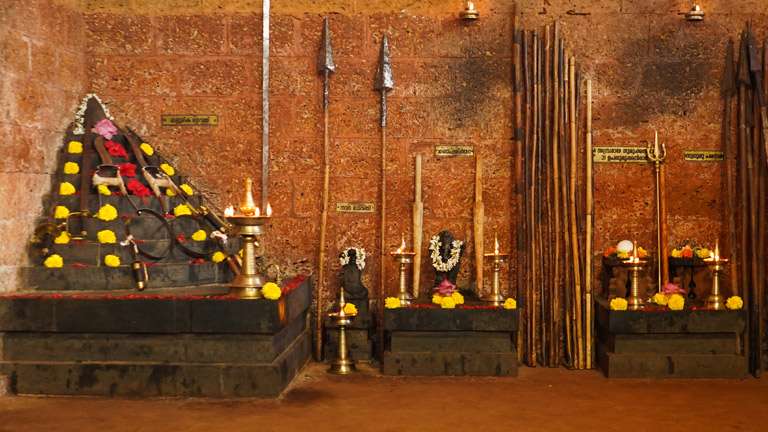
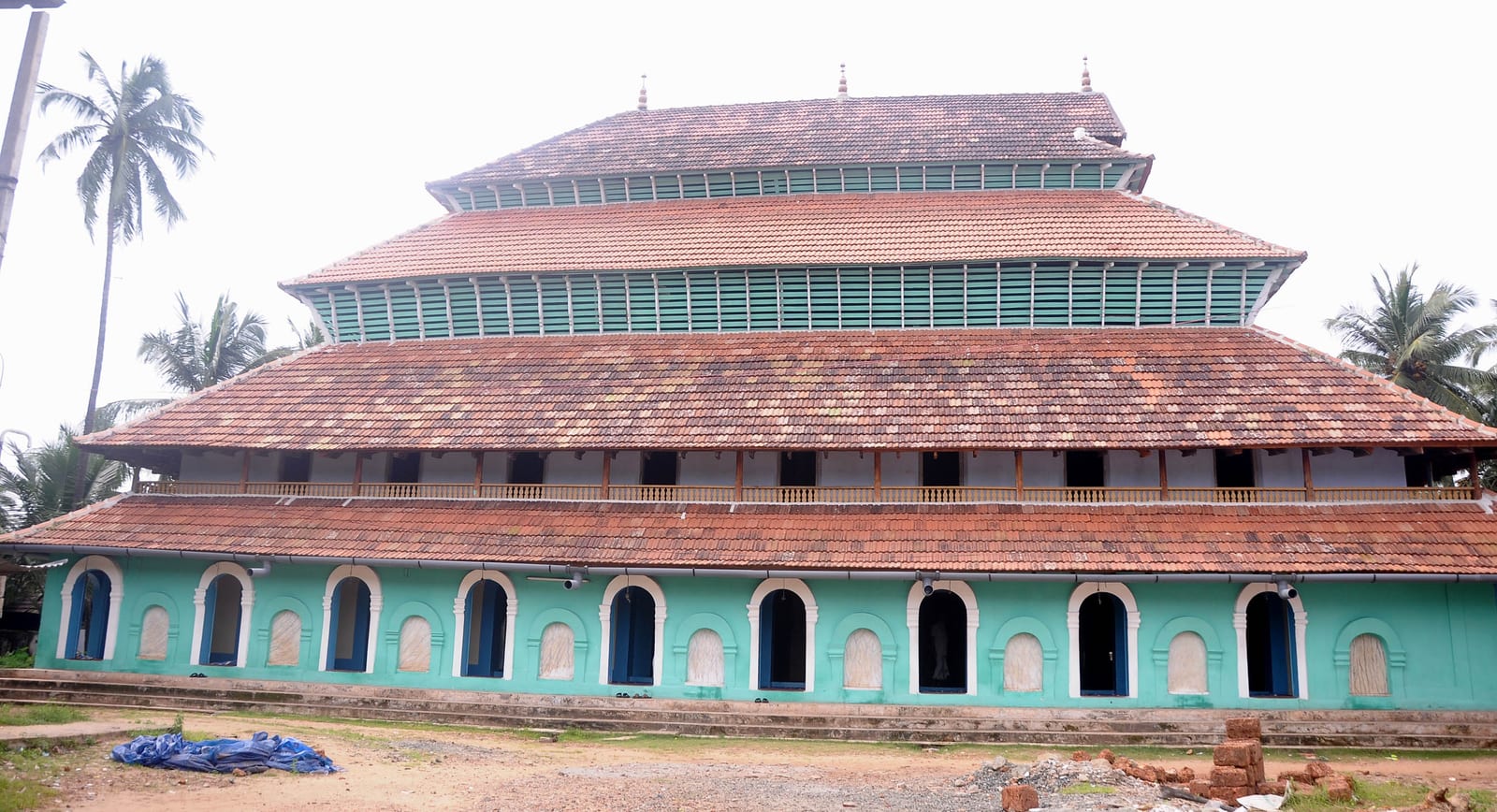
Architecturally, Thali is a textbook of the Kerala temple idiom. The two-storeyed sanctum sanctorum is often likened to a majestic chariot, its steep wooden roof sheathed in copper and brass and finished with fine metal relief. Inside and around the shrine, granite sculpture and old mural paintings depict Shiva and his divine retinue, the pigments and carved timber speaking of generations of craftsmen. The harmony of laterite, carved wood and metal roofing is exactly what students of Kerala architecture come to see.
But Thali is famous above all for something you cannot see in stone: an idea. For centuries the temple was the stage for the Revathi Pattathanam, an annual assembly and contest of Vedic, Vedantic and Sastraic scholarship. Learned men gathered over several days each autumn to debate the great disciplines — logic, grammar, ritual philosophy and Vedanta — and the finest among them were honoured before the Zamorin with the title of Bhatta and with purses of gold coin. In its heyday this was among the most prestigious intellectual gatherings in southern India.
The temple has weathered the storms of Malabar history. It rose to prominence under the Zamorins, suffered damage during the campaigns of Tipu Sultan in the late eighteenth century, and was repaired in the twentieth (a restoration is commonly dated to 1964 — indicative, confirm locally). Through it all the shrine has remained a living place of worship and, remarkably, the Revathi Pattathanam tradition has been revived and continues to be observed, keeping alive a thread of scholarship that reaches back some six centuries.
For the visitor, Thali offers two temples in one: a serene, still-active shrine of daily devotion, and an open-air monument to a lost world of royal patronage and learned debate. Come at dawn when the lamps are lit and the copper roof catches the first light, or during the Thulam festival season when the courtyard fills with scholars and devotees, and you sense why the people of Kozhikode still speak of this temple with pride.
Legend & myth
The temple carries a striking origin-tradition tied to the Zamorin himself. As the story is told, when the Zamorin took control of the Thali shrine he came into conflict with its Brahmin trustees, and the resulting bloodshed was believed to have brought a curse or spiritual stain upon the ruler. A saint — remembered in tradition as Kolkunnattu Savankal — is said to have counselled the Zamorin to atone by instituting an annual gathering of Brahmin scholars on his own birth star, the Revathi asterism, and to honour learning with gold. Thus, legend holds, the Revathi Pattathanam was born as an act of penance (prayaschitta), turning guilt into a lasting celebration of knowledge (recounted as tradition — details vary between sources).
A second, older legend reaches further back in time: that Parasurama, the axe-wielding sage and an incarnation of Vishnu who by myth reclaimed Kerala from the sea, worshipped Shiva here and installed the lingam. This tale is offered to explain why both Shiva and Vishnu are revered at Thali. It is devotional lore rather than dated history, and is best received in that spirit.
History
Thali temple is generally dated to around the fourteenth century, though its roots may be older. Tradition attributes its building or consecration to a reigning Zamorin — often named in accounts as Swami Thirumulpad — who is said to have raised the shrine within the royal palace complex at Calicut (this attribution and dating are traditional; treat the ~14th-century date as attribution rather than fixed record).
Older accounts describe a small original shrine at Thali associated with a community of Namboothiri (Kerala Brahmin) families who served as its trustees. As the Zamorins consolidated power over the region, control of the temple passed to the ruling house — a transition remembered in tradition as violent — and thereafter Thali functioned effectively as the state temple of the Zamorins of Calicut, with the shrine remaining under the trusteeship of the Zamorin to this day.
The temple is inseparable from the Revathi Pattathanam, a documented tradition of scholarly assembly held under Zamorin patronage. Conducted over about seven days beginning on the Revathi star in the Malayalam month of Thulam (October–November), it brought together scholars in disciplines such as Tarka (logic), Vyakarana (grammar), Mimamsa (ritual exegesis) and Vedanta. Winners were conferred the honorific Bhatta and rewarded with purses of coin, and platforms for the debates were set up at the temple's entrance hall (dates and rewards per tradition — confirm current arrangements locally).
The gathering drew celebrated intellects of the Malayalam world; the polymath Melpathur Narayana Bhattathiri, author of the devotional classic Narayaneeyam, is remembered among those honoured in connection with the assembly. Over the centuries the Pattathanam became a marker of Calicut's stature as a seat not only of trade and power but of learning.
Like much of Malabar, the temple suffered during the military campaigns of Tipu Sultan in the later eighteenth century and sustained damage; later repairs and restoration followed, with a notable restoration commonly dated to 1964 (indicative — confirm locally). Today Thali continues as an active temple, and the Revathi Pattathanam has been revived as an annual cultural and scholarly event, sustaining one of Kerala's longest-running intellectual traditions.
Why visit
See the royal temple of the Zamorins — the historic state shrine at the heart of old Calicut.
Admire classic Kerala temple architecture: the chariot-like two-storeyed sanctum with copper-and-brass roofing, carved wood, granite sculpture and old murals.
Connect with the Revathi Pattathanam, a six-century tradition of Vedic and Vedantic scholarship revived each Thulam (Oct–Nov).
Worship at a rare shrine where both Shiva and Vishnu are venerated.
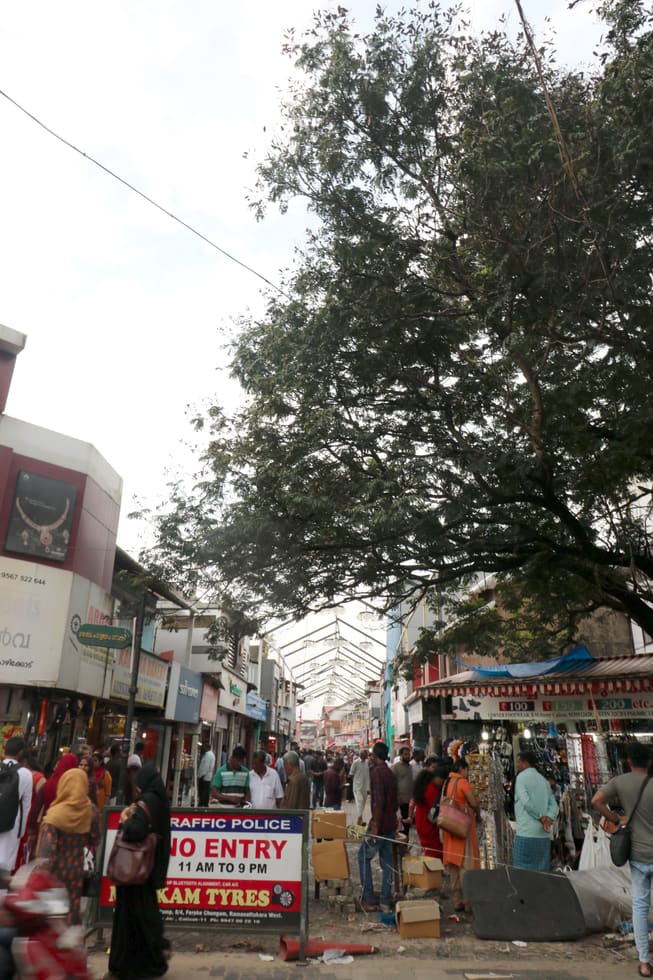
Soak in the calm of a living temple set in the busy city, minutes from Mananchira and SM Street.
Feel the layered history — royal patronage, penance-born scholarship, and survival through Malabar's turbulent centuries.