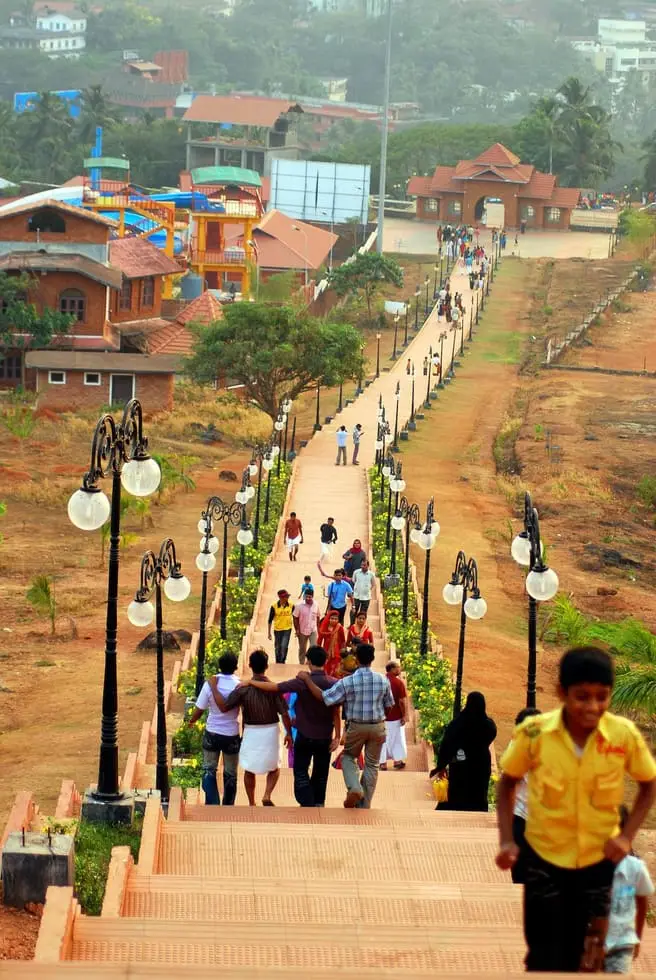
Rising green and breezy in the very heart of Malappuram town, Kottakkunnu is a table-topped hillock crowned by the traces of an old fort and today reborn as the district's favourite cultural park — landscaped gardens, an open-air amphitheatre, an art gallery and sweeping views that have earned it the fond nickname the 'Ooty of Malappuram'.
The story of Kottakkunnu
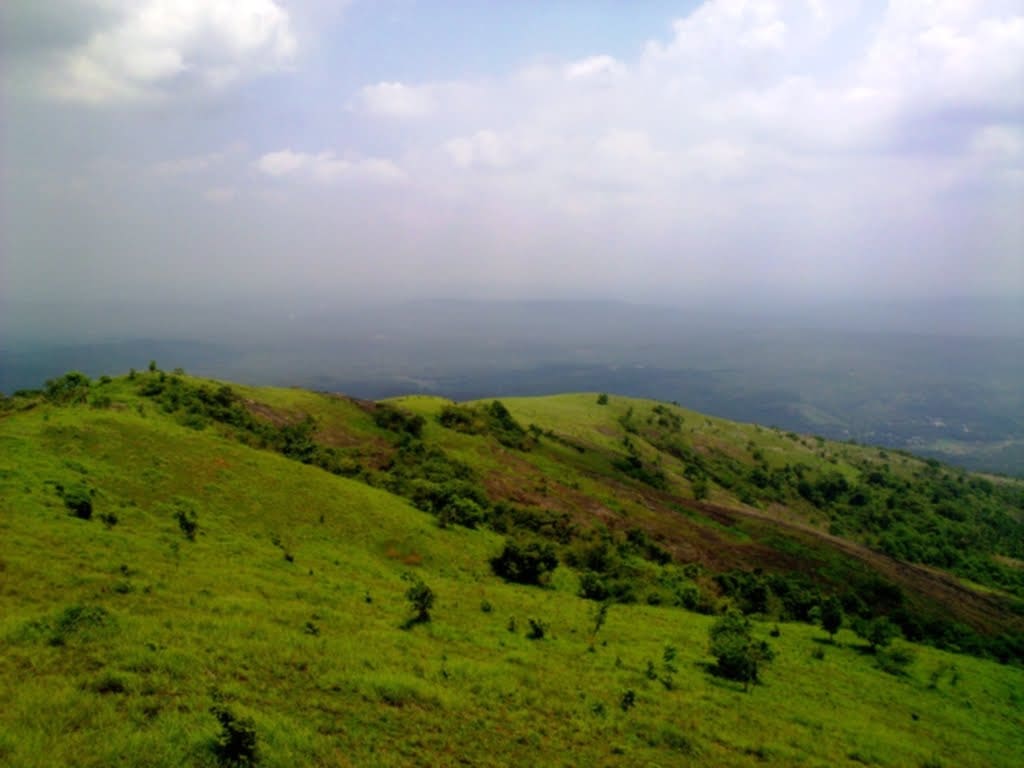
Some hills are just high ground; Kottakkunnu is a stage. Climb its gentle slope in the late afternoon and the whole of Malappuram town spreads out below you — rooftops, mosque minarets, coconut canopies and, on a clear day, the blue smudge of the distant Nilgiri hills riding the horizon. It is this generous, cinematic outlook that has won the hill its affectionate local titles: the 'Ooty of Malappuram' for its cool, garden-like air, and the 'Marine Drive of Malappuram' for the way families promenade along its landscaped terraces at dusk.
The name itself tells the first half of the story. In Malayalam, kotta means fort and kunnu means hill, so Kottakkunnu is quite simply 'the hill with the fort'. For centuries this flat-crowned rise — three sides falling away to river and gorge, its summit as level as a pedestal — was prized less for its beauty than for its command of the land around it, and a fort once stood where children now ride cycles and couples watch the sun go down.
That martial past has long since softened into a park. The District Tourism Promotion Council developed the hill into a public recreation ground, threading its slopes with flowering gardens, benches, walking paths, sculptures and lawns where the townsfolk gather every evening. What was once a garrison is now the town's living room — a place people come to simply because it is theirs.
At its cultural heart sits the Arangu, an open-air auditorium and amphitheatre carved into the hillside, where music nights, dance recitals, poetry sittings and art events unfold under the sky through much of the year. Beside it the Lalitha Kala Akademi art gallery keeps paintings, books and sculpture by some of Kerala's finest artists and artisans, giving Kottakkunnu a genuinely artistic pulse rather than mere fairground fun.
And there is fairground fun too. Children pour into the play areas, the adventure park, the cycle track, the balloon park and the multi-dimensional cinema, while on weekends and big festivals — Onam, Eid, Christmas, New Year — the musical fountain throws up its dancing, laser-lit jets of water to a crowd of upturned faces. It is a rare hill that manages to hold a freedom fighter's memory, an art gallery and a squealing children's ride within the same afternoon.
Come for sunset and you understand why the whole town seems to migrate uphill after work. The light goes gold over the tiled roofs, the gardens cool, the fountain begins to play, and Malappuram — a district often overlooked by tourists chasing the backwaters — reveals itself as quietly, unexpectedly lovely from its own front porch.
History
Kottakkunnu owes both its name and its shape to war. Malappuram was for centuries the military headquarters of the forces of the Zamorin of Kozhikode (Calicut) in the eastern uplands of Malabar, and the flat-topped, steep-sided hill made a natural citadel. Tradition holds that Varakkal Paranambi, a chieftain who wrested Malappuram and its surrounds from the rule of the Valluvakkonathiri (the Valluvanad Raja), raised a fort on the crown of Kottakkunnu and used it as the base for his continued campaigns — the 'kotta' that gave the hill its name.
From this stronghold the region was governed and defended as part of Ernad, and Malappuram grew into an important garrison town rather than a temple or trading centre. Only fragments of that fort and a few associated monuments survive on the hill today; the walls are gone, but the strategic logic of the site — river on several sides, a deep gorge, a pedestal-flat summit — is still legible to anyone who walks its edges.
Malappuram itself carries a long layered history as a centre of the Mappila (Malabar Muslim) community, remembered in traditions such as the Malappuram Nercha, and later as a focus of anti-colonial resistance under British rule. The town's identity as a place of soldiers, faith and defiance repeatedly circles back to this hill.
Kottakkunnu holds a solemn place in that struggle. It was here, at the Malabar Special Police camp on the hill, that Variyamkunnath Kunjahammed Haji — a principal leader of the 1921 Malabar Rebellion, who for some months had run a parallel administration in the interior — was shot dead by British forces on 20 January 1922 after a summary trial. The site is thus not only a pleasure ground but a place of memory for one of Malabar's most contested chapters.
The hill's transformation into a landscaped cultural park is comparatively recent, the work of the District Tourism Promotion Council, which added the gardens, the Arangu open-air auditorium, the art gallery, the play areas and the musical fountain to make the old fort-hill the chief public recreation space of modern Malappuram town.
Why visit
Panoramic hilltop views over the whole of Malappuram town, with the distant Nilgiri hills on the horizon on a clear day — one of the best free viewpoints in the district.
A genuinely lovely sunset spot: the landscaped terraces fill with families every evening, giving the hill its 'Marine Drive of Malappuram' feel.
Real cultural depth — the Arangu open-air amphitheatre stages music, dance and art events, and the Lalitha Kala Akademi gallery shows paintings, books and sculpture by leading Kerala artists.
A weekend-and-festival musical fountain with a coloured laser-and-water show that delights children and adults alike.
Plenty for families and kids: children's park, adventure park, cycle track, balloon park and a multi-dimensional cinema all on one hill.
A meaningful piece of history — the fort-hill of the Zamorins and the site linked to the 1921 Malabar Rebellion — right in the centre of town, making it easy to combine heritage with a relaxed outing.