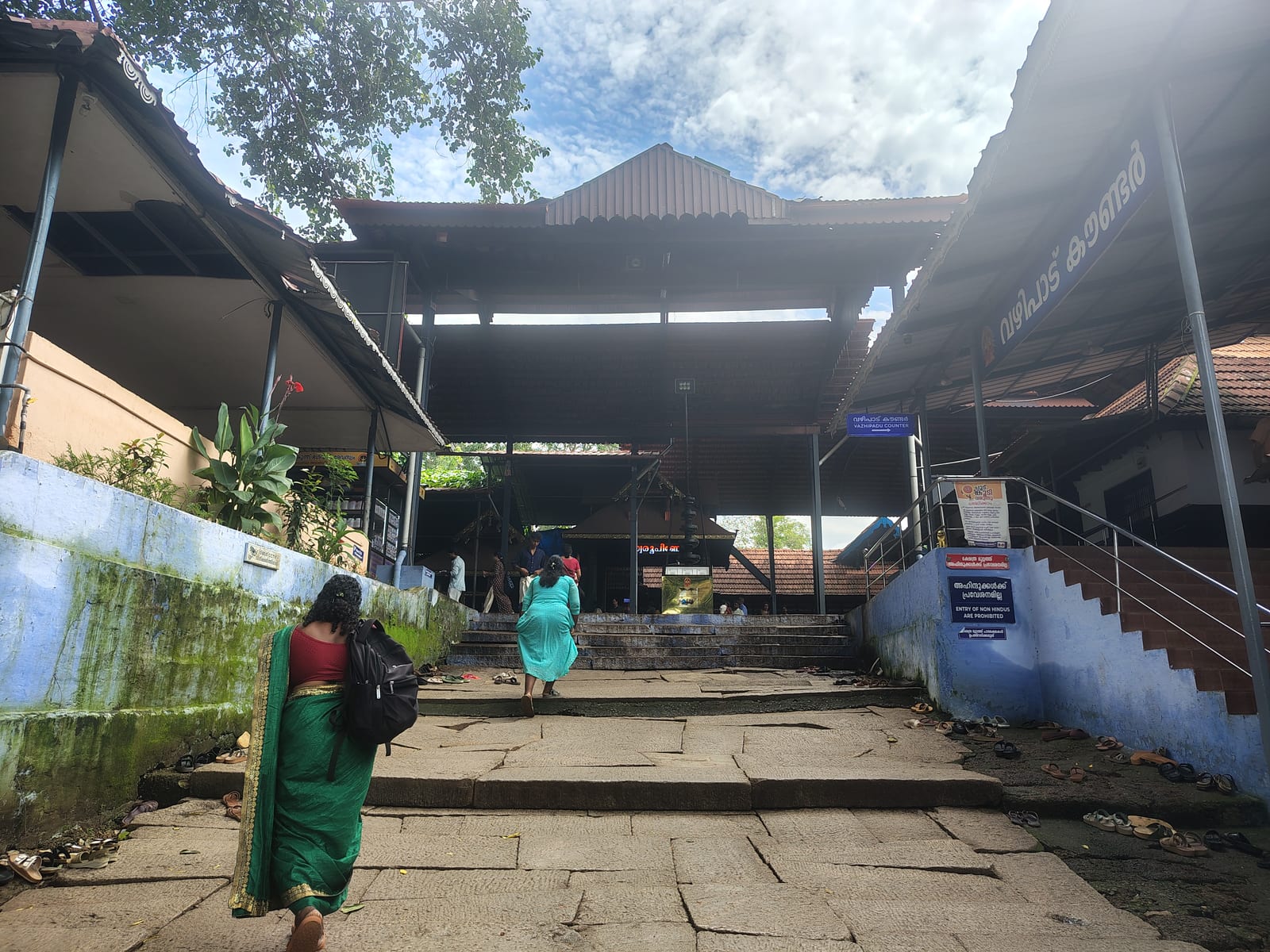
The story
At Kadampuzha, near Kottakkal in Malappuram, the goddess has no idol at all — devotees pour their prayers, flowers and shattered coconuts into a small perpetually-moist hole in the ground, believed to be the very spot where the Divine Mother once vanished from human sight.
The story of Kadampuzha Devi Temple
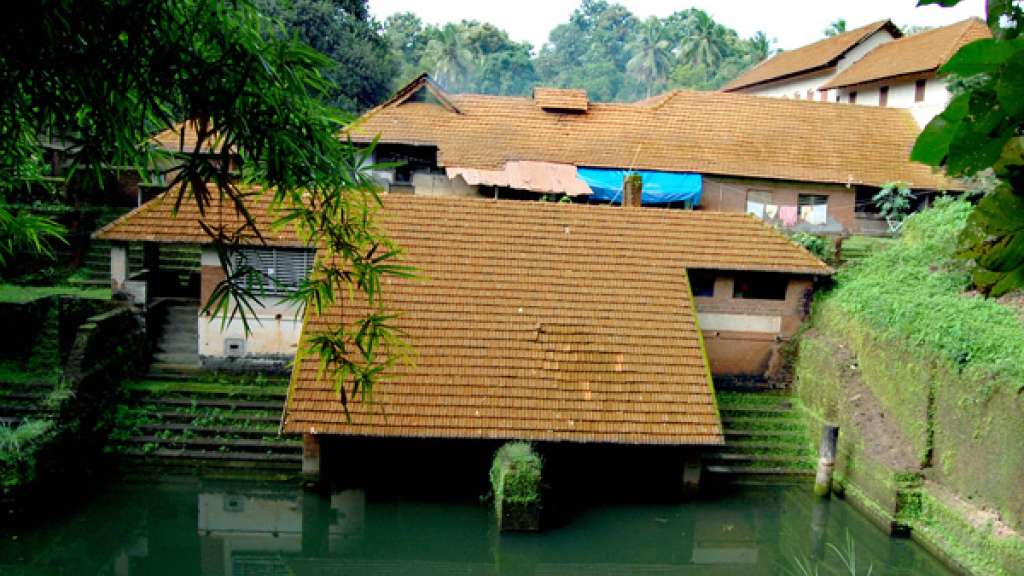
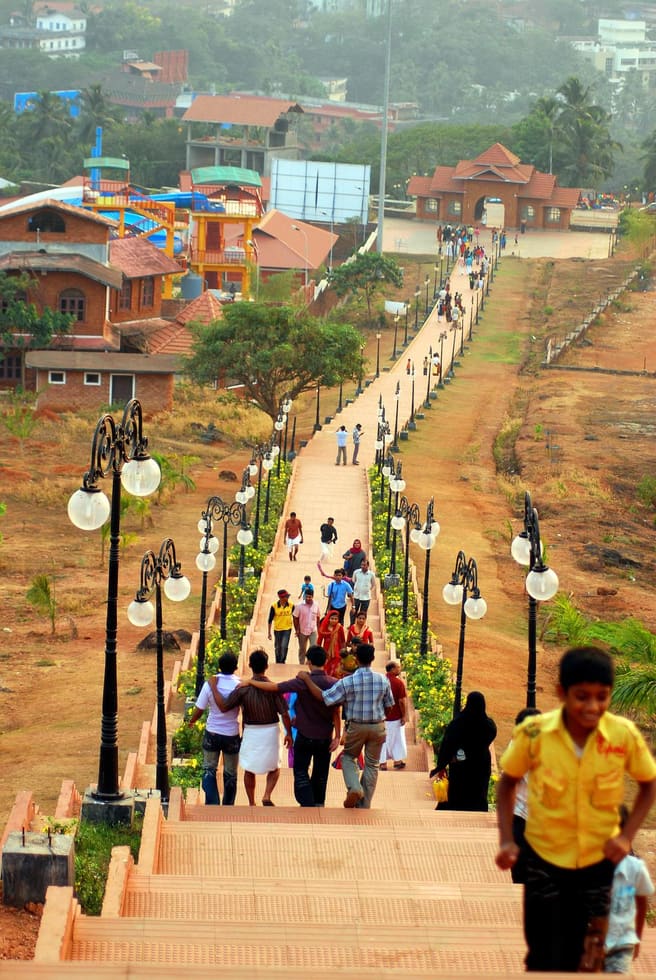
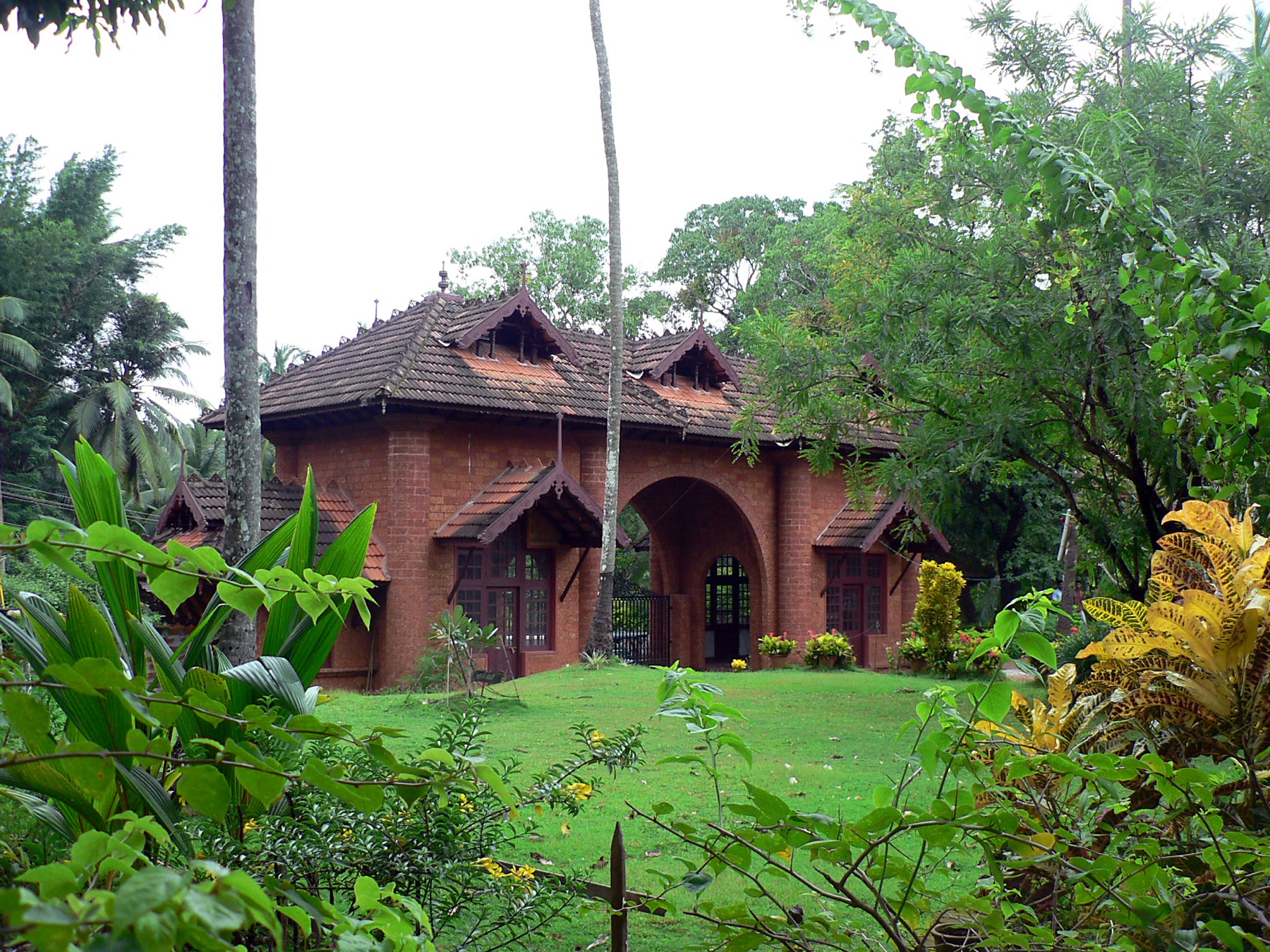
Kadampuzha Devi Temple, also called Kadampuzha Bhagavathy Temple, sits amid what was once dense forest near Kadampuzha village, a short drive from the medicine town of Kottakkal and roughly a dozen kilometres from Kuttippuram in Malappuram district. It is among the most-visited Devi shrines in Kerala, drawing a steady stream of pilgrims from across the state and beyond, particularly those carrying wishes, worries and long-held vows to lay before the goddess.
What sets Kadampuzha apart from almost every other Kerala temple is startlingly simple — there is no idol. The sanctum holds no carved image of the goddess. Instead, the Devi is believed to be self-manifested (swayambhu) and present within a small pit or hole in the ground, kept perpetually moist by an underground spring. Priests perform the daily rituals facing and into this hole, and it is here that every offering is finally directed. Standing before an empty-seeming sanctum and feeling that the Mother is nonetheless intensely present is, for many devotees, the whole point of coming.
The goddess is worshipped here as a form of Parvati in her fierce, forest-dwelling aspect — Kiratha Parvathy, the huntress, and Durga in her woodland form. By tradition the Devi is honoured through the day in three distinct forms: Vidya Durga in the morning, Vanadurga (the forest Durga) in the afternoon, and Aadi Durga in the evening (indicative — confirm locally). This layered worship reflects the belief that the same divine energy shows different faces to the devotee through the hours of the day.
The temple is defined by two signature offerings that have become almost synonymous with its name. The first is Muttarukkal — the breaking of coconuts — where devotees dash coconut after coconut against a stone, each broken shell carrying a prayer for the removal of obstacles, the fulfilment of a wish, or relief from some difficulty. On busy mornings the sound of splitting coconuts is near-continuous, and the sheer volume of coconuts broken here is legendary. The second is Poomoodal — the covering, or literally the burying, of the deity's spot beneath a blanket of wild thechi (Ixora) flowers, a lavish and much-sought offering associated with cooling the goddess and answering deeply-held prayers.
These vazhipadu (ritual offerings) are the beating heart of Kadampuzha's daily life and, in effect, its economy. Families book Muttarukkal and Poomoodal in advance, coconuts and thechi flowers are supplied in enormous quantities, and the temple hums with the logistics of channelling thousands of devotees and their offerings through the sanctum each day. For many pilgrims a trip to Kadampuzha is specifically undertaken to perform one of these vazhipadu, often in thanksgiving for a wish already granted.
The setting adds to the temple's pull. It lies close to Kottakkal, home of the world-renowned Arya Vaidya Sala and Kerala's Ayurveda heritage, so pilgrimage and wellness journeys often overlap here. Crowds swell heavily on auspicious days, and the atmosphere ranges from the quiet intensity of an early-morning darshan to the dense, fervent press of a festival crowd — but the still point at the centre is always the same modest hole in the ground into which centuries of prayers have been poured.
Legend & myth
The best-known legend of Kadampuzha reaches back to the Mahabharata and the episode retold in the Kiratarjuneeyam. As tradition holds it, the Pandava prince Arjuna undertook severe penance in the forest to win the Pashupatastra, the invincible weapon of Lord Shiva. To test the depth of his devotion, Shiva and Parvati are said to have appeared before him disguised as a Kirata (a tribal hunter) and his huntress wife. A fierce duel broke out — famously over a wild boar both claimed to have shot — and Arjuna, humbled and defeated by the hunter, at last recognised the divine couple before him. In one telling the arrow loosed by the Kirata (Shiva himself) struck the earth here and opened the very hole in which the goddess is now worshipped, giving the place its name and its spring.
The temple as a place of worship is, by tradition, credited to Adi Shankaracharya. The story goes that while passing through this then-forested tract on his travels, Shankaracharya sensed an overpowering divine aura rising from the undergrowth and found his path arrested by an unseen presence. Realising after meditation that it was the living presence of Sree Parvathy — the forest Vanadurga — he is said to have consecrated the spot as a temple, installing Narasimha and the Sudarshana Chakra before the Devi and Dharmasastha and the Nagakanyakas to the sides, and laying down the rituals still followed. The Poomoodal offering of flowers is linked in tradition to the mythic shower of blossoms upon the divine, and the goddess is believed to have vanished into the hole after revealing herself to the Acharya.
These accounts are devotional tradition and sacred legend rather than documented history, and the details vary between tellings — but they are inseparable from how the temple is understood and worshipped, and they explain both the absence of an idol and the reverence for the small pit at the shrine's heart.
History
Kadampuzha's defining historical peculiarity is its complete absence of an idol — an unusual arrangement even among Kerala's many ancient shrines. Rather than a consecrated image, worship is directed into a hole in the ground held to be self-manifested and fed by a perpetual underground spring, and the daily poojas are performed into this pit. This mode of worship is treated as the temple's oldest and most essential feature (indicative — confirm locally).
By long-standing tradition the temple's consecration is attributed to Adi Shankaracharya, the eighth-century philosopher-saint, who is said to have recognised the divine presence in the forest and established the shrine and its ritual order. The temple website and pilgrimage accounts record that he consecrated it on the Karthika day in the Malayalam month of Vrischikam (roughly November–December), and that day is still marked as the temple's principal festival (indicative — confirm locally). As with many temples of great antiquity, the Shankaracharya attribution is a matter of tradition rather than firmly-dated record.
The temple's fame rests heavily on its two great offerings. Muttarukkal — the ritual breaking of coconuts — is performed by devotees seeking the removal of obstacles and the granting of wishes, and Kadampuzha is renowned for the sheer scale of coconuts broken here; this particular offering is traditionally done in the morning hours (commonly cited as around 5 a.m. to 7 a.m. on weekdays — indicative, confirm locally). Poomoodal, the covering of the deity's spot with wild thechi (Ixora) flowers, is the other celebrated and much-booked vazhipadu, associated in tradition with cooling and pleasing the goddess.
In its worship the Devi is venerated as Kiratha Parvathy / Durga in the forest-huntress form, and is honoured through the day in successive aspects — commonly described as Vidya Durga, Vanadurga and Aadi Durga across morning, afternoon and evening (indicative — confirm locally). Alongside the Devi, subsidiary deities including Narasimha, the Sudarshana Chakra, Dharmasastha and the Nagakanyakas are part of the temple's traditional layout.
Today Kadampuzha is one of the busiest Devi temples in the Malabar region, its calendar and finances shaped by the constant flow of Muttarukkal and Poomoodal offerings. Its proximity to Kottakkal and the Arya Vaidya Sala, and its position within easy reach of Kuttippuram, Tirur and the wider Malappuram road network, keep it firmly on both pilgrimage and tourist itineraries through the year.
Why visit
Witness a genuinely rare form of Hindu worship — a major temple with no idol, where the goddess is present in a hole in the ground fed by a perpetual spring.
Perform or observe Muttarukkal, the dramatic breaking of coconuts for the removal of obstacles and the granting of wishes.
See Poomoodal, the deity's spot buried beneath a blanket of wild thechi flowers — one of Kerala's most striking floral offerings.
Connect with living Mahabharata legend — the Kirata-Arjuna episode and the tradition of consecration by Adi Shankaracharya.
Feel the intense devotional atmosphere of one of Malabar's most-visited Devi shrines, especially at dawn.
Combine the visit easily with nearby Kottakkal and its famed Arya Vaidya Sala Ayurveda heritage.