Thirumandhamkunnu Temple

The Thirumandhamkunnu Bhagavathy (Durga) temple at Angadipuram — a major Devi pilgrimage and the paradevata shrine of the old Valluvanad rajas, famous for its Pooram festival.

Thirumandhamkunnu Temple, Perinthalmanna and Kodikuthimala
Practical guide

Plan Thirumandhamkunnu Temple

Typetemple
Nearest basePerinthalmanna and Kodikuthimala
Best timeMorning or early evening is usually best
Time needed45 minutes to 2 hours, longer during festival or queue periods
EntryDarshan is generally free; specific sevas, poojas and offerings such as Mangalya Puja or Laksharchana carry set charges paid at the temple counter (indicative — confirm rates locally).
Nearest town/basePerinthalmanna and Kodikuthimala
DistrictMalappuram
Place typetemple
Time needed45 minutes to 2 hours, longer during festival or queue periods.

The Thirumandhamkunnu Bhagavathy (Durga) temple at Angadipuram — a major Devi pilgrimage and the paradevata shrine of the old Valluvanad rajas, famous for its Pooram festival.

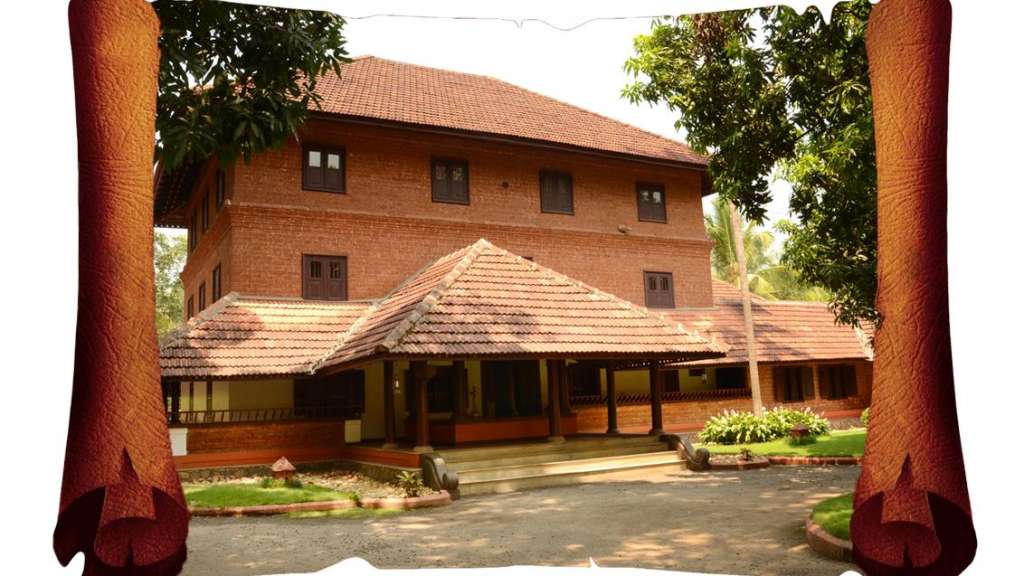
Thirumandhamkunnu Temple belongs under Perinthalmanna and Kodikuthimala, one of the practical travel bases in Malappuram district. Use Perinthalmanna and Kodikuthimala for stays, food, local transport and operators, then plan this place as a focused stop rather than an isolated pin.

The story

Crowning a low green hill at Angadipuram, this ancient Bhagavathy shrine is where the warrior-kings of Valluvanad knelt before their goddess — and from whose gate their Chaver martyrs once marched to die at the Mamankam.

The story of Thirumandhamkunnu Temple

The Thirumandhamkunnu Bhagavathy Temple stands on a small wooded hill at Angadipuram, a short distance from Perinthalmanna in the heartland of Malappuram district. For centuries this was the spiritual centre of Valluvanad — the medieval chiefdom whose rulers, the Vellattiri or Valluvakonathiri rajas, made this hilltop goddess their paradevata, or tutelary family deity. To understand the temple is to understand the little kingdom that revered it, and few Devi shrines in the Malabar region carry so dense a weight of royal memory.

The presiding deity worshipped here is Bhagavathy — venerated locally as Thirumandhamkunnilamma, and understood in the fierce, protective aspect of Bhadrakali or Durga, the Supreme Mother, Shakti. Yet the temple has an older Shaiva layer beneath it: tradition holds that a Shiva linga lies at the very core of the sanctum, and Shiva and Ganapathy are also worshipped on the hill. The temple is especially known for its Mangalya Puja, a rite sought by devotees praying for marriage and married happiness (indicative — confirm ritual details locally).

One of the most striking features here is the Sreemoolasthanam, the original sanctum, which by custom is said to stand open to the sky without a roof — a mark, devotees say, of its great antiquity as a sacred grove hilltop shrine rather than a later built temple. The split linga associated with the origin legend is believed to rest below the peedam (pedestal), screened from ordinary view and revealed only during particular rituals (indicative — confirm locally). The shrine has both eastern and western openings for darshan.

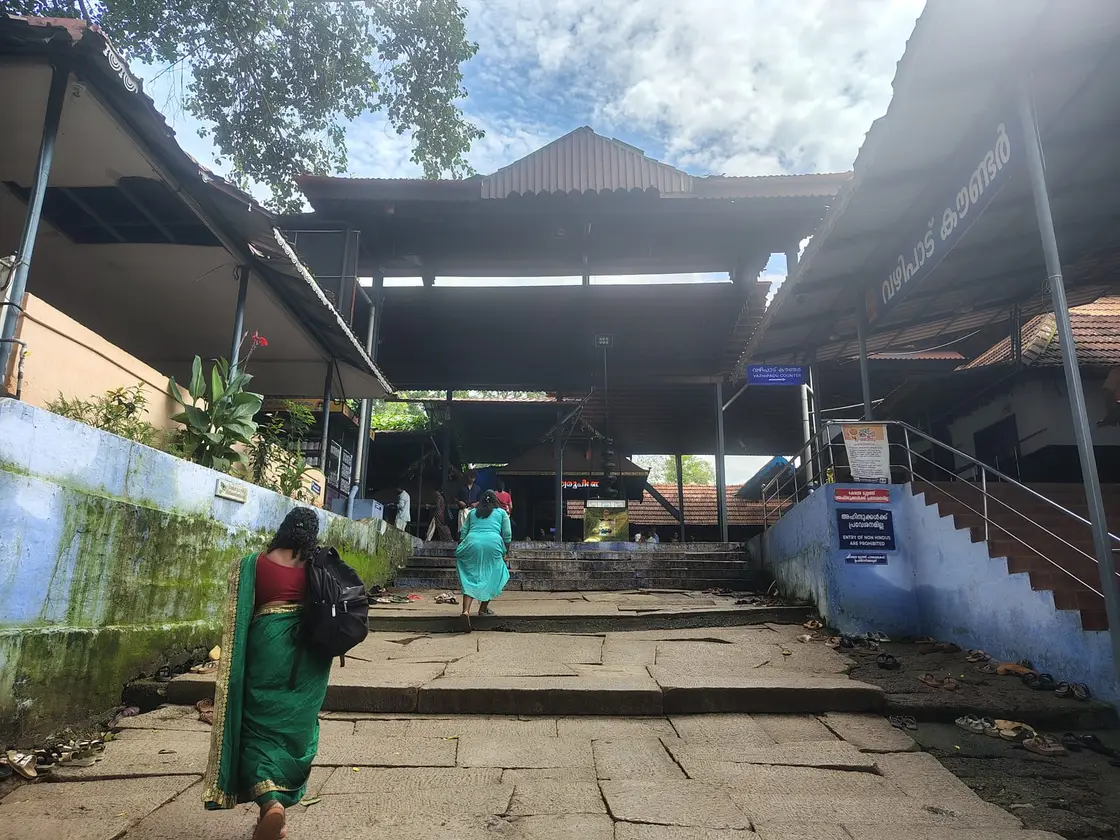
In front of the main entrance stands the chaver thara, a memorial platform to the Chaver warriors — the sworn martyr-soldiers of Valluvanad. It is one of the most poignant monuments on the hill, a stone reminder that this was not only a place of worship but the mustering point of men who set out knowing they would not return. That link between the goddess and the battlefield of the Mamankam is what gives Thirumandhamkunnu a resonance beyond the ordinary temple.

The temple year builds towards the great Thirumandhamkunnu Pooram, an eleven-day festival held in the Malayalam month of Meenam (roughly March to April), one of the most important temple festivals in Malappuram district. In the months before it, from around Vrischikam, the hill echoes nightly with Kalampattu — the ritual singing before an intricate powder-drawing (kalam) of the goddess — building the devotional charge that the Pooram finally releases in caparisoned elephants, percussion and the arattu procession to the temple tank.

For the traveller, Thirumandhamkunnu offers a rare combination: a living, actively worshipped Devi temple of the first rank; a hilltop setting of quiet green calm; and a direct thread into one of the most dramatic chapters of Kerala history, the twelve-yearly Mamankam and the doomed valour of the Chaver. It remains first and foremost a place of worship, so it rewards visitors who come with the patience and respect due to a sanctified royal shrine rather than merely a monument.

Legend & myth

The temple name and origin are explained through the legend of Mandhata (Mandhatavu), remembered as a king-sage of the Surya (solar) dynasty and a great devotee of Shiva. As the legend is told, Mandhata performed severe penance upon Mount Kailash, and Shiva, pleased, granted him a sacred Shiva linga to carry back and enshrine. Descending the mountain with the divine gift, the king rested on this hill in the Malabar country and set the linga down — whereupon it rooted itself immovably to the spot, choosing, as it were, its own home. From Mandham (a form of the sage-king's name) and kunnu (the Malayalam word for hill) the place is said to take its name, Thirumandhamkunnu, the sacred hill of Mandhata.

The legend continues that Parvati, learning the linga had been given away, sent the goddess Bhadrakali to reclaim it. A fierce celestial battle is said to have followed, lasting many days, in which even attanga nuts flung by the king are described as turning into arrows. In the end, rather than wrench the linga apart from her devotee, the goddess is said to have chosen to enter and abide within it herself, vowing to remain on the hill forever — and so Shiva and Devi are worshipped together at the core of the shrine, the goddess as the living presence the temple is named and famed for.

This account is preserved and cherished as sacred legend and temple tradition rather than as documented history, and several versions circulate. It is offered here as the devotional story that explains the hill, the name, the split linga said to lie beneath the pedestal, and the annual Attangayeru ritual that commemorates the legendary battle (indicative — confirm ritual details locally).

History

As documented regional history, the temple was the paradevata — the official tutelary goddess — of the rulers of Valluvanad, a medieval chiefdom of the Malabar region with its seat at Angadipuram. The Valluvanad rajas, styled Vellattiri or Valluvakonathiri, drew their legitimacy and protection from Thirumandhamkunnilamma, and the temple functioned as the spiritual anchor of their small state. Local tradition credits the Valluvanad royal line with building and endowing the temple in its present form, with major renovation recorded in the twentieth century (indicative dating — confirm locally).

The temple is inseparable from the history of the Mamankam, the great festival-assembly held roughly every twelfth year on the banks of the Bharathapuzha at Thirunavaya. Thirunavaya and the presidency of the Mamankam had originally belonged to the rulers of Valluvanad, but between the fourteenth and later centuries the Zamorin (Samoothiri) of Kozhikode seized control of Thirunavaya and assumed the honour of presiding over the Mamankam. That loss festered into one of the longest-running feuds in Kerala history.

Denied their ancestral right, the Valluvanad rulers answered with the Chaver — sworn suicide-warriors, drawn largely from Nair fighting families, who took a vow of death. As regional history and tradition record, at each Mamankam bands of Chaver would set out and attempt to cut their way through the Zamorin's massed guard to reach and kill him, avenging the seizure of Thirunavaya and the deaths of Valluvanad princes. It was understood on all sides to be a fight to the death, with virtually no expectation of survival for the martyrs.

By long tradition these Chaver bands began their final march from Thirumandhamkunnu, worshipping their family goddess on the hill before descending to the river at Thirunavaya — which is why the chaver thara memorial stands before the temple to this day. The Mamankam continued to be held into the mid-eighteenth century (the last are generally dated to around 1755 to 1766), and stories survive of extraordinarily young and skilled Chaver coming within a sword's length of the Zamorin himself.

Around the temple grew an ordered establishment of hereditary service families and officials tied to the royal cult — Brahmin lineages entrusted with the shrine's upkeep and worship, and Nair officeholders with ceremonial duties — while the Valluvanad rulers later entrusted day-to-day management to local feudal lords. Through the collapse of the old chiefdom and the coming of colonial and modern administration, the temple endured as a major Devi centre, and it remains an actively worshipped and much-visited pilgrimage shrine of Malappuram district today (indicative — confirm current administration locally).

Why visit

One of the foremost Bhagavathy (Devi) temples of the Malabar region, the tutelary goddess of the old Valluvanad kingdom.

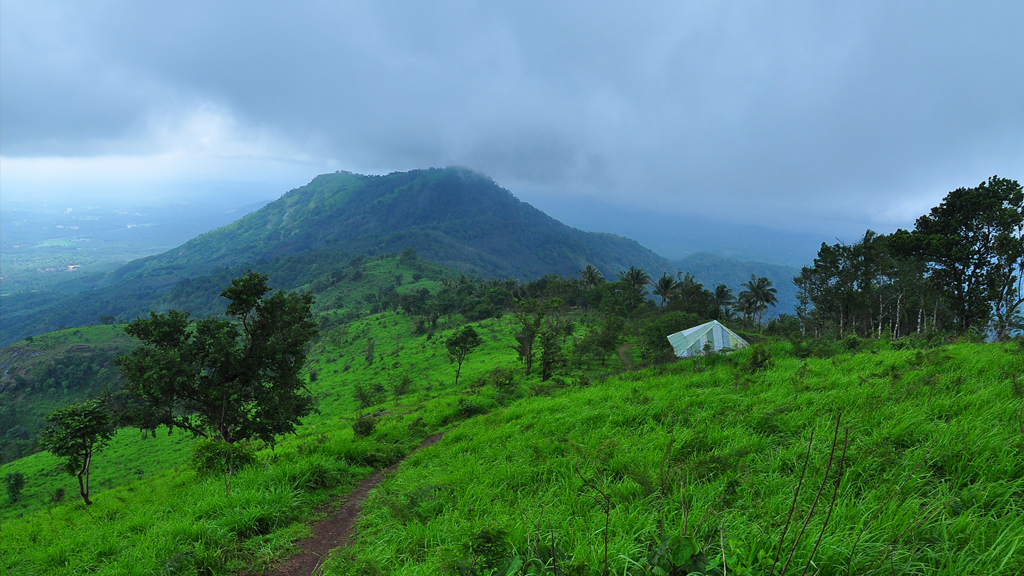
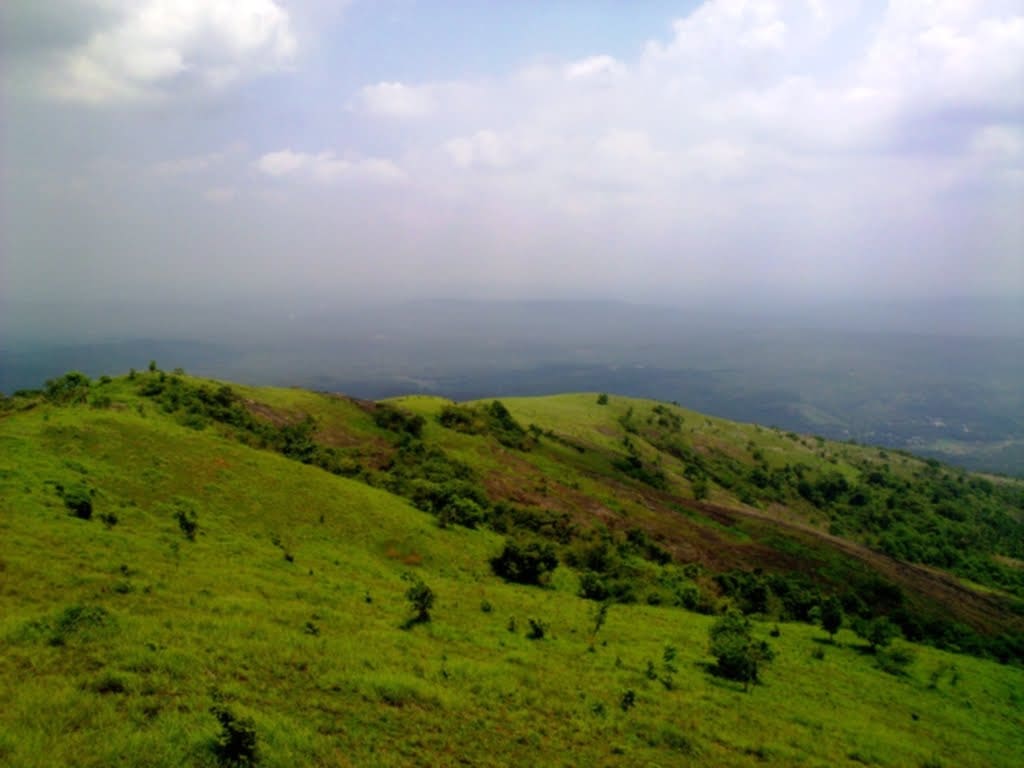
A serene, green hilltop setting near Perinthalmanna, quietly atmospheric away from festival crowds.

The chaver thara memorial and the direct, tangible link to the Mamankam and the legendary Chaver martyrs.

The ancient roofless Sreemoolasthanam sanctum and the origin legend of the split Shiva linga beneath the pedestal.

The spectacular eleven-day Thirumandhamkunnu Pooram, with caparisoned elephants, percussion and the arattu procession.

The months-long nightly Kalampattu tradition — ritual song and powder-drawing of the goddess — leading up to the Pooram.
Visiting

Thirumandhamkunnu Temple — at a glance

TimingsTypically open early morning (reported from around 4 a.m.) for the morning poojas including Usha, Pantheeradi and Ucha pooja, closing around midday, and reopening in the late afternoon (about 4 p.m.) into the evening; timings extend and change during festivals (indicative — confirm locally).
Best timeThe cooler, drier months of roughly October to March are most comfortable; the Meenam (March to April) Pooram season is the most spectacular but also the most crowded (indicative — confirm locally).

Entry: Darshan is generally free; specific sevas, poojas and offerings such as Mangalya Puja or Laksharchana carry set charges paid at the temple counter (indicative — confirm rates locally).

Dress code: Traditional, modest temple attire is expected — commonly a mundu/dhoti for men (often bare-chested by custom in the inner areas) and saree or salwar for women; avoid shorts and revealing clothing, and confirm the current dress norms at the temple (indicative — confirm locally).

Festivals: The eleven-day Thirumandhamkunnu Pooram in Meenam (around March to April) is the flagship festival, preceded by months of nightly Kalampattu from Vrischikam; the arattu procession and the Attangayeru ritual (commemorating the origin legend, on the first new-moon day of Thulam) are also observed (indicative dates — confirm locally).

Photography: Photography inside the sanctum and of the deity is usually restricted or prohibited; outdoor photography of the hill and grounds may be permitted — always ask and follow temple staff instructions (indicative — confirm locally).

Getting here

How to reach Thirumandhamkunnu Temple

  • ✈︎ By air The nearest airport is Calicut (Kozhikode) International Airport at Karipur, roughly 30 to 35 km away, from where taxis reach Angadipuram; Kochi (Cochin) International Airport is the next major option further south (indicative — confirm locally).
  • 🚆︎ By train Angadipuram railway station is the nearest railhead, about 1 to 2 km from the temple, on the Shoranur–Nilambur line; Pattambi and the major Shoranur Junction are alternative stations with wider connections (indicative — confirm locally).
  • 🚗︎ By road The temple is about 4 km from Perinthalmanna and well connected by road from Malappuram, Palakkad and Kozhikode; autos and taxis are readily available from Perinthalmanna and Angadipuram town (indicative — confirm locally).
  • 🚌︎ By bus KSRTC and private buses serve Perinthalmanna and Angadipuram frequently from across Malappuram and central Kerala; Angadipuram bus stand is a short walk (around 500 m) from the temple, with autos for the final stretch up the hill (indicative — confirm locally).
Do

Things to do

  • Offer darshan to Thirumandhamkunnilamma at the hilltop sanctum.
  • See the chaver thara memorial to the Chaver martyrs at the entrance.
  • Sponsor a Mangalya Puja or other seva if praying for a specific blessing.
  • Observe the nightly Kalampattu ritual song and powder-drawing in the pre-Pooram season.
  • Experience the caparisoned elephants and percussion of the Pooram if visiting in Meenam.
  • Walk the quiet green hill setting and take in the views around Angadipuram.
  • Combine the visit with nearby Perinthalmanna and the wider Valluvanad heritage of the area.

This is a living, actively worshipped royal Devi temple, not merely a monument. Dress traditionally, remove footwear before entering, maintain silence and decorum near the sanctum, follow all rituals and photography restrictions, and check current entry customs (including any restriction on non-Hindu entry to inner areas) before travelling (indicative — confirm locally).

What to expect

Highlights

  • Temple visit at Thirumandhamkunnu Temple
  • Kerala temple architecture and rituals
  • Local food, shops and pilgrim services nearby
Getting there

How to visit

  • Base yourself in Perinthalmanna and Kodikuthimala or a nearby town in Malappuram, then confirm the last-mile route locally before leaving.
  • Check temple entry customs, dress rules and festival crowd conditions before arrival.
  • If the visit depends on forest, temple, boat, ferry, weather or seasonal access, check the official/local rule on the day before travel.

Distance by road

  • Kozhikode49 km
  • Coimbatore133 km
  • Kochi168 km
  • Mysuru192 km
  • Mangaluru277 km

Road km to Malappuram; ghat roads and traffic vary — allow extra.

Timing

Best time

Morning or early evening is usually best; festival days can be powerful but crowded.

Weather in Thirumandhamkunnu TempleSeasonal guide

Live forecast loads in your browser.

Visitor notes

  • Dress modestly and follow local entry rules.
  • Photography may be restricted inside temple areas.
Safety

Good to know

  • Use official counters for offerings/tickets where applicable.
  • Keep footwear and valuables secure in crowded areas.
On the map

Where Thirumandhamkunnu Temple is

Stay · eat · do · rent · see · shop

Stays, food & things to do near Thirumandhamkunnu Temple

Verified hotels, homestays, restaurants, experiences, sights, shops and rentals around Thirumandhamkunnu Temple — commission-free, with direct contact. Filter by what you need.

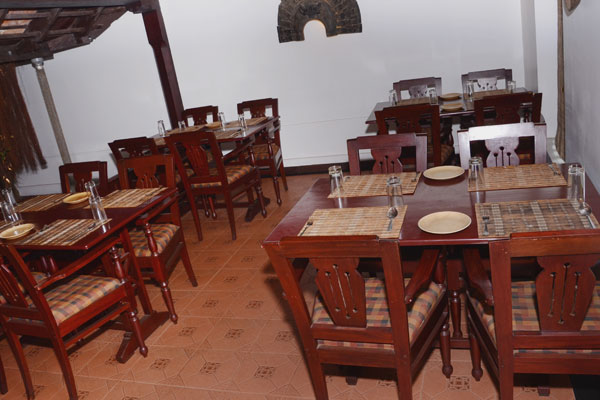
Chengara Heritage Restaurant Perinthalmanna — Hotel restaurant in Perinthalmanna and Kodikuthimala
Verified
Hotel restaurant · Perinthalmanna and Kodikuthimala
Chengara Heritage Restaurant Perinthalmanna

Chengara Heritage Restaurant Perinthalmanna is a sourced hotel restaurant record for the perinthalmanna-and-kodikuthimala guide. (eat option in Perinthalmanna and Kodikuthimala)

Commission-freeView details
Kodikuthimala DTPC Malappuram — Official district destination source in Perinthalmanna and Kodikuthimala
Verified
Official district destination source · Perinthalmanna and Kodikuthimala
Kodikuthimala DTPC Malappuram

DTPC Malappuram destination source for Kodikuthimala, evening walks and Perinthalmanna-side hill planning. (see option in Perinthalmanna and Kodikuthimala)

View guide
Chengara Heritage Perinthalmanna — Heritage hotel in Perinthalmanna and Kodikuthimala
Verified
Heritage hotel · Perinthalmanna and Kodikuthimala
Chengara Heritage Perinthalmanna

stay option in Perinthalmanna and Kodikuthimala: Chengara Heritage Perinthalmanna is a Heritage hotel option for stay planning in Perinthalmanna and Kodikuthimala, Ernakulam, kerala, India. Use Chengara Heritage Perinthalmanna as a stay option in Perinthalmanna and Kodikuthimala, Ernakulam, kerala, India. book your stay, transport and nearby food stops. Key details: Near Railway Gate, Marungath Colony, Perinthalmanna, Angadippuram, Malappuram, Kerala 679321 · Price range: Contact direct · Amenities: Perinthalmanna stay, Angadippuram, Heritage hotel.

Commission-freeView details
Kodikuthimala Kerala Tourism — Hill viewpoint in Perinthalmanna and Kodikuthimala
Verified
Hill viewpoint · Perinthalmanna and Kodikuthimala
Kodikuthimala Kerala Tourism

do option in Perinthalmanna and Kodikuthimala: Kodikuthimala Kerala Tourism is a Hill viewpoint option for do planning in Perinthalmanna and Kodikuthimala, Ernakulam, kerala, India. Use Kodikuthimala Kerala Tourism as a do option in Perinthalmanna and Kodikuthimala, Ernakulam, kerala, India. book timing, permits and local support before heading out. Key details: Kodikuthimala, near Perinthalmanna, Malappuram, Kerala · Price range: Check current access · Amenities: Kodikuthimala, Perinthalmanna, Hill viewpoint.

Commission-freeView details
O
Orentincars | Car Rental Service
Vehicle rental
Top pick Verified
Self-drive car rental · Perinthalmanna and Kodikuthimala
Orentincars | Car Rental Service
4.7 (199)

Self-drive car rental in perinthalmanna and kodikuthimala — confirm vehicles, rates, documents and deposit directly. (vehicle rental option in Perinthalmanna and Kodikuthimala)

Commission-freeView details
E
Emarald Ayurveda Resort
Place to stay
Top pick
Hotel · Perinthalmanna and Kodikuthimala
Emarald Ayurveda Resort

Riverside wellness resort with an Ayurvedic spa, daily yoga and Panchakarma detox packages. Set on Resort Road in Pulamanthole, near Perinthalmanna. (stay option in Perinthalmanna and Kodikuthimala)

Commission-freeView details
N
Narmada Homestay
Place to stay
Top pick
Hotel · Perinthalmanna and Kodikuthimala
Narmada Homestay

Premium homestay of five river-named villas with Ayurvedic treatment facilities. Sits at Angadippuram, close to Thirumandhamkunnu Temple. (stay option in Perinthalmanna and Kodikuthimala)

Commission-freeView details
R
Rithu Regency
Place to stay
Top pick
Hotel · Perinthalmanna and Kodikuthimala
Rithu Regency

Vegetarian-friendly hotel with suites and a Koothambalam banquet hall on NH-213. Stands beside Thirumandhamkunnu Temple in Angadippuram. (stay option in Perinthalmanna and Kodikuthimala)

Commission-freeView details
M
MP Residency
Place to stay
Top pick
Hotel · Perinthalmanna and Kodikuthimala
MP Residency

Budget 24-hour hotel with AC rooms, CCTV and power backup. Located opposite the Government Hospital, handy for Perinthalmanna's medical hub. (stay option in Perinthalmanna and Kodikuthimala)

Commission-freeView details
B
Blue Diamond Residency
Place to stay
Hotel · Perinthalmanna and Kodikuthimala
Blue Diamond Residency

Compact hotel with elegant rooms, an on-site restaurant and meeting space. Stands at the Bypass Junction on the Kozhikode-Palakkad road. (stay option in Perinthalmanna and Kodikuthimala)

Commission-freeView details
N
Nahdi Kuzhi Mandi
Where to eat
Restaurant · Perinthalmanna and Kodikuthimala
Nahdi Kuzhi Mandi
Arabian / Mandi

Arabian restaurant serving slow-cooked kuzhi mandi and biryani since 2013. Located on Pattambi Road near the post office in central Perinthalmanna. (eat option in Perinthalmanna and Kodikuthimala)

Commission-freeView details
P
Perinthalmanna Taxi Route Support
Things to do
Verified
Hill route transport support · Perinthalmanna and Kodikuthimala
Perinthalmanna Taxi Route Support

Hill route transport support for Perinthalmanna Taxi Route Support, researched for perinthalmanna-and-kodikuthimala trip support. (do option in Perinthalmanna and Kodikuthimala)

Commission-freeView details
W
White Flower Mountain Resort Kodikuthimala
Place to stay
Verified
Kodikuthimala resort support · Perinthalmanna and Kodikuthimala
White Flower Mountain Resort Kodikuthimala

Kodikuthimala-area resort support record for travellers needing a hill overnight near Perinthalmanna. (stay option in Perinthalmanna and Kodikuthimala)

Commission-freeView details

Roampedia is commission-free — own or know a stay, eatery, guide or shop near Thirumandhamkunnu Temple? List it and it appears here once verified.

Add a nearby business
Nearby

What’s near Thirumandhamkunnu Temple

Kodikuthimala
viewpointKodikuthimala 9.7 km · ~16 min by cab
Kottakkunnu
viewpointKottakkunnu 15.0 km · ~25 min by cab
Kadampuzha Devi Temple
templeKadampuzha Devi Temple 17.7 km · ~30 min by cab
Kottakkal Arya Vaidya Sala
heritageKottakkal Arya Vaidya Sala 21.1 km · ~35 min by cab
Biyyam Kayal
backwaterBiyyam Kayal 33.6 km · ~56 min by cab
Good to know

Thirumandhamkunnu Temple — frequently asked

When is the best time to visit Thirumandhamkunnu Temple?

Morning or early evening is usually best; festival days can be powerful but crowded.

What are the entry fee and timings at Thirumandhamkunnu Temple?

Entry: Darshan is generally free; specific sevas, poojas and offerings such as Mangalya Puja or Laksharchana carry set charges paid at the temple counter (indicative — confirm rates locally).. Timings: Typically open early morning (reported from around 4 a.m.) for the morning poojas including Usha, Pantheeradi and Ucha pooja, closing around midday, and reopening in the late afternoon (about 4 p.m.) into the evening; timings extend and change during festivals (indicative — confirm locally).. Fees and timings are indicative — confirm on site before you travel.

How do I reach Thirumandhamkunnu Temple?

Base yourself in Perinthalmanna and Kodikuthimala or a nearby town in Malappuram, then confirm the last-mile route locally before leaving. Check temple entry customs, dress rules and festival crowd conditions before arrival. If the visit depends on forest, temple, boat, ferry, weather or seasonal access, check the official/local rule on the day before travel.

How much time do I need for Thirumandhamkunnu Temple?

45 minutes to 2 hours, longer during festival or queue periods.

What else is near Thirumandhamkunnu Temple?

Nearby you can pair Kodikuthimala (9.7 km), Kottakkunnu (15.0 km), Kadampuzha Devi Temple (17.7 km), Kottakkal Arya Vaidya Sala (21.1 km).

What should I know before visiting Thirumandhamkunnu Temple?

Use official counters for offerings/tickets where applicable. Keep footwear and valuables secure in crowded areas.

Image credits