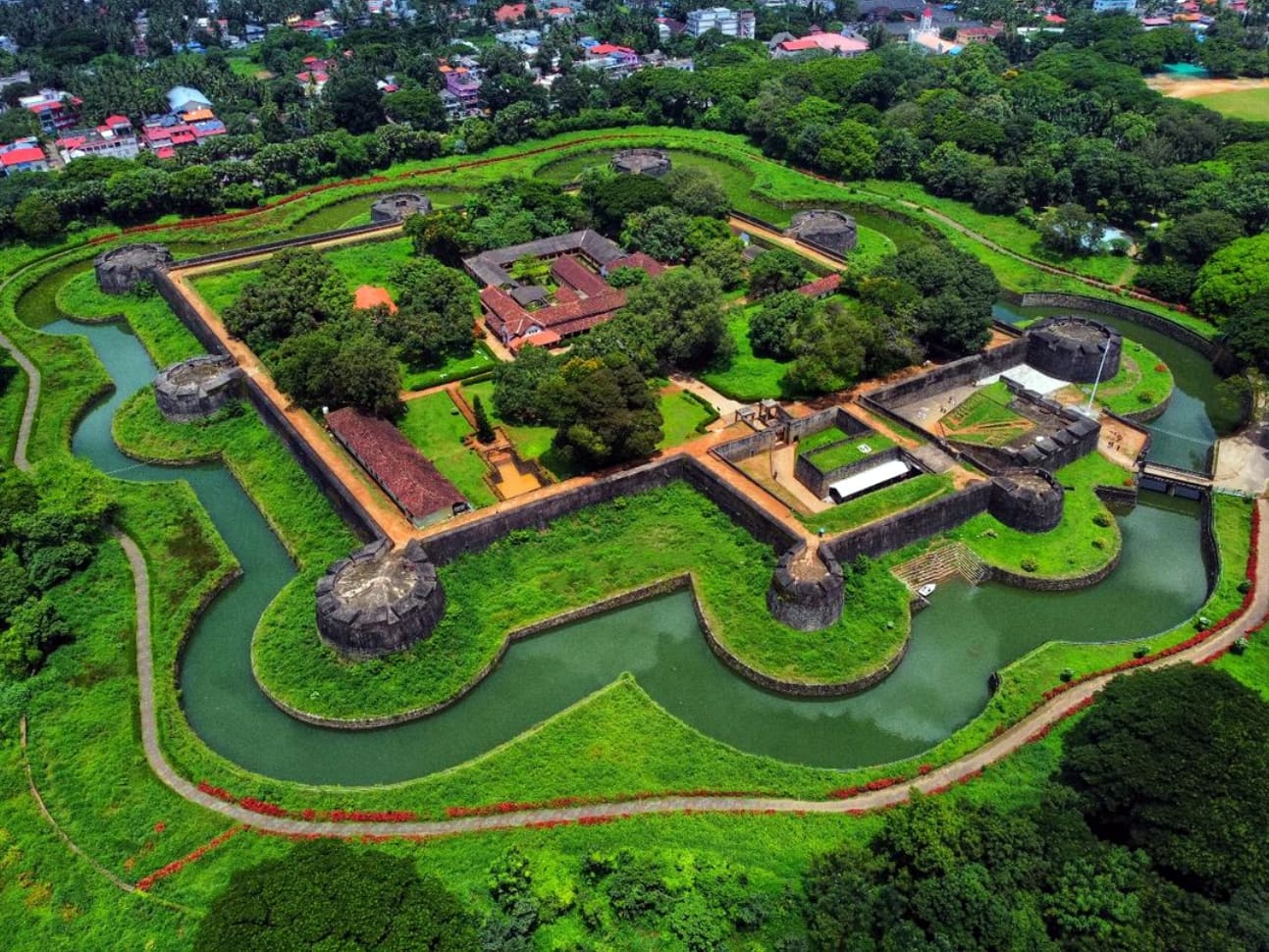
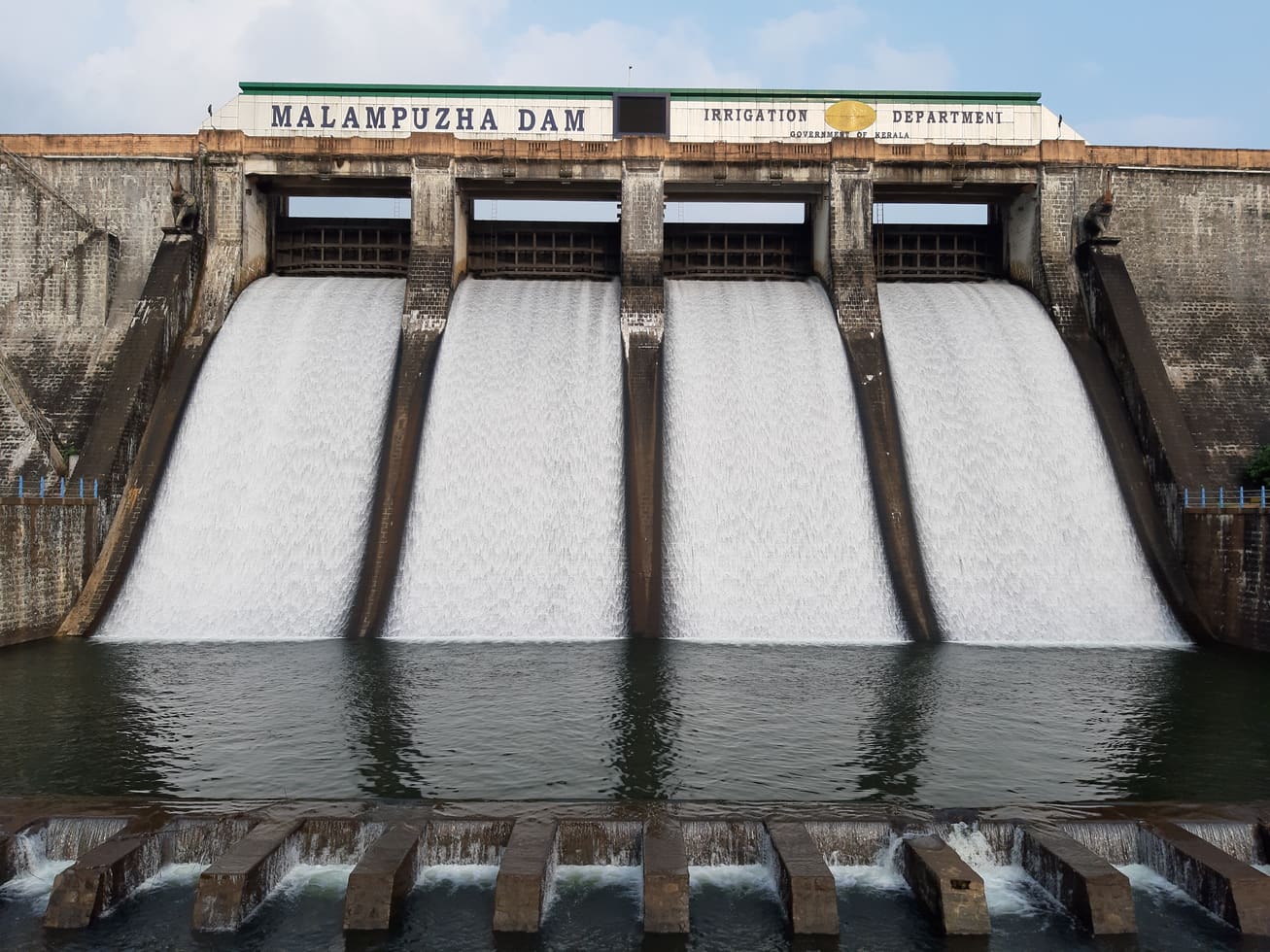
Cradled where the Palakkad plains rise to meet the blue wall of the Western Ghats, Malampuzha is Kerala’s largest reservoir and its most beloved family day-out — a masonry dam of the 1950s married to a sprawling landscaped garden of fountains, an aerial ropeway, boats on still green water, a rock garden built from rubbish, and the state’s most famous piece of public art: Kanayi Kunhiraman’s giant reclining Yakshi. Come for the engineering, stay for the picnic, and leave arguing about a sculpture.
The story of Malampuzha Dam & Garden
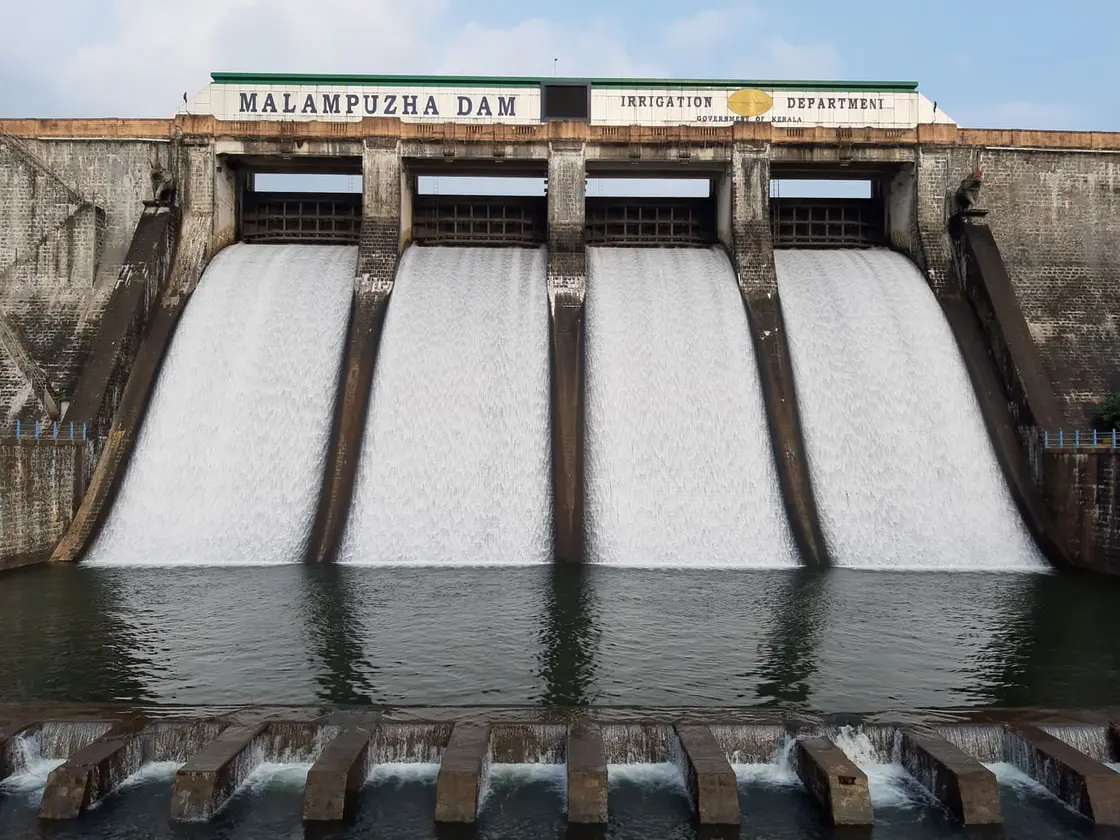
Malampuzha is that rare Kerala destination that is not built around a temple, a beach or a legend, but around water and human ambition. The dam holds back the Malampuzha river — a tributary of the Bharathapuzha, Kerala’s second-longest — in a broad reservoir that laps against low, wooded hills. On a clear morning the far shore dissolves into the Western Ghats, and the whole scene has the calm, engineered beauty of a place that was designed to be looked at as much as to be useful.
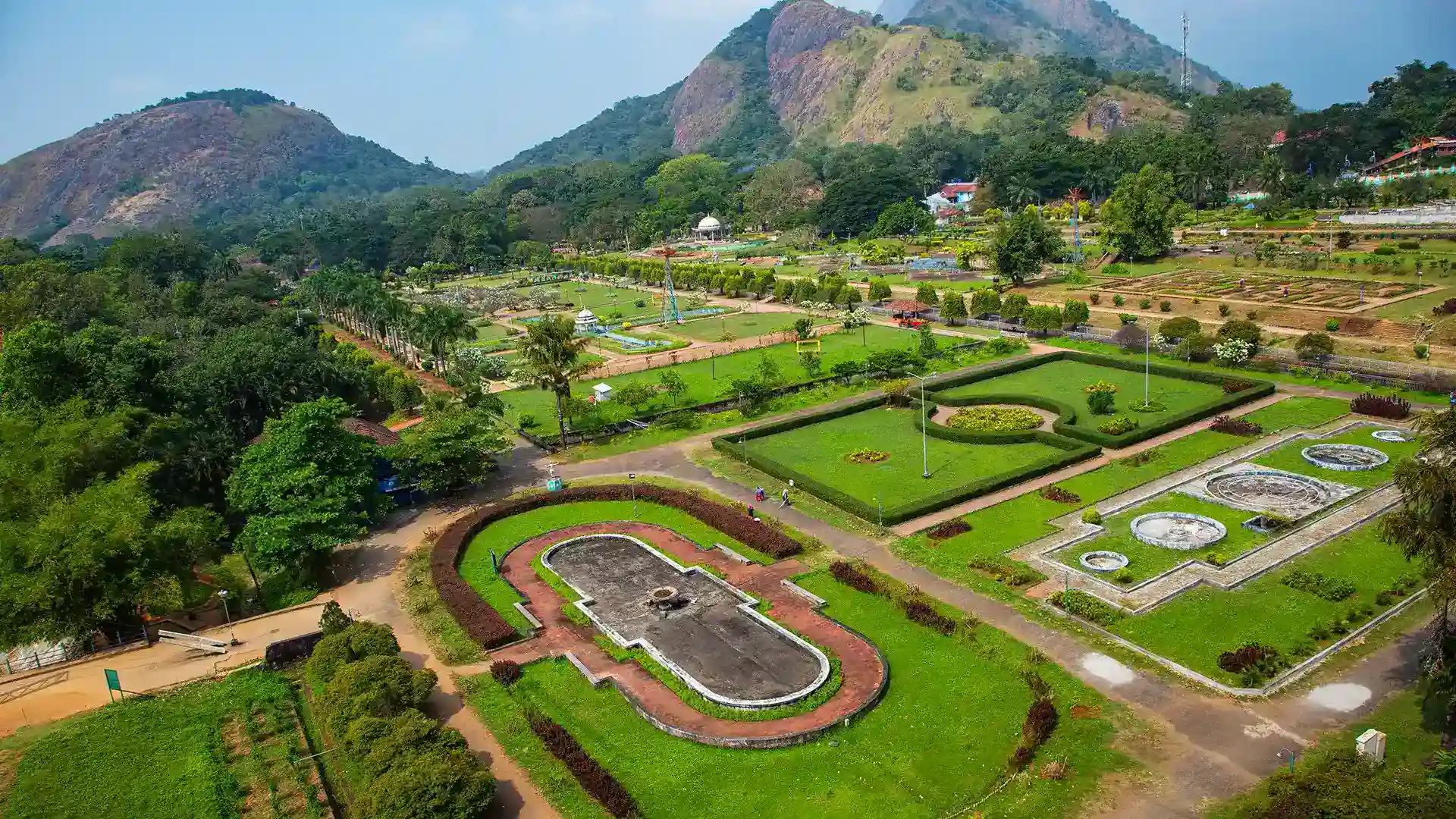
The garden below the dam is the emotional heart of the visit. Laid out in the tidy, geometric style of a mid-century public park, it runs on manicured lawns, ribboned flower beds, ornamental pools and fountains that come alive in the evening. For generations of Palakkad and Coimbatore families this has been the Sunday outing — children scattering across the grass, couples on the boats, grandparents on the shaded benches — and that unhurried, multi-generational picnic energy is really what Malampuzha is about.
Gliding above it all is the aerial ropeway, a chain of small cabins that carries you sixty-odd feet over the gardens and out towards the dam for a slow, panoramic view of reservoir, lawns and mountains (indicative — confirm operating status locally). It is gentle rather than white-knuckle, the kind of ride that makes children shriek with delight and adults reach for their phones, and it remains one of the most photographed experiences in the whole park.
Then there is the rock garden — Malampuzha’s quiet stroke of genius. Inspired by Nek Chand’s celebrated rock garden in Chandigarh, it is assembled almost entirely from waste: broken bangles, shards of tile and crockery, discarded tin, plastic and stone, coaxed into sculptures, walls and grottoes. It is playful, slightly surreal, and carries a genuinely modern message about turning rubbish into wonder, long before recycling became a slogan.
But the image most visitors carry home is the Yakshi — a colossal reclining female figure in cement, thirty feet from head to toe, lying back with her eyes turned to the mountains. Created by the great Kerala sculptor Kanayi Kunhiraman, she is at once serene and startling, a piece of serious modern art dropped into a family picnic ground. She has been adored, photographed, moralised over and fought about for more than half a century, and she gives Malampuzha a cultural weight that no fountain or boat ride could.
Add a freshwater aquarium, a snake park, a children’s play area, a swimming pool and boating on the reservoir, and Malampuzha becomes less a single attraction than a full day’s worth of them — an easy, joyful, deliberately un-solemn place that rewards families, photographers and anyone curious about how a working irrigation dam grew into one of Kerala’s favourite outings.
History
The Malampuzha project belongs to the great post-Independence age of Indian dam-building, when new reservoirs were spoken of as temples of a modern nation. Work on the dam is generally dated to the late 1940s, with construction beginning around March 1949 and the completed dam commissioned on 9 October 1955 (indicative dates — confirm locally). It was conceived first and foremost as an irrigation work, to water the thirsty paddy tracts of the Palakkad plain.
Engineering-wise, Malampuzha is Kerala’s largest reservoir. The scheme pairs a long masonry dam with an earthen section, running to a total length in the region of two kilometres and impounding a reservoir of a couple of hundred million cubic metres (indicative figures — confirm locally). Sitting just where the Palakkad Gap breaks the Western Ghats, it draws on the run-off of those hills to feed a wide network of irrigation canals downstream.
The landscaped garden, ropeway, aquarium and boating facilities were developed later, as the authorities recognised that a scenic reservoir at the foot of the mountains was a tourism asset as much as an agricultural one. Over the decades Malampuzha steadily accumulated its family-park attractions, turning a piece of irrigation infrastructure into one of the most visited leisure spots in the district.
The garden’s cultural landmark, the Yakshi, was created by Kanayi Kunhiraman in 1969, reportedly taking him close to a year of work. A leading figure of modern Indian sculpture, Kanayi conceived the reclining nude not as titillation but as an image of nature herself — memorably explaining that the Yakshi, drawn towards the mountain before her, signifies nature, and that nature is naked. Its installation provoked a storm: traditionalists condemned it as obscene, agitations were mounted, and the sculptor has spoken of being physically and mentally drained, even threatened and attacked over the work. The Yakshi survived every campaign and is today celebrated as a milestone of public art in Kerala — proof that Malampuzha’s history is not only about concrete and canals, but about the fight over what art in a public place is allowed to be.
Why visit
It is a genuine all-in-one family day out. Ropeway, boating, rock garden, aquarium, snake park, children’s play areas and wide lawns sit within a single ticketed garden, so one stop keeps children and grown-ups happily occupied for hours.
The setting is quietly spectacular. Kerala’s largest reservoir spreads out beneath the blue ridge of the Western Ghats at the Palakkad Gap, giving you big-sky mountain-and-water views that are rare on the coastal side of the state.
The Yakshi is a must-see piece of modern Indian art. Kanayi Kunhiraman’s thirty-foot reclining figure is one of the most talked-about public sculptures in the country, and standing beneath it — knowing its story of controversy and survival — is a genuinely memorable experience.
The rock garden is unexpectedly delightful. Built in the Nek Chand tradition from broken tiles, bangles and other waste, it is a playful, slightly surreal maze that children love and that carries a real message about creativity and recycling.
The aerial ropeway offers the best view for the least effort. Drifting sixty feet above the gardens and out towards the dam wall, it turns the whole park, reservoir and mountain backdrop into one sweeping, camera-ready panorama.
It is refreshingly un-touristy in the temple-circuit sense. This is a leisure destination pure and simple — no dress-code anxieties, no ritual queues, just lawns, boats, ice cream and a slow evening among the fountains — which makes it an easy, relaxed contrast to Kerala’s heritage sights.