Down a quiet lane on the edge of Palakkad town stands a low, weather-darkened granite hall — one of the last surviving Jain temples in Kerala, and a rare, unadorned relic of a faith that once thrived here.
The story of Jainimedu Jain Temple
The Jainimedu Jain Temple sits at Jainimedu, a suburb roughly 3 km from the centre of Palakkad town (indicative — confirm locally). It is a plain rectangular structure of dressed granite, often cited as about 32 feet long and 20 feet wide (indicative — confirm locally), utterly different in mood from the towering gopurams and lamp-lit corridors of Kerala’s Hindu temples. Here there is no ornament clamouring for attention — just cool stone, a shaded courtyard and a hush that rewards the traveller who seeks it out.
The temple is dedicated to the Jain Tirthankaras, with Chandraprabha — commonly described as the eighth of the twenty-four Tirthankaras — venerated as the principal figure (indicative — confirm locally). Inside, the sanctum holds carved images of Tirthankaras together with yakshis, the guardian deities of Jain iconography. Names recorded by various accounts include Chandraprabha, Parshvanatha, Rishabhanatha and the yakshis Padmavati and Jwalamalini (spellings and attributions vary between sources — confirm locally).
What strikes most visitors is the austerity. Jain devotional art favours restraint and inward focus, and the building reflects it: granite walls, simple pillars, an unhurried plainness that feels closer to meditation than to festival. The very name of the locality, Jainimedu — loosely, the ‘mound’ or ‘high ground of the Jains’ — quietly preserves the memory of the community that raised it, long after most of that community moved on.
There is a gentle literary halo around this corner of Palakkad. Tradition holds that the celebrated Malayalam poet Kumaran Asan (Kumaranasan) composed his landmark poem Veena Poovu — ‘The Fallen Flower’ — while staying at a Jain house near here, an association often dated to the early twentieth century (attributed tradition — confirm locally). It is a poignant coincidence: a meditation on impermanence written beside a shrine to a faith that had itself all but faded from the Kerala landscape.
Today the temple is a quiet, lesser-visited monument rather than a bustling pilgrimage hub. It underwent restoration in more recent years, and Jain devotees and heritage-minded travellers still find their way here, but on many days you may have the courtyard largely to yourself. Facilities on site are minimal, and opening may be irregular, so patience and a respectful, low-key approach serve the visitor best.
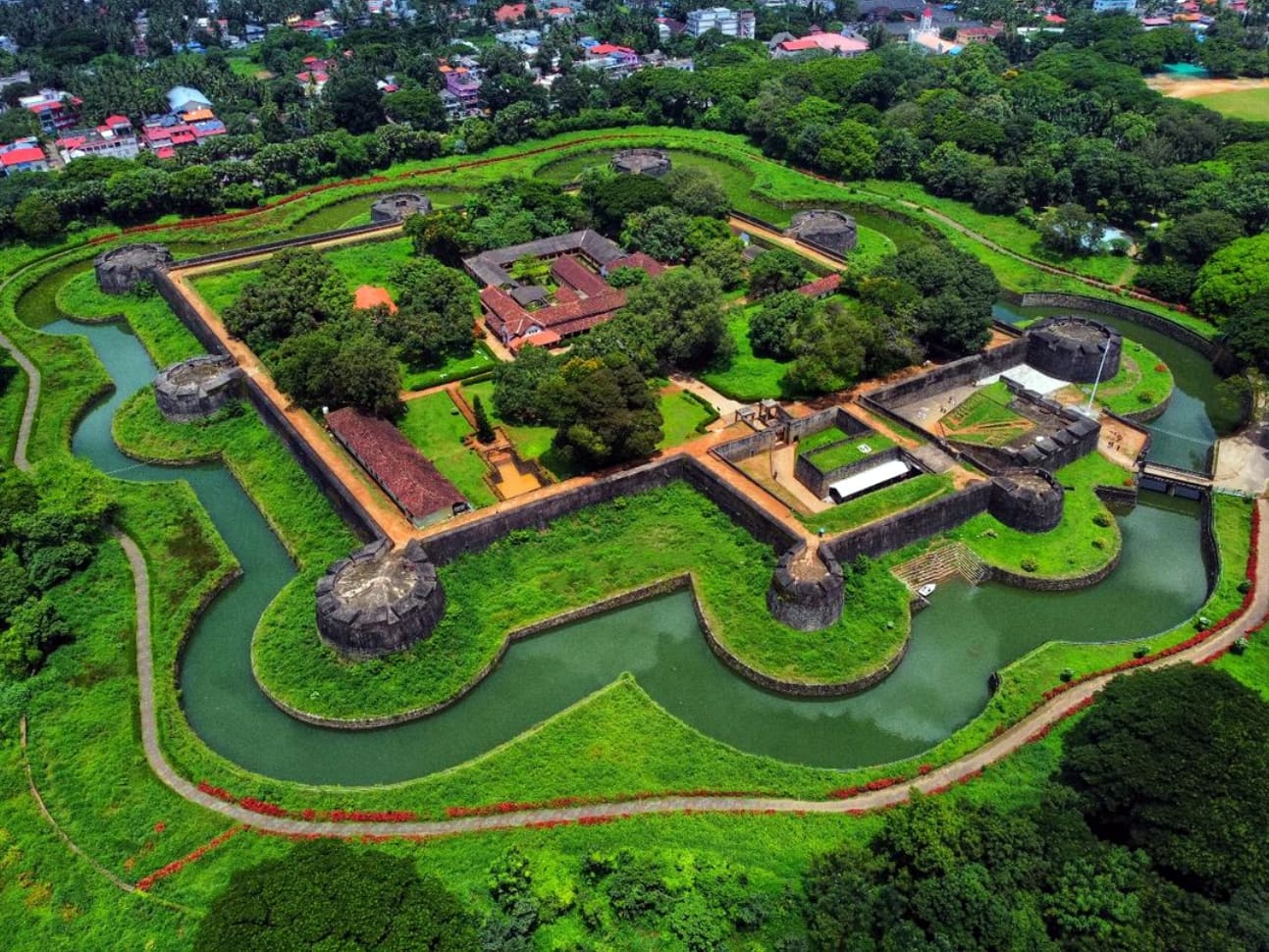
For the curious traveller, Jainimedu offers something Kerala rarely gives: a tangible thread back to a Jain past that most people never associate with the state at all. Paired with the nearby Palakkad Fort and the old town’s markets, temples and grain-country landscapes, it rounds out a picture of Palakkad as a historic crossroads where Karnataka, Tamil and Kerala worlds met, traded and left their marks in stone.
History
The temple is generally dated to around the 15th century, giving rise to the popular description of it as a ‘500-year-old’ shrine (indicative dating — confirm locally). Accounts widely credit its construction to a family of Jain diamond merchants who had migrated from Karnataka, with one name recorded in tradition as its founder (attributed — confirm locally). Jain traders following the medieval trade routes into the Palakkad Gap are a plausible thread behind its origins.
The early Jain settlers here are often said to have been Shettys, a merchant community, and the locality took the name Jainimedu from their presence. At its height — commonly placed in the seventeenth and eighteenth centuries — Jainimedu is said to have been home to several hundred Jain families (figures vary between sources — confirm locally), making it one of Kerala’s more significant Jain centres in a region where Jainism was otherwise scarce.
That community later dwindled. Local histories associate the decline with the turbulence of the late eighteenth century, including the period of the Mysore invasions of Malabar, after which the Jain population thinned and the temple slipped into neglect (historical attribution — confirm locally). What remained was the granite shell and its images — a surviving fragment of a once-living tradition rather than an active congregation.
The building itself is valued precisely as one of the very few places in Kerala where the physical vestiges of Jainism endure. It houses carved figures of Tirthankaras and yakshis and, in its plainness, preserves an authentic Jain aesthetic. The temple was renovated in the 2010s, with a Panch Kalyanak consecration ceremony reported around that time (indicative — confirm locally), which helped stabilise the deteriorating structure.
The temple is frequently described as a protected heritage monument of Palakkad, and it appears on district and state tourism heritage listings; however, travellers should treat any specific ASI or protected-monument designation as something to verify locally rather than assume (heritage status indicative — confirm locally). Either way, its significance is not in scale or grandeur but in rarity: a quiet stone survivor of Kerala’s Jain chapter.
Why visit
See one of the last surviving Jain temples in Kerala — a genuine rarity in a state better known for its Hindu, Christian and Muslim heritage.
Experience a strikingly austere granite shrine, free of the elaborate ornamentation of Kerala’s Hindu temples.
View carved images of Jain Tirthankaras and yakshis, including the principal figure Chandraprabha.
Trace a vanished community: the very name Jainimedu preserves the memory of Palakkad’s once-thriving Jain settlers.
Connect with a literary footnote — the tradition that poet Kumaran Asan composed Veena Poovu at a Jain house nearby.
Enjoy a quiet, uncrowded heritage stop that pairs naturally with Palakkad Fort and the old town.