The story
Kollengode is a heritage village on the eastern edge of Palakkad district, where the flatness of Kerala’s rice country runs straight up against the blue wall of the Nelliyampathy hills. It is a quiet place of paddy fields, old temples, tiled family houses and the memory of a small princely line — the Rajas of Kollengode — whose palace, arts patronage and Raja Ravi Varma connection give the village a cultural weight far larger than its size.
The story of Kollengode
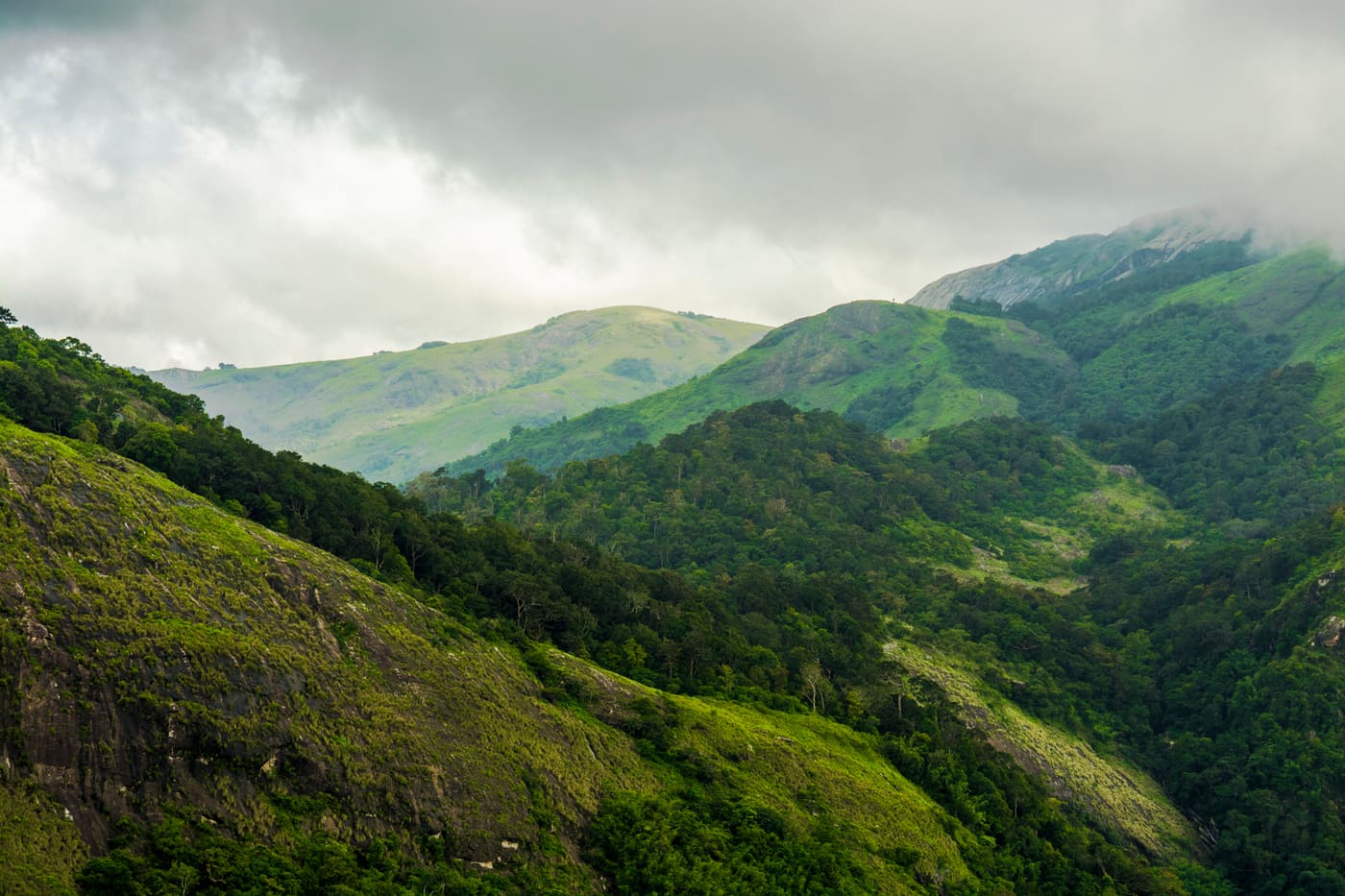
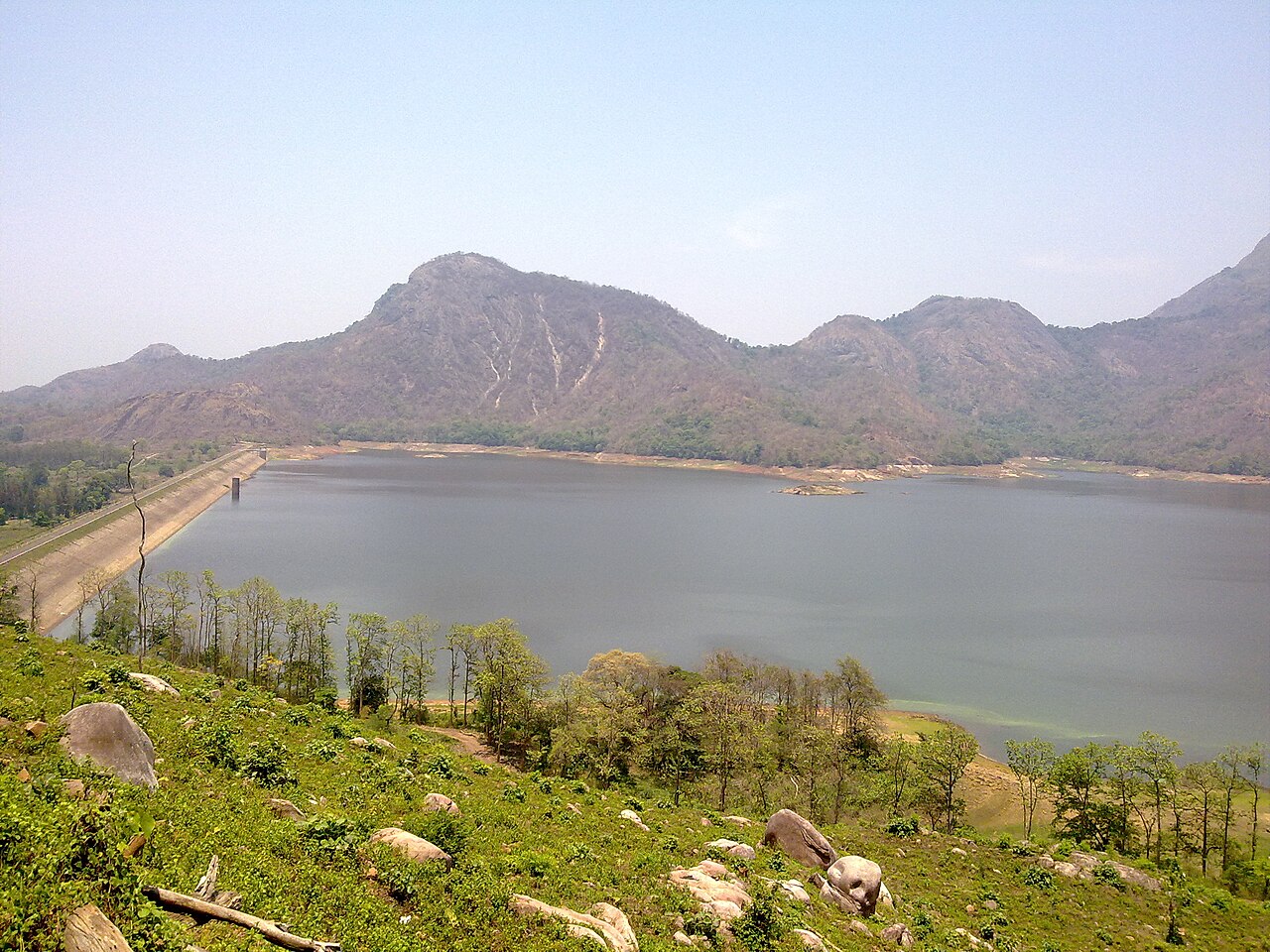
The first thing Kollengode gives you is its horizon. The village sits in one of the broadest sweeps of paddy land in Palakkad, and in the growing season the fields run flat and luminous green until they simply stop at the foot of the Nelliyampathy ranges, which rise as a long blue-grey rampart along the southern sky. Locals point out the peaks of Nelliyampathy and the shape of Seetharkund from the edge of the fields; the same view is famously framed by the pond of the Kachamkurissi temple, where hills, water and rice terrace stack up into one long postcard of the Western Ghats meeting the plain.
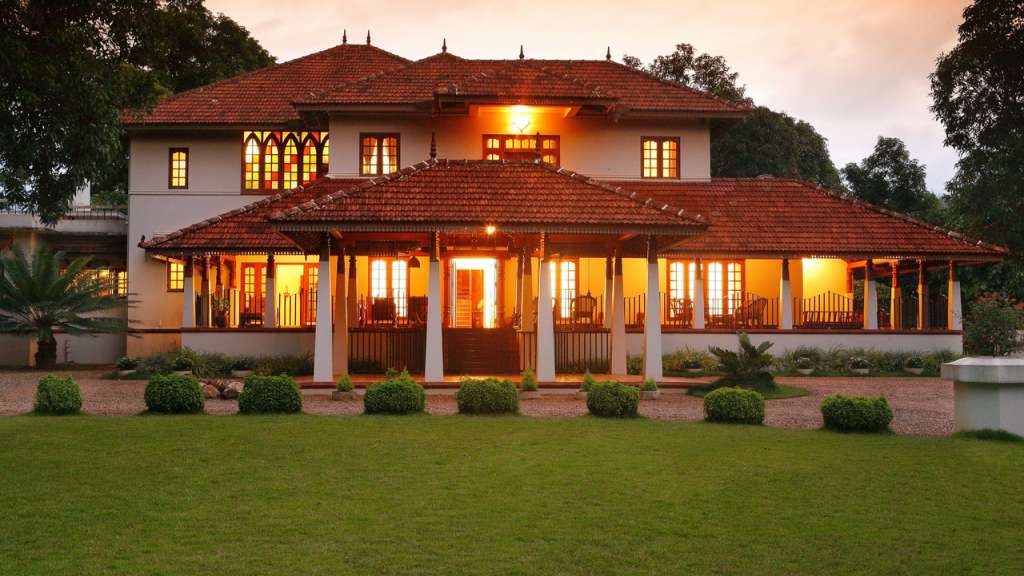
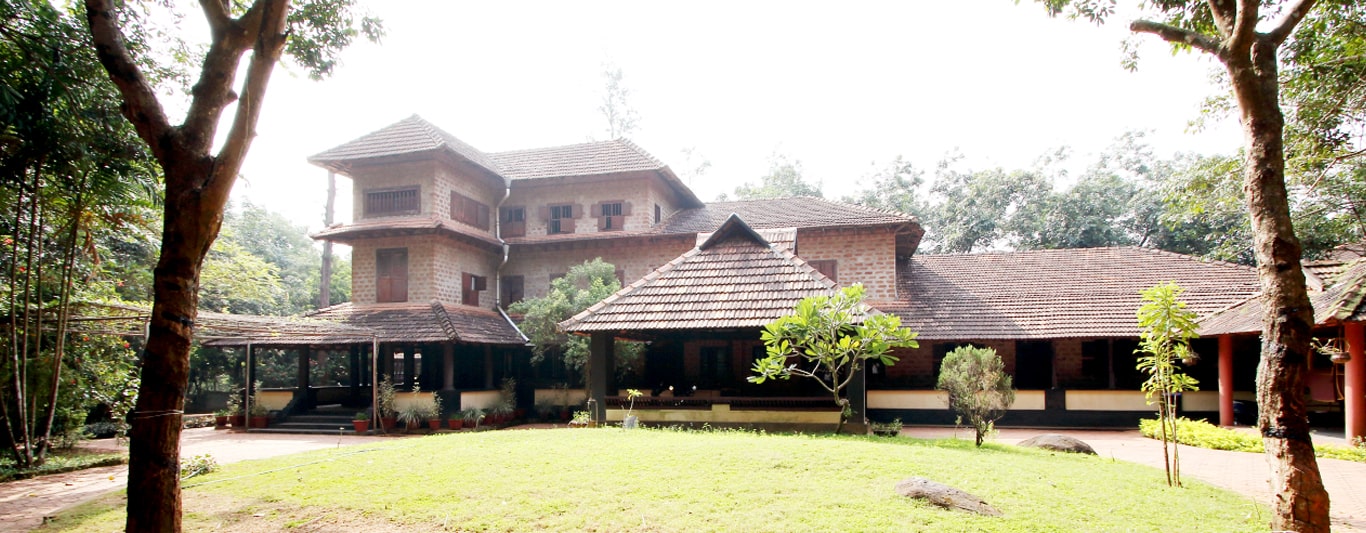
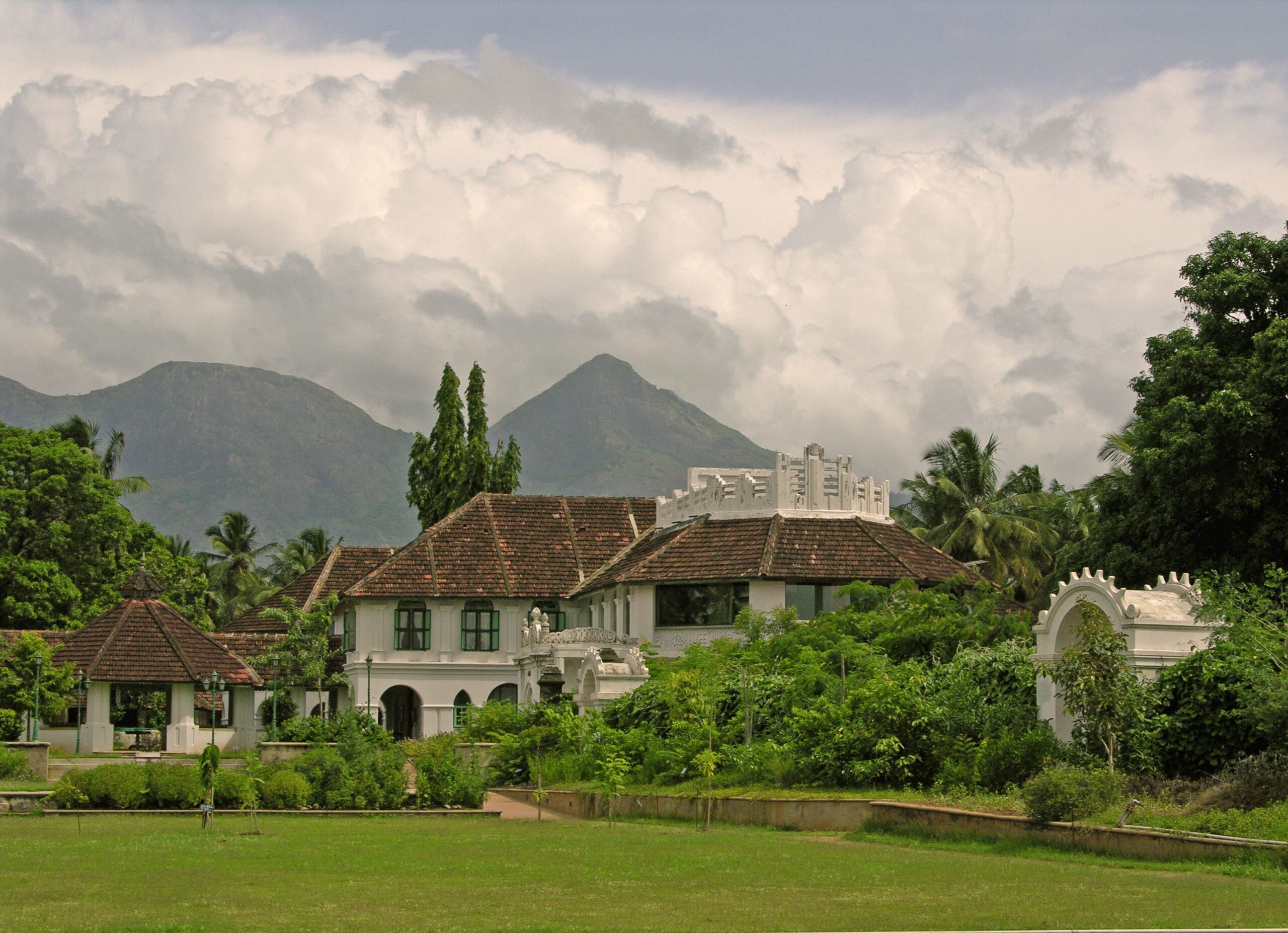
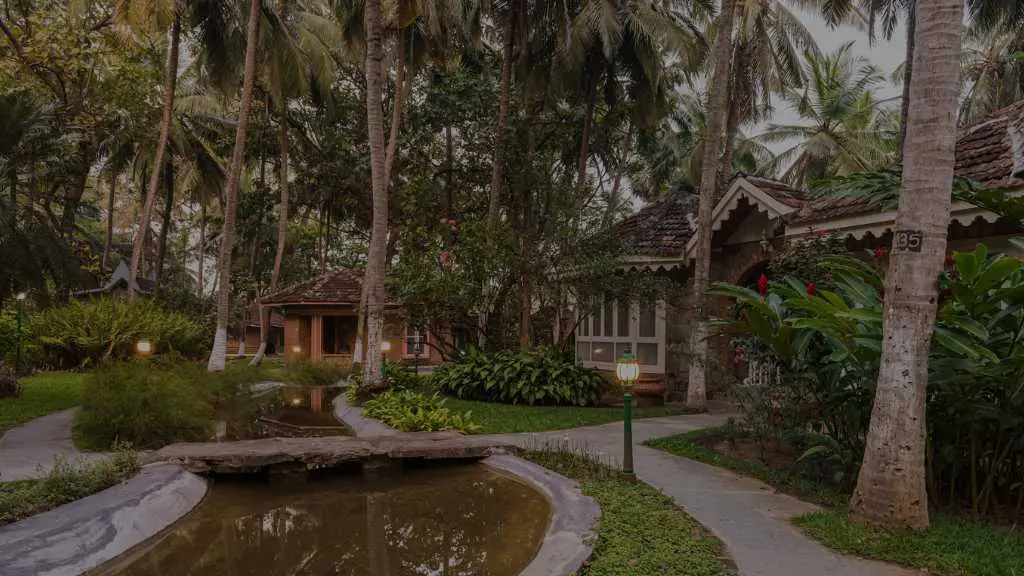
At the heart of the village stands its old royal seat, the Kollengode Kovilakam. This 19th-century palace — the Kalari Kovilakom, built around 1890 — was the residence of the chieftains of Vengunad, and an older palace nearby served as the ladies’ quarters. Long verandas, sloping tiled roofs, courtyards and dark timber halls speak of a Malabar aristocracy that lived modestly by the standards of larger kingdoms but kept a real sense of ceremony. The building today operates as an exclusive Ayurveda retreat rather than a public monument, so it is best appreciated for its setting and story; access to the interiors is limited or by arrangement only (indicative — confirm locally).
Kollengode keeps the unhurried rhythm of a temple-town. Mornings begin with lamps and bells at the Kachamkurissi Perumal shrine and the smaller neighbourhood temples; bullock-cart lanes give way to cycles and the odd bus; farmers move out to the fields and back. The village’s big communal event is its vela — the caparisoned-elephant, drum and firework temple festival that the harvested paddy fields of this belt are made for. The most celebrated of the region’s velas, the Nenmara–Vallanghy Vela, is staged nearby, and Kollengode has its own temple-festival traditions tied to Kachamkurissi (indicative — confirm dates and details locally).
For its size, Kollengode carries an unusually rich arts heritage. The ruling family were active patrons of painting, music and scholarship, and the great Travancore artist Raja Ravi Varma was a guest of the palace — a link that puts this small village on the map of Indian art history. The Rajas also endowed schools and supported musicians and Sanskrit scholars, so the place has long thought of itself as cultured rather than merely rural. That self-image survives in its well-kept temples, its music-and-festival calendar, and the pride locals take in the palace’s story.
Away from the temple and the kovilakam, Kollengode is simply a lovely piece of rural Kerala to move slowly through. Narrow roads run between coconut groves, tanks and paddy bunds; egrets work the flooded fields; the light in the late afternoon turns the hills violet. It is the kind of landscape that has quietly built a reputation among travellers looking for the ‘real’ Palakkad — unpolished, green and framed by mountains — and it has been singled out by well-known admirers of Kerala’s countryside as a place worth the detour.
Kollengode also sits at a crossroads of geography and culture. It lies close to the Kerala–Tamil Nadu border and the Palakkad Gap, so the village mixes Malayali temple culture with the drier, breezier feel of the plains that open toward Coimbatore. Nelliyampathy’s tea estates, viewpoints and waterfalls are within a short drive for those who want to climb into the hills, while the paddy plains, temples and palace give the low country its own gentle draw. It rewards the traveller who is happy to wander, sit by a temple tank and watch the fields rather than tick off attractions.
Legend & myth
The village’s best-loved legend belongs to the Kachamkurissi Perumal temple, one of the oldest Vishnu shrines in the area. As the story is told, the name Kachamkurissi comes from ‘Kashyapan-Kurissi’ — the hill of the sage Kashyapa — because it was here, in this quiet green fold below the hills, that Kashyapa is said to have sat in long meditation.
Legend holds that Lord Vishnu, pleased by the sage’s devotion, appeared before him, and that Kashyapa begged the Lord to stay in this tranquil land for ever. Vishnu is said to have granted the wish, and the sage himself is believed to have consecrated the idol of Mahavishnu now worshipped as Perumal. This is a devotional legend rather than documented history, but it is the story villagers will tell you to explain both the temple’s antiquity and its unusually serene, hill-framed setting.
Such origin legends — a wandering sage, a granted boon, a self-installed deity — are common to many old Kerala shrines, and at Kachamkurissi the tale is woven tightly into the landscape: the pond that mirrors the Nelliyampathy peaks is treated as part of the sacred scene rather than mere scenery. Take it as living folklore that gives the place its meaning, not as an established chronicle.
History
Kollengode was the seat of a small chiefly line, the Vengunad (Venganad) Nambidis — sometimes called the Vengandu Swaroopam — who governed a cluster of desams on the eastern side of Palakkad. Their territory, Vengunad, is traditionally glossed as ‘the land of vengu trees’ in the foothills below the Anamalai–Nelliyampathy ranges. In the older Malabar order the Nambidis held a recognised, if modest, rank and were connected to the wider network of Zamorin-era chieftaincies before that power waned (indicative — confirm scholarly detail locally).
The chiefs came to be styled the Rajas of Kollengode. Accounts of exactly how the ‘Raja’ title was conferred differ — some trace it to the era of Mysore’s incursions under Hyder Ali and Tipu Sultan, others to recognition by the British colonial administration in the aftermath of those wars — so the honour is best described as dating to the late 18th- to 19th-century upheavals in Malabar rather than pinned to a single grant (indicative — confirm locally).
The most prominent figure in the family’s recorded history is Vasudeva Raja, active around the turn of the 20th century, remembered as a moderniser and public man. He is credited with founding a high school and improving the locality, sat in the Madras legislative assembly, served as a vice-president of the Malabar Jenmi Sabha (the landlords’ association), and received the Kaiser-i-Hind honour. He also built the well-known Kollengode Palace at Chembukkavu in Thrissur — a separate building from the Palakkad kovilakam — reportedly around 1904 as a gift connected to his daughter’s marriage; that Thrissur house later became a museum.
Kollengode’s brightest thread in Indian cultural history is its Raja Ravi Varma connection. The celebrated painter and his brother, C. Raja Raja Varma, were guests of the Kollengode palace, and in January 1903 they painted a portrait of Vasudeva Raja’s mother, Dhatri Tampuratti (Rani Dhatri). The picture is noted as one of the rare works carrying both brothers’ signatures and is dated 1-1-1903; it is reported to have remained in the family’s own collection. During her son’s minority, Dhatri Tampuratti is remembered for managing the family estates with notable ability.
The physical legacy of all this is the Kollengode Kovilakam itself: an older palace that served as the ladies’ quarters and the later reception palace of about 1890, now run as the Kalari Kovilakom Ayurveda retreat. The family were remembered as patrons of the arts, education and scholarship, endowing schools and supporting artists and musicians, even as their direct political authority faded through the 20th century. Together the palace, the portrait and the temples make Kollengode a small place with a long cultural memory.
Why visit
The landscape: some of the widest, most photogenic paddy fields in Palakkad, running flat and green straight up to the blue wall of the Nelliyampathy hills.
A genuine princely heritage — the Kollengode Kovilakam and the story of the Vengunad Rajas — giving a quiet village real historical depth (note the palace now runs as a private retreat, so plan around limited access).
The Kachamkurissi Perumal temple, an ancient Vishnu shrine with a sage-and-boon origin legend and a famous view of the hills mirrored in its temple pond.
A rare Raja Ravi Varma connection: the master painter and his brother were guests here and painted the Rani of Kollengode, linking the village to the story of modern Indian art.
The unhurried, unpolished feel of rural Kerala — coconut groves, temple tanks, bullock lanes and mountain light — ideal for slow, camera-in-hand wandering.
A handy base for the Nelliyampathy hills (tea estates, viewpoints, waterfalls) and for experiencing the region’s spectacular post-harvest velas with their elephants and fireworks.