The story
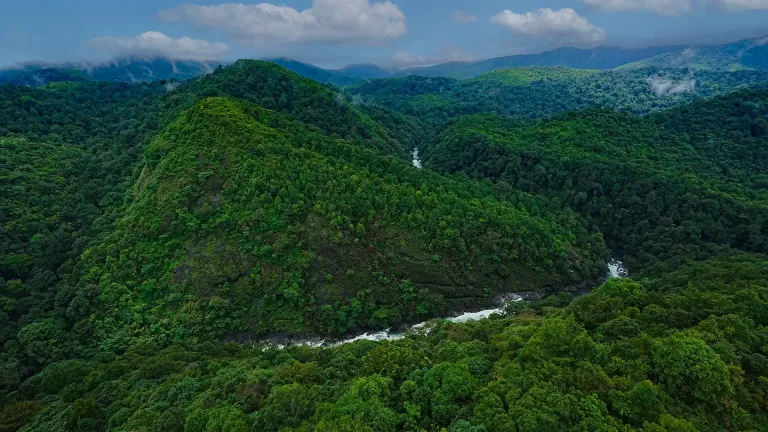
Deep in the Kundali Hills of Palakkad, where the Western Ghats fold into some of the oldest rainforest left on Earth, Silent Valley National Park protects roughly 90 square kilometres of undisturbed tropical evergreen jungle that was very nearly drowned by a dam. Reached through the forest check-post at Mukkali, it is a place of dripping canopy, mist and the tea-brown Kunthipuzha river — and the story of how ordinary Keralites fought to save it is as famous as the forest itself.
The story of Silent Valley National Park
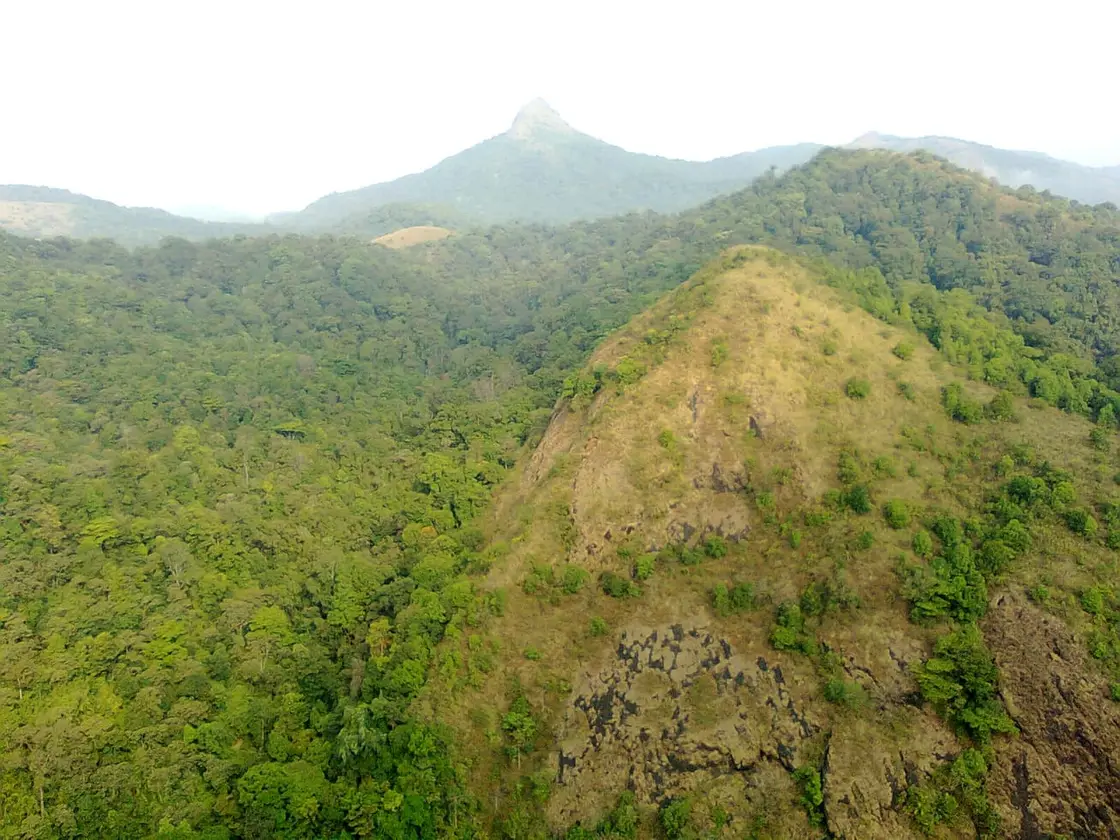
Silent Valley does not announce itself. From the base at Mukkali the forest road climbs through plantations and secondary jungle before the canopy closes overhead and the light turns green and underwater. This is one of the last unbroken tracts of tropical evergreen rainforest in the Western Ghats — a forest that has stood, botanists believe, more or less continuously for millions of years, never cleared, never settled, a living museum of the wet tropics.
At its heart runs the Kunthipuzha, a clear, cold river that threads the entire length of the valley from north to south, dividing it into eastern and western halves. The river gives the park its shape and its life: along its banks the forest is at its densest, the trees rising in soaring tiers hung with lianas, ferns and more than a hundred species of orchid. Elevations climb from the river at around 650 metres to the high ridge of Anginda Peak above 2,300 metres, so within a short distance the forest shifts from lowland evergreen to shola-grassland and stunted montane wood.
The valley is the flagship home of the lion-tailed macaque, one of the rarest and most striking primates in the world — a black-coated monkey with a silver-grey mane framing its face, found only in the rainforests of the southern Ghats. Silent Valley holds one of the largest surviving populations, and it was partly to protect this endangered animal that the whole forest was ultimately saved. Alongside it live Nilgiri langurs, Malabar giant squirrels, elephants, the shy Nilgiri tahr on the higher slopes, and a bird list running past a hundred and thirty species. The park forms a core zone of the wider Nilgiri Biosphere Reserve.
The name itself carries a puzzle. One much-repeated explanation is that British surveyors called it the “Silent Valley” because they were struck by the apparent absence of the noisy cicadas that fill most Indian forests with their shrill drone — a quiet that seemed eerie to visitors used to a wall of insect sound. It is a lovely idea and worth telling, but it is best treated as folklore rather than settled fact: cicadas are in truth present here, and the name may equally be an anglicisation of an older local word. Whatever its origin, “silence” suits the place — the loudest sounds are usually the river, the wind in the canopy and the whoop of a distant macaque.
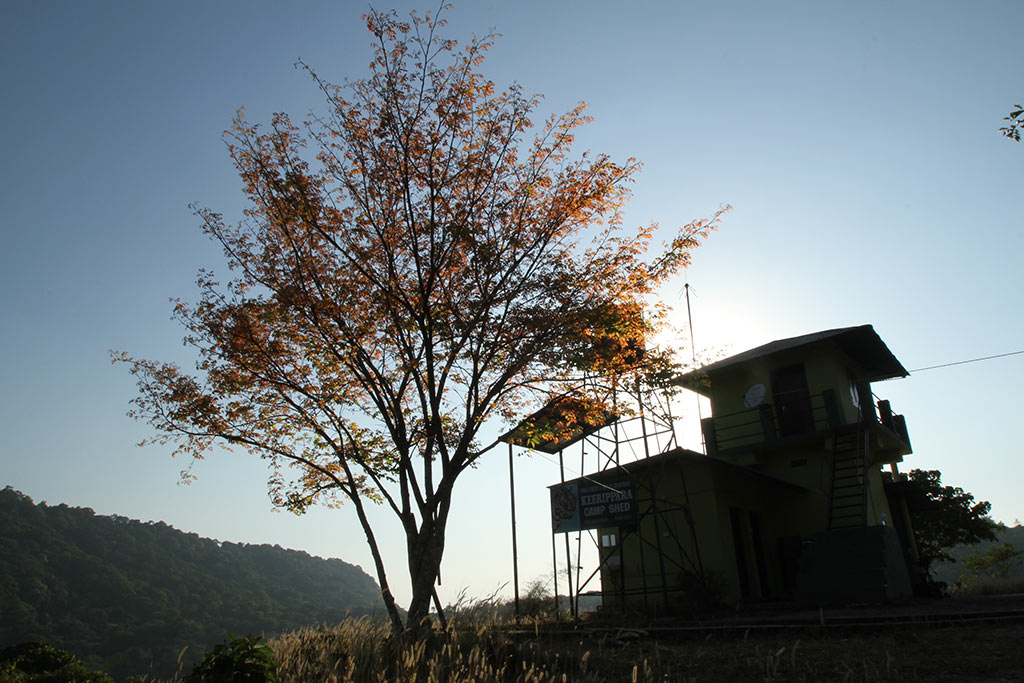
A visit today is deliberately low-impact. There is no resort, no crowd and no free run of the forest. From Mukkali the Forest Department runs guided jeep trips along a single track into the core, and at Sairandhri — the visitors’ zone deep inside — a watchtower lets you look out over an unbroken sea of canopy toward the peaks. Numbers are capped each day and the whole experience is designed to keep the forest exactly as the campaigners of the 1970s and 80s wanted it: intact, protected and quietly, insistently alive.
Legend & myth
The names inside Silent Valley reach back to the Mahabharata, and local tradition links the valley to the years the Pandava brothers spent in exile. The core visitors’ zone is called Sairandhri — the very name Draupadi is said to have taken when, in the final year of exile, she disguised herself as a humble serving-maid (a “sairandhri”) in the court of King Virata. By this telling the valley is one of the wild places through which the exiled Pandavas wandered.
The river carries the legend too. The Kunthipuzha is popularly connected to Kunti, mother of the Pandavas, its name echoing hers. Some versions hold that the family sheltered and bathed here during their forest years, binding the whole valley — river, forest and clearing — to the great epic.
These associations are best enjoyed as etymology and legend rather than history: they explain how the places came by their names and lend the forest a mythic depth, without any claim that the events literally unfolded on this ground. Even so, walking a rainforest named for a queen in disguise and a river named for an epic mother adds a quiet resonance to an already extraordinary place.
History
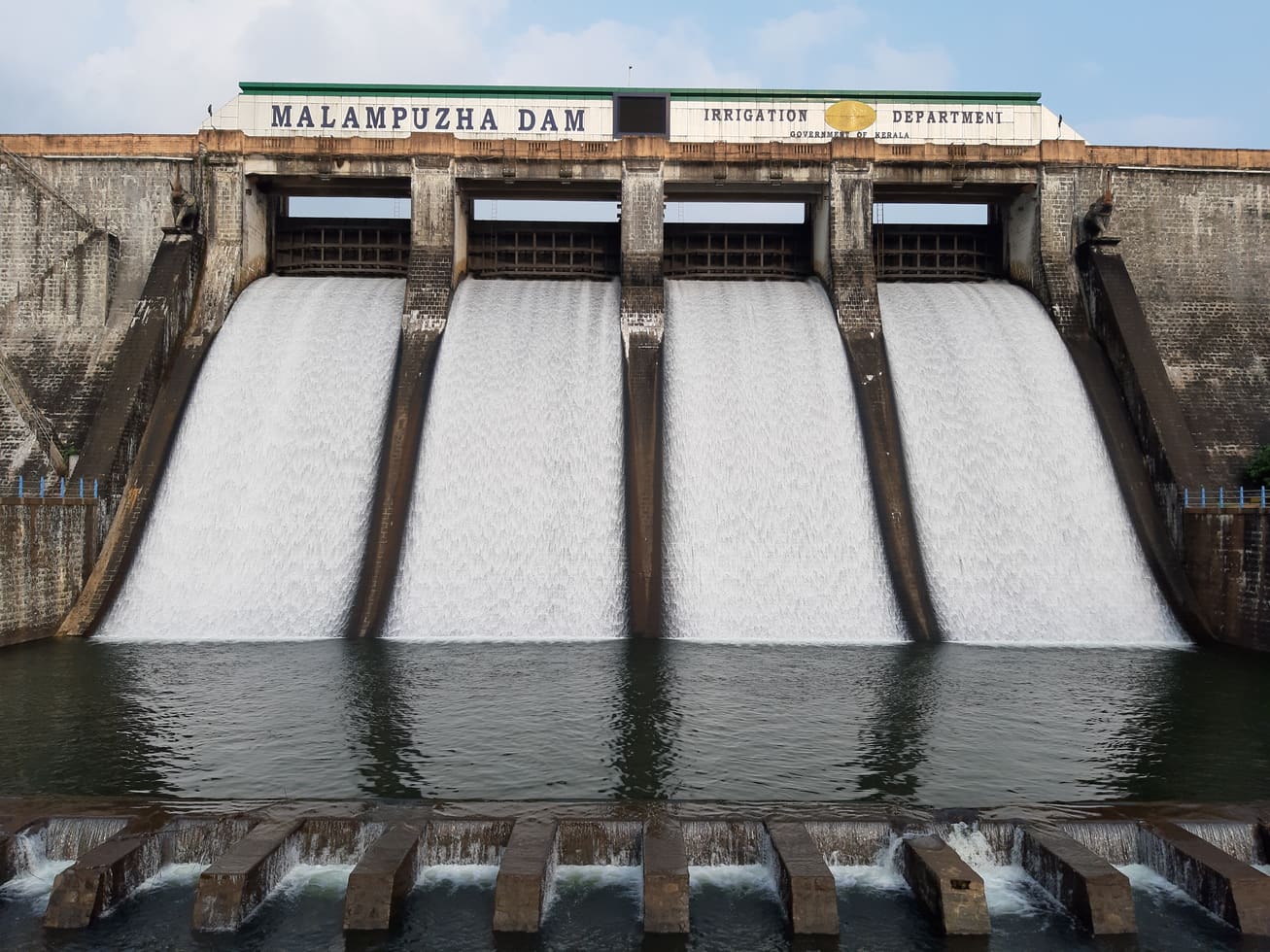
The idea of damming Silent Valley is surprisingly old. As early as 1928 the Kunthipuzha was identified as a promising site for a hydro-electric scheme, and in 1973 the Planning Commission approved a project by the Kerala State Electricity Board to build a dam across the river. The reservoir would have submerged a large stretch of pristine rainforest in the heart of the valley — and set in motion one of independent India’s defining environmental battles.
Opposition crystallised around the Kerala Sasthra Sahithya Parishad (KSSP), the people’s science movement, which argued the case against the dam in village halls and scientific forums alike. The campaign drew in some of the most respected names in the country: the ornithologist Sálim Ali warned of the irreplaceable loss to bird life, scientists such as M. G. K. Menon and Madhav Gadgil weighed in, and the poet Sugathakumari gave the movement its emotional voice with “Marathinu Stuthi” (Ode to a Tree), read aloud at gatherings until it became an anthem for the forest. What began as a regional dispute grew into a nationwide debate about whether development had to mean destruction.
The pressure told. Through the late 1970s and early 1980s the project was reviewed, suspended and reviewed again. A committee chaired by Professor M. G. K. Menon was asked to assess the scheme, and on the strength of its findings Prime Minister Indira Gandhi — who had taken a close personal interest — moved to abandon the dam. In 1983 the hydro-electric project was formally scrapped, a landmark victory for a grassroots movement over a sanctioned government scheme.
With the dam dead, the forest was given permanent protection. Silent Valley was declared a National Park in 1984, and on 7 September 1985 Prime Minister Rajiv Gandhi formally inaugurated the park at Sairandhri, where a memorial marks the occasion. In 1986 the valley became a core zone of the newly notified Nilgiri Biosphere Reserve, embedding it in one of India’s most important conservation landscapes.
The story did not quite end there. A revived proposal to build a dam a little downstream in the early 2000s reopened old wounds and was again resisted, and in 2007 the Kerala government approved a large buffer zone — adding well over a hundred square kilometres drawn from neighbouring forest ranges — to shield the core from encroachment. Today “Save Silent Valley” is taught in Indian schools as the campaign that rewrote the country’s environmental narrative, and the forest it saved remains its most eloquent argument.
Why visit
You are standing in one of the last undisturbed tropical evergreen rainforests in the Western Ghats — a forest that was never logged or settled and that scientists regard as a genuine relic of the ancient wet tropics. Very few places let you walk into rainforest of this age and integrity.
It is the best-known home of the lion-tailed macaque, the silver-maned, black-coated primate found nowhere but the southern Ghats. Sightings are never guaranteed in dense jungle, but Silent Valley offers one of the finest chances anywhere to encounter this rare and charismatic animal in the wild.
The Sairandhri watchtower delivers one of Kerala’s great forest views — an unbroken swell of canopy rolling toward high peaks, with the Kunthipuzha somewhere below and mist drifting through the treetops. It is the kind of vista that explains, instantly, why people fought so hard to save this valley.
The biodiversity is staggering for its size: over a thousand species of flowering plants, more than a hundred orchids, well over a hundred birds, elephants, Nilgiri langur and tahr, and a river alive with dragonflies. As a core zone of the Nilgiri Biosphere Reserve, it is a naturalist’s and birdwatcher’s dream.
History clings to every path. This is the ground of “Save Silent Valley,” the movement that stopped a dam and reshaped environmental thinking across India — a rare place where you can see, first-hand, exactly what a people’s campaign managed to protect.
And there is the atmosphere itself: the capped visitor numbers, the guided jeep trip, the absence of resorts and crowds mean the forest stays hushed and undisturbed. For anyone tired of over-touristed hill stations, Silent Valley offers something increasingly rare — quiet, wildness and space to breathe.