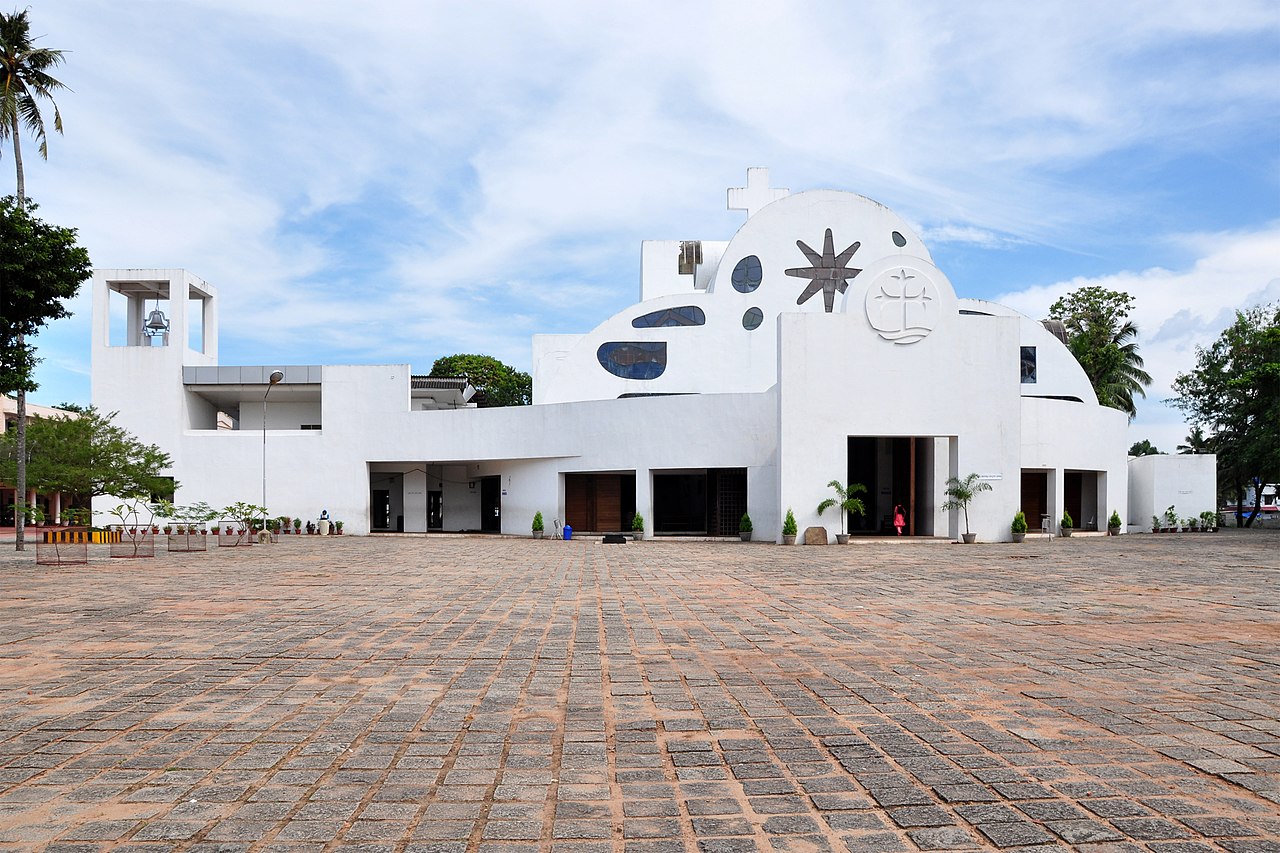
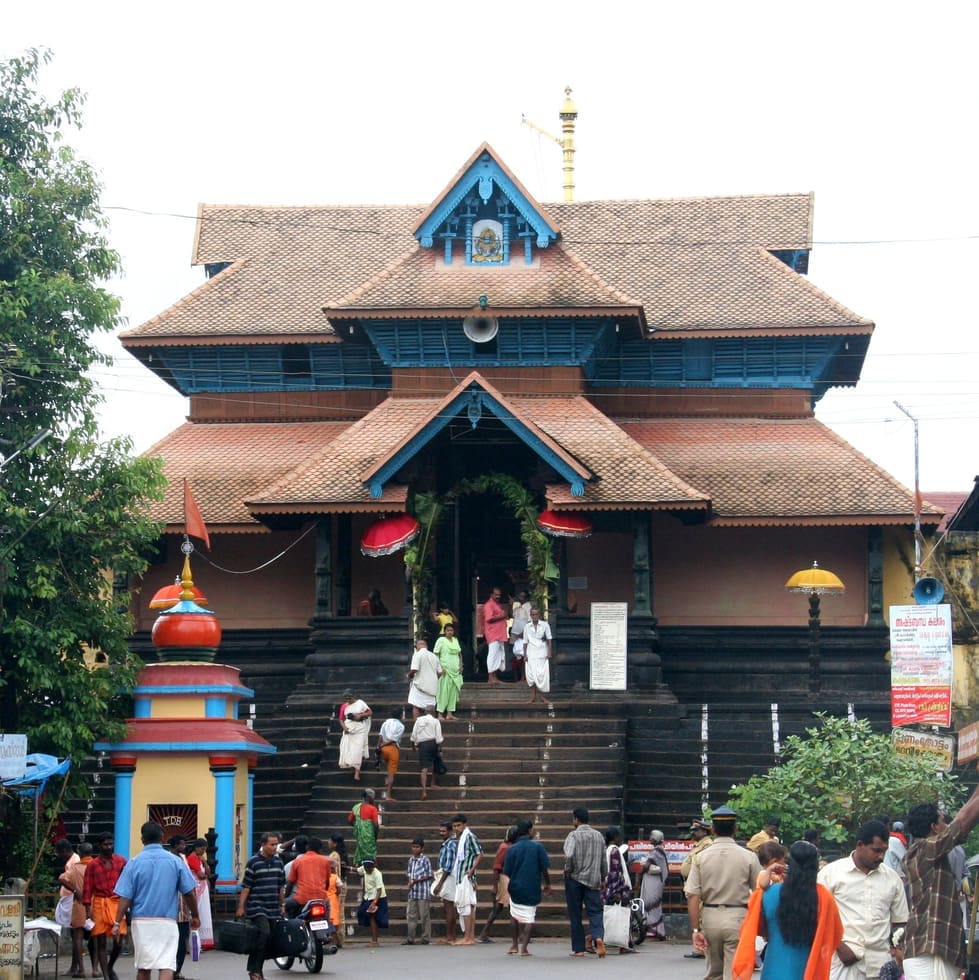
On a low green island where the Pamba river braids itself into backwater channels near Mannar, Parumala Church — properly the St Peter’s and St Paul’s Orthodox Church, and known to Malayalis simply as Parumala Palli — keeps the tomb of the first canonised saint of the Malankara Orthodox Syrian Church, St Gregorios of Parumala. Pilgrims of every faith come here quietly, all year round, to light a candle at the grave of the bishop they call, with unforced affection, Parumala Thirumeni.
The story of Parumala Church
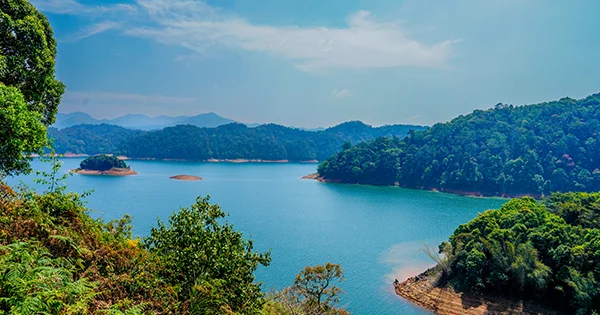
Parumala is not a place you stumble upon; you arrive deliberately, crossing a bridge onto a river island so flat and low that in monsoon the Pamba seems to lap at the very compound walls. The setting is disarmingly humble — coconut palms, paddy, the slow brown river — and yet a steady current of people moves toward the whitewashed church at its heart. They come in ones and twos on weekday mornings and in their tens of thousands at feast time, and a striking number of them are not Orthodox Christians at all. Hindus, Muslims and Catholics walk the same path to the same tomb. That quiet, matter-of-fact plurality is the first thing many visitors notice, and it is the truest thing about Parumala.
At the centre of it all lies a man who died here in 1902 and has never really left the imagination of Kerala. Geevarghese Mar Gregorios — Parumala Thirumeni — was a bishop of extraordinary austerity and gentleness, remembered less for grand pronouncements than for fasting, sleepless nights of prayer, and a habit of giving away whatever he had. Devotees speak of him the way one speaks of a beloved grandfather who happened also to be a saint: strict with himself, endlessly tender with the poor, the sick and the frightened. The church you visit grew up around his grave, and the whole island still feels organised, gently, around his memory.
The devotion here is intensely personal. Pilgrims kneel at the kabaradana, the tomb chamber, pressing foreheads to cool stone, and leave behind an unruly, moving tangle of offerings — models of houses hoped for, tiny cradles for a longed-for child, replicas of limbs prayed over. Many bring letters. Devotees believe that Parumala Thirumeni still hears them, and they will tell you — without insisting you agree — of examinations passed, illnesses eased, marriages mended after a visit here. These accounts are cherished as testimony of the saint’s intercession; Roampedia records them respectfully as the living belief of those who make the journey, not as documented fact.
The rhythm of Parumala is prayer. There are set hours for the Holy Qurbana (the Orthodox liturgy) and for special intercessory prayers at the tomb, and the air carries the particular signature of Eastern worship — Syriac and Malayalam chant, the sweet fog of incense, oil lamps and slender candles guttering in the river breeze. Even outside service hours the church rarely feels empty. Someone is always at the grave.
Then, once a year, the island transforms. Around the saint’s death anniversary at the start of November, the Ormaperunnal — the great commemoration feast — swells Parumala with a sea of pilgrims that spills far beyond the compound, along the riverbank and into every approach road. It is one of the largest Christian gatherings in Kerala, and for a few days this quiet island becomes, briefly, the spiritual capital of a whole community — before the crowds ebb and Parumala returns to its patient, prayerful stillness.
For the traveller who is not a pilgrim, Parumala still repays the detour. It is a window into a very old and very Indian form of Christianity — the Malankara Orthodox tradition, tracing its lineage to the Apostle Thomas — set in a gentle riverine landscape of the kind that made Kuttanad and the Pamba basin famous. Come for the saint, and you also find a way of life along the water: ferries and country boats, paddy and palm, and a hospitality that treats the outsider as one more welcome guest at the tomb.
History
The man at the heart of Parumala was born Geevarghese on 15 June 1848 at Mulanthuruthy, near Kochi, into a devout family of the ancient Syrian Christian community of Kerala (dates indicative — confirm locally). Drawn to the Church from boyhood, he was ordained deacon while still very young, reportedly around the age of ten, under the guidance of his relatives and clergy who recognised an unusual seriousness in the child. He grew into a monk of rigorous discipline, steeped in Syriac learning, liturgy and the ascetic tradition of the Malankara Church.
His rise was remarkably swift. In December 1876, during the visit of the Syriac Orthodox Patriarch of Antioch, Ignatius Peter (the period of the Mulanthuruthy Synod that reshaped the Malankara Church), Geevarghese was consecrated a Metropolitan and took the name Mar Gregorios — becoming, at around twenty-eight, one of the youngest bishops the Church had known (details indicative — confirm locally). He was entrusted with the pastoral care of several dioceses, a heavy charge for so young a bishop, and he carried it with a seriousness that would define the rest of his life.
Parumala itself became central to his work. A seminary had been established on the island under Pulikottil Joseph Mar Dionysius, and Mar Gregorios made Parumala his base — the aramana, or bishop’s residence — pouring his energy into forming priests and deepening the spiritual life of his flock. From this quiet river island he championed causes that were forward-looking for his day: he was a strong advocate of education, encouraging the founding of schools (including English-medium teaching) and Sunday schools, and he laboured constantly for the poor and the sick. In 1895 he undertook a pilgrimage to Jerusalem, a long and arduous journey that deepened the reputation for holiness that already surrounded him.
Mar Gregorios died at Parumala on 2 November 1902, and by his own wish was buried on the island he had made his home. Almost immediately his grave became a place of pilgrimage; the ordinary faithful, and then the wider Church, came to regard him as a saint long before any formal act declared it. Reports of answered prayers gathered around the tomb, and the little church grew steadily into a major shrine.
In 1947 the Malankara Orthodox Syrian Church formally declared Geevarghese Mar Gregorios a saint — the first canonised saint of Indian origin in that Church, and a landmark moment for Indian Christianity, which could now venerate a saint of its own soil. Devotion continued to spread far beyond Kerala; in 1987 the Syriac Orthodox Patriarch of Antioch also solemnly proclaimed his sainthood, and today churches named for St Gregorios of Parumala stand across India and around the world (dates indicative — confirm locally). Yet the heart of it all remains this modest island, where the saint chose to be laid to rest.
Why visit
To stand at the tomb of the first canonised saint of Indian origin in the Malankara Orthodox Church — a place of genuine historical weight for Indian Christianity, not merely a pretty church, but the resting place of a figure venerated across continents.
For the remarkable all-faith character of the pilgrimage: Parumala is one of those rare Kerala shrines where Hindus, Muslims and Christians pray side by side. Whatever your own beliefs, the sight of that easy plurality is quietly moving.
To experience living Eastern Orthodox worship — Syriac and Malayalam chant, incense, oil lamps and the ancient rhythm of the Holy Qurbana — in the tradition that traces itself to the Apostle Thomas, one of the oldest continuous Christian communities on earth.
For the setting itself: a low green island cradled by the Pamba river near Mannar, on the edge of the Kuttanad backwater country. The approach over the water, the paddy and palms, and the slow river make even the journey part of the experience.
For the extraordinary human texture of the tomb chamber — the letters, the model houses and cradles, the offerings left by strangers — which tells you more about hope, grief and gratitude in Kerala than any guidebook could.
And, if your timing allows, for the Ormaperunnal in early November, when Parumala becomes the focus of one of the largest Christian gatherings in the state and the whole island pulses with candlelight, chant and an enormous, orderly tide of pilgrims.