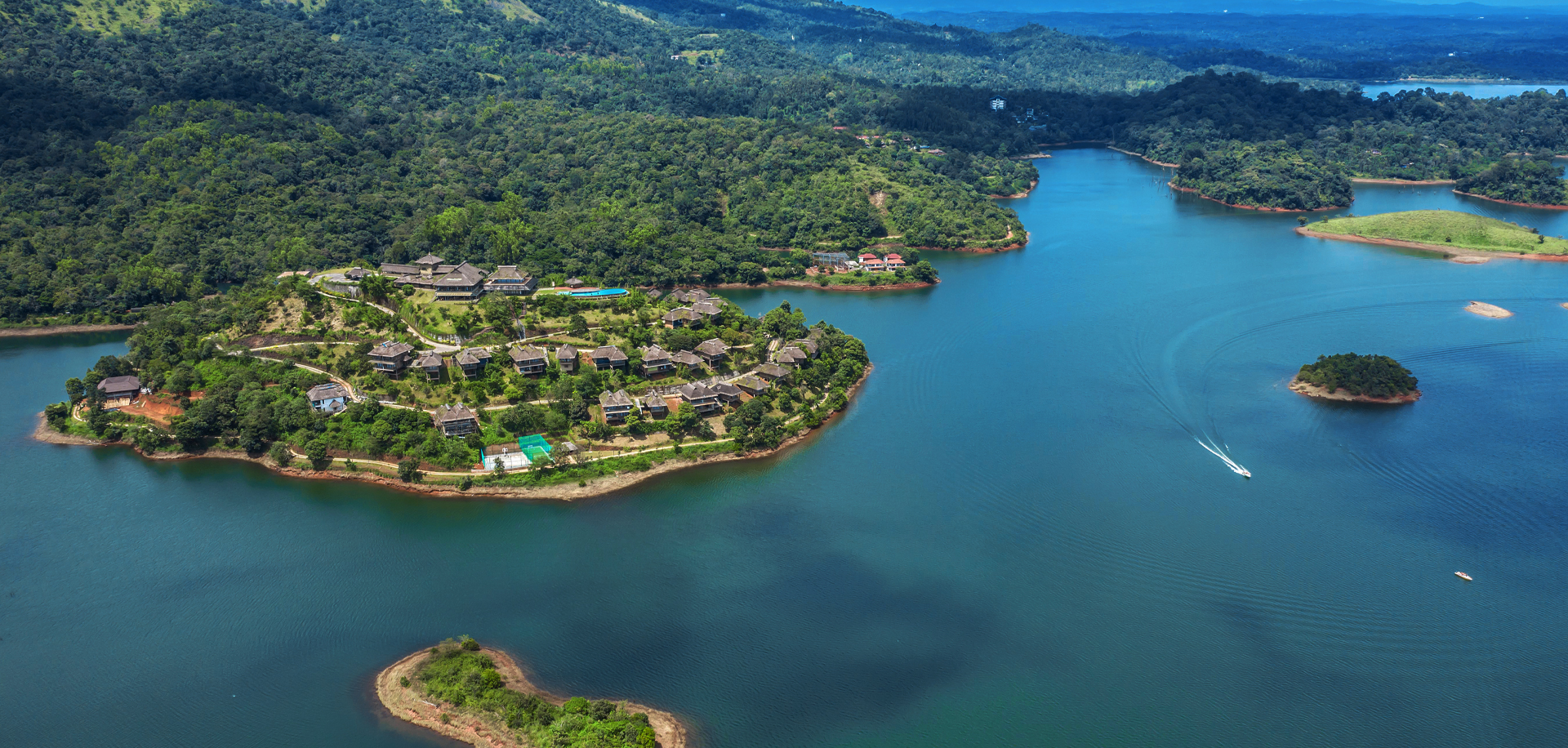
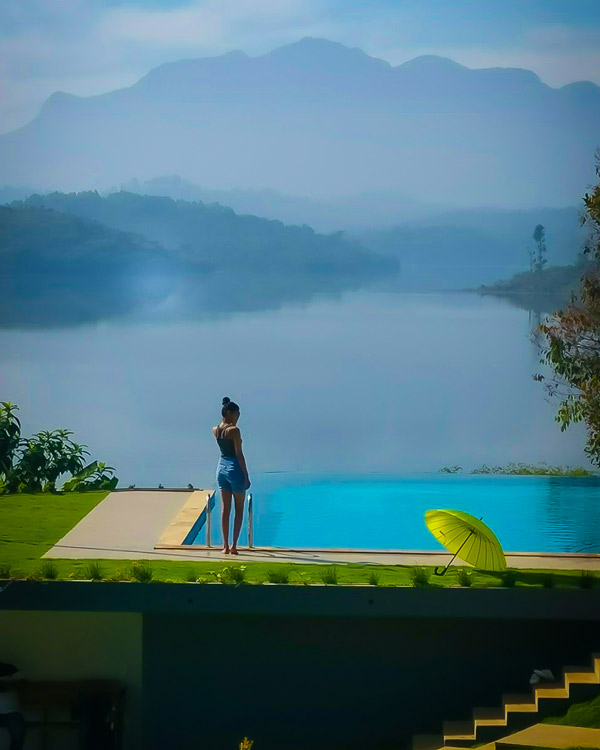
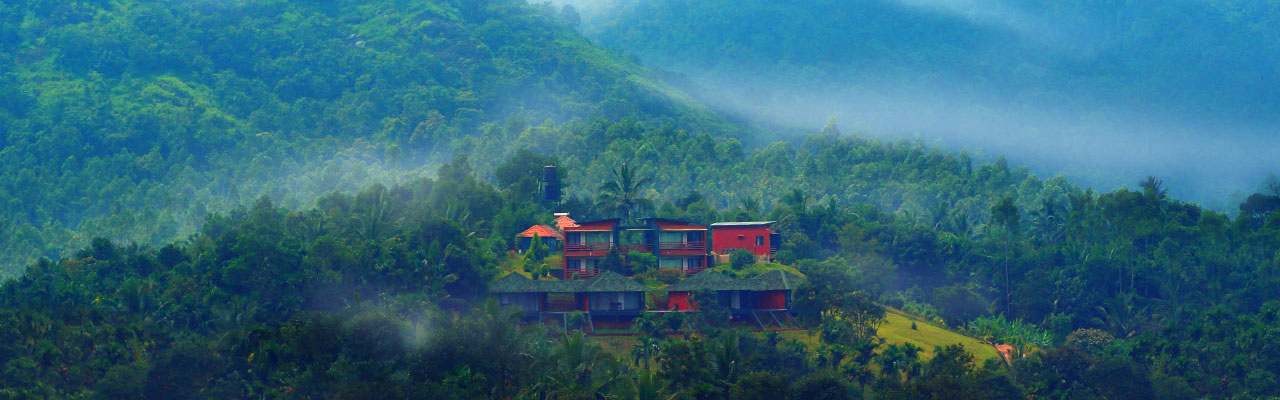
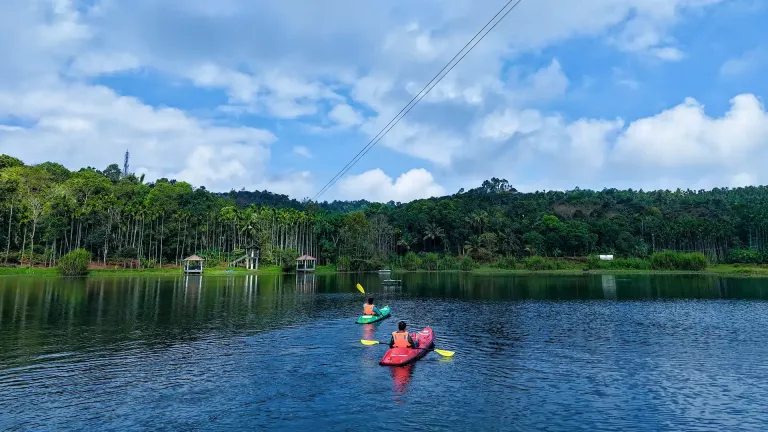
Karapuzha Dam is a large earthen dam near Kalpetta in Wayanad, holding back a broad reservoir ringed by paddy fields and blue-green hills. It is a modern irrigation project turned easy-going day out — boating, gardens, a children’s park and a breezy hanging bridge, with the Wayanad ranges filling the horizon.
The story of Karapuzha Dam
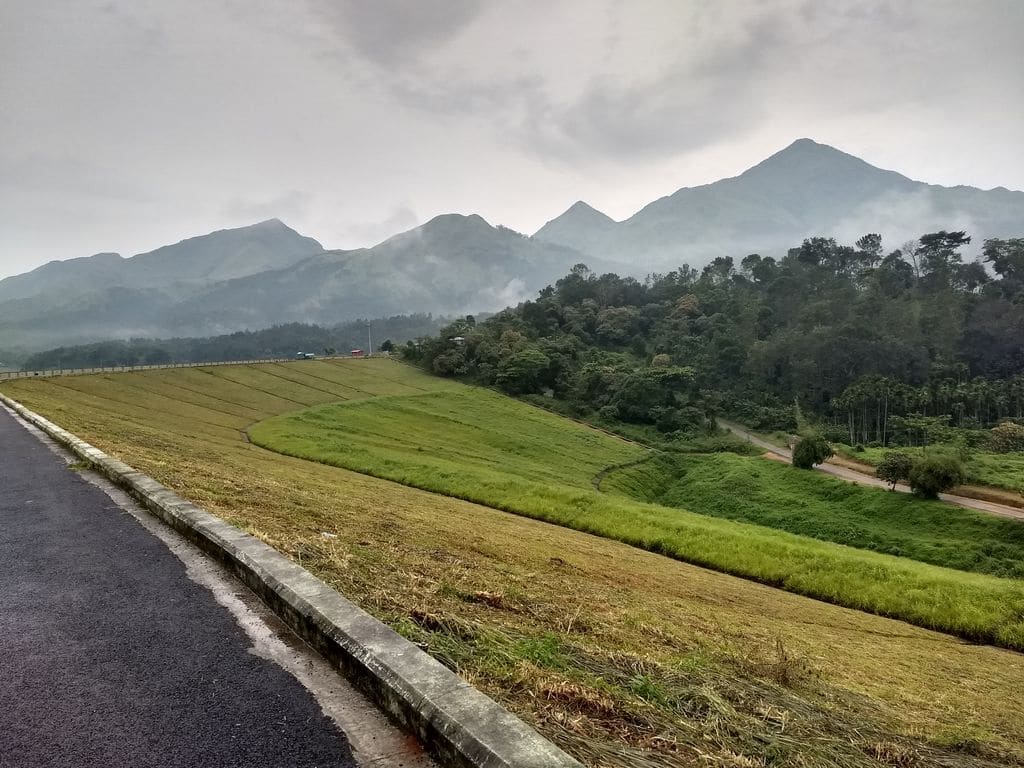
Karapuzha Dam sits a short drive from Kalpetta, spread across the Karapuzha river where it winds through the paddy country of central Wayanad. Unlike the district’s dripping rainforests and cliff-edge viewpoints, this is a place of open water and wide sky — a long green embankment, a shining reservoir, and rows of hills folding away into the distance. It is worth being honest about what it is: not an ancient monument or a temple with a legend behind it, but a working piece of engineering that the land and the light have slowly turned into a scenic retreat.
The Karapuzha is a tributary of the Kabini, itself part of the great Cauvery system that drains eastward off the Wayanad plateau. Damming it created a sheet of water that fills out generously after the monsoon and mirrors the surrounding hills on still mornings. Paddy fields press right up to the fringes in places, so the view shifts with the farming year — flooded and silver in one season, emerald with young rice in another, gold at harvest.
The reservoir is often described as one of the largest earthen dams in India, and it is certainly among the bigger earthfill dams in Kerala (indicative — the ranking claim is repeated widely but rarely sourced precisely, so treat it as a talking point rather than a hard record). What is not in doubt is the sense of scale on the ground: a long, grassed embankment you can walk along, and a body of water big enough to lose your bearings on when you are out in a pedal boat.
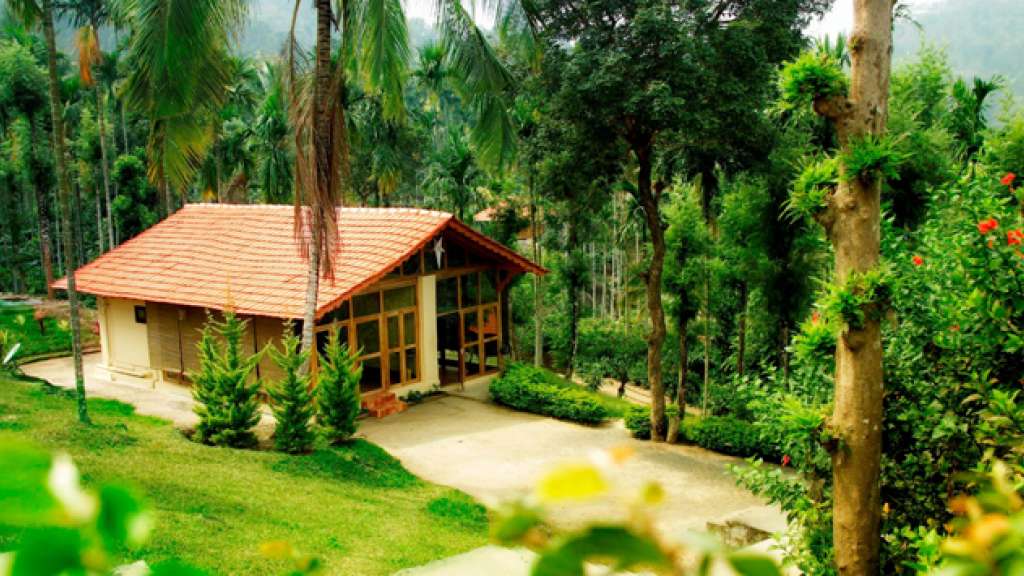
Over the past decade the state tourism and irrigation bodies have added the trappings of a family park to the dam site — landscaped gardens, a children’s play area, walking paths, viewpoints and adventure add-ons such as a suspension-style hanging bridge and, at times, a long zip line strung above the water (indicative — adventure rides are operated seasonally and by contractors, so availability varies; confirm locally). It is the kind of place families in Wayanad come for an unhurried afternoon rather than a bucket-list thrill.
The reservoir is also quietly good for birds. The open water, the reedy margins and the adjoining paddy draw egrets, cormorants, kingfishers and a shifting cast of waterbirds, particularly in the cooler months. Early morning and the hour before sunset are the rewarding times — the light goes soft, the water turns to glass, and the hills behind the dam catch a warm glow that photographers make the most of.
Come with the right expectations and Karapuzha delivers: a relaxed, scenic reservoir where you can drift on the water, stretch out in a garden, let children run off some energy, and watch the sun drop behind the Wayanad hills. It pairs naturally with Kalpetta’s other outings — a calm counterpoint to the district’s peaks, caves and forests.
History
The Karapuzha project is a story of patience more than of glory. It was conceived as a medium irrigation scheme to water the farmland of central Wayanad, and construction on the earthen dam across the Karapuzha river reportedly began in the late 1970s, around 1977 (indicative — confirm locally). What followed was one of the longer-running public works in the region.
Progress was slow for decades — a familiar tale of shifting budgets, land and rehabilitation issues, and the sheer difficulty of building a large earthfill embankment in hilly, high-rainfall terrain. The main dam structure is generally cited as being completed around 2004, roughly a quarter of a century after work started (indicative — dates vary between sources, so confirm locally).
Even after the embankment was finished, the project’s core purpose — irrigation — took further years to come good, as the left- and right-bank canal networks meant to carry water to the fields were built out in stages. The scheme is often described as partially commissioned around 2010, with canal work continuing beyond that (indicative — confirm locally). It is counted among the notable medium irrigation projects in the Kabini sub-basin.
By design the dam is an embankment, earth-fill structure with a concrete spillway, standing on the order of 28 metres high and several hundred metres long, impounding a reservoir with a gross storage of roughly 76 million cubic metres (indicative figures — confirm locally). Its stated job is to irrigate thousands of hectares of cultivable command area across the Vythiri, Sulthan Bathery and Mananthavady taluks.
Tourism came later and almost as a by-product. As the reservoir matured into a permanent feature of the landscape, authorities developed the site with gardens, a park and recreational rides to draw visitors — turning a long-delayed irrigation project into one of Wayanad’s pleasant, low-key day outings. The history is worth knowing precisely because it grounds the visit: this is a place people willed into being over decades, not a relic left by them.
Why visit
Big-water scenery that is rare in hill-country Wayanad — a broad reservoir mirroring the ranges, best after the monsoon when it fills out.
Gentle boating across calm water, an easy and photogenic way to get out among the hills without any hard effort.
A breezy hanging bridge and, when running, a long zip line and adventure add-ons for a bit of mild thrill (indicative — seasonal and contractor-run; confirm locally).
Landscaped gardens and a children’s park that make it a genuinely family-friendly, picnic-style outing rather than a strenuous sight.
Quietly good birdwatching along the reedy margins and adjoining paddy — egrets, cormorants, kingfishers and waterbirds, especially in the cooler months.
Some of the loveliest sunsets in the Kalpetta area, with the light softening over the water and the Wayanad hills glowing behind the dam.