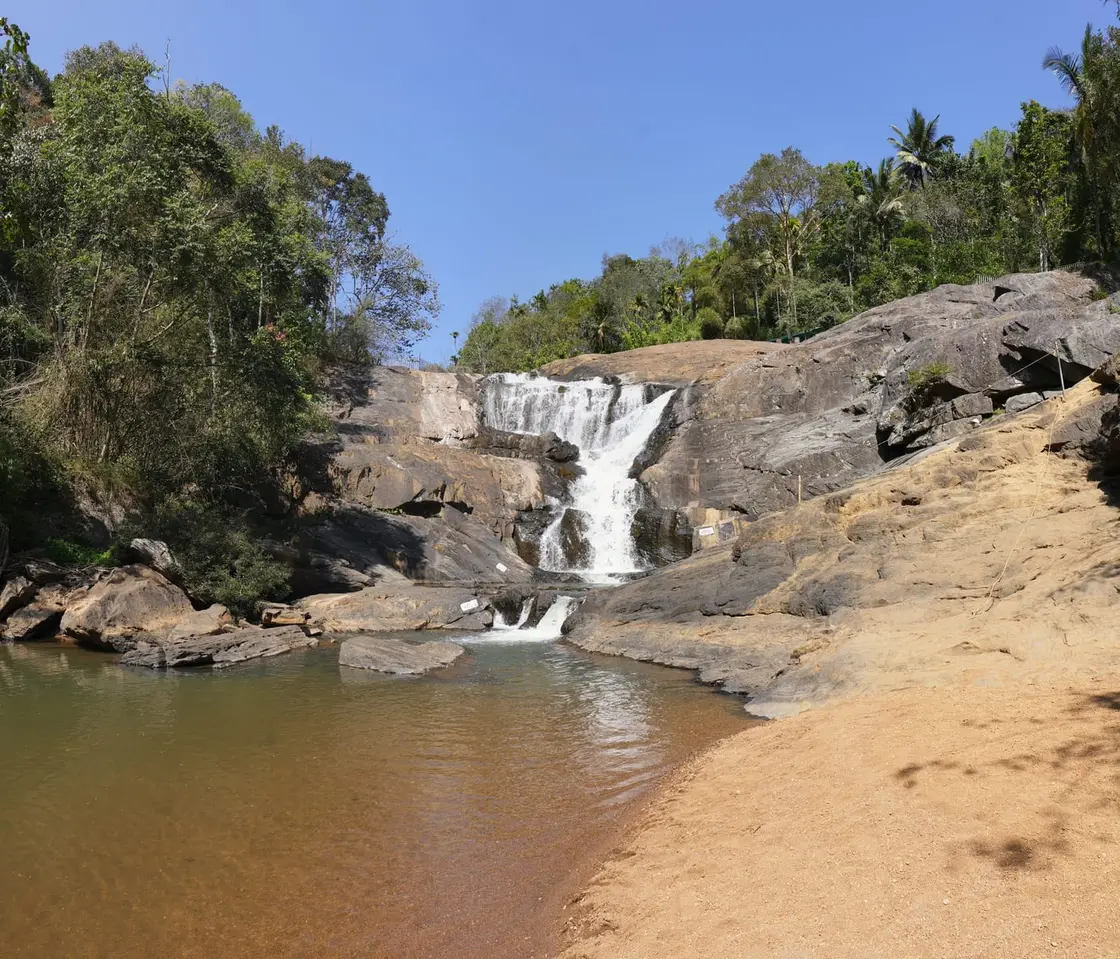
A modest but lovely two-tiered forest cascade tumbling roughly 30 metres through tea, coffee and bamboo country about 8 km east of Meppadi in south Wayanad — the quiet, uncrowded alternative to the district's headline falls.
The story of Kanthanpara Waterfalls
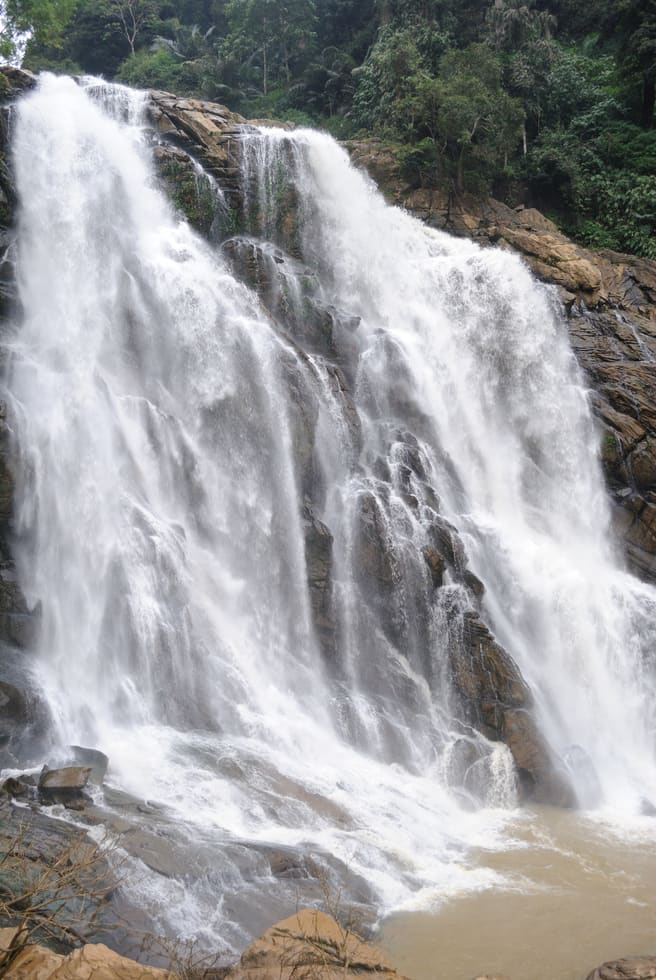
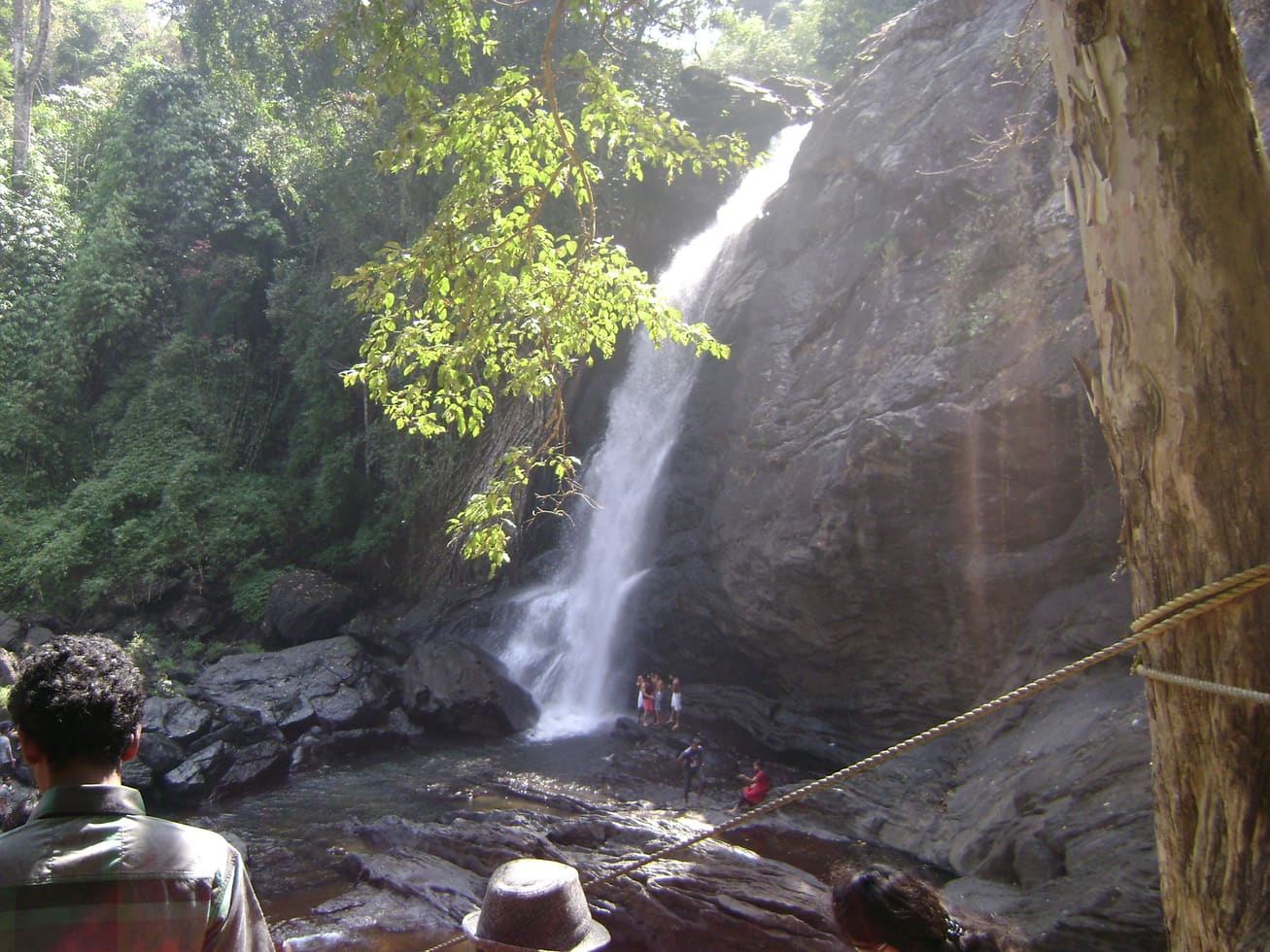
Kanthanpara is the kind of waterfall you stumble into rather than queue for. Tucked away on the Vaduvanchal road roughly 8 km east of the plantation town of Meppadi, it drops in two gentle tiers down a rock face draped in moss and ferns, gathering at the bottom into a shallow, sparkling pool ringed by boulders. The total fall is a shade under 30 metres — call it a hundred feet — which makes it smaller than Wayanad's giants, yet the intimacy is exactly the point. Where the marquee falls come with car parks full of tour buses, Kanthanpara often gives you the sound of the water almost to yourself.
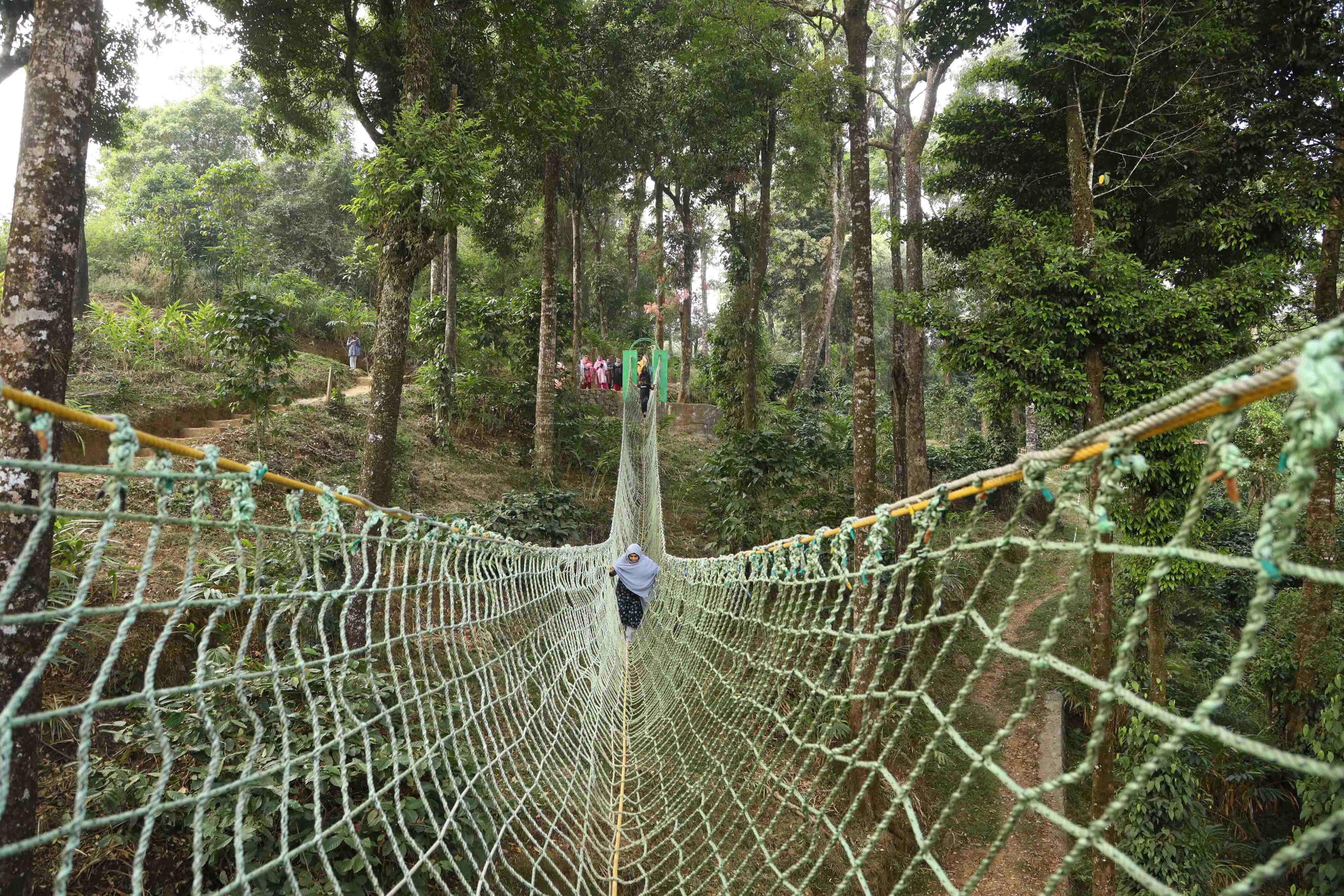
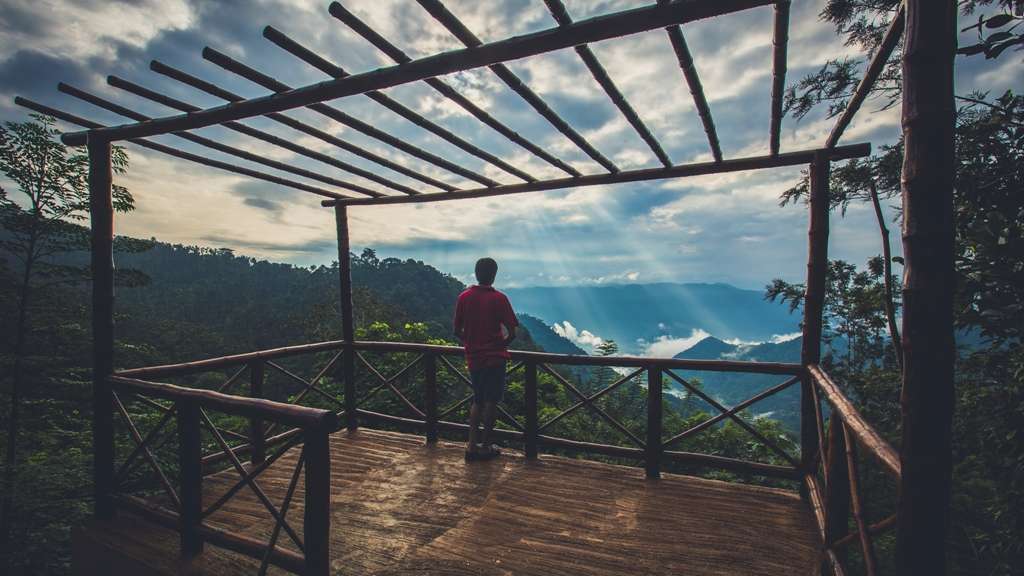
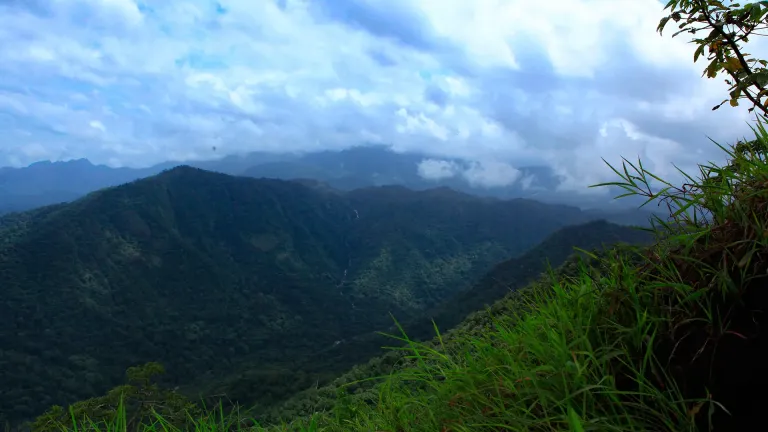
The setting is what visitors remember. The falls sit inside a working landscape of rolling tea gardens, coffee estates and rubber, with bamboo thickets crowding the stream banks and the folded green ridges of the Western Ghats rising behind. Getting there is half the pleasure: the last stretch is a short drive from Meppadi through neatly clipped plantations, the road threading between hillsides striped with tea before the greenery closes in and the roar of falling water announces the destination. Because there is barely any walk-in from the entrance, it suits families, older travellers and anyone who wants a big-nature payoff without a hard trek.
The stream that feeds the cascade is the Kanthanpara River, and the area falls within the Meppadi forest range of the South Wayanad Forest Division. That protected backdrop makes it a genuinely good spot for birdlife rather than just a photo stop. Birders come for the Malabar grey hornbill, common flameback woodpecker, white-cheeked barbet and white-throated kingfisher among many others, and the Forest Department has at times run early-morning bird-watching outings and a short riverside trek along the banks for those who want a slower, wilder look at the surrounding jungle.
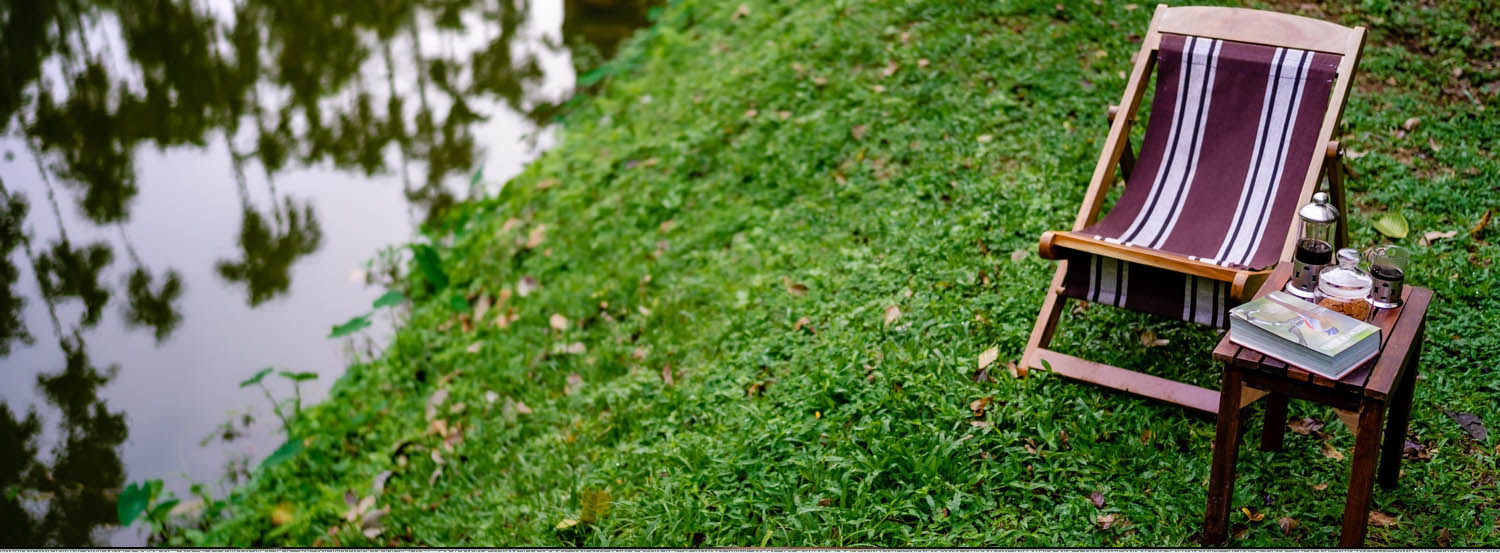
It is also a classic picnic and camping spot in the local imagination. Families spread out on the flat rocks below the fall, children paddle at the shallow edges, and the tea-garden slopes on either side invite an easy, soft ramble rather than a serious climb. The pool looks tempting on a hot afternoon, but the rocks are slick and the flow strength changes fast with rain, so most sensible visitors keep to the shallow margins rather than plunging in — this is a place to cool your feet and watch the light move through the spray, not to swim hard.
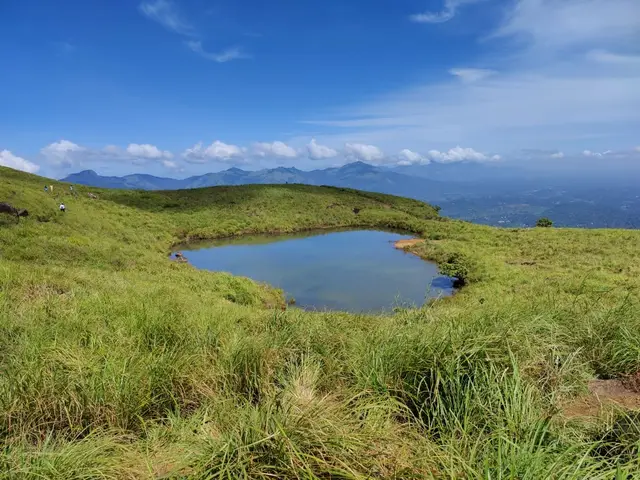
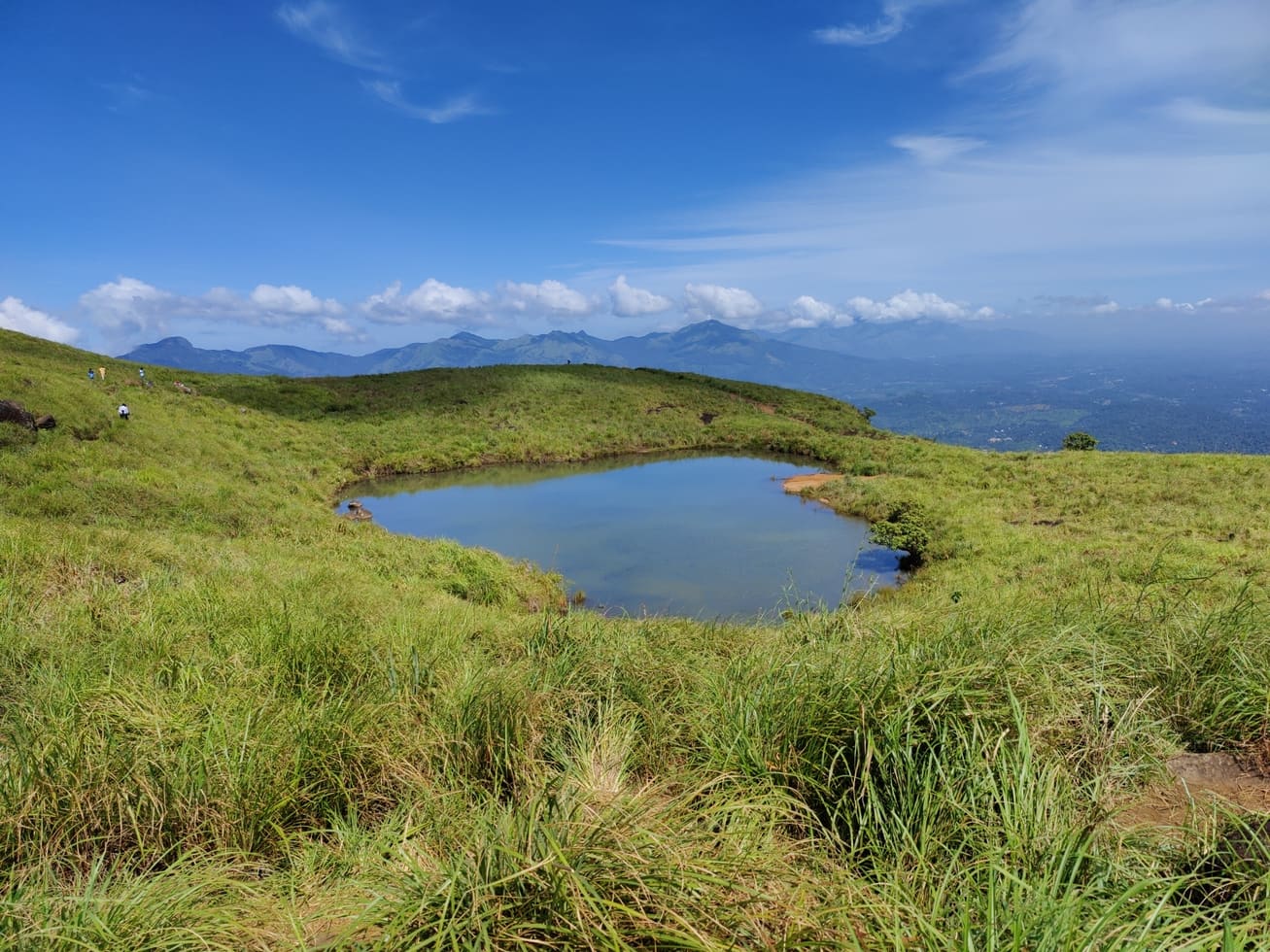
Compared with its famous neighbours, Kanthanpara plays a supporting but charming role. Nearby Soochipara (Sentinel Rock) and Meenmutty are far taller and more dramatic, and Chembra Peak with its heart-shaped lake is the region's trophy trek; in fact, on a clear day Kanthanpara can be picked out as a thin silver thread when viewed from Soochipara. If you are stringing together the Meppadi cluster, the usual verdict is that Kanthanpara is the gentle, low-effort, low-crowd counterpoint — a half-hour of calm between the bigger adventures rather than a day in itself.
Time it right and it rewards you. In the months after the monsoon the fall runs full and the whole valley is impossibly green, while the drier winter and spring bring safer rocks and easy access. In the thick of the rains the cascade is at its most spectacular but also its most dangerous, with slippery paths and the ever-present Wayanad risk of landslips — a reminder that these hills, for all their postcard prettiness, are steep, wet and wild underneath the tea.
History
Kanthanpara has no grand historical monument attached to it; its story is really the story of the Wayanad plateau itself, a high tableland of the Western Ghats that for centuries was thickly forested tribal country before it was opened up. The falls take their name from the locality of Kanthanpara, and like most of the district's waterfalls they were known first to the indigenous Adivasi communities and plantation workers long before they appeared on any tourist map.
The surrounding landscape of tea, coffee and cardamom is a colonial-era inheritance. From the 19th century onward British planters cleared and terraced large tracts of the Wayanad hills for plantation agriculture, and the estates around Meppadi that frame the falls today are a direct legacy of that period. This is why the approach to a wild forest cascade runs, incongruously and beautifully, straight through manicured tea gardens.
Administratively the falls sit within the Meppadi forest range of the South Wayanad Forest Division, and their promotion as a low-key eco-tourism and picnic destination is comparatively recent. As Wayanad grew into one of Kerala's most popular hill destinations, the District Tourism Promotion Council and the Forest Department developed basic visitor facilities here — a ticketed entrance, parking, toilets and, at times, guided bird-watching and riverside trekking — positioning Kanthanpara as a gentler complement to the headline falls.
The wider region carries real historical weight even if the falls themselves do not: nearby Edakkal Caves preserve prehistoric petroglyphs thousands of years old, and Wayanad was a theatre of resistance associated with the Pazhassi Raja against the British. Kanthanpara is best understood as one small, watery corner of this deep and layered plateau rather than a landmark with a chronicle of its own.
In recent years Wayanad's fragility has become part of its history too. The district has suffered devastating monsoon flooding and landslides, and access to forest and waterfall sites is now more tightly governed by weather and Forest Department advisories than it once was — so opening days, timings and permitted activities at spots like Kanthanpara can change with the season and with local safety orders.
Why visit
The uncrowded alternative — a genuinely peaceful fall while Soochipara and Meenmutty draw the coach parties.
Almost no trek in: a short drive from Meppadi and you are practically at the water, ideal for families and older travellers.
A postcard setting of tea gardens, coffee estates and bamboo forest wrapped around a twin-tier cascade.
One of Wayanad's best gentle bird-watching spots — hornbills, barbets, woodpeckers and kingfishers in the Meppadi forest range.
A ready-made picnic and camping spot with flat rocks, shallow pools and easy soft-trekking on the estate slopes.
Perfectly placed to combine with Chembra Peak, Soochipara, Edakkal Caves and Pookode Lake on a single Meppadi-area loop.