Alappuzha Beach is the sandy, sun-washed seaward face of Alleppey — a laid-back town beach on the Arabian Sea where a crumbling 19th-century pier still reaches out over the waves and an old laterite lighthouse keeps watch over a town famous the world over as the “Venice of the East.”
The story of Alappuzha Beach
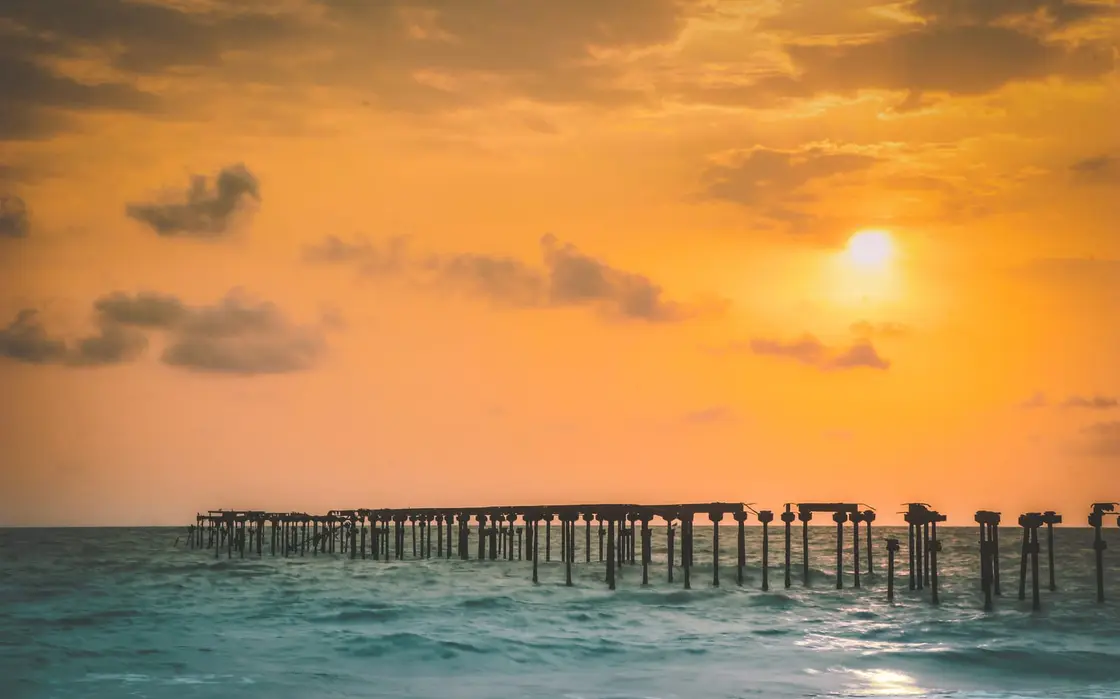
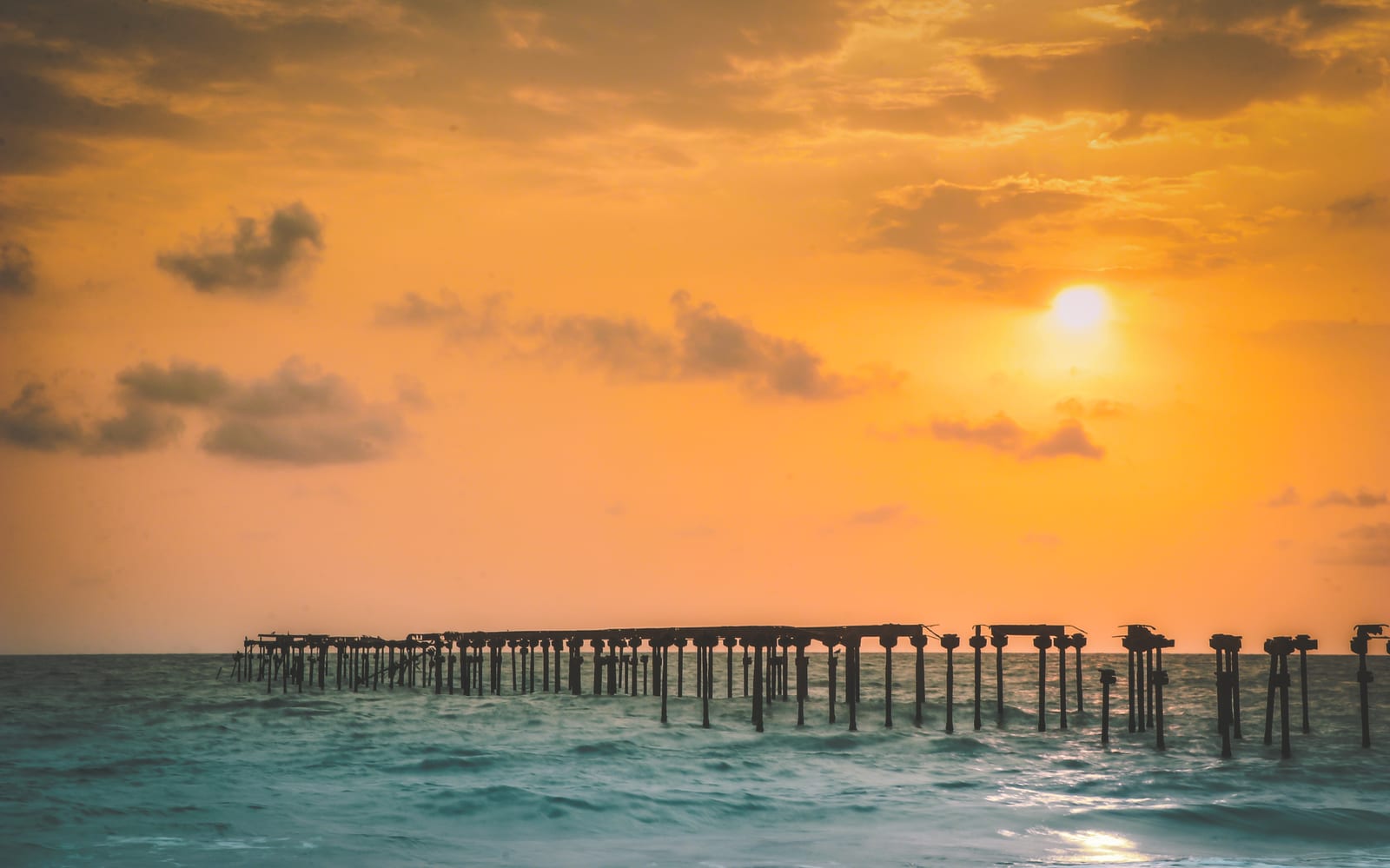
The first thing most visitors notice at Alappuzha Beach is not the sand but the strange, weathered line of pillars marching out into the sea. This is the old Alappuzha Pier — locally called the “Kadal Palam,” or sea-bridge — and it is the reason this stretch of coast has a story to tell. Once a busy loading jetty where ships anchored offshore and cargo was ferried out along its length, the pier now stands half-collapsed and salt-eaten, its stumps rising from the surf like the ribs of some beached sea creature. At sunset, when the sky turns molten and the silhouettes of the pillars darken against the water, it becomes one of the most photographed sights on the Kerala coast.
Behind the pier stretches a broad, gently shelving beach that has been the town’s favourite evening gathering place for generations. Families spread out on the sand, children chase the retreating waves, vendors sell hot bhajji and cut fruit and roasted peanuts in paper cones, and the sea breeze carries away the heat of the day. It is not a manicured resort beach — it is a working town’s beach, unpolished and full of life, and that is precisely its charm.
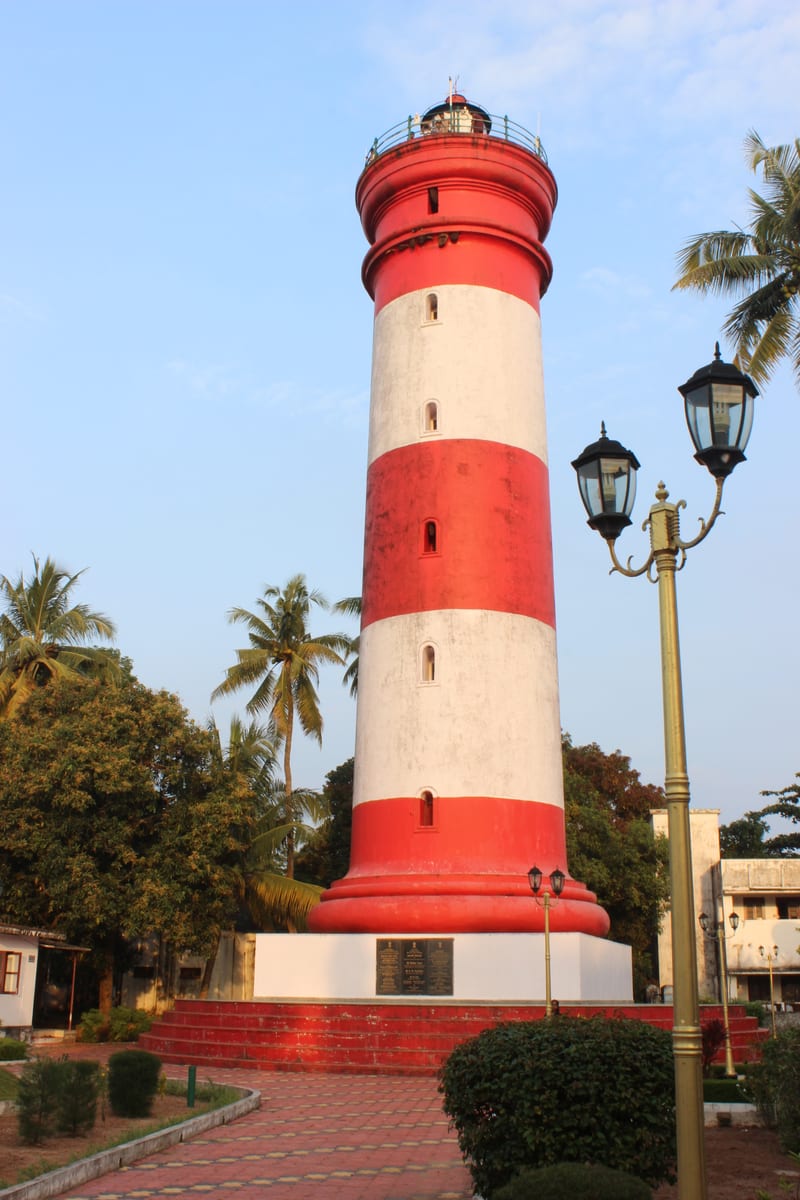
A short walk from the shore stands the old Alappuzha Lighthouse, a red-and-white banded tower built in the 1860s from laterite stone and teak. Climbing its spiral stair rewards you with a sweeping view: the long ribbon of coast in one direction, and in the other the rooftops, coconut palms and glinting canals of Alappuzha town spreading inland toward the backwaters. A small museum inside preserves old oil lamps and lighthouse relics that trace its century-and-a-half of service to passing ships.
Right by the beach lies Vijaya Beach Park, a modest seaside entertainment park where children ride toy trains and pedal boats, couples stroll the lawns, and the whole thing hums with the easy holiday mood of an Indian evening by the sea. It is an unpretentious place, designed for families and picnickers rather than adrenaline-seekers, and it fills up most on weekends and holidays.
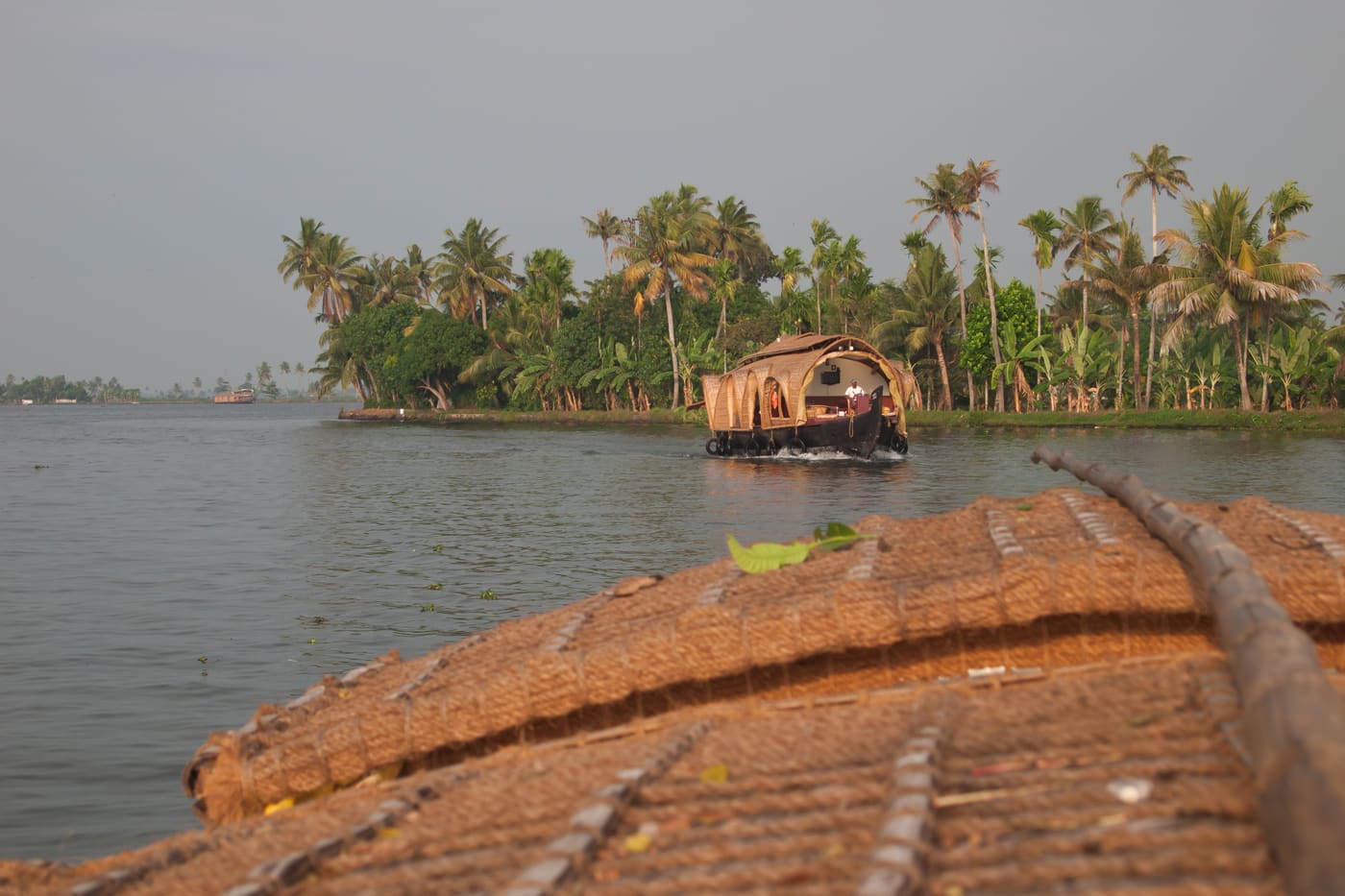
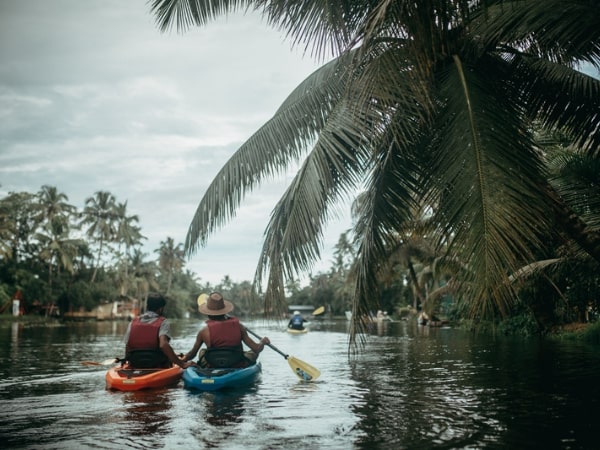
But to understand Alappuzha Beach you have to look past the shoreline to the town at its back. Alleppey is a place laced with water — a grid of canals and lagoons that flow inland to the great lakes and backwaters of Kuttanad, earning the town its enduring nickname, the “Venice of the East.” The beach is where this famous watery landscape meets the open ocean, and many travellers who come for a houseboat cruise on the backwaters end their day here, watching the sun sink into the Arabian Sea.
Come in August and the mood shifts entirely, for nearby Punnamada Lake hosts the Nehru Trophy Boat Race — the thunderous snake-boat spectacle in which hundred-foot chundan vallams, each pulled by scores of oarsmen chanting in unison, race across the water before roaring crowds. It is Alappuzha at its most electric, and it draws visitors from around the world to this quiet backwater town.
History
Alappuzha owes its very existence to a single visionary: Raja Kesava Das, the Diwan (chief minister) of Travancore in the late 18th century, remembered as the “maker of modern Alleppey.” Around 1762 he set about deliberately building a planned port town here, cutting canals and roads, laying out warehouses and encouraging trade, so that landlocked Travancore would have a commercial harbour of its own on the Arabian Sea. The town’s distinctive grid of waterways — the feature that later earned it the “Venice of the East” tag — was born of this planning.
Through the 19th century Alappuzha grew into one of the busiest ports on the Malabar coast, its prosperity built above all on coir — the golden fibre spun from coconut husk. The first modern coir factory is said to have opened here around 1859, founded by the Irish-American entrepreneur James Darragh, shifting coir-making from a household craft to an industrial trade. Mats, ropes and yarn were shipped out from Alleppey to markets across the world, alongside the spices, cashew and other produce of the Travancore hinterland.
To serve this seaborne trade, the town built the infrastructure whose relics still line the beach. The Alappuzha Pier — the “Kadal Palam” — was constructed in 1862 (indicative — confirm locally) to let cargo be moved between the shore and ships anchored in the open roadstead, since the coast had no natural sheltered harbour. Around the same time, in March 1862, the Alappuzha Lighthouse was first lit, guiding vessels toward the port and marking this stretch of an otherwise featureless coast.
For a century the port thrived, but the 20th century brought decline. Larger, deeper harbours elsewhere — and the shift of trade to rail and road — gradually drew shipping away from Alappuzha’s exposed open anchorage. The pier fell out of use and was left to the sea, which slowly ate away at its timber and masonry until only the stark line of pillars remained.
What the port lost, tourism gained. In the later 20th century Alappuzha reinvented itself around its extraordinary backwaters, its houseboats and its heritage, and the beach — with its romantic ruined pier, its old lighthouse and its sunsets — became a destination in its own right. Today the crumbling Kadal Palam is no longer a working jetty but a monument: a reminder, standing in the surf, of the trading town that Raja Kesava Das dreamed into being.
Why visit
Watch the sunset behind the ruined 19th-century pier — the salt-eaten pillars of the old “Kadal Palam” silhouetted against a burning sky make this one of the most atmospheric coastal views in Kerala.
Climb the historic Alappuzha Lighthouse, built in the 1860s, for a 360-degree panorama over the coast, the town and its palm-fringed canals, and browse the small museum of old lamps and lighthouse relics inside.
Soak up the authentic, unpolished energy of a real town beach — vendors, families, children in the surf and the easy evening mood that a manicured resort beach can never fake.
Bring the family to Vijaya Beach Park beside the shore, with its toy train, boating and lawns — an easy, low-key spot for children and picnickers.
Use the beach as the seaward bookend to a backwater trip: pair a houseboat cruise through the “Venice of the East” with an evening by the ocean where the famous waterways finally meet the sea.
Time your visit for August and witness the Nehru Trophy Boat Race on nearby Punnamada Lake — the roaring, hundred-foot snake-boat race that is one of India’s great sporting spectacles.