The story
In the beating heart of Alappuzha town, wrapped around by a bustling shopping street of the same name, the Mullakkal Rajarajeswari Temple is the much-loved Devi shrine that gives this corner of the backwater city its soul — and, once a year, its most dazzling nights.
The story of Mullakkal Temple
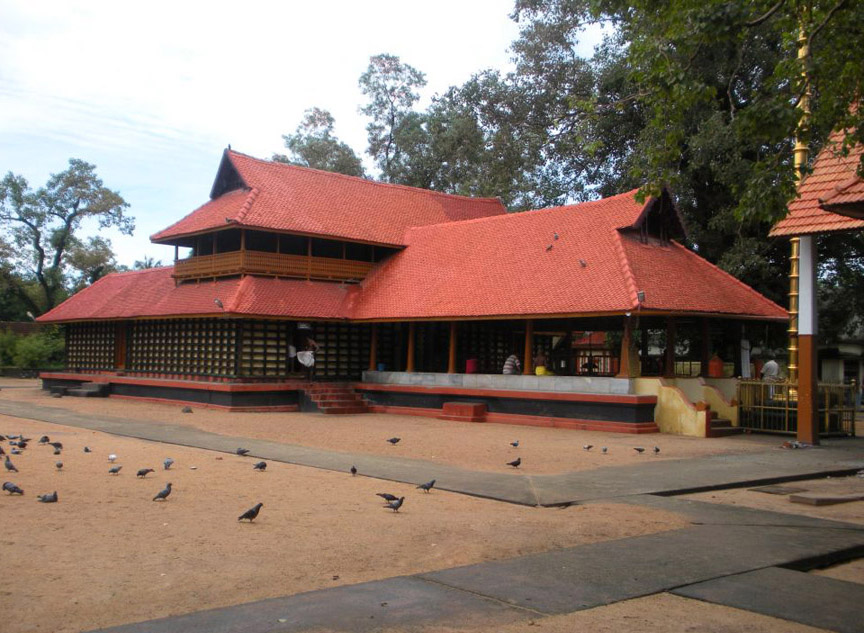
Walk the Mullakkal stretch of Alappuzha on any ordinary evening and you will find a temple that refuses to sit apart from the town. Its gopuram rises directly off a busy market street, brass lamps glinting through the crowd of shoppers, flower-sellers and tea stalls that press right up to the temple wall. This is Mullakkal Rajarajeswari Temple, one of the best-known Devi temples in the Alappuzha region and, for locals, the spiritual centre of gravity of the whole town.
The presiding deity is the Goddess in her form as Rajarajeswari, worshipped here as Durga Bhagavathy — the fierce yet maternal mother-goddess of Kerala tradition. Devotees come through the day for a quiet darshan, to light a lamp, to offer flowers, and to fold a small prayer into the noise of the market outside. The atmosphere is unusually intimate for a temple of this fame: the sanctum sits close to the street, and the sacred and the everyday brush shoulders constantly.
The temple carries a small architectural surprise. Its sanctum sanctorum, unusually, is built with an open roof, so the inner shrine lies open to the sky rather than under the more common tiled canopy of a Kerala temple. Alongside the main Devi shrine stand sub-shrines to Ganesha, Subrahmanya, Hanuman, the serpent deities, the Navagrahas and others, and a banyan tree within the grounds shelters a Shiva lingam — the familiar layering of deities that gives a Kerala temple its slow, unfolding rhythm as you walk the circuit.
The name itself is part of the charm. Mulla is the Malayalam word for jasmine, and by local account the place was once thick with jasmine gardens — so that the temple, the street and the whole neighbourhood came to be called Mullakkal, the place of jasmine. Devotees still tie the flower and the Goddess together in their imagination, and jasmine remains a favoured offering here.
For most visitors, though, the temple is inseparable from the street that surrounds it. The Mullakkal market beside the shrine is one of Alappuzha town’s busiest shopping strips — a run of textile shops, jewellers, coir and handicraft stalls, snack vendors and small traders. Temple and bazaar have grown up together, and the pilgrim flow and the shopping crowd have fed one another for generations, so that a visit here is as much a plunge into everyday Alleppey life as an act of worship.
That fusion of the devotional and the commercial reaches its peak once a year, when the temple hosts the Mullakkal Chirappu — the festival that turns the whole street into a river of light and colour, and draws people to Alappuzha from across the district and beyond.
Legend & myth
Local tradition, told as legend rather than documented fact, links the temple’s founding to the jasmine gardens that once covered this ground. In one much-repeated account the Goddess is said to have made her presence felt here amid the jasmine — mulla — from which the place takes its name, and a shrine was raised on the spot in her honour.
Another strand of folklore, again passed down as story rather than record, tells of the sacred idol being carried here from elsewhere in the old Thekkumkur country and enshrined in the jasmine grove, after which a ruler is remembered as having built the temple around it. As with much temple lore in Kerala, these tales are held with devotion but not offered as history, and the temple’s earliest origins remain wrapped in such traditional accounts.
History
By most accounts the temple is old — traditionally reckoned to date back around five centuries — though, as with many Kerala shrines, its earliest history survives more in oral tradition than in firm record. What is clear is that Mullakkal grew into one of the region’s important Devi temples and, in time, came under the administration of the Travancore Devaswom Board, which manages it today.
One well-documented turn in its story is comparatively recent. For much of its history the idol enshrined here was worshipped as Annapurneswari — the Goddess bearing a ladle in one hand and a pot in the other, the giver of food and abundance. After the older idol was damaged, a new idol was consecrated in the early 1960s (indicative — confirm locally), and it is in this form, worshipped as Rajarajeswari, that the Goddess is honoured in the sanctum today.
The temple’s fortunes are bound up with the rise of Alappuzha itself. The town was deliberately developed as a port and trading hub in the late eighteenth century under Raja Kesavadas, the able Dewan of Travancore, whose canals and warehouses turned Alleppey into a thriving centre of the coir and spice trade — the ‘Venice of the East’. As merchants, workers and settlers gathered in the growing town, the temple at its centre became a natural focal point of community life, and the Mullakkal market beside it grew in step with the commerce of the port.
That intertwining of temple and trade is written into the shape of the neighbourhood. The Mullakkal shopping street, running right past the temple, developed as one of the town’s principal bazaars, and the temple’s festivals came to double as the great commercial and social gatherings of the year — a pattern that survives vividly in the Chirappu to this day.
Through the twentieth century and into the present the temple has remained the devotional anchor of Alappuzha town: a busy, living shrine rather than a monument, drawing daily worshippers, presiding over the annual Chirappu and Thaipooya Kavadi, and holding its place in the heart of the city even as the town around it has changed.
Why visit
It is the spiritual heart of Alappuzha town — the Devi temple locals treat as their own, set right in the thick of the city rather than off on a quiet hilltop.
The setting is unique: a working temple that opens straight onto one of Alleppey’s busiest market streets, so faith and everyday life mingle at every step.
If your visit falls in the Malayalam months of Vrischikam or Dhanu (roughly late November to December–January), the Mullakkal Chirappu turns the whole street into a spectacle of lamps, stalls, processions and fireworks.
Architecturally it rewards a closer look — the rare open-roofed sanctum and the cluster of sub-shrines make for an unhurried, layered temple circuit.
The adjoining Mullakkal market is one of the best places in town to shop for textiles, jewellery, coir goods and handicrafts, so a temple visit folds neatly into a browse through old Alleppey.
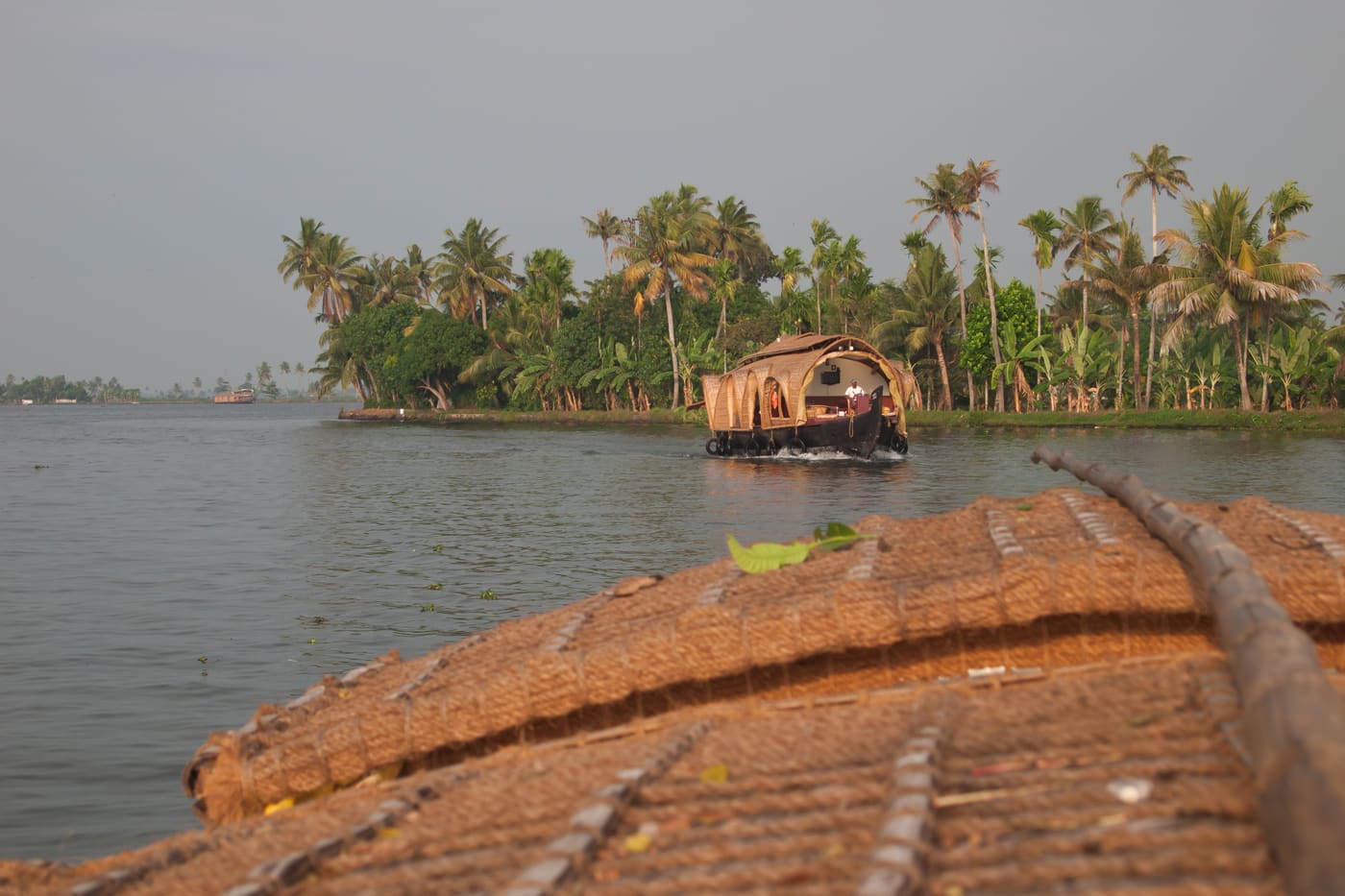
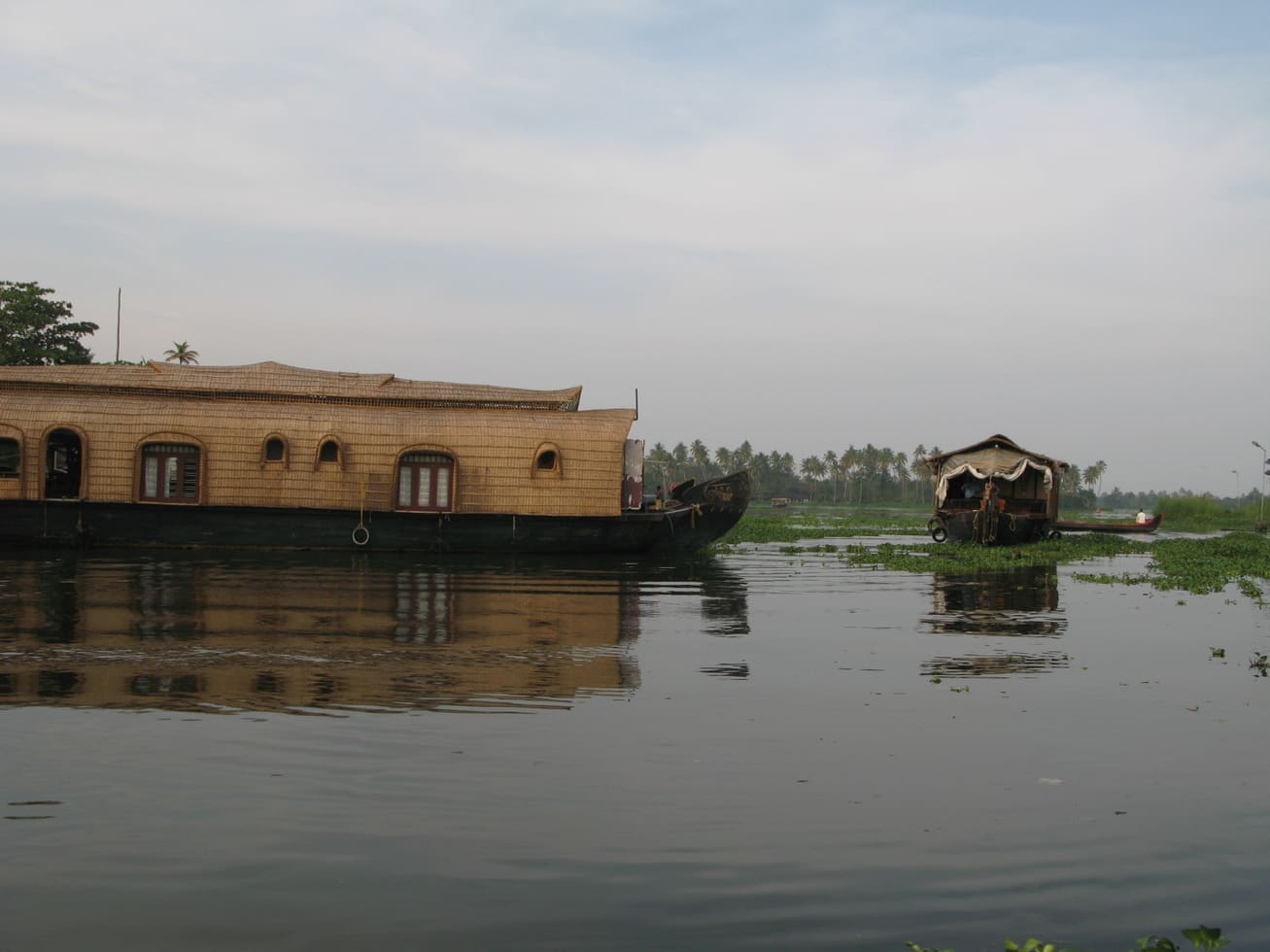
It slots naturally into an Alappuzha day: an easy stop in the town before or after a backwater houseboat cruise, the beach or the canals.