Draped across the high folds of the Western Ghats above Munnar, Eravikulam National Park is a rolling world of montane grassland, misty shola forest and the endangered Nilgiri tahr — the surefooted mountain goat that grazes almost within arm’s reach of visitors on the Rajamalai slopes. Crowned by Anamudi, at roughly 2,695 m South India’s highest peak, and famous for the Neelakurinji that carpets the hills blue once in about twelve years, this was Kerala’s first national park and remains one of India’s great conservation success stories.
The story of Eravikulam National Park
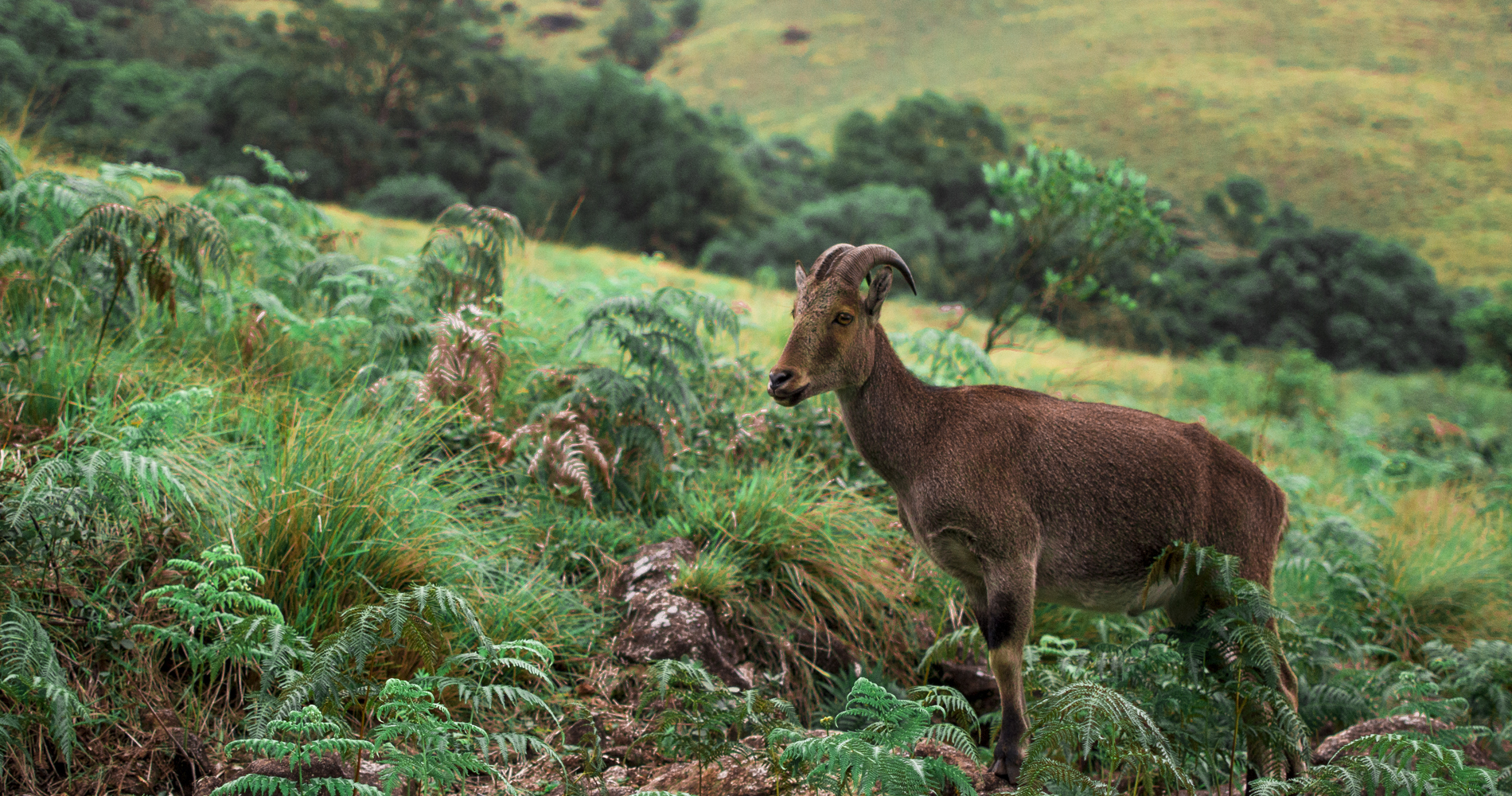
The first thing most visitors notice is how close the tahr come. On the open shola-grassland shoulders of Rajamalai, the Nilgiri tahr — a stocky, cinnamon-brown wild goat found nowhere on Earth but these South Indian highlands — graze calmly along the walking path, the old ‘saddleback’ males with their silvered flanks stepping past cameras as if the crowds simply were not there. Decades of protection have made them so unafraid that Eravikulam is widely regarded as the finest place in the world to watch the species. Kids and calves pick their way over the rocks, and on a clear morning the whole hillside seems to be quietly on the move.
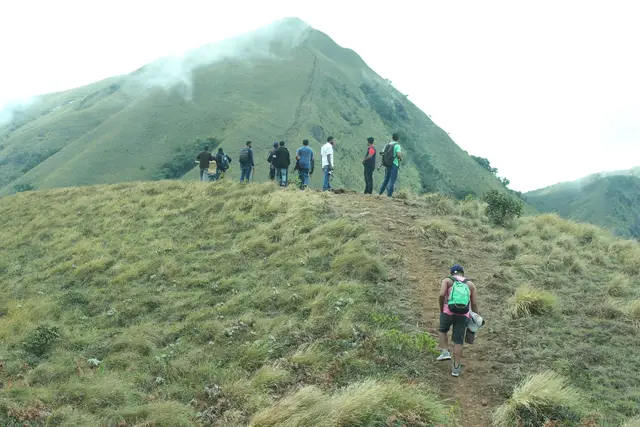
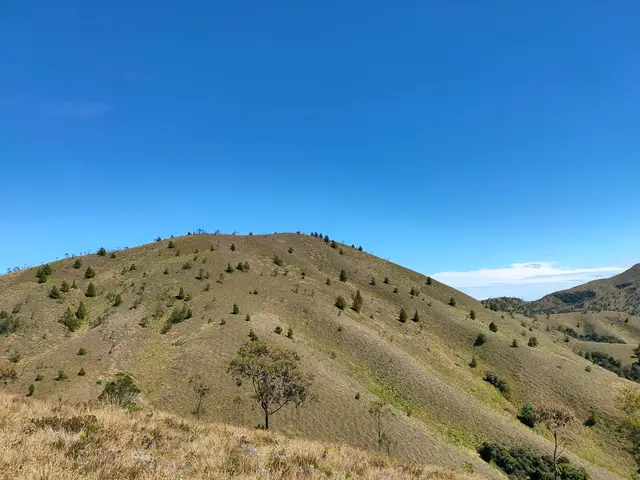
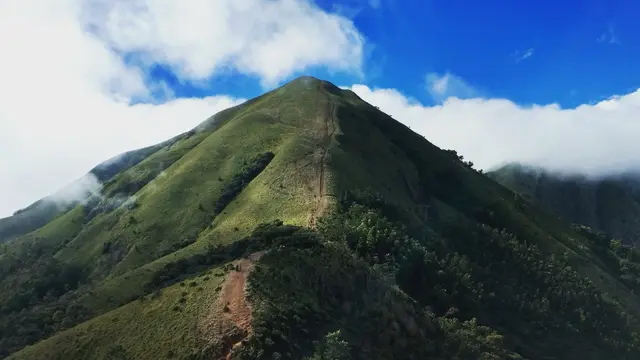
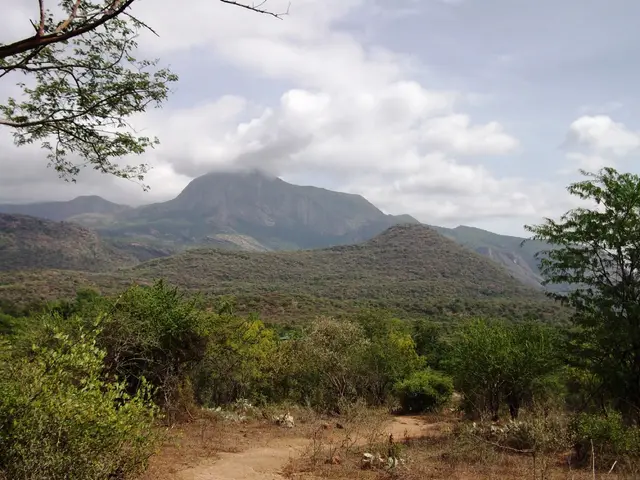
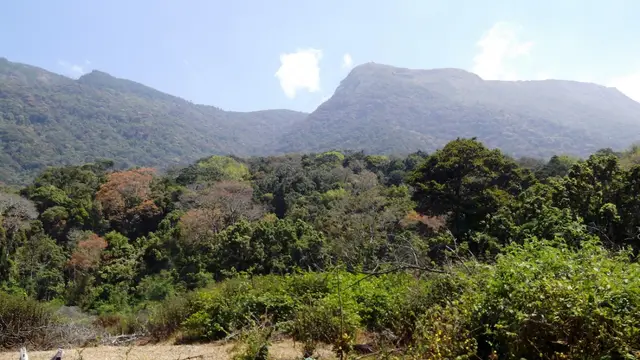
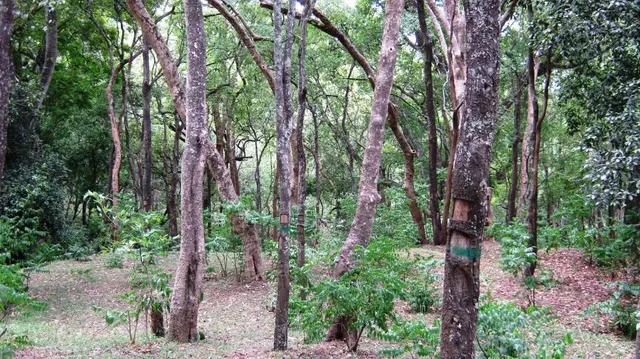
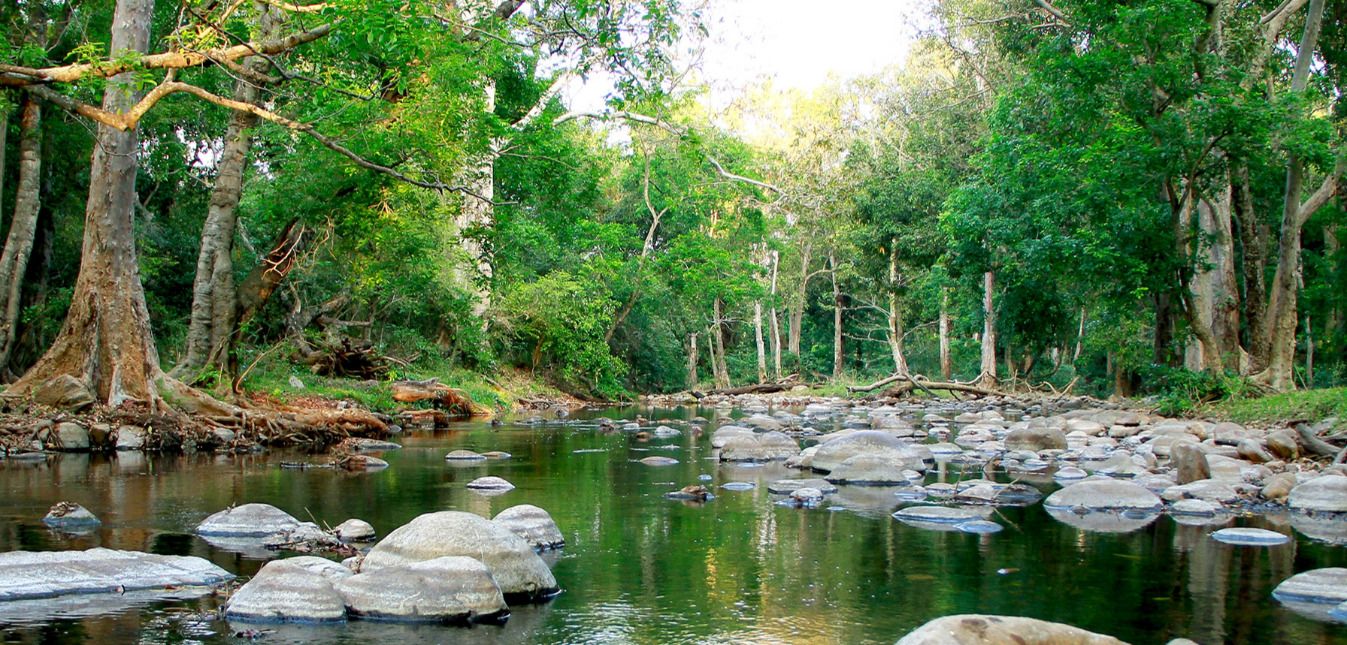
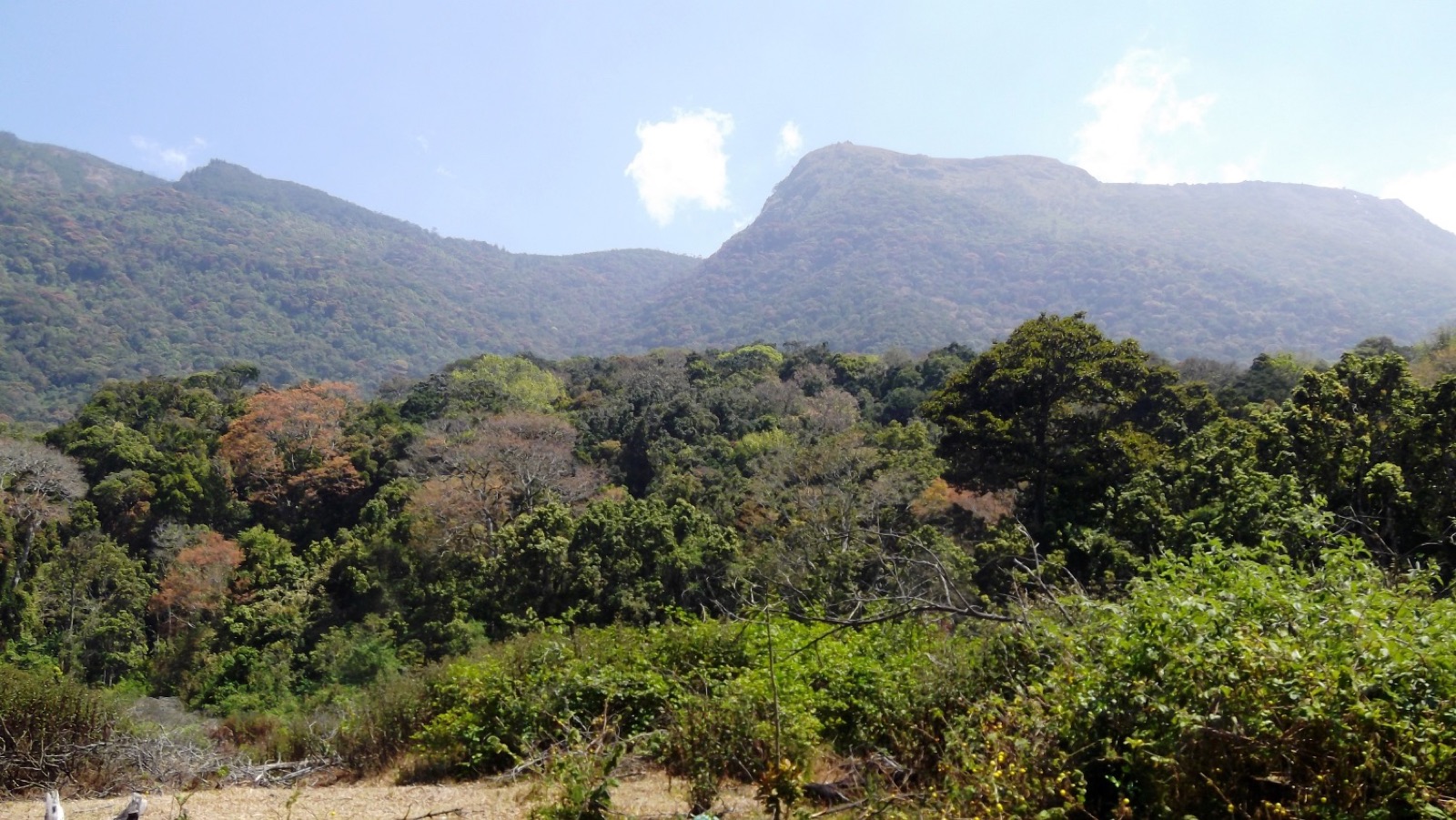
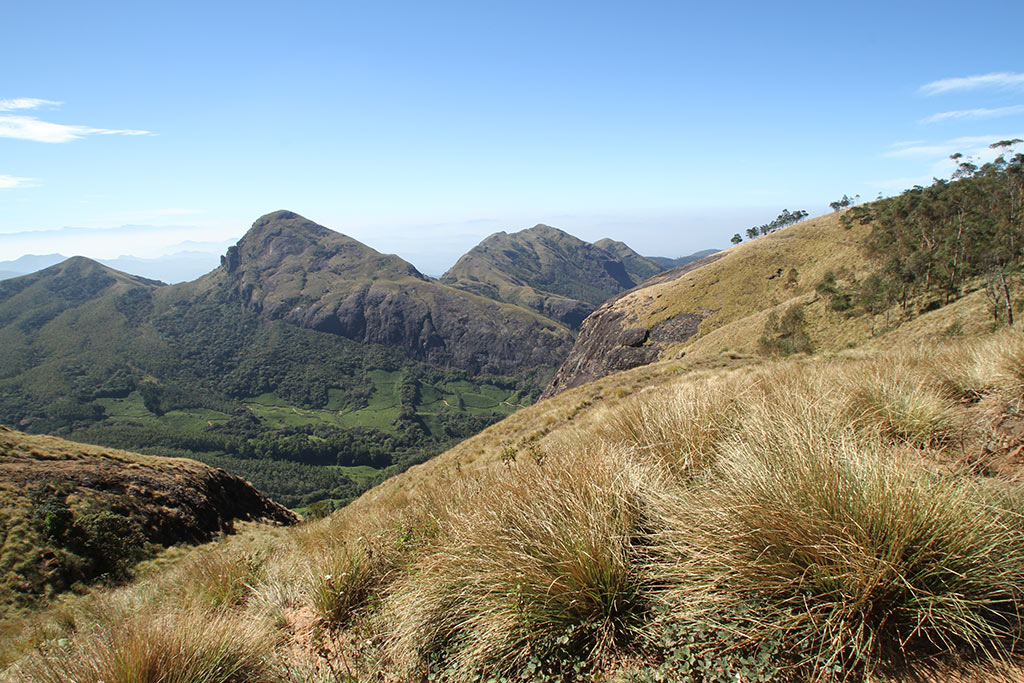
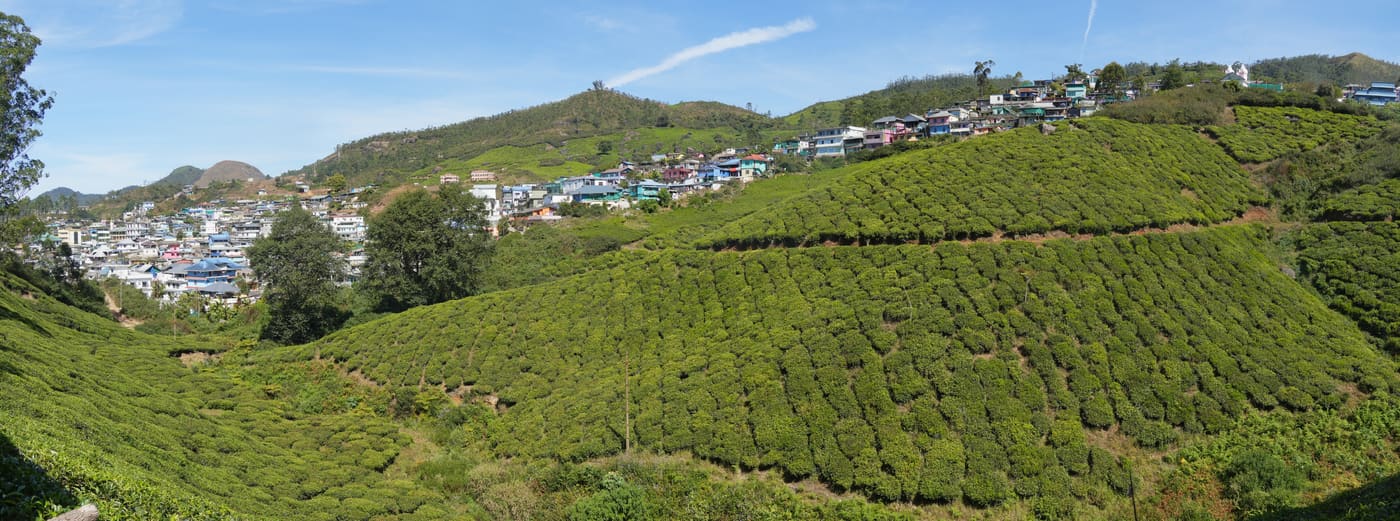
The park is really a single vast ecosystem tipped up towards the sky: high rolling grasslands cut by deep, sheltered folds where dense, stunted ‘shola’ forest survives out of the wind. This shola–grassland mosaic, rare and ancient, is the tahr’s true home and a natural sponge that feeds the streams and rivers running down to the tea country below. Walk the Rajamalai trail and the two worlds sit side by side — sunlit meadow on the ridges, a dark, dripping, moss-hung woodland tucked into every hollow.
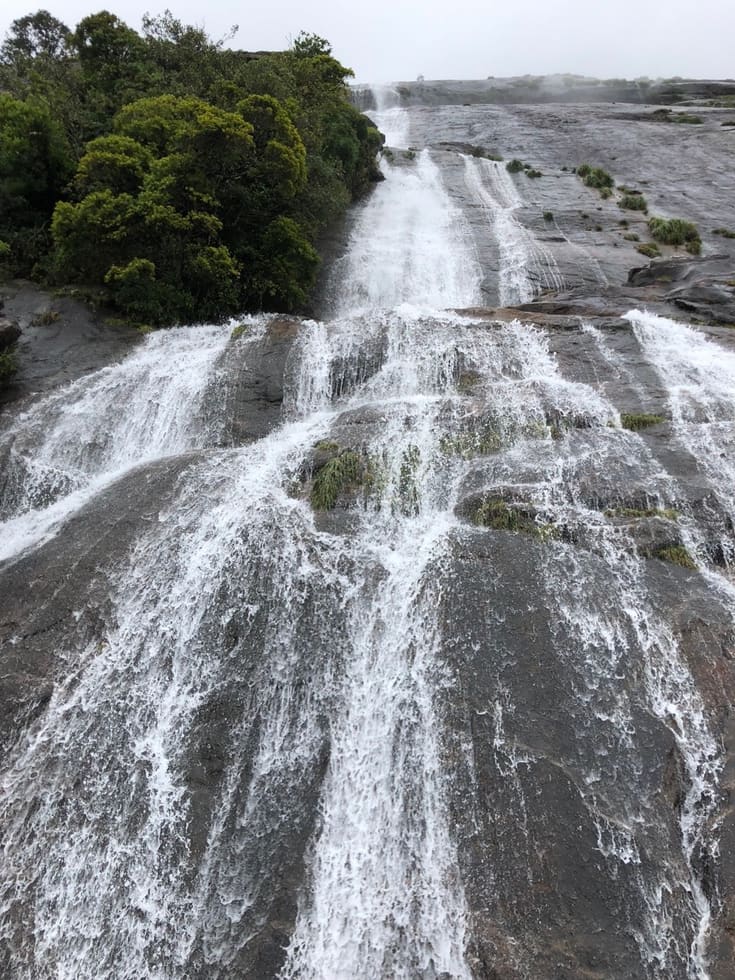
Above it all rises Anamudi, ‘the elephant’s forehead’, at about 2,695 m the highest point in India south of the Himalaya (indicative — confirm locally). Its bald granite dome dominates the skyline of the park, and its flanks shelter tahr, gaur and, lower down, the elephants that give the peak its name. The summit itself lies within the strictly protected core and is generally off-limits to casual visitors, but from the tourism zone it stands as a constant, humbling backdrop to the walk.
Then there is the flower everyone waits a decade for. The Neelakurinji (Strobilanthes kunthiana) is a shola-grassland shrub that flowers gregariously only once in roughly twelve years, then sets seed and dies, so that entire hillsides turn a soft violet-blue in a single season. The last great bloom drew huge crowds in 2018, with the next widely expected around 2030 (indicative — confirm locally). Even in ordinary years the slopes are stitched with wildflowers, but the kurinji year is the one that turns Munnar’s hills into a legend.
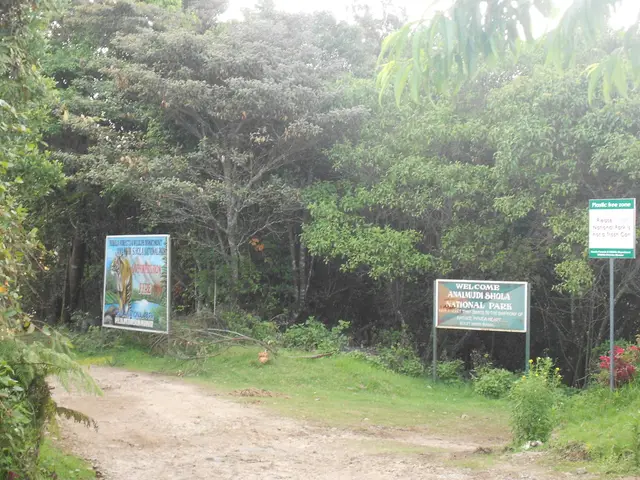
Because the tahr and the grassland are so fragile, you do not drive into Eravikulam. Private vehicles stop at the check post, and from there a compulsory Forest Department bus grinds up the winding road to the Rajamalai drop-off point, where a paved trail leads on foot into the tahr country. It is a deliberate bottleneck that keeps traffic, noise and disturbance out of the core — and it means a little patience in the queue is part of the experience, especially in season.
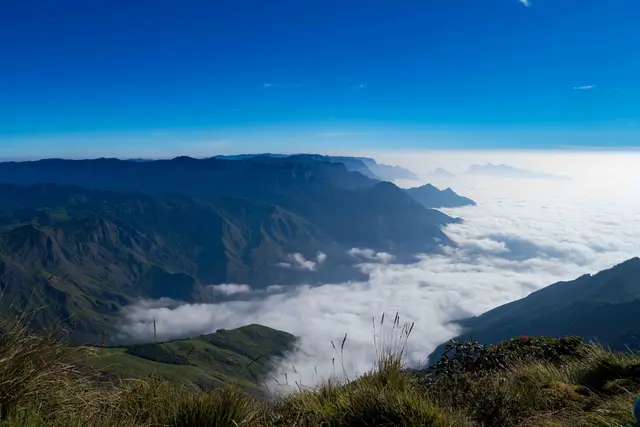
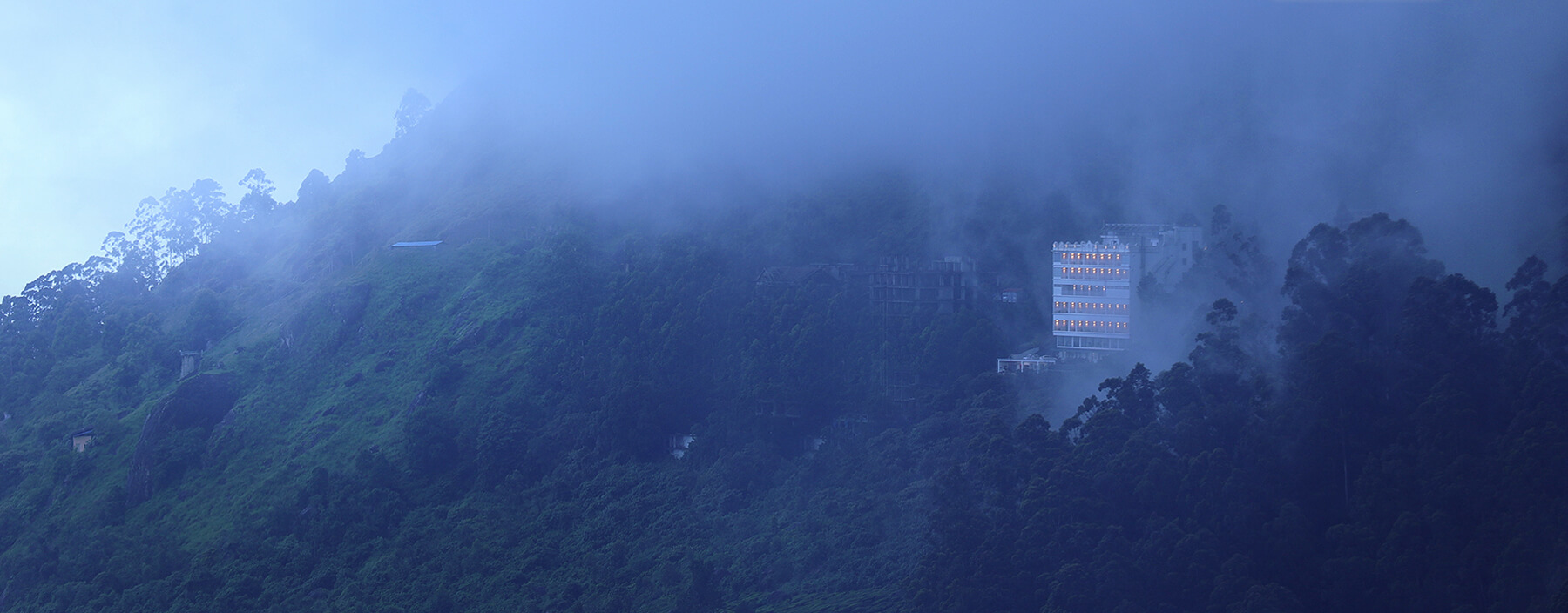
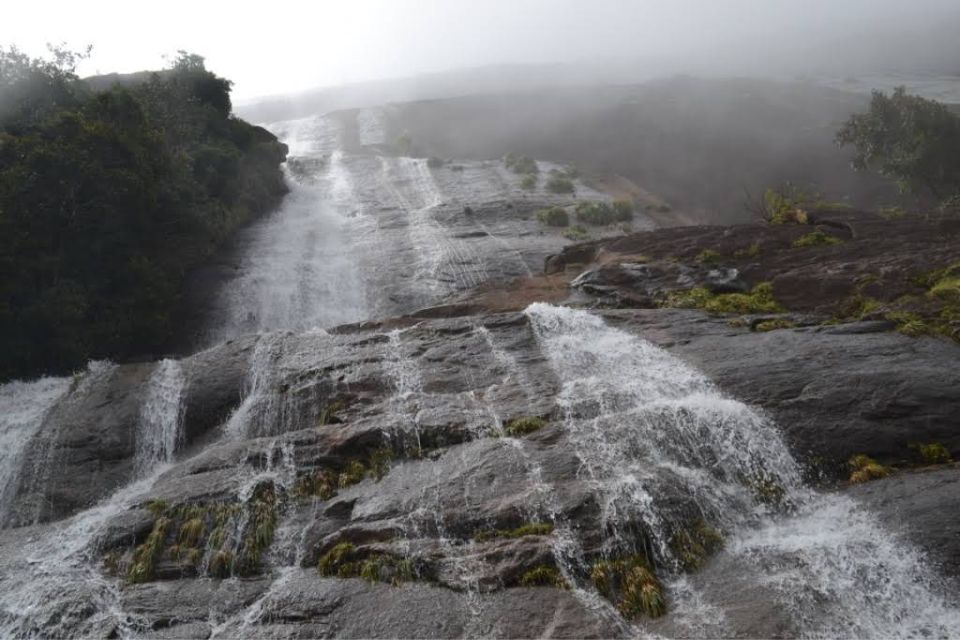
What lingers, though, is the light. At this altitude the air is thin and clean, clouds pour over the ridgelines and burn off again within minutes, and the grasslands shift from gold to green to grey as the mist moves. One moment Anamudi is razor-sharp against a blue sky; the next the whole valley has vanished into cloud and the only sound is the wind and the crop of a grazing tahr. It is high, wild, unhurried country — the Western Ghats at their most elemental.
History
These highlands were not always a sanctuary. Through the colonial era the Eravikulam plateau formed part of a private hunting reserve associated with the tea estates of the Kannan Devan Hills, developed from the late nineteenth century by British planters around Munnar. Sport hunting of the tahr and other game was a fixture of estate life in the high range.
Paradoxically, it was the planters’ own club that first shielded the tahr. The High Range Game Preservation Association, formed by the estate community, appointed game watchers and imposed hunting restrictions on the plateau, and this early self-policing is often credited with keeping a viable tahr population alive into the twentieth century (indicative — confirm locally).
The legal turning point came with land reform. Under the Kannan Devan Hills (Resumption of Lands) Act of 1971, lands not under cultivation by the company were vested with the Government of Kerala, opening the way for formal protection of the grasslands. The area was declared a wildlife sanctuary in 1975, specifically to safeguard the Nilgiri tahr, and was upgraded to a national park in 1978 — Kerala’s very first.
The conservation payoff has been striking. From a badly depleted population, Eravikulam now holds the largest and densest concentration of Nilgiri tahr anywhere; a 2025 census reported on the order of 800-plus tahr within the park, part of a wider Western Ghats population of a few thousand (indicative — confirm locally). The species remains globally threatened, but Eravikulam is the anchor of its survival.
Today the park spans roughly 97 sq km of high-altitude Western Ghats terrain in Idukki district and forms part of a larger belt of protected shola-grassland landscapes recognised for its exceptional biodiversity (indicative — confirm locally). Only a small ‘tourism zone’ around Rajamalai is open to visitors; the rest is managed as a strict core for research and conservation.
Why visit
See the endangered Nilgiri tahr up close in the wild — Eravikulam is regarded as the best place on Earth to do so, with the animals grazing beside the walking trail.
Stand beneath Anamudi, at about 2,695 m the highest peak in India south of the Himalaya, and take in sweeping high-range views over Munnar’s tea country.
Walk through the rare shola–grassland ecosystem of the Western Ghats, a UNESCO-recognised global biodiversity hotspot.
Time a visit — if you are lucky — for the once-in-roughly-twelve-years Neelakurinji bloom that turns whole hillsides blue (next widely expected around 2030; indicative — confirm locally).
Experience an unusually well-run, low-impact wildlife visit: no private vehicles, a compulsory park bus, and a short, accessible trail suitable for most fitness levels.
Enjoy cool, misty high-altitude weather and dramatic, fast-changing mountain light just a short drive from Munnar town.