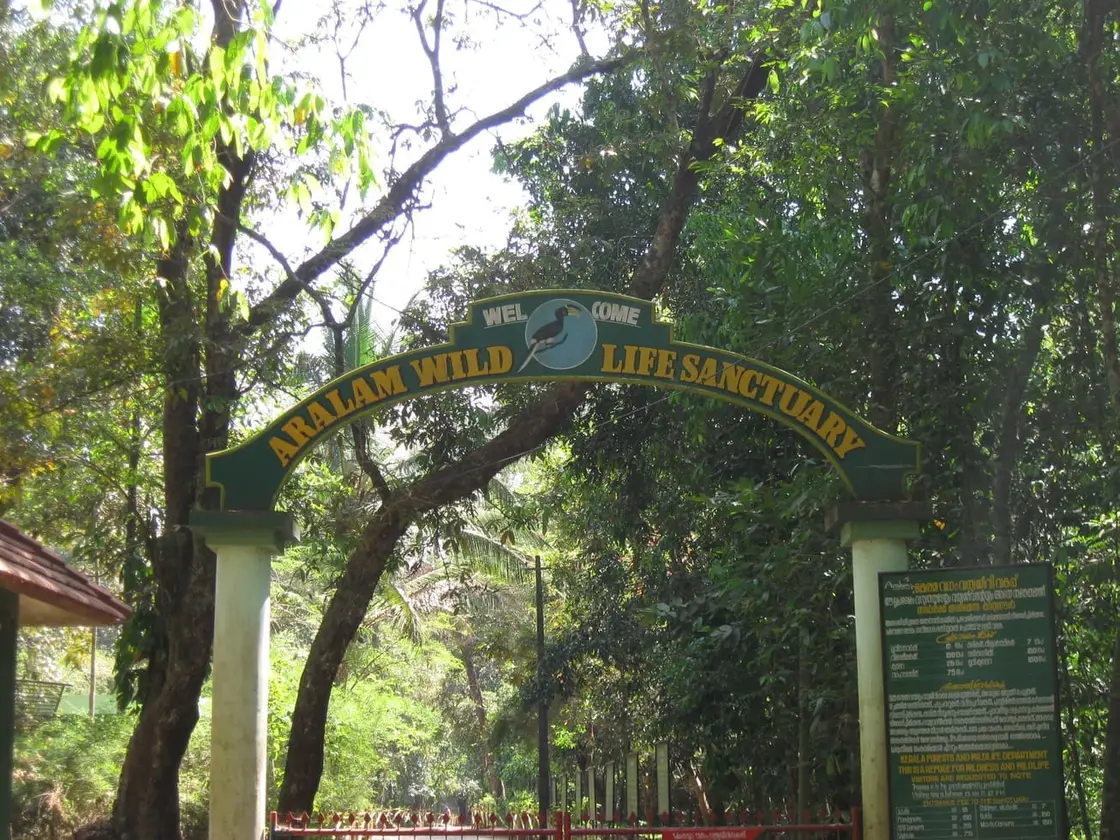
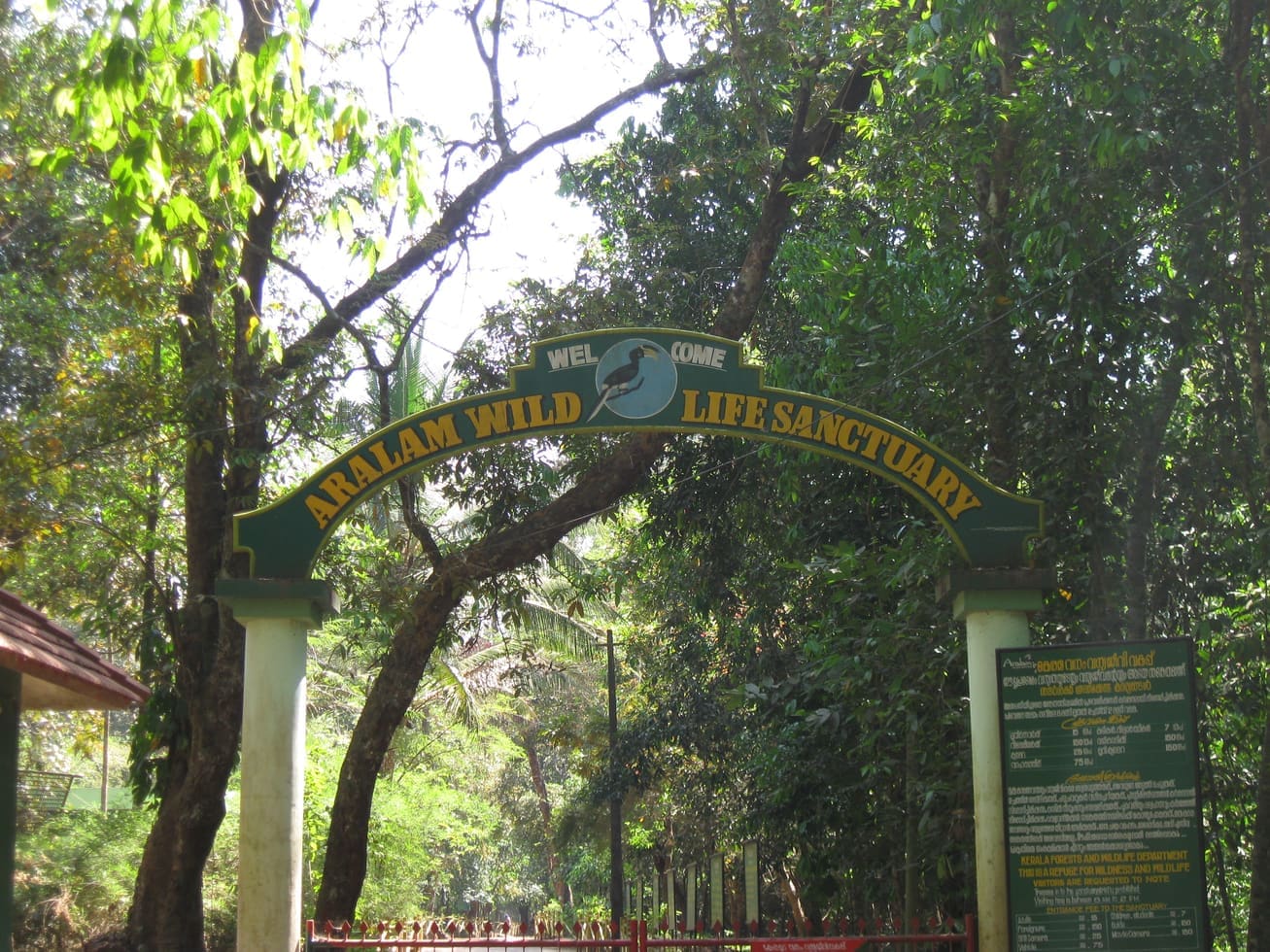
Kerala's northernmost wildlife sanctuary, cradled on the western slopes of the Western Ghats in Kannur district, where rainforest, roaring waterfalls and one of India's greatest butterfly migrations meet the foothills of the Brahmagiri hills.
The story of Aralam Wildlife Sanctuary
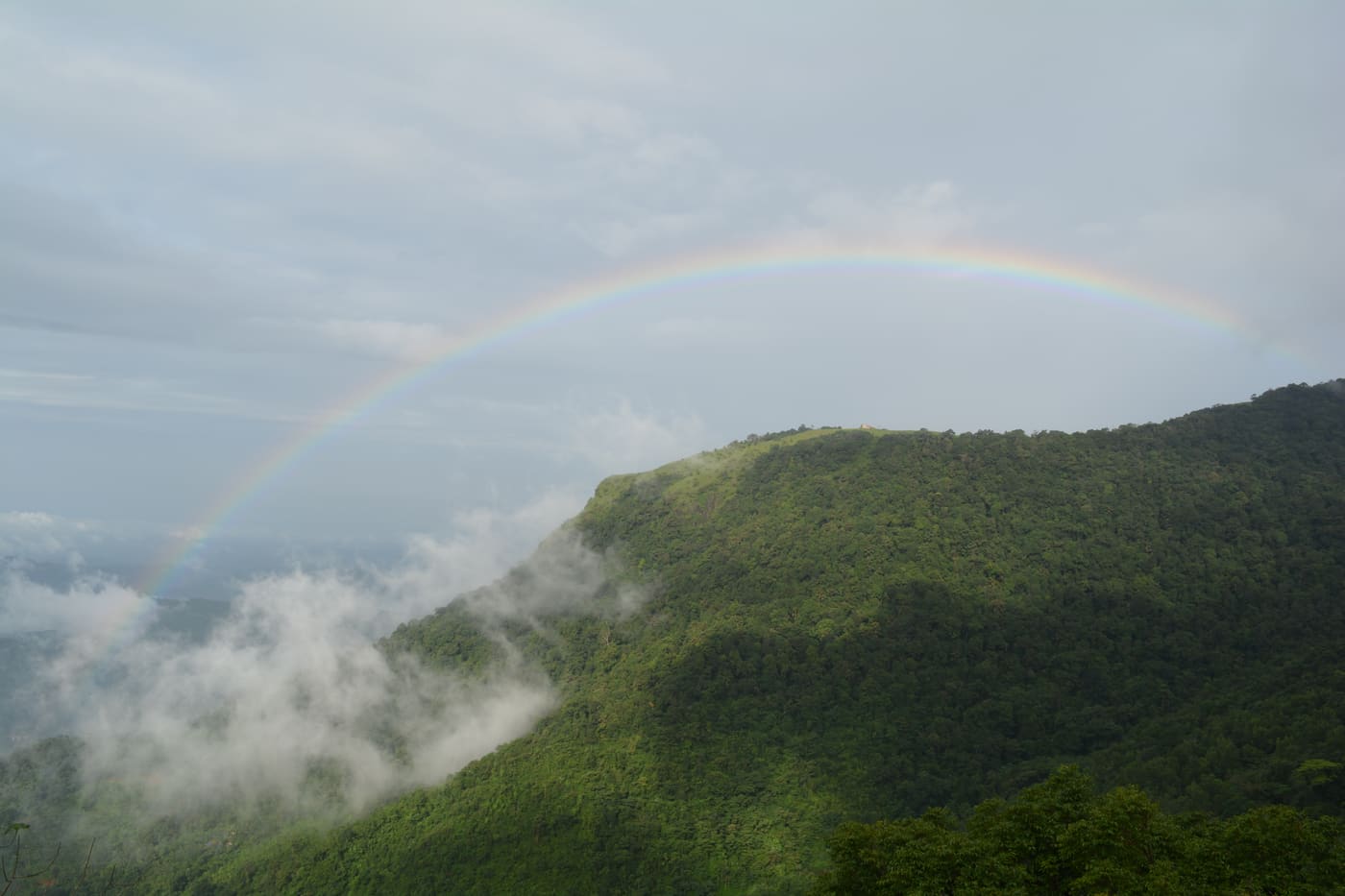
Tucked into the north-eastern corner of Kannur district, Aralam Wildlife Sanctuary is the northernmost of Kerala's sanctuaries, a roughly 55-square-kilometre sweep of evergreen and semi-evergreen forest that climbs from lowland plantations at around 50 metres to the mist-wrapped summit of Katti Betta at 1,145 metres. It sits on the western flank of the Western Ghats, one of the world's biodiversity hotspots, and shares its high eastern boundary with the Brahmagiri range and the Kodagu district of neighbouring Karnataka, so a walk uphill carries you from tropical heat into cool, cloud-brushing shola country in a single day.
The forest is watered by heavy rain — well over 4,000 millimetres a year, most of it hurled down in the south-west monsoon — and that abundance shows in the greenery. Rivers and hill streams such as the Aralam River, the Cheenkannipuzha and the Meenmuttithodu thread the valleys, feeding the sanctuary's signature cascades. The best known is Meenmutty, a spectacular multi-tiered fall reached on the sanctuary's most popular trek; the lesser-seen Katti falls lie deeper in the interior. In the wet months the streams swell alarmingly, which is exactly why the Forest Department controls where and when visitors may walk.
Aralam is quietly one of the richest wildlife pockets in northern Kerala. Herds of elephant and gaur (Indian bison) move through the valleys, alongside sambar deer, wild boar, common langur, Nilgiri langur, Malabar giant squirrel, wild dog and the endangered lion-tailed macaque; leopard and even tiger are recorded but very rarely seen. The birdlife is exceptional too, with roughly 150 or more species including the Nilgiri wood pigeon, Malabar grey hornbill, great hornbill, blue-winged parakeet and the eerie Sri Lanka frogmouth, plus several globally threatened species and winter migrants that fly in from as far as Central Asia and Europe.
What has made Aralam nationally famous, though, is its butterflies. More than 266 species have been recorded here — over eighty per cent of all the butterfly species found in Kerala — and every year the sanctuary stages one of the subcontinent's most dramatic insect migrations. As the north-east monsoon eases, vast rivers of butterflies, above all the Common Albatross, pour across the hills; survey teams have logged tens of thousands passing in minutes and hundreds of thousands in a single day. In July 2025 the Kerala government renamed the reserve the Aralam Butterfly Sanctuary, making it India's first sanctuary declared specifically for butterflies, though most maps and locals still call it Aralam Wildlife Sanctuary.
Wrapped around the protected forest lies the Aralam Farm, a large Central State Farm of coconut, cashew and hybrid-seed plantations that today doubles as one of India's biggest tribal rehabilitation settlements. The mosaic of farm, settlement and forest gives Aralam an unusual character — part working landscape, part wilderness — and it also means human-wildlife encounters, especially with crop-raiding elephants, are a real and sometimes tense part of local life.
For the traveller, Aralam rewards those who come slowly and on the forest's terms: a guided dawn walk with an eco-development committee guide, a half-day trek to a thundering waterfall, a patient hour at a mud-puddling patch watching butterflies drink, or a climb toward Katti Betta for long views over the Ghats. It is far less crowded than Kerala's marquee hill parks, and that solitude is much of its charm.
History
Aralam Wildlife Sanctuary was constituted in 1984, carved from the reserved and vested forests of the Aralam, Kelakam and Kottiyoor revenue villages to protect a slice of the northern Western Ghats and the wildlife corridor linking Kerala's forests with those of Karnataka's Kodagu district. Its roughly 55 square kilometres span an unusually wide altitude band, from around 50 metres in the foothills to 1,145 metres at Katti Betta, which is a large part of why so many different habitats — and so many species — are packed into it.
The land next door has its own distinct story. In 1970 the Government of India established the Central State Farm at Aralam with technical assistance from the erstwhile Soviet Union, clearing forest and plantation land to produce hybrid coconut seedlings, cashew and other crops on a large scale. For decades it operated as a federal agricultural enterprise abutting the sanctuary, and the plantation edge remains a defining feature of the landscape today.
In 2004 the Central State Farm — about 7,500 acres — was transferred to the Government of Kerala, which purchased it using the Scheduled Tribes rehabilitation fund with the aim of resettling landless Adivasi families. Roughly 4,000 acres were earmarked for tribal rehabilitation and the remainder retained for a farming corporation; several thousand tribal families were each allotted around one acre of land. It became one of the largest tribal land-rehabilitation programmes in India, though it has also been dogged by disputes over land, livelihoods and unfulfilled promises, which independent researchers and land-rights groups have documented in detail.
The sanctuary's scientific reputation grew steadily through butterfly and bird surveys, which revealed both the extraordinary species count and the recurring mass migration of butterflies across the hills. Building on this, the Kerala government formally renamed the reserve the Aralam Butterfly Sanctuary in July 2025 — the first protected area in India designated primarily for butterfly conservation — a status intended to draw research, eco-tourism and protection to the phenomenon.
Alongside conservation, the settled landscape at Aralam Farm has kept human-elephant conflict in the headlines: crop-raiding elephants moving between the sanctuary and the farm have caused deaths and damage, and the Forest Department has repeatedly intervened, including capturing problem animals. It is a sober reminder that Aralam is a lived-in frontier between people and wildlife, not an untouched wilderness.
Why visit
See Kerala's — and India's — first dedicated butterfly sanctuary, home to 266-plus species and, in season, a spectacular mass migration of Common Albatross and other butterflies across the hills.
Trek through genuine Western Ghats rainforest to Meenmutty, a dramatic multi-tiered waterfall, on the sanctuary's most popular guided walk.
Spot big Western Ghats wildlife — elephant, gaur (bison), sambar, Malabar giant squirrel, lion-tailed macaque and a rich cast of hornbills and endemic birds — in a reserve far quieter than Kerala's famous parks.
Climb toward Katti Betta, at 1,145 metres the highest point in the sanctuary, for sweeping views over forested ridges toward the Brahmagiri hills and Karnataka.
Experience an unusual landscape where protected rainforest meets the historic Aralam Farm plantations and one of India's largest tribal rehabilitation settlements.
Enjoy low-key, Forest-Department-run eco-tourism — guided treks, nature camps and birding — that keeps crowds small and the forest experience authentic.