A squat, square block of weathered laterite standing guard over the Arabian Sea, Thalassery Fort is the stone heart of one of Malabar’s most storied towns — a British East India Company stronghold from which pepper, cardamom and the fortunes of the spice trade once flowed, and around which the town that gave India its circus, its cricket and its famous biryani grew up.
The story of Thalassery Fort
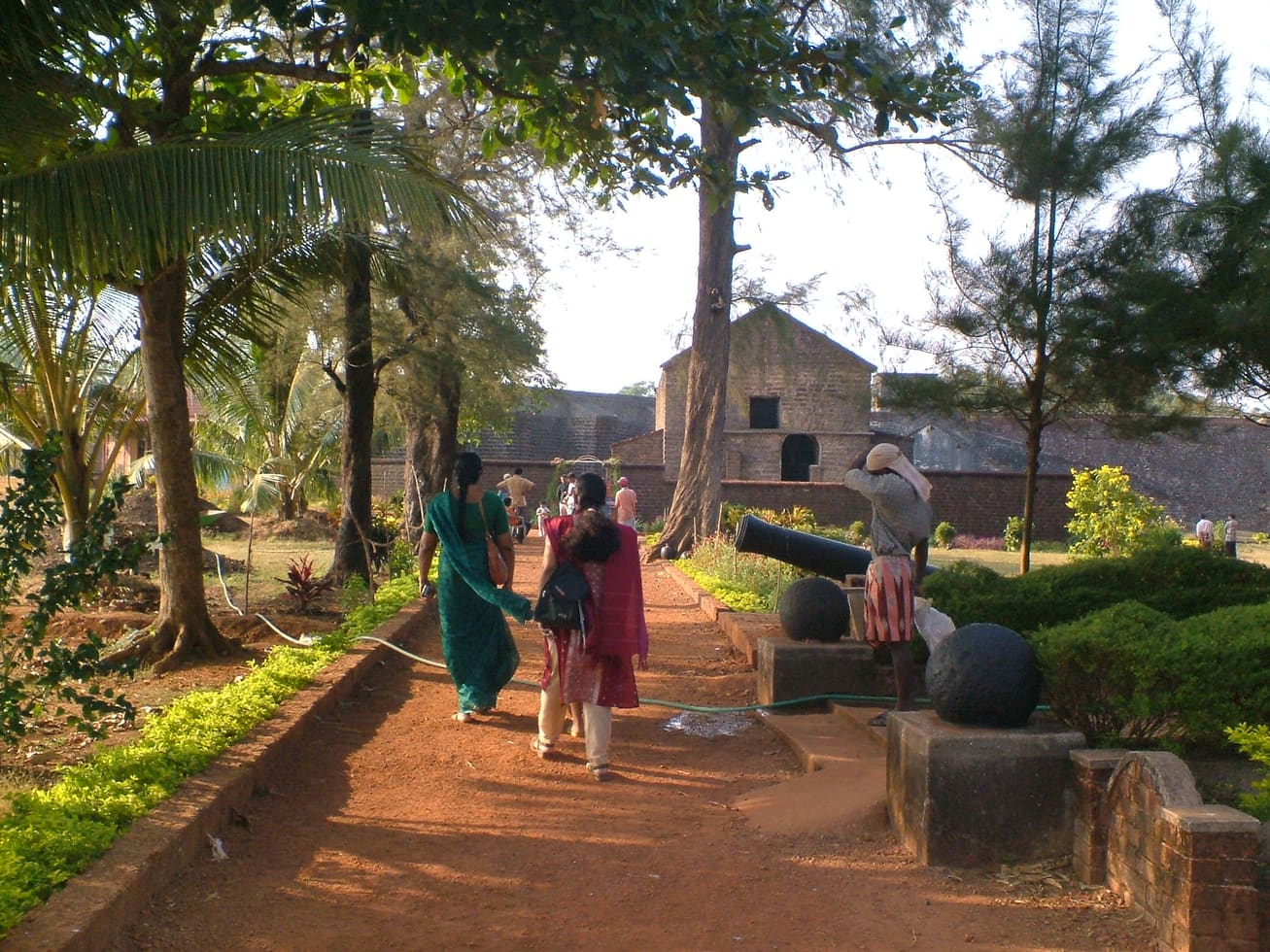
Walk up to Thalassery Fort today and the first thing that strikes you is its solidity. This is not a fairy-tale fort of soaring turrets but a low, muscular square of reddish-brown laterite, its walls rising to roughly ten metres and thick enough to shrug off cannon fire. Strong flanking bastions anchor the corners, small round-holed openings pierce the ramparts, and the whole structure sits on a rocky rise above the sea, exactly where a trading company wanting to watch the horizon would want to be.
The fort was raised by the British East India Company, which had established a trading factory at Tellicherry — the old anglicised name for Thalassery — in 1708 after securing a site from the local ruler. What began as a warehouse for peppercorns grew, over the following decades, into a fortified command post. Its underground chambers were built to store the pepper and, later, cardamom that made this stretch of the Malabar coast one of the most valuable pieces of real estate in the eighteenth-century spice world.
The details that visitors remember are the small, human ones. The fort is entered through massive wooden doors, heavy and intricately carved, that swing on the same hinges they have for generations. Ventilator openings and gun-slits break the thick walls. And then there are the tunnels: passages said, by long local tradition, to run from within the fort down towards the sea and the coast, dug so that defenders could move stores — or slip away — unseen. How far they truly reached is now more folklore than surveyed fact, but the sealed mouths of these passages are still pointed out, and they give the place a satisfying whiff of intrigue.
For all its calm today, this fort earned its walls. During the Anglo-Mysore wars it was besieged: from 1779 the Company garrison, blockaded by land and sea by the forces of Hyder Ali of Mysore under his commander Sardar Ali Khan, held out for over two years within these ramparts. Crucial help came from Kerala Varma Pazhassi Raja of Kottayam, whose troops and supplies stiffened the defence, and in 1782 a combined assault broke the siege. A decade later, in 1792, Tipu Sultan ceded Malabar to the British, and the fort settled into the quieter role of an administrative and garrison town’s centrepiece.
The fort is really a keyhole into Thalassery itself — a town that punches astonishingly above its weight in India’s cultural firsts. On the nearby maidan some of the earliest cricket in India was played, with an early cricket club taking root here in the 1860s. It was in Thalassery that Keeleri Kunhikannan fused kalari body-training with acrobatics to found the Indian circus tradition. The German missionary-scholar Hermann Gundert worked in the area, compiling his pioneering Malayalam dictionary and helping print one of Kerala’s first newspapers. Even the town’s cakes and its celebrated biryani carry the flavour of this crossroads of Europeans, Arabs and Malabaris.
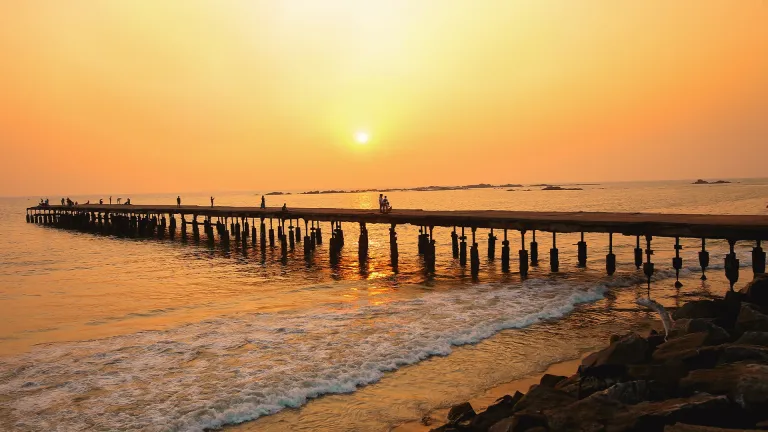
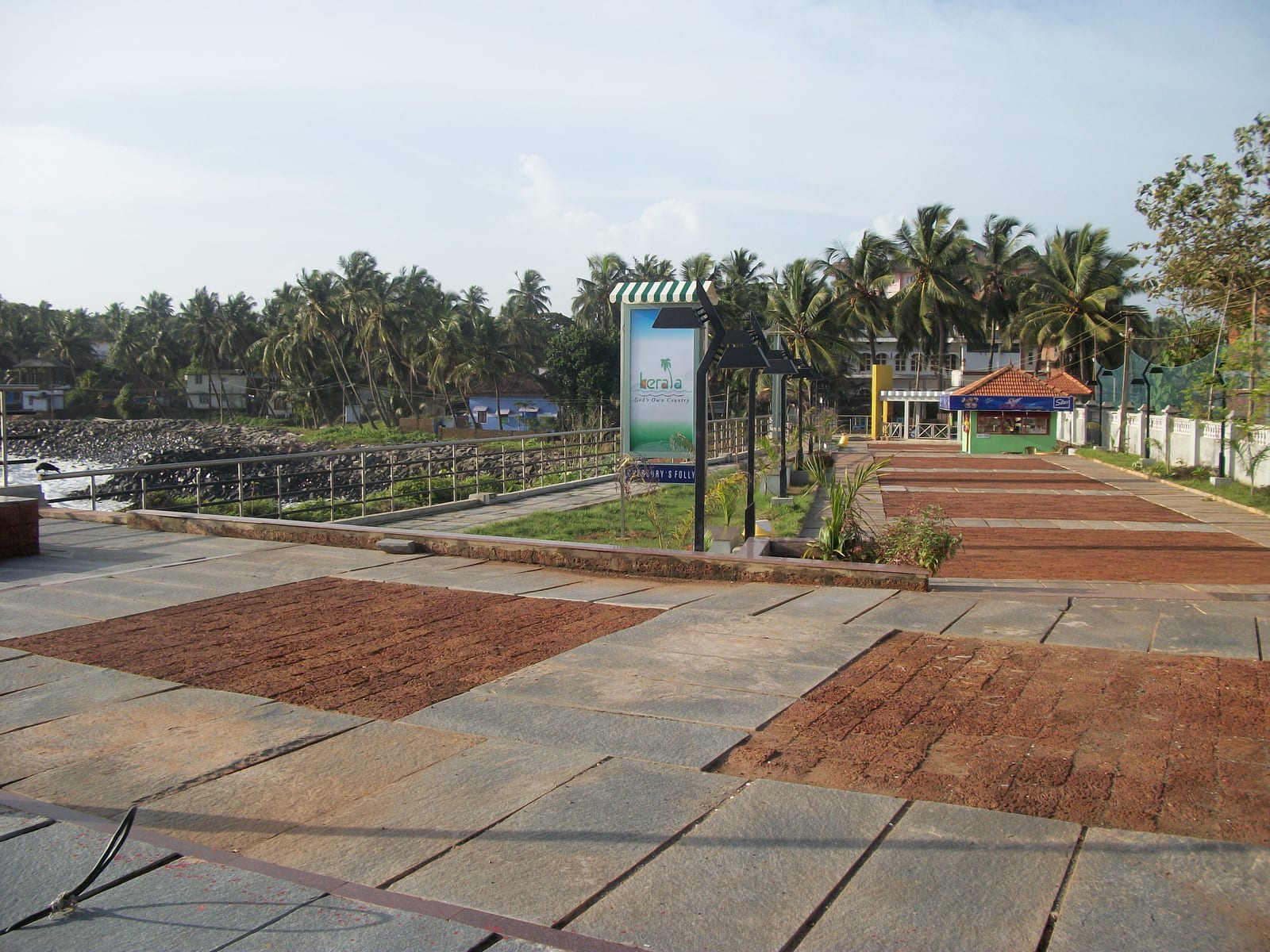
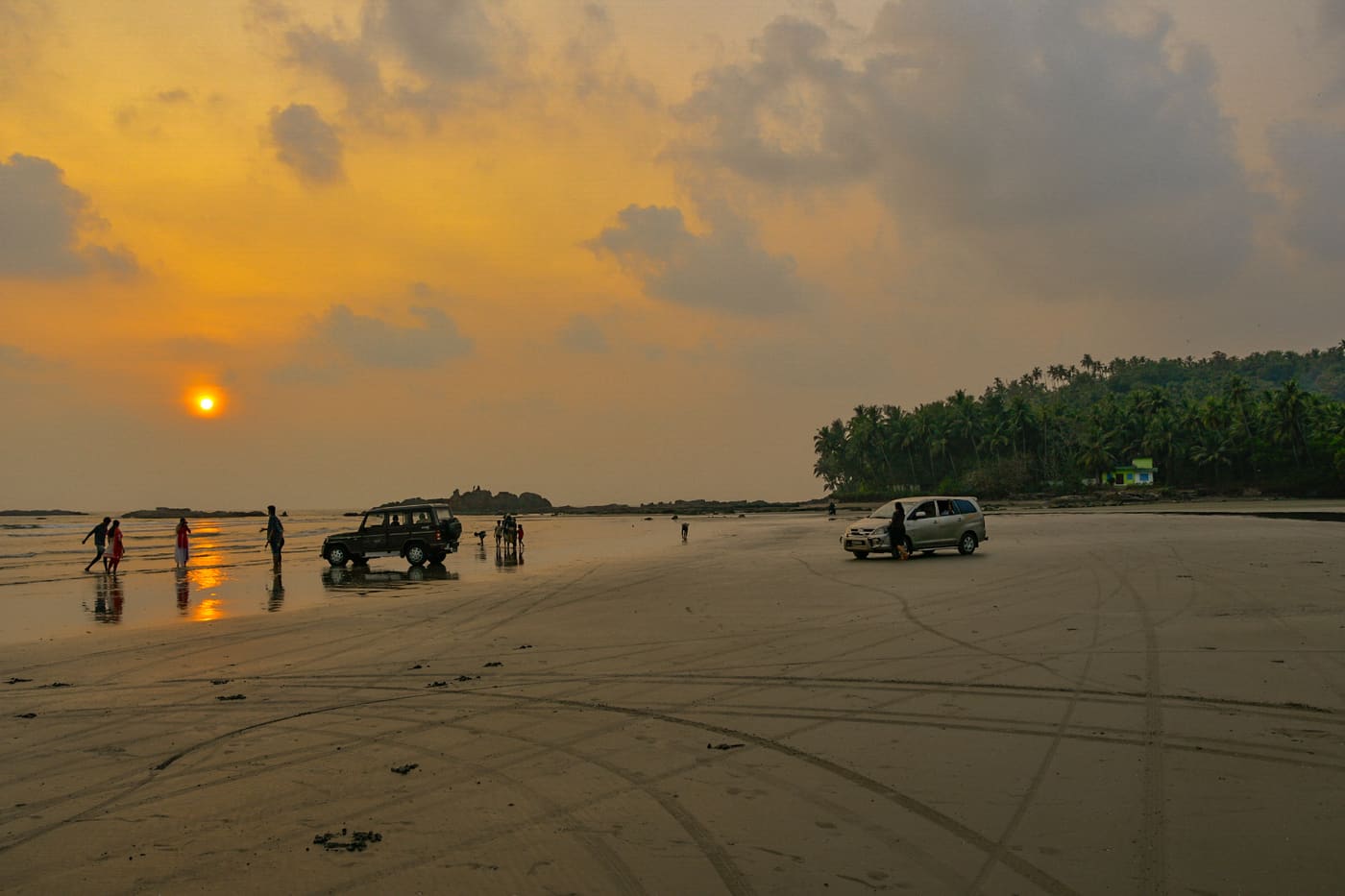
A short walk or drive from the fort, the coast keeps giving. Overbury’s Folly, a breezy seafront promontory laid out by a British judge in the 1870s, offers sunset views over the Arabian Sea. To the north, Muzhappilangad stretches out as one of the few drive-in beaches in India, where you can take a car along the sand. Together they make the fort not a one-stop photo but the anchor of an easy half-day soaking up Malabar’s layered, seafaring past.
History
The story begins with pepper. By the late seventeenth century the Malabar coast’s black pepper and hill spices had made it a magnet for European trading companies, and the British East India Company set up a factory at Tellicherry in 1708 on a site obtained from the local ruler. The fortification of that trading post followed, hardening a commercial foothold into a defensible one — a process that gained urgency after the French occupied nearby Mahé in the 1720s and rivalry along the coast sharpened.
Built almost entirely from locally quarried laterite, the fort reflects European military engineering adapted to Malabar’s materials and climate: an oblong-to-square plan, walls around ten metres high and several metres thick, flanking bastions for covering fire, and the storage vaults and tunnels that served both trade and defence. From here the Company managed the export of pepper, cardamom, other hill produce and timber, and Tellicherry grew into one of its most important settlements on the western coast.
The fort’s severest test came during the Anglo-Mysore wars. From late 1779 the garrison was blockaded within Thalassery by the armies of Hyder Ali of Mysore, led by his commander Sardar Ali Khan. The defenders, aided decisively by Kerala Varma Pazhassi Raja of Kottayam and eventually reinforced to several battalions with artillery, endured a siege lasting more than two years before breaking it with a combined frontal and flanking assault in 1782 — a reverse that rippled out into wider revolt across Malabar.
The larger political question was settled a decade later. Following his defeat in the Third Anglo-Mysore War, Tipu Sultan ceded the Malabar District to the British in 1792, folding the region firmly into Company rule. Thalassery continued as a trade and administrative centre, and around the fort the town accumulated its remarkable roster of firsts in cricket, circus, printing and scholarship through the nineteenth century.
In 1921 the Archaeological Survey of India recognised Tellicherry Fort as a centrally protected monument, the status it holds today. A lighthouse now stands on the site of an old redoubt near the fort, and while some of the outlying hill defences have been lost to time, the main laterite structure survives in fair condition — an unusually intact piece of colonial-era Malabar for visitors to walk through.
Why visit
It is a genuine, walk-through eighteenth-century fort — massive laterite walls, corner bastions and gun-slits — rather than a ruin you view from behind a fence, making the scale of Company-era Malabar tangible.
The carved heavy doors, ventilators and the legendary sea-tunnels give the fort real texture and stories, ideal for history-minded travellers and curious families alike.
Its perch above the Arabian Sea delivers breezy ramparts and wide coastal views, with a lighthouse close by and sunsets that reward a late-afternoon visit.
The fort is the gateway to Thalassery’s extraordinary cultural firsts — the birthplace of Indian circus, one of the cradles of Indian cricket, and a centre of early Malayalam printing and scholarship.
It anchors an easy, rewarding day out: pair it with Overbury’s Folly for sunset, the drive-in sands of Muzhappilangad beach, and a plate of the town’s famous Thalassery biryani.
Entry is generally free or nominal and it sits right in town, so it slots into a north Kerala itinerary with almost no effort or cost.