The story
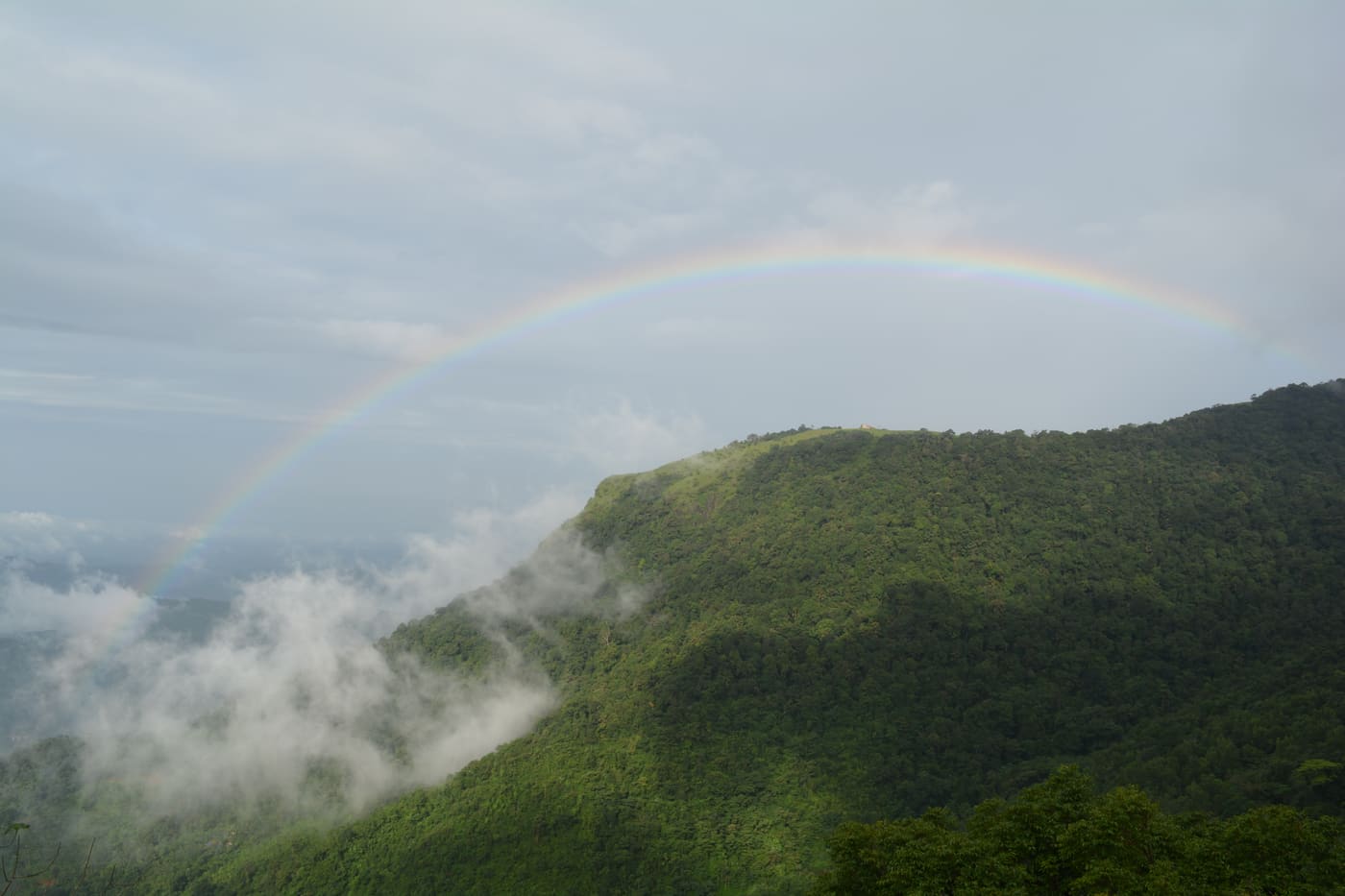
High in the Western Ghats of eastern Kannur, Palakkayam Thattu is a wind-scoured grassland plateau at roughly 3,500 ft where the forest suddenly opens onto a floor of rolling meadow and a horizon of blue-green ridgelines. Reached by a famously steep jeep track, it has become one of northern Malabar’s most talked-about viewpoints — a place of drifting mist, sunrise cloud-seas, a much-photographed giant swing and a cluster of adventure activities perched on the very edge of the hill.
The story of Palakkayam Thattu
The last stretch of the journey is the part everyone remembers. After the long, curling climb through Kannur’s interior hills, the tarred road runs out at a jeep stand, and the final couple of kilometres up to the plateau are a rutted, near-vertical scramble that only a hardy 4×4 or a strong pair of legs can manage. Battered Mahindra jeeps grind up the incline in low gear, engines roaring, while passengers hang on and laugh — and then, quite abruptly, the trees fall away and the whole tableland opens out in front of you.
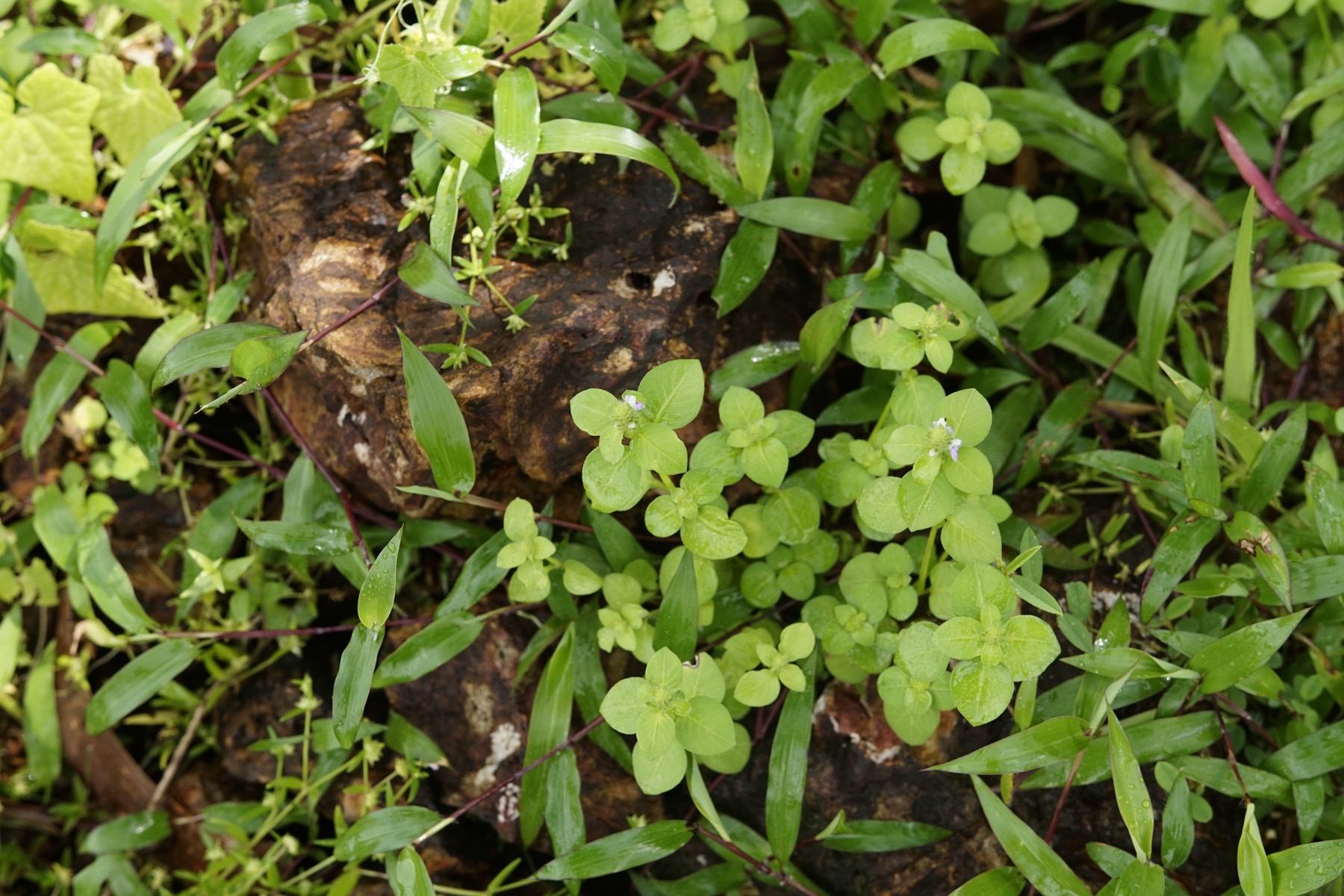
The word thattu in Malayalam means a flat terrace or shelf of land, and that is exactly what Palakkayam Thattu is: an unexpected apron of open, grassy ground laid across the top of a steep hill. In the clear, dry months the meadow is a warm brown-gold, cropped short and studded with rock; through and after the monsoon it turns a vivid, drenched green. Either way it feels like a natural stage suspended in the sky, fenced along its edges where the ground drops sharply into forested valleys.
Ranged along that edge are the plateau’s trademark viewing frames — square cement window-frames, sometimes called the ‘eyes’ of Palakkayam Thattu or the ‘Kannur Eye’, set up so that you can stand inside them and be photographed with the ridges falling away behind you. Through one frame the land rolls towards Paithalmala, the highest peak in Kannur district; through another you can trace the thread of the Valapattanam river winding far below through a sea of green.
Weather is the great shape-shifter here. On a settled winter morning the air is glass-clear and you can see for miles; an hour later cloud can boil up from the valleys and swallow the whole hilltop in cool white mist, reducing the frames to grey silhouettes and the swing to a ghost against the fog. Visitors quickly learn that the plateau rewards the early and the patient — dawn and the hour before sunset are when the light is softest and the cloud-play is most spectacular.
Scattered across the tableland are metal benches placed to catch the panorama, cemented platforms for pitching tents, a modest refreshment stall near the top, and the adventure zone that has made the place a magnet for younger travellers. The giant swing that arcs out over the slope, the zip-line strung above the grass, zorbing balls, a rope crossing, archery and an air-rifle shooting range all cluster near the edge, so that thrill and view come in the same frame.
For all the recent buzz, Palakkayam Thattu still wears its remoteness lightly. There are no big hotels on the summit, no crowds jostling at midday once the mist rolls in, just grass, wind, cloud and a long silver horizon. Campers who stay overnight get the best of it — a bonfire under a hard, star-dense sky, and a sunrise the day-trippers never see, when the valleys below fill with cloud and the plateau seems to float above the world.
History
Palakkayam Thattu is a relative newcomer to Kerala’s tourist map. For generations it was simply a high grazing shelf known to the farmers and forest-edge villages of eastern Kannur — a hard-to-reach tableland in the folds of the Western Ghats, more familiar to hunters, herders and trekkers than to holidaymakers. Its fame is very much a product of the smartphone-and-social-media era.
What changed everything was the view. Sitting at around 3,500 ft, the plateau commands one of the widest, most photogenic panoramas in the district — described locally as the second-highest viewpoint in Kannur after Paithalmala — taking in that peak, distant hill ranges and the distant curve of the Valapattanam river. As images of the misty meadow and its cloud-seas began circulating online, curious visitors started making the difficult drive up, and word spread quickly across Malabar.
To manage the growing footfall, the site was gradually organised into a ticketed viewpoint. Basic infrastructure appeared over time: a fenced perimeter along the dangerous edges, the distinctive cement photo-frames, benches, cemented camping platforms, a small stall and toilets, and a regulated jeep service to ferry visitors up the punishing final climb from the lower parking area. A modest entry fee and parking charge were introduced, with the local body and tourism promotion council involved in running and promoting it.
The adventure offerings — the giant swing, zip-line, zorbing, rope crossing, archery and shooting range — were added to turn a simple scenic stop into a half-day activity destination, and camping packages followed to capture the overnight, sunrise-chasing crowd. These have been the making of the place commercially, drawing school groups, families and young travellers from across Kannur, Kasaragod and beyond.
Today Palakkayam Thattu is firmly established in Kannur’s tourism messaging as an offbeat hill-station experience, even as it remains deliberately low-key on the summit itself. Its story is a familiar modern one — a quiet Western Ghats plateau, ‘discovered’ by cameras, lightly developed for visitors, and now balancing its new popularity against the fragile grassland, steep access and unpredictable mountain weather that give it its character.
Why visit
The panorama is the headline act. From roughly 3,500 ft the plateau opens onto one of Kannur’s broadest views — layered Western Ghats ridgelines, the distant summit of Paithalmala and the silver line of the Valapattanam river far below — best framed through the site’s signature cement ‘eyes’.
It is a rare walk-in cloud experience. On the right morning, mist and cloud pour up from the valleys and roll across the meadow, so you are literally standing inside the weather; sunrise from the tableland, with the lowlands drowned in cloud, is the reason many people camp overnight.
There is a genuine adventure cluster on top — a giant swing that flings you out over the slope, a zip-line above the grass, zorbing, a rope crossing, archery and an air-rifle range — making it as good for thrill-seekers and families with teenagers as for photographers.
The journey itself is an attraction: the winding climb through the hills of interior Kannur followed by the notorious steep jeep track to the summit turns the trip into a small expedition, with the rattling 4×4 ride up part of the fun.
It offers something the coast cannot — cool, high-altitude air, open grassland and space to breathe, plus star-heavy night skies and bonfire camping well away from town lights, all within a few hours of Kannur city.
As an offbeat, still-uncrowded spot, it rewards travellers looking beyond the standard Kerala circuit; outside peak weekend hours the meadow can feel almost empty, wild and windswept in the best possible way.