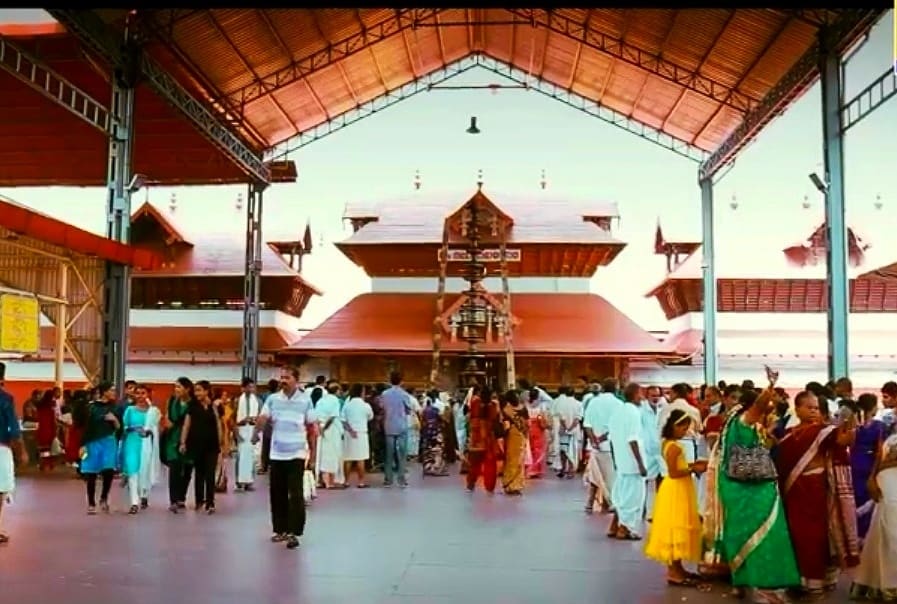
Just a few kilometres from the thronged corridors of the Guruvayur temple, the crowds thin, the incense fades, and a long, unhurried ribbon of grey-gold sand opens onto the Arabian Sea — this is Chavakkad, the pilgrim’s quiet exhale.
The story of Chavakkad Beach
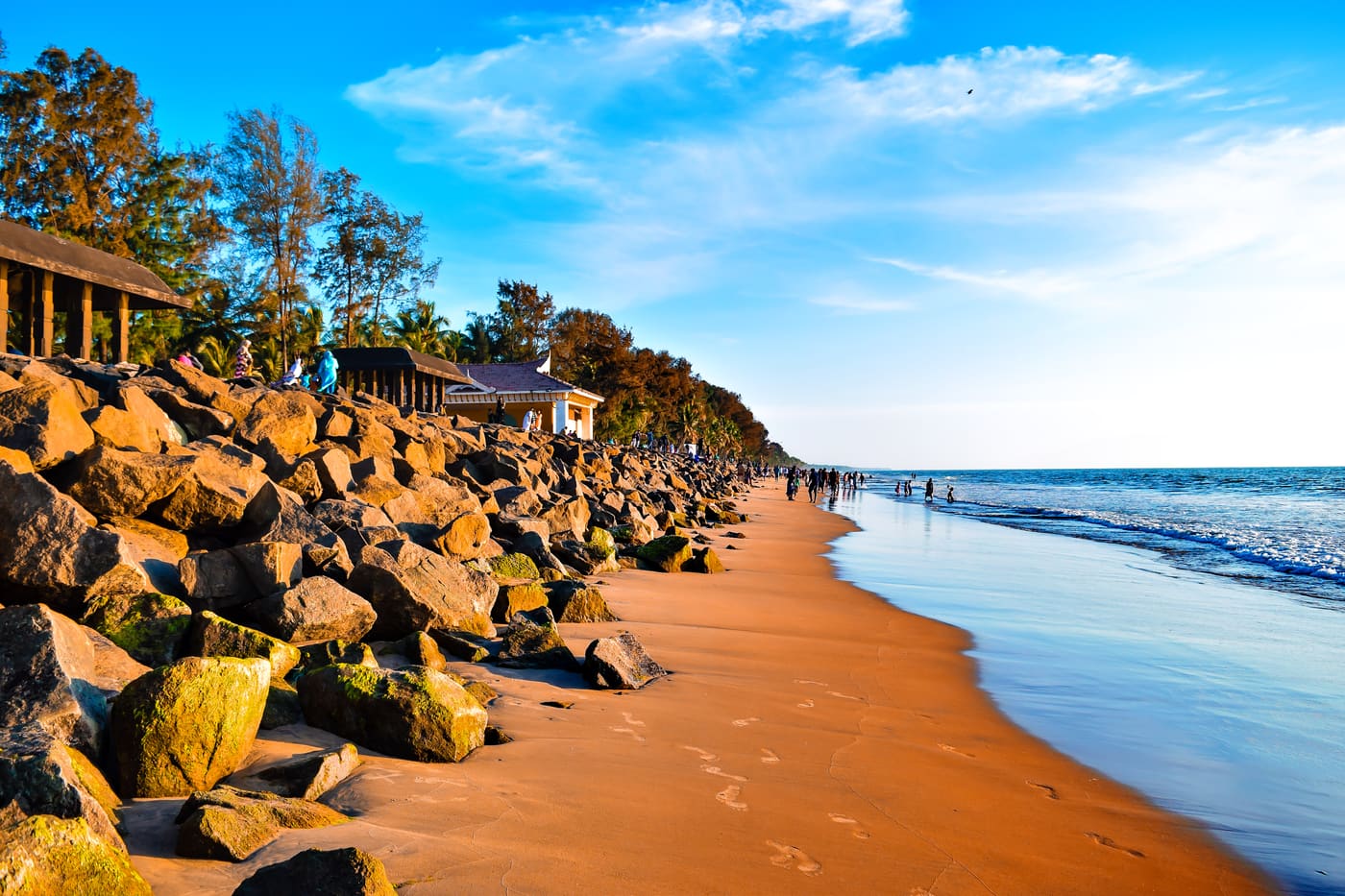
Most people arrive at Chavakkad Beach with temple bells still ringing in their ears. After the queues and the crush of Guruvayur, roughly five kilometres to the east, this stretch of Thrissur coastline feels almost improbably calm — a place where families spread out on the sand as the light softens, children chase the shallow foam, and the day quietly comes undone. It is less a resort beach than a breathing space, and that is precisely its charm.
The defining feature here is the Azhimukham, the point where a backwater river slips out through the sand to meet the sea. Locals will tell you it is the one place in the Thrissur region where you can watch a river and the ocean fold into one another, and there is a genuine theatre to it — brackish water braiding into salt, sandbars shifting with the tide, gulls and terns wheeling over the churn. Stand at the confluence toward evening and the whole scene turns molten, the sky and the water trading the same coppery colour.
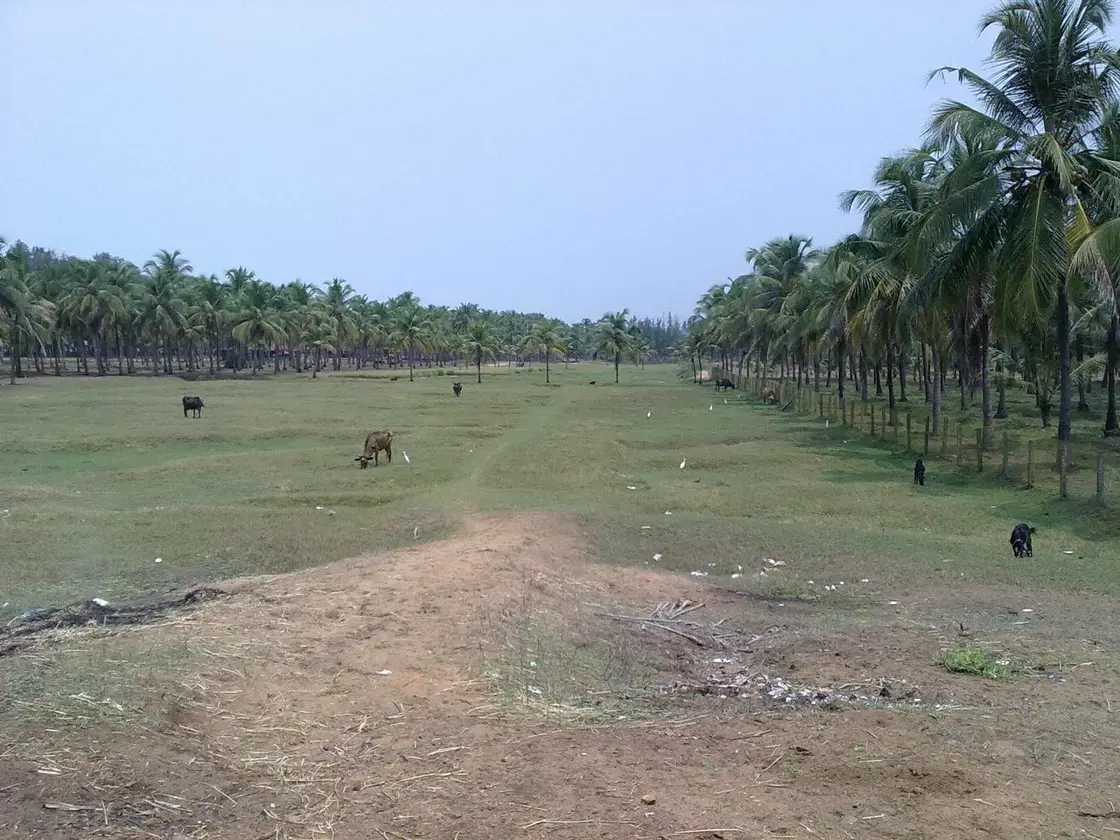
For all its openness, Chavakkad is a working coast as much as a scenic one. Fishing catamarans and boats line parts of the shore, nets dry in the sun, and a small fish market nearby hums with the morning catch. The beach shades into coconut groves and low-lying Ayurvedic farmland behind the dunes, so the salt air is often threaded with the greener smell of the backwater country. It is the sort of place where you can walk for a long while and meet more fishermen than tourists.
The sand runs on toward Blangad, sometimes treated as a continuation of the same coastline, and the two names blur together for anyone strolling the shore. To the north lie the Chettuva (Chetwa) backwaters, a quieter maze of lagoons and islets that many visitors pair with a beach afternoon. This makes Chavakkad less a single destination and more a doorway into a gentler, watery corner of Kerala that mass tourism has largely passed over.
Because it has never been heavily commercialised, Chavakkad keeps an unhurried, local rhythm. You will not find a strip of loud shacks or jet-ski touts; instead there are simple stalls, a promenade to amble along, and the steady comings and goings of Guruvayur pilgrims looking for somewhere to slow down before or after their darshan. The beach fills a little on weekends and holidays and empties again on ordinary evenings.
The pull of Chavakkad is ultimately about mood rather than spectacle. It is a place for a long beach walk, a plate of something fried and hot from a stall, a sunset watched without a phone in hand, and the particular peace of standing where fresh water meets the sea. For the pilgrim, it is the secular half of the trip; for the traveller, it is a reminder that some of Kerala’s finest coast is the coast nobody markets.
History
Chavakkad is far older than its role as a beach escape suggests. The town — long anglicised as Chowghat before it was renamed Chavakkad in the early 1970s, ahead of most other Kerala towns — sits on an ancient stretch of the Malabar Coast that has drawn traders for close to two thousand years. Local histories place it as a centre of trade and commerce from around the early centuries of the Common Era.
Its fortunes were built on water. Chavakkad could reach the sea and the inland waterways through navigable channels at Chettuva and Enamavu, and at spots such as Vanjikadavu goods were transacted and stored in godowns raised by settled merchants. Along this coast, Kerala’s famed spices — pepper, cardamom, cinnamon and cloves — moved outward toward West Asian buyers, knitting small Malabar ports into a much larger Indian Ocean trade world.
That commerce gave Chavakkad a strikingly plural character that survives today. Arab and other West Asian merchants, along with Jewish and Muslim settler communities in the wider area, integrated into the trading networks long before European ships arrived. The result is a town often noted for its communal diversity, with prominent mosques, temples and churches sharing the same small landscape.
Nearby Palayur adds a remarkable layer of religious antiquity: its St Thomas church is traditionally held to have been founded by the Apostle Thomas in the first century, making it one of the oldest Christian sites in South Asia. Together with the great Krishna temple at Guruvayur a short way inland, this pocket of Thrissur district carries an unusually deep weight of pilgrimage and faith for so compact an area.
For the modern visitor, that history is what turns a pleasant beach into a meaningful stop. The confluence, the coconut country and the quiet promenade sit atop centuries of maritime exchange, and the steady stream of Guruvayur pilgrims who drift down to the shore continues, in its own way, a very old habit of coming to this coast for something larger than the sea itself.
Why visit
It is the calm counterpoint to Guruvayur — a genuinely peaceful, uncrowded beach only about five kilometres from one of Kerala’s busiest temples, perfect for decompressing before or after a darshan.
The Azhimukham, where the backwater river meets the Arabian Sea, is a rare and photogenic confluence often described as the standout sight of this coast.
Sunsets here are quietly spectacular, with the open western horizon turning the sky and water the same warm colour — a favourite reason locals and pilgrims linger into the evening.
It stays refreshingly non-commercial, so you get long, walkable sand, fishing-village texture and a simple promenade rather than a wall of loud shacks.
It works as a hub for the wider area, sitting within easy reach of Blangad, the Chettuva (Chetwa) backwaters and the ancient church at Palayur, so a beach afternoon can flow into backwater and heritage trips.
The setting — coconut groves, Ayurvedic farmland and a working fishing shore behind the dunes — gives it an authentic, unpolished Kerala-coast feel that photographs and families both enjoy.