The story
Punnathur Kotta — better known as Anakkotta, the 'elephant fort' — is the leafy compound near Guruvayur where the captive elephants dedicated to Lord Guruvayurappan are kept, trained and cared for. Once the palace of a local ruling family, the walled estate was taken over by the Guruvayur Devaswom in the 1970s and turned into one of India's largest temple-elephant camps, forever linked with the legendary tusker Guruvayur Kesavan.
The story of Punnathur Kotta
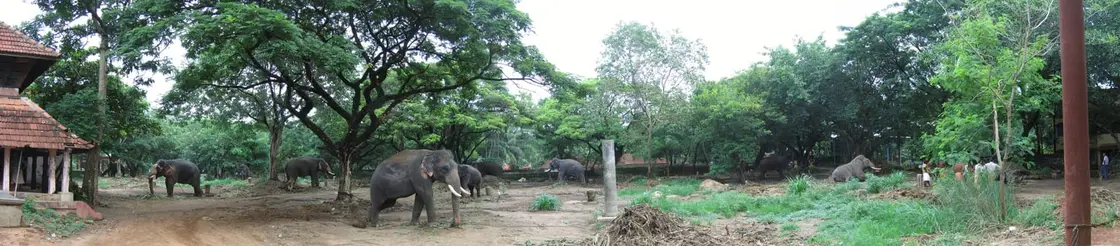
Set about 2–3 km from the Guruvayur Sree Krishna Temple, in the village of Kottapadi in Thrissur district, Punnathur Kotta does not announce itself the way a great temple does. You turn off the Guruvayur road, pass through a gate, and suddenly the noise of the pilgrim town falls away into a wide green compound shaded by tall trees — and there, tethered in the shade or being led down to bathe, are the elephants. This is Anakkotta, literally the 'elephant fort', home to the tuskers and cows that devotees have offered to Lord Guruvayurappan over the decades.
The elephants here are not wild animals in a reserve; they are working temple elephants, donated by families and institutions as a form of devotion. Each is the property of the Guruvayur Devaswom (the temple trust), and each earns its keep by carrying the deity's image, the thidambu, in processions and by standing in the caparisoned rows that make a Kerala temple festival so unmistakable. Between festivals they live, feed and rest at Punnathur Kotta, which functions as their home, their hospital and their training ground all at once.
A visit is an intimate, slightly overwhelming thing. You walk among dozens of the largest land animals on earth, close enough to hear them rumble and to watch a mahout scrub a flank with a coconut husk. Mornings are the liveliest hours — the elephants are fed enormous bundles of palm fronds and are often taken to bathe, trunks working through the water like great hoses. In the heat of the midday the camp quietens as the animals rest, and it stirs again towards evening.
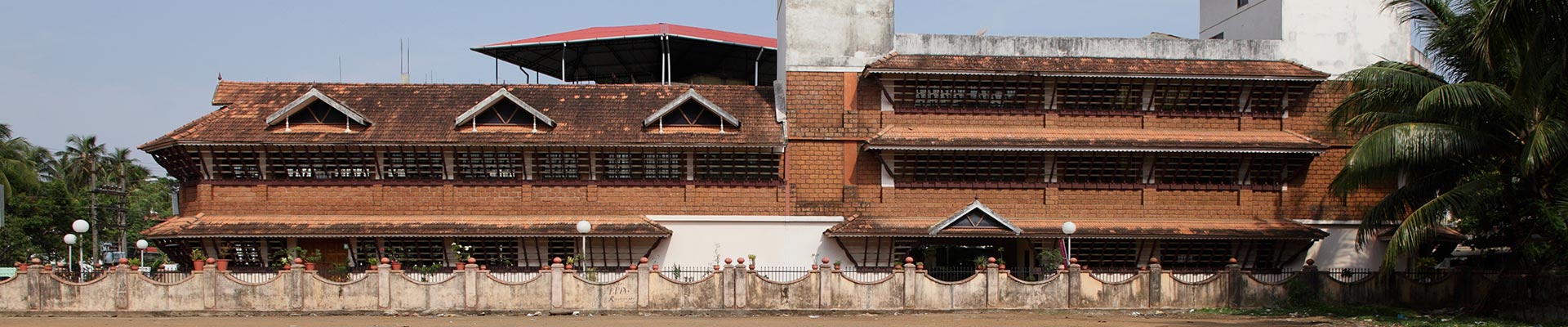
At the heart of the compound stands the old palace itself, a traditional Kerala naalukettu — a rectangular timber-and-tile mansion built around a central courtyard — said to be roughly four centuries old. Today it serves as a training school for papans, the mahouts and elephant handlers, so the estate keeps alive not only the animals but the human craft of caring for them. A small shrine to Shiva and Bhagavathy sits within the grounds, a reminder that this is, above all, a place of temple service rather than a zoo.
For most visitors, though, the pull of Punnathur Kotta is the sheer presence of the elephants and the aura of one animal in particular: Gajarajan Guruvayur Kesavan, the towering tusker whose devotion to the Lord became the stuff of Kerala legend. His memory saturates the place, and the annual honours paid to his statue at the temple keep his story alive for new generations of pilgrims.
It is worth visiting with clear eyes. These are captive elephants, chained for much of the day and trained for temple work, and the ethics of that tradition are debated in Kerala and beyond. Punnathur Kotta lets you see that world honestly — the grandeur and the devotion, but also the reality of animals living in human service — and to make up your own mind while treating the elephants and their handlers with respect.
Legend & myth
The most beloved legend of Punnathur Kotta belongs to Gajarajan Guruvayur Kesavan, remembered as the most devout temple elephant Kerala has known. As the story is told, the Valiya Raja of Nilambur once prayed to Lord Guruvayurappan to protect his family and property from an enemy threat, vowing that if his prayer were answered he would offer one of his elephants to the temple. His wish granted, the raja kept his word, and on 4 January 1922 the young Kesavan was presented to the Lord of Guruvayur.
Over the following decades Kesavan grew into an enormous, gentle and famously disciplined tusker — standing well over three metres — and stories multiplied of an elephant that seemed to understand it belonged to the deity. He was so identified with the Lord's service that in 1973 the Devaswom conferred on him the singular title Gajarajan, 'king among elephants'. It is said he would grow restless and unmanageable if any other elephant was chosen ahead of him to carry the deity in procession, as though jealous of his sacred duty.
The legend reaches its close on 2 December 1976, which fell on Guruvayur Ekadasi, one of the temple's holiest days. As devotees tell it, the aged Kesavan fasted through that auspicious day and then sank down facing the direction of the temple, his trunk raised as if in a final prostration to the Lord he had served for more than fifty years. The Devaswom raised a life-size statue in his honour, and each year on his death anniversary elephants are lined up before it and the leading tusker garlands the image — a folk tribute that treats Kesavan not merely as an animal but as a devotee.
History
The compound began not as an elephant camp but as a palace. Punnathur Kotta was the seat of the Punnathur royal line — sources name a local ruler, His Highness Anujan Raja — and the surviving naalukettu mansion is reckoned to be around four hundred years old, built in the classic Kerala style of a rectangular house wrapped around an open central courtyard. The 'kotta' (fort) in the name reflects the walled, fortified character of these old chieftains' residences.
The estate's second life began in the 1970s. As devotees increasingly offered elephants to Lord Guruvayurappan, the Guruvayur Devaswom needed land to house and manage a growing herd, and around 1975 it acquired the Punnathur palace grounds for exactly that purpose. The palace of the Punnathur kings was reborn as Anakkotta, the 'elephant fort', and the roughly 11.5-acre compound became the collective home of the temple's elephants.
At its peak the camp is said to have held a very large number of elephants — historical accounts mention figures well into the dozens, at times cited as high as around eighty — making it one of the largest gatherings of captive elephants anywhere in India. The population rises and falls over the years with deaths, new donations and animals being deployed to festivals, so the number present on any given day varies and is best confirmed on the spot.
The old palace building now houses a training school for papans (mahouts), preserving the specialised knowledge of handling, feeding and treating temple elephants. The grounds also include a shrine to Shiva and Bhagavathy, and the annual monsoon month of Karkidakam brings a period of Ayurvedic rejuvenation treatment for the animals — part of the seasonal cycle of care built around the herd.
Presiding over the camp's history is Guruvayur Kesavan, donated in 1922 and honoured with the title Gajarajan in 1973, whose death in 1976 on Guruvayur Ekadasi sealed his legend. His statue at the temple and the yearly tribute paid to it tie the modern elephant camp back to the older tradition of elephants as devotees of Guruvayurappan, and remain the reason many pilgrims make the short trip out to Punnathur Kotta at all.
Why visit
See temple elephants up close — walk among dozens of the caparisoned tuskers and cows that carry Lord Guruvayurappan in procession, close enough to watch them feed, bathe and rest.
One of India's largest temple-elephant camps — the roughly 11.5-acre Anakkotta compound gathers the Guruvayur Devaswom's herd in one green estate, a scale of elephant-keeping you will not see elsewhere.
Walk in the footsteps of Guruvayur Kesavan — the camp is inseparable from the legend of the Gajarajan, Kerala's most famous and devout temple elephant, whose story is retold across the grounds and at his statue by the temple.
A four-century-old palace — the traditional Kerala naalukettu at the centre of the grounds, once the seat of the Punnathur kings, is a piece of living heritage now used as a mahout training school.
An easy, memorable add-on to a Guruvayur pilgrimage — just a few kilometres from the temple, it makes a natural half-day outing for families and photographers alike.
A window into a living tradition — you see not only the elephants but the papans (mahouts) who care for them, and the daily routines of feeding, bathing and training that keep temple ritual going.