The story
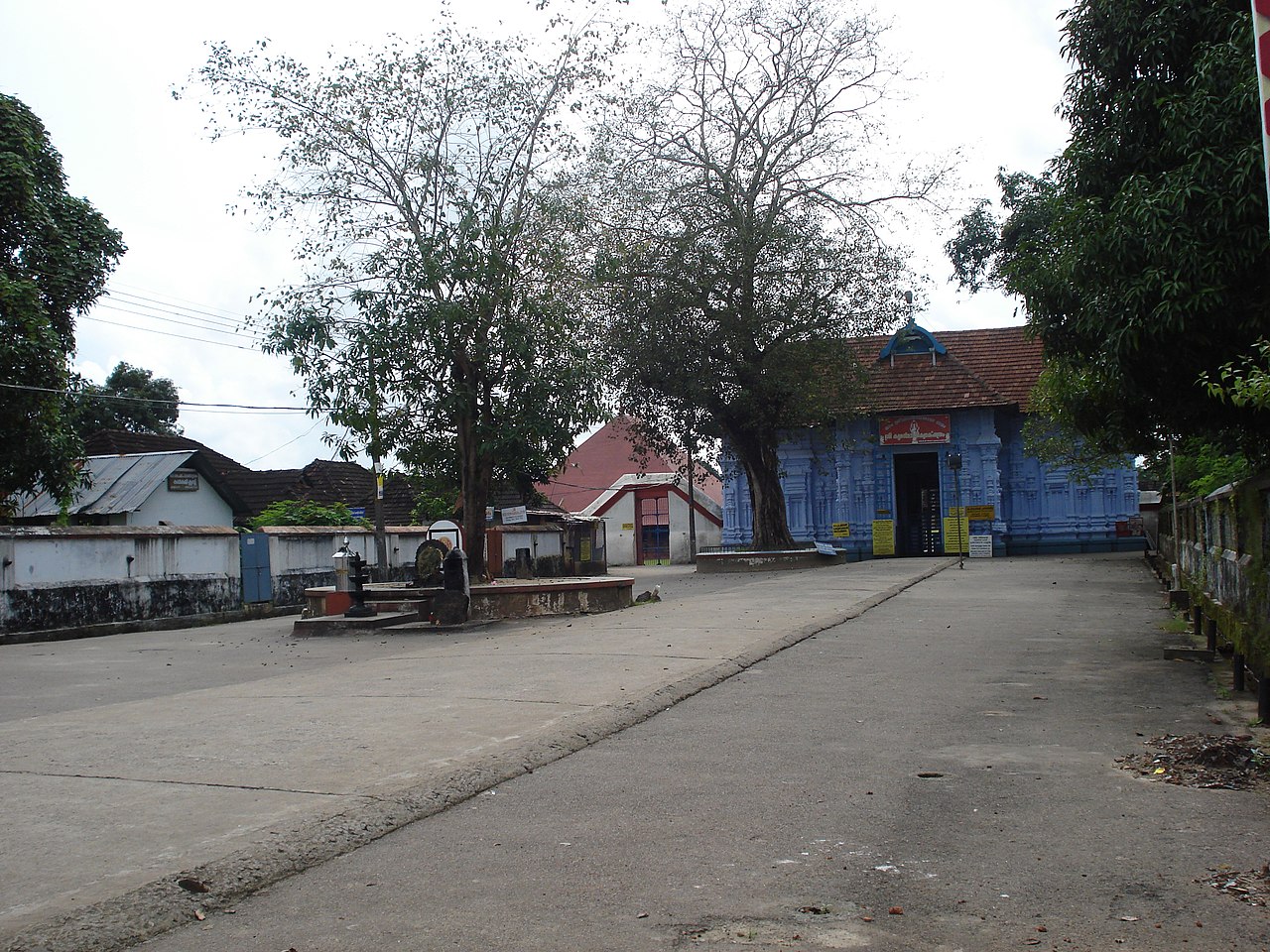
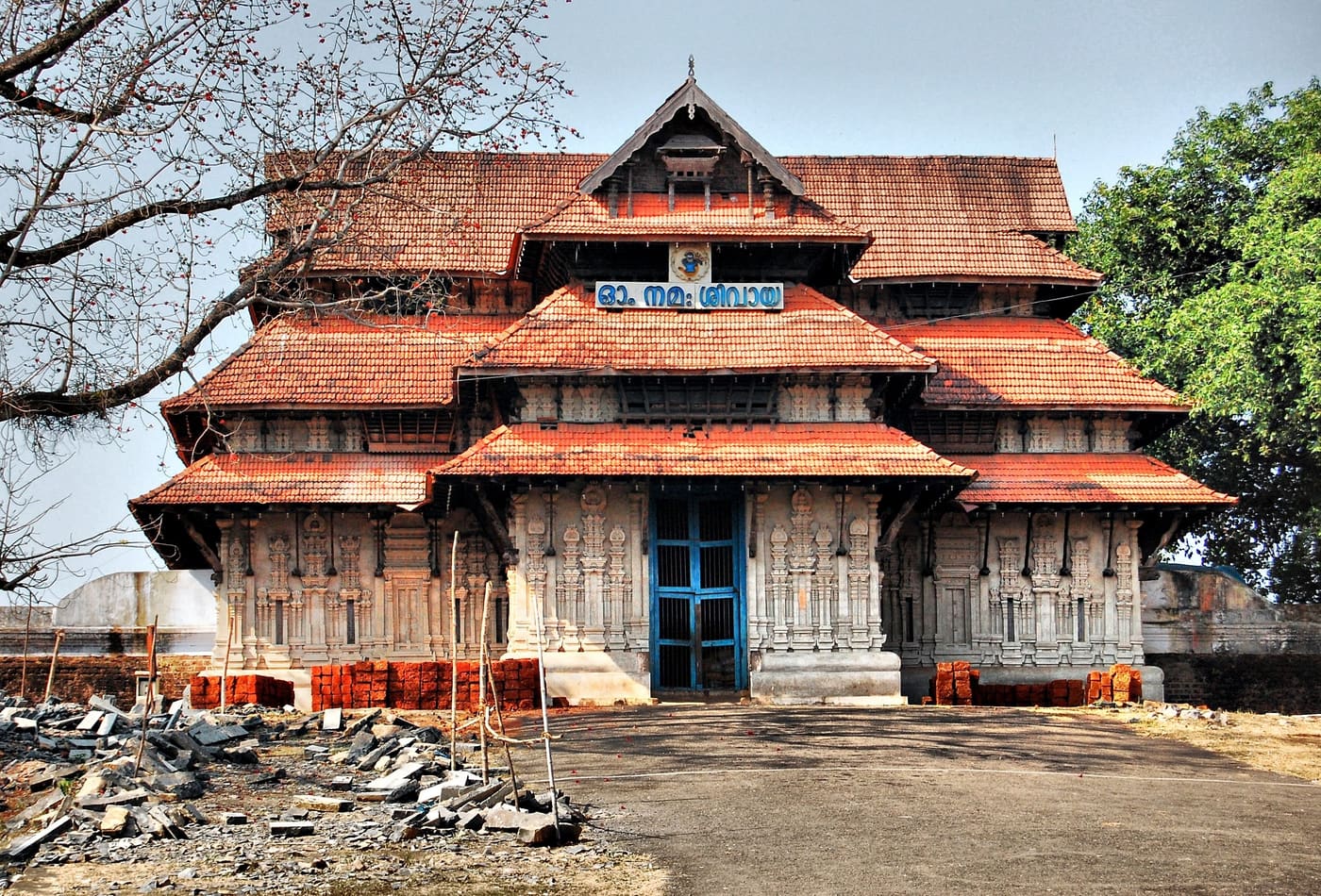
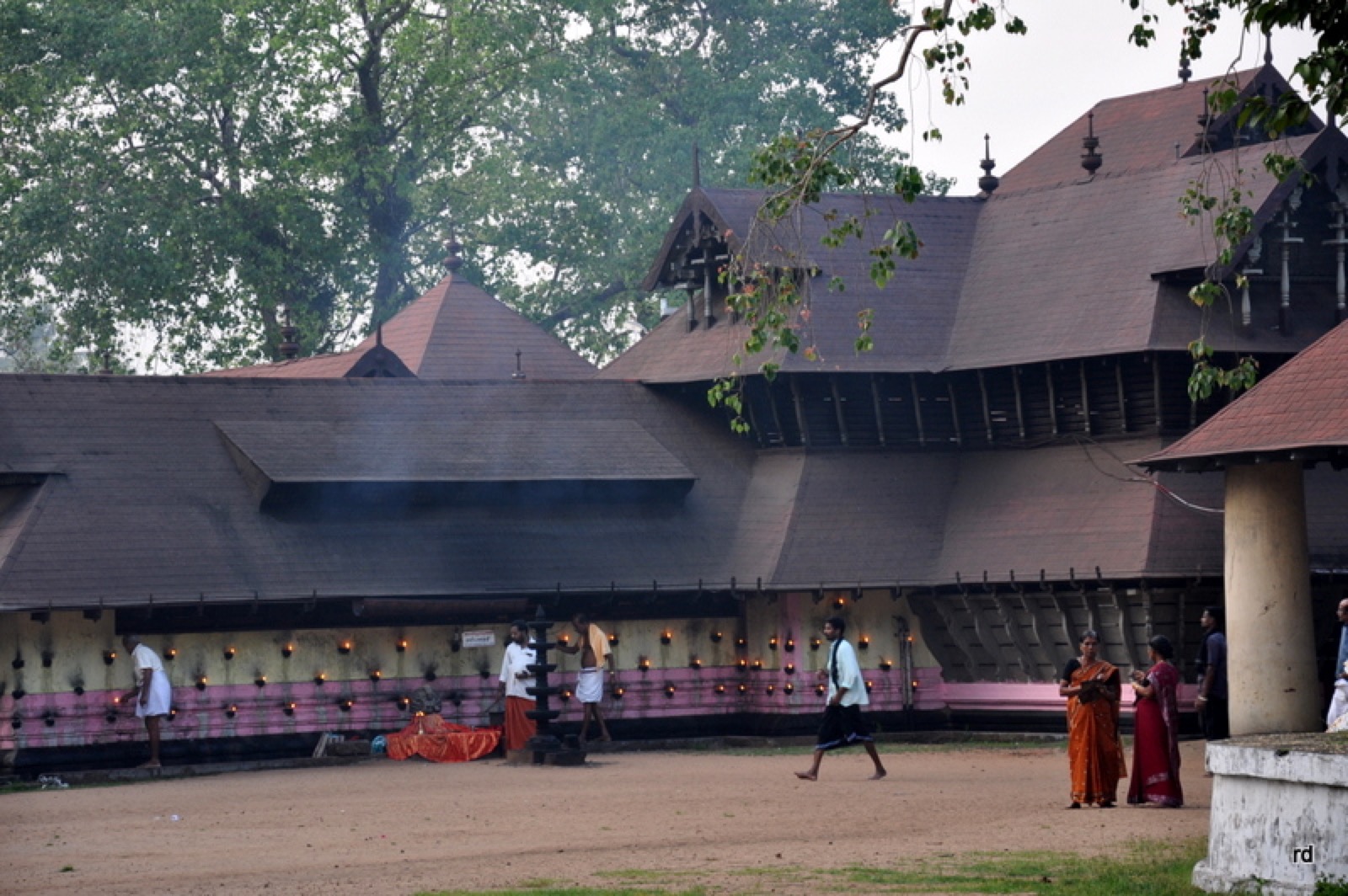
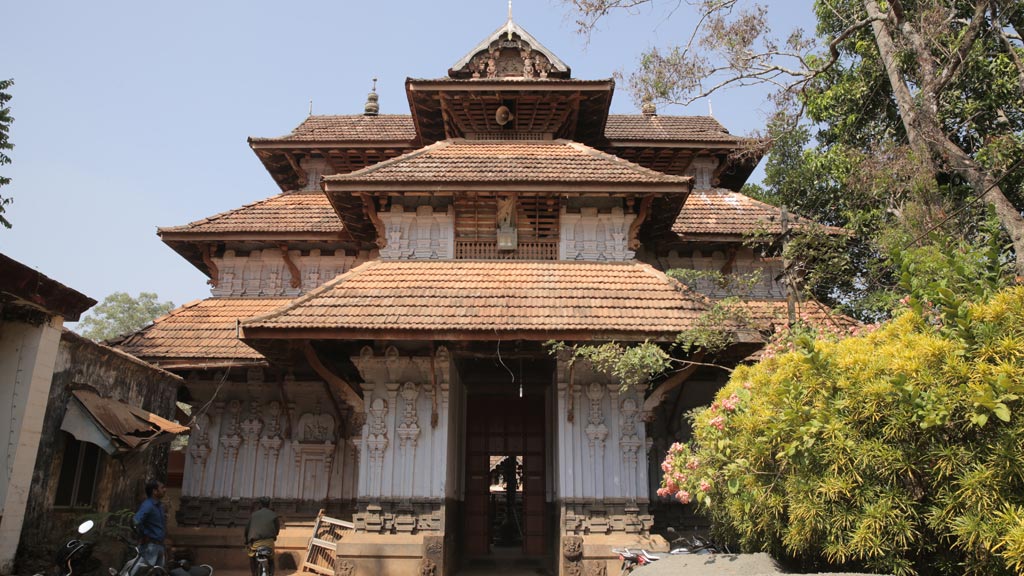
In the temple town of Irinjalakuda, a short drive south of Thrissur, stands one of Kerala’s most singular shrines — Sree Koodalmanikyam, widely held to be the only ancient temple in India where Bharata, the devoted brother of Rama, is the principal deity worshipped in his own right.
The story of Koodalmanikyam Temple
Most great temples of Kerala crowd their courtyards with a retinue of lesser gods — a Ganapati by the flagstaff, a Naga grove in a corner, a shrine to Ayyappan or Bhagavati along the outer wall. Koodalmanikyam is famous for doing precisely the opposite. Here there is only one consecrated presence. There is no upadevata, no subordinate shrine, not even the near-universal Vigneswara who guards the threshold of almost every other Kerala temple. Devotees come to stand before a single deity and nothing else, and that austere singularity is the first thing pilgrims remember about the place.
The idol itself is a four-armed form of Vishnu, yet the mood of worship is entirely Bharata’s. Temple tradition holds that the deity is contemplated in the emotional state of Bharata during Rama’s fourteen-year exile — the younger brother who ruled Ayodhya only as regent, keeping his elder’s sandals upon the throne, waiting in longing for his return. Some accounts frame the bhava as the very instant Bharata hears from Hanuman that Rama is at last coming home. It is this reading of a familiar Ramayana figure — patient, self-effacing, wholly devoted — that gives Koodalmanikyam its unusual devotional character.
The deity also carries the Sanskrit name Sangameswara, the Lord of the Confluence, and Koodalmanikyam is understood as its Malayalam rendering — koodal meaning union or meeting. Sitting amid ponds and paddy on the edge of old Irinjalakuda, the shrine has long been counted among the most important temples of central Kerala, its cultural weight out of all proportion to the quiet town around it.
The temple complex is defined as much by water as by stone. Four large ponds encircle it. The greatest, Kulipini Theertham, lies within the walls and gives its water to the temple’s rituals; Kuttan Kulam sits just outside to the east, where the priests bathe before entering the sanctum, while Padinjare Kulam to the west and Thekke Kulam to the south complete the ring. Local lore insists these are no ordinary tanks — that the sacred river Ganga herself abides in Kulipini Theertham — and visitors are often told, curiously, that the snakes and frogs of ordinary temple ponds are absent here, with only fish thriving in the water.
Koodalmanikyam is also a house of the arts. Its long annual festival is celebrated for its elephant pageantry and its Panchari melam percussion, and across the year the temple has been a stage for Kerala’s classical music and dance, part of a tradition that treats performance itself as an offering to the deity. For the traveller, the appeal is layered: an atmospheric, un-crowded shrine of real antiquity, a devotional story unlike any other, and a living link to the ritual arts of the region.
For most pilgrims, though, Koodalmanikyam is inseparable from a larger journey. It is the Bharata stop on the Nalambalam — the four-temple circuit of Rama’s brothers, traditionally completed in a single day during the monsoon month of Karkidakam. To reach Irinjalakuda on that route is to step into one of Kerala’s most beloved acts of Ramayana devotion.
Legend & myth
The temple’s luminous name comes with a legend, and it should be enjoyed as legend rather than record. It is said that a dazzling light once streamed inexplicably from the forehead of the idol, and none could account for its brilliance. A devotee named Kumara Kurup, from Kayamkulam far to the south, is remembered as the one who proposed measuring that radiance against a precious stone — a manikya, a ruby, said to be the size of an egg, kept by the Raja of Kayamkulam. As the story goes, when the chief priest brought the great ruby close to the idol’s brow, the gem was drawn to it as if by a will of its own and fixed itself fast to the deity. Try as he might, the priest could not prise it away. From this koodal — this union of the ruby with the idol — the deity is said to have taken the name Koodalmanikyam, and, in the tale, the Raja of Kayamkulam was granted a share in the temple’s affairs in return. The gem is long gone, but the name it gave has endured.
A second folk tale explains the older name, Sangameswara, the Lord of the Confluence. In this telling a saint set out to gather the divine essence of many Kerala temples, drawing their power into a conch to carry it away. When he reached Irinjalakuda the conch slipped from his hands and shattered, and all the accumulated divinity it held is said to have poured out and settled upon the deity here — a confluence of many sacred powers in one place, and hence Sangameswara. Both stories are best received in the spirit in which they are told: as devotional legend woven around a shrine whose true origins are lost in time.
Woven through it all is the Ramayana itself. Bharata is the brother who refused the throne that was thrust upon him, ruling only as caretaker with Rama’s sandals set upon the seat of Ayodhya, living apart in penance until his elder returned. Devotees say the deity of Koodalmanikyam holds exactly this feeling — devotion, restraint and longing — and that to worship Bharata here is to honour the ideal of the selfless younger brother. The absence of every other shrine within the walls is often read as an echo of that same single-minded devotion.
History
The documented history of Koodalmanikyam is genuinely ancient. The temple’s earliest firm reference appears in a stone inscription from the reign of the Chera king Sthanu Ravi Varma, dated to the mid-ninth century — around 854 CE — recording grants of land to the shrine. Because such an inscription presumes an already-established and endowed temple, the sanctuary is understood to be older still, reaching back beyond the surviving epigraphic record.
As with many very old Kerala temples, its precise origins are shrouded. One long-repeated theory holds that the site was once associated with the Jains before it passed into the Brahminical Hindu fold as Jain influence in the region waned — a hypothesis that reflects the layered religious history of central Kerala rather than any settled certainty. What is not in dispute is the temple’s deep antiquity and its continuous importance across the centuries.
The deity’s identification with Bharata, and the temple’s reputation as the sole ancient shrine in India where he is the chief object of worship, has made Koodalmanikyam a place apart in the wider Hindu landscape. Even so, the icon in the sanctum is a form of Vishnu, and the Bharata association is carried through the temple’s ritual mood and tradition rather than through the iconography of the idol itself — a distinction worth keeping in mind.
Through its history the temple has been a patron of the ritual and performing arts, its festivals drawing percussion ensembles, caparisoned elephants and classical performers, and sustaining the wider cultural life of Irinjalakuda — a town long noted for its links to Kerala’s music, Kathakali and Koodiyattam traditions.
Today the temple is administered by its own body, the Koodalmanikyam Devaswom, which manages the shrine independently rather than under one of the larger Kerala devaswom boards — a governance arrangement that itself sets Koodalmanikyam apart among the state’s major temples.
Why visit
It is celebrated as the only ancient temple in India where Bharata is the principal deity — a genuinely rare dedication that you are unlikely to encounter anywhere else (a claim worth appreciating, and confirming, on the spot).
The temple’s striking austerity: a single consecrated deity with no sub-shrines at all, not even the ubiquitous Ganapati, giving the darshan a focus and calm quite different from Kerala’s busier temples.
It is the Bharata shrine of the famous Nalambalam circuit, so a visit can be a leg of one of Kerala’s most cherished pilgrimages — the four brothers’ temples completed in a single day.
The atmospheric setting of ponds and paddy, with the sacred Kulipini Theertham and its ring of temple tanks steeped in legend.
The living arts tradition — the elephant pageantry and Panchari melam of the annual festival, and Irinjalakuda’s wider reputation as a cradle of Kerala’s classical performing arts.
A quiet, deeply traditional temple town away from the tourist crush, an easy add-on to a Thrissur itinerary and a window into central Kerala’s devotional and cultural heritage.