The story
On the low, palm-shaded plain near Kodungallur — the ancient port-city that historians identify with the old Chera capital of Mahodayapuram — stands one of Kerala’s most historically loaded Shiva shrines: the Thiruvanchikulam Mahadeva Temple. It is quiet and unhurried today, but it carries an outsized place in the devotional map of South India, for it is widely held to be the only temple in Kerala counted among the Paadal Petra Sthalams — the Shiva shrines hymned by the Tamil Nayanar saints in the Tevaram. Here Shiva is worshipped as Mahadeva with his consort Parvati as Umadevi, and the very stones are tied to two of the sixty-three Nayanars: the poet-saint Sundarar and his royal friend, the Chera king-saint Cheraman Perumal Nayanar.
The story of Thiruvanchikulam Mahadeva Temple
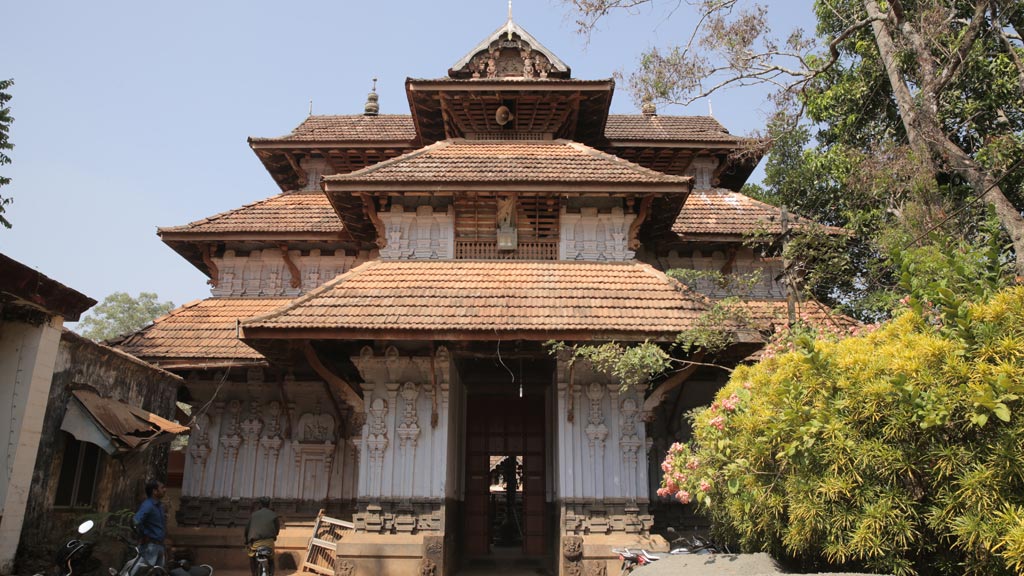
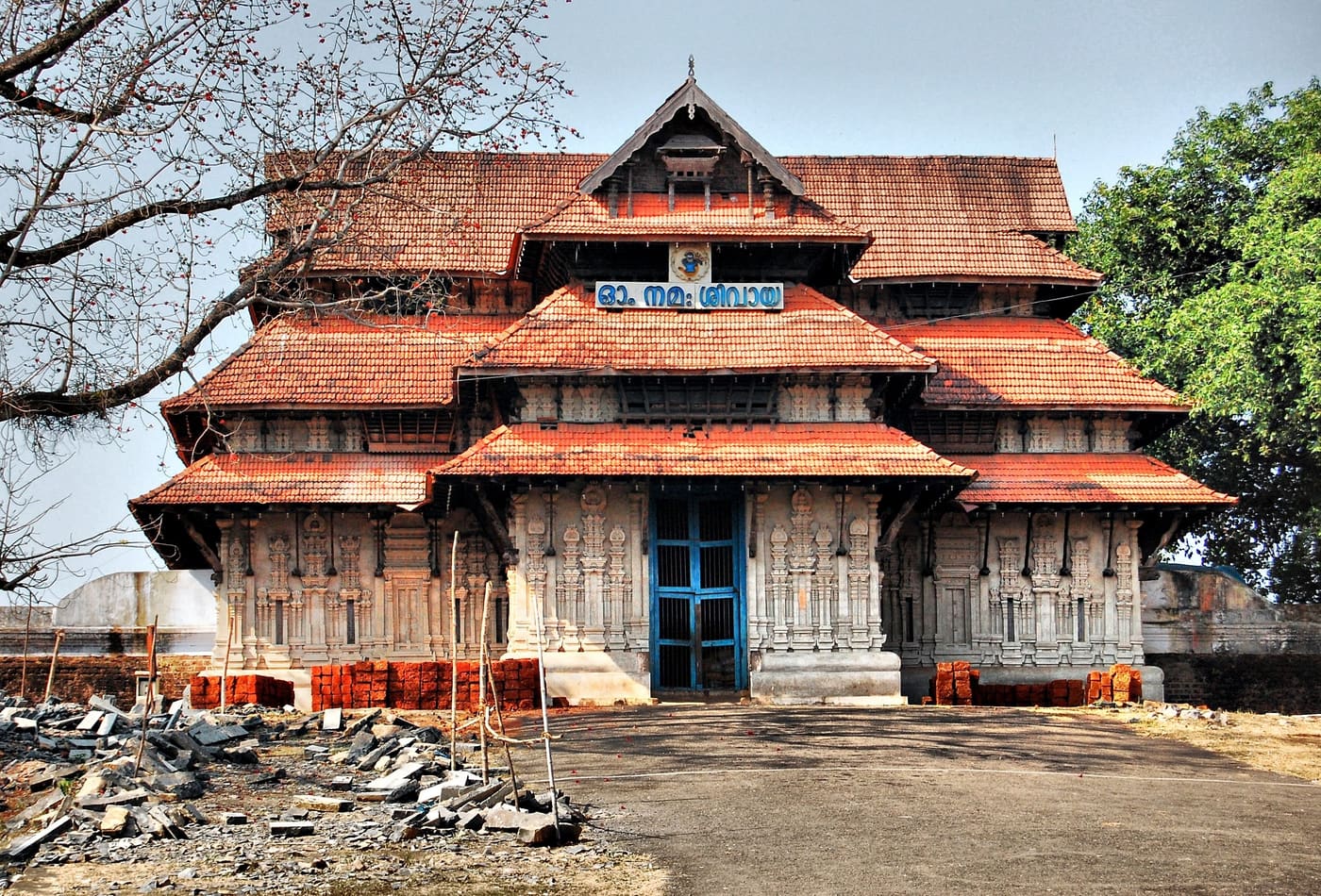
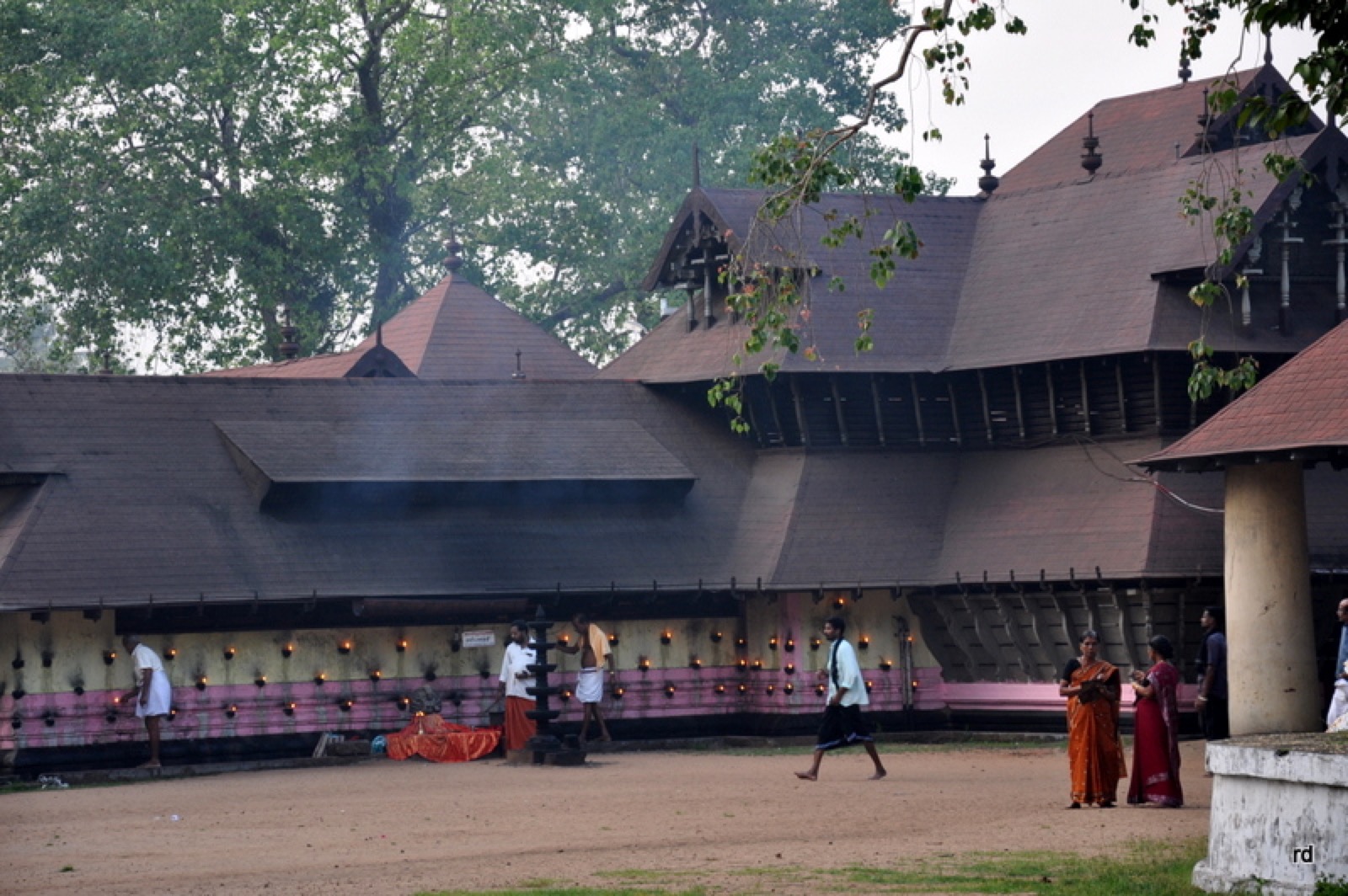
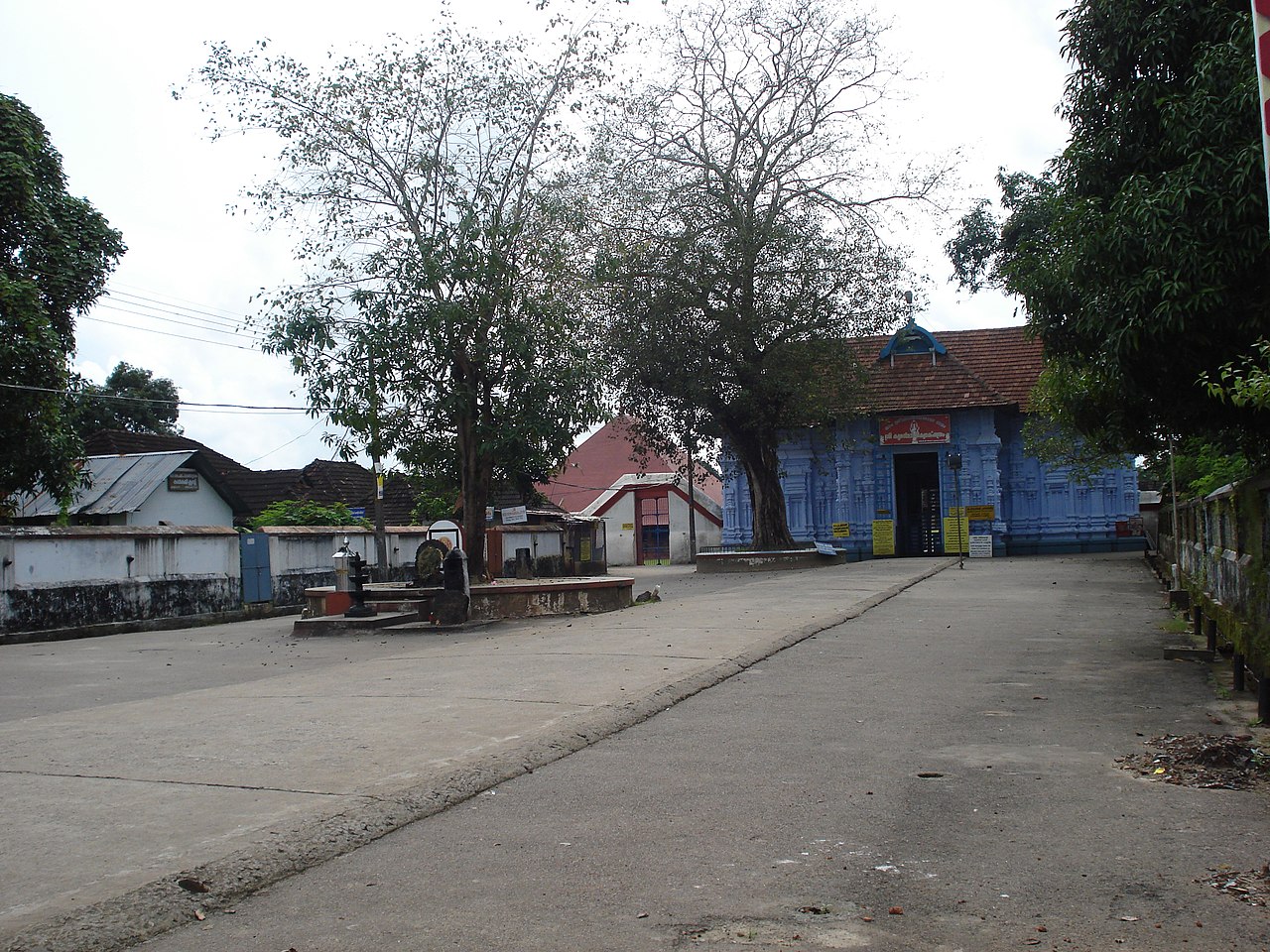
Thiruvanchikulam does not announce itself the way Kerala’s grand devaswom temples do. There is no towering gopuram-crowded skyline, no crush of buses; there is a walled compound in the Kerala style, entrances on the four sides, a fortified central sanctum, a copper-clad flagstaff, and the lamp-blackened calm of a place that has simply been prayed in for a very long time. Yet for anyone who knows the Tamil Shaiva tradition, this modest shrine near Kodungallur is a giant — the western outpost of the Nayanar world, the one Kerala temple that Tamil saints walked to and sang about.
The presiding deity is Shiva as Mahadeva, a Shivalinga in the innermost sanctum, worshipped alongside Parvati as Umadevi. What sets the temple apart from most Kerala shrines is the sheer density of its sub-shrines: local tradition counts an unusually large number of sub-deities within the compound — often cited as the highest concentration of upa-devatas in any Kerala temple (indicative — devotees and guides give slightly varying counts). To walk the compound is to move past shrine after shrine, each with its own lamp and its own small circle of the faithful.
The temple is built in the classic Kerala idiom — a square, near-fortress sanctum, sloping tiled roofs, granite base courses, and the dim, incense-thick interior that Kerala temple architecture makes so well. Older accounts speak of murals and fine granite work; parts of the structure have been rebuilt over the centuries after damage, so what a visitor sees today is a layered fabric of ancient foundations and later restoration rather than a single frozen moment.
But it is the human story that fills this place. Thiruvanchikulam is bound up with Sundarar (Sundaramurthy Nayanar), one of the four great saint-poets whose hymns make up the Tevaram, and with Cheraman Perumal Nayanar, the Chera monarch remembered as Kazharittarivar who set aside his crown for devotion. The two are remembered as inseparable friends — king and poet — who worshipped Shiva here, and the temple guards the memory of their extraordinary departure from the world, a story the tradition tells as sacred legend rather than history.
For pilgrims travelling the Nayanar and Tevaram circuit, reaching Thiruvanchikulam is a kind of completion: it is the one node of that vast Tamil devotional network that lies west of the ghats, in Malayalam country. Standing before the sanctum, a visitor is standing where the Chera kingdom’s sacred heart is said to have beaten, in a corner of Kerala that was, a thousand years and more ago, a cosmopolitan port humming with merchants, monks and poets.
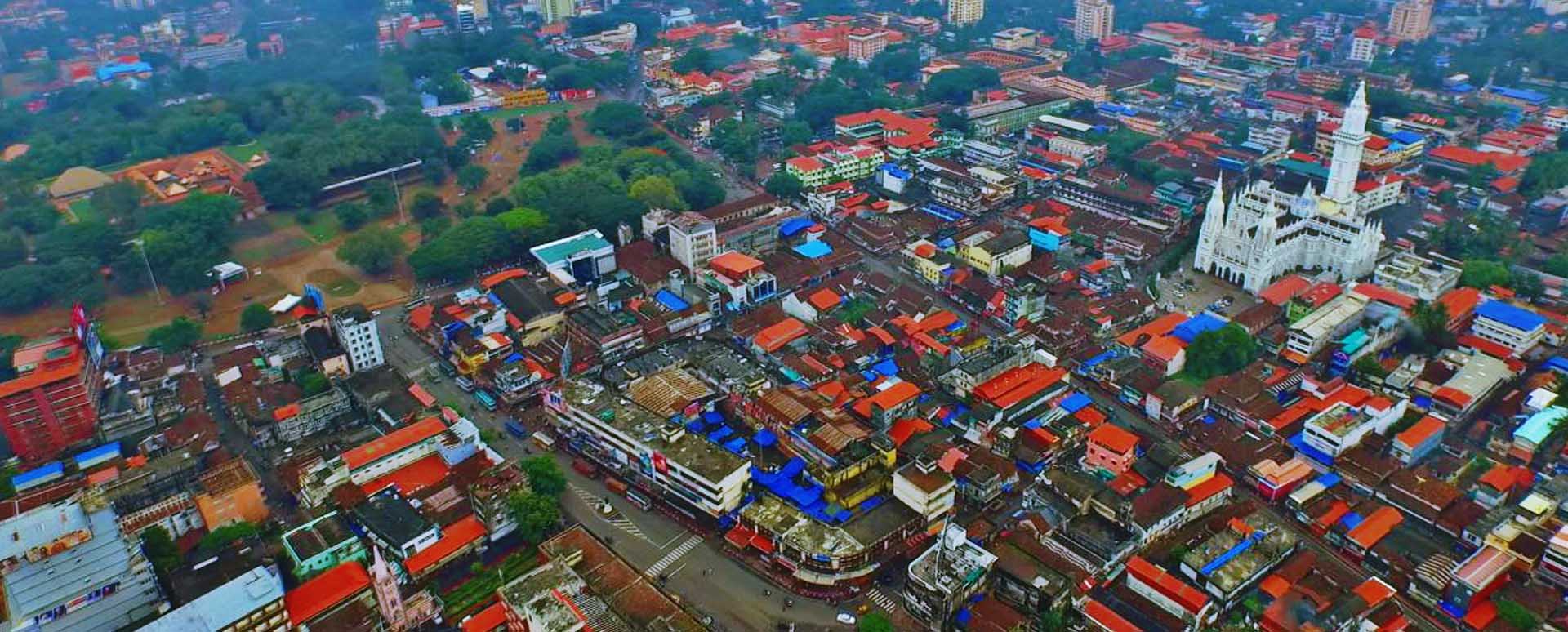
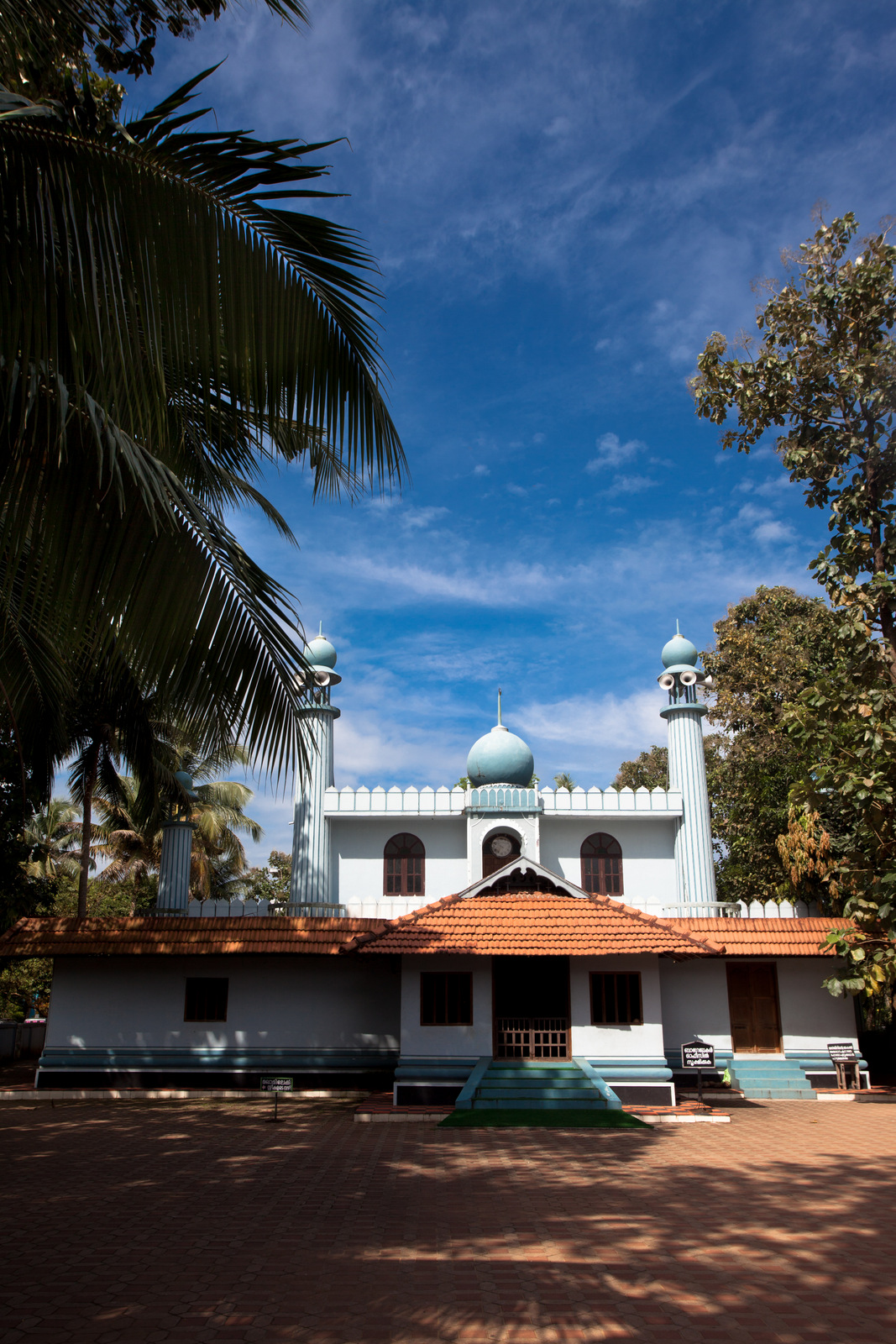
Today the temple sits within easy reach of Kodungallur’s dense cluster of heritage — the famous Kodungallur Bhagavathy Temple, the Cheraman Juma Masjid revered as one of the oldest mosques in the subcontinent, and the archaeological trail of ancient Muziris. That setting makes Thiruvanchikulam less a solitary stop than one stone in a mosaic of faiths and centuries, all packed into a small, green stretch of the Thrissur coast.
Legend & myth
The best-loved legend of Thiruvanchikulam is the story of how two saints left the earth together. As the tradition tells it, the poet-saint Sundarar and the Chera king-saint Cheraman Perumal Nayanar were bound by a friendship deeper than that of king and subject — they were companions in devotion to Shiva. When the time came for Sundarar to be released from the world, it is said that Shiva himself sent a white elephant to carry him to Kailash, the god’s abode. Sundarar mounted the elephant and began his ascent; and Cheraman Perumal, unwilling to be parted from his friend, is believed to have followed on a swift white horse, spurring it heavenward by the power of a sacred hymn until he too reached Shiva’s presence.
The tradition places the departure from the precincts of Thiruvanchikulam, and links it to the Adi-Swati asterism in the Tamil month of Adi (around July–August), which is why the temple’s association with the two saints is remembered so vividly here. All of this is devotional legend as preserved in the Periya Puranam and in local memory — recounted here as sacred story, not as documented event — but it is the beating heart of why pilgrims come: to stand at the spot where, they believe, a poet and a king rode off to Kailash side by side.
A second strand of legend explains the temple’s pull for Tamil devotees: Sundarar is remembered as having composed and sung Tevaram hymns in praise of the Mahadeva of Thiruvanchikulam, so that the very verses of the Tamil Shaiva canon reach across the mountains to name this Kerala shrine. To sing those hymns before this sanctum is, for the faithful, to close a loop that the saint himself opened more than a millennium ago.
History
Thiruvanchikulam’s importance is inseparable from the history of the Cheras. Kodungallur and its surroundings are widely identified with Mahodayapuram, the capital of the later Chera or Kulasekhara dynasty that ruled much of present-day Kerala through the early medieval centuries. As the sacred temple of that capital region, Thiruvanchikulam stood close to the centre of Chera political and religious life, and the temple is generally dated to the Chera period, with foundations often placed around the 8th–9th centuries CE (indicative — scholars debate exact dating).
The temple’s deepest claim to fame lies in the Tevaram — the body of Tamil Shaiva devotional hymns composed by the Nayanar saints in and around the 7th century. Shrines praised in these hymns are honoured as Paadal Petra Sthalams, traditionally numbered at 276. Thiruvanchikulam is widely described as the only Paadal Petra Sthalam in Kerala — the sole shrine of that great Tamil devotional network to lie west of the Western Ghats (this ‘only in Kerala’ status is the standard tradition, but is best treated as the received claim rather than an undisputed fact).
The temple is tied above all to Sundarar (Sundaramurthy Nayanar), remembered as one of the four principal Nayanar acharyas whose hymns form the core of the Tevaram, and to Cheraman Perumal Nayanar, the Chera king numbered among the sixty-three Nayanars. That a reigning Chera monarch is himself counted a saint, and that the greatest of the Tamil hymnodists sang here, gives Thiruvanchikulam a doubled significance — political and devotional — that few Kerala temples can match.
Like much of coastal Kerala’s heritage, the temple has weathered turbulent centuries. Tradition holds that it suffered damage during the 18th-century invasions of the region and was subsequently restored under local chieftains and patrons; what stands today reflects that long history of injury and repair rather than an unbroken ancient fabric. The shrine is administered as a Devaswom temple and is recognised for its heritage value, sitting within the wider archaeological landscape of ancient Muziris and Chera Kodungallur.
For the historian and the pilgrim alike, then, Thiruvanchikulam is a doorway into a lost golden age: the Chera capital of Mahodayapuram, a port-country open to Roman, Arab, Chinese and Jewish traders, where a Tamil poet and a Malayali king could be remembered forever as brothers in devotion beneath the same Shaiva sky.
Why visit
It is widely regarded as the only Paadal Petra Sthalam in Kerala — the one shrine of the great Tamil Tevaram network to lie west of the ghats — which makes it a bucket-list stop for anyone following the Nayanar pilgrimage trail.
The temple is the sacred heart of the old Chera capital region of Mahodayapuram near Kodungallur, so a visit is as much a walk into Kerala’s early-medieval history as it is an act of worship.
Its bond with two of the sixty-three Nayanars — the poet-saint Sundarar and the king-saint Cheraman Perumal Nayanar — and the beloved legend of their ride to Kailash give the shrine a story-richness that lingers long after you leave.
The classic Kerala-style architecture — walled compound, four-sided entrances, fortress-like sanctum, copper flagstaff and lamp-blackened interiors — offers a quieter, more contemplative temple experience than Kerala’s busier pilgrimage giants.
The unusually large cluster of sub-shrines within the compound, often described as the highest number of sub-deities in any Kerala temple, makes even a slow circuit of the grounds absorbing.
Its position inside Kodungallur’s dense heritage cluster — the Kodungallur Bhagavathy Temple, the ancient Cheraman Juma Masjid and the Muziris archaeological circuit — lets you fold Thiruvanchikulam into one of the most layered half-day heritage trails in Kerala.