About 22 km east of Thrissur town, where the plains crumple into the first green folds of the Western Ghats, a long concrete wall holds back the Manali river to form a broad, island-dotted reservoir. Peechi Dam is one of Kerala’s oldest large dams and, for generations of Thrissur families, the classic Sunday picnic — a manicured garden below the bund, pedal and motor boats on the water, and beyond the far bank the forested wall of the Peechi-Vazhani Wildlife Sanctuary. It is water supply, irrigation lifeline and day-trip playground rolled into one easy drive from the city.
The story of Peechi Dam
The approach sets the mood before you even see the water. The road out of Thrissur runs through paddy and rubber and then climbs gently as the Ghats close in, and quite suddenly the reservoir opens out — a wide sheet of green-blue water fringed by low wooded hills, with small islands breaking the surface and the grey ribbon of the dam wall stretched across one end. On a clear morning the whole basin sits mirror-still; by afternoon a breeze ruffles it and the light turns silver.
Most visitors head first for the dam-site garden, laid out on the slope below the bund. It is an old-fashioned public garden of clipped hedges, flowering shrubs, shaded benches and a few fountains, the kind of place where children run loose while parents spread out a picnic. Steps and pathways lead up onto the crest of the dam, and from that walkway you get the signature view — the long reservoir on one side, the sudden drop and the river valley on the other, and the hills of the sanctuary rolling away into haze.
The water itself is the main draw. A boating jetty offers pedal boats for pottering about near the bank and motorised boat rides that carry you further out across the reservoir, letting you see the dam wall from the water and slip past the wooded islands. Being on the water changes the scale of the place entirely — the bund looks longer, the hills taller, and on a quiet weekday you may share the reservoir with little more than a fishing craft and a passing cormorant.
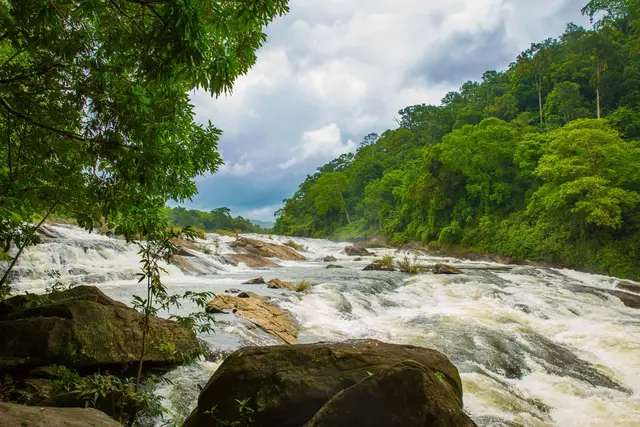
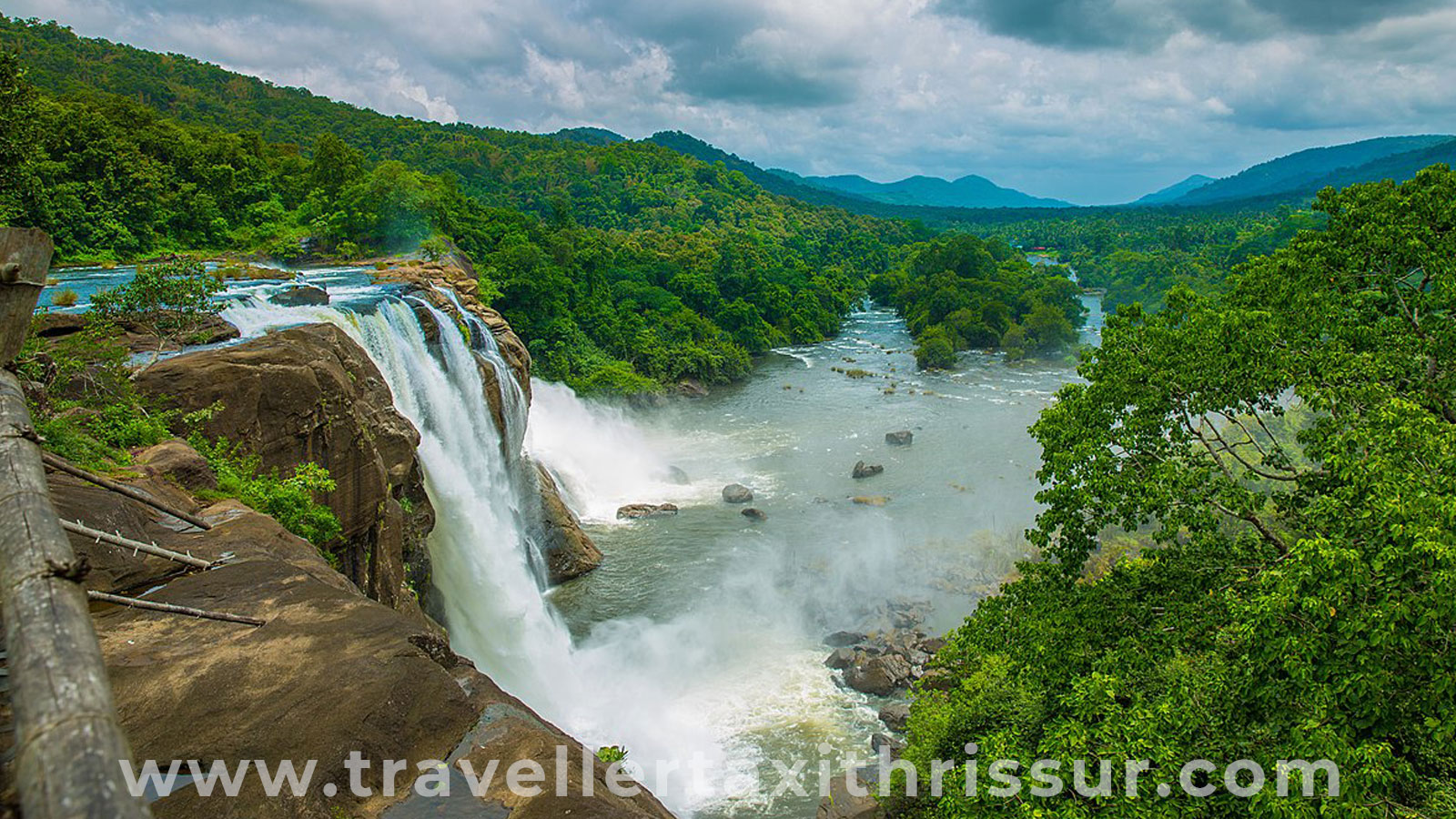
Across the reservoir and up into the catchment lies the reason the whole area feels so wild so close to a busy town: the Peechi-Vazhani Wildlife Sanctuary, whose moist-deciduous and evergreen forests wrap the dam on almost every side. Trekking trails and forest roads lead into this green hinterland, and the sanctuary’s Wildlife Warden office at Peechi is the gateway for guided walks, watch-tower visits and the occasional jeep foray. Elephants are sometimes seen along the forested banks, and the birdsong on an early morning is startlingly loud.
Peechi is also, quietly, a place of science. The Kerala Forest Research Institute (KFRI), one of India’s leading forestry research bodies, has its main campus here at Peechi, and its arboretum, bambusetum and living plant collections have made the area a magnet for students and naturalists as well as picnickers. It gives the whole location an unusual double character — a popular pleasure spot on the surface, a serious conservation and research landscape underneath.
For all its natural setting, Peechi wears its popularity lightly. Weekends and holidays fill the garden with families, ice-cream sellers and squealing children on the boats; weekday mornings are calm enough for a slow walk along the bund with only the wind and the water for company. Come at the right hour, watch the light move across the reservoir and the hills, and it is easy to see why this modest dam has stayed one of Thrissur’s best-loved outings for well over half a century.
History
Peechi Dam was among the earliest of independent India’s large irrigation projects in this part of Kerala. Work on damming the Manali river is generally dated to the late 1940s, and the completed dam was formally inaugurated on 4 October 1957 by Burgula Ramakrishna Rao, then Governor, with the reservoir and its works finished around 1959. Some sources cite 1957 and others 1959 depending on whether they mean the inauguration or the full completion — treat the late 1950s as the reliable window.
The project is closely associated with E. Ikkanda Warrier (1890–1977), a public figure of the erstwhile Kochi state, who is remembered as the guiding force — sometimes described as the architect — behind the scheme. The dam was built as a concrete straight-gravity structure across the Manali, and published figures put its height at roughly 49.8 m (about 163 ft) and its length at around 213 m (about 699 ft), with a catchment of some 3,200 acres feeding the reservoir.
The dam’s core purpose was, and remains, agricultural and municipal. Its waters irrigate a large spread of paddy and farmland across the Thrissur district — figures of the order of seventeen thousand hectares are commonly quoted — and the reservoir is a principal source of drinking water for Thrissur city, as well as helping moderate monsoon flooding downstream through its spillways and sluices.
Almost at the same moment as the dam, the surrounding forests were given formal protection. The Peechi-Vazhani Wildlife Sanctuary was constituted in 1958, taking in the catchments of both the Peechi and the more distant Vazhani reservoirs and covering roughly 125 sq km of the Western Ghats foothills. Its undulating terrain rises from lowland around the water to hill country inland, with Ponmudi (about 923 m) as its highest point, and it shelters elephants, leopards, deer, gaur and more than a hundred bird species amid teak, rosewood and a celebrated wealth of orchids and medicinal plants.
The final layer of Peechi’s story is institutional. The Kerala Forest Research Institute established its headquarters here, turning the dam’s green surroundings into a centre for forestry science, plant collections and field study. Between the 1950s dam, the 1958 sanctuary and the KFRI campus, Peechi grew over a few decades from a piece of engineering into an entire landscape of water, wildlife and research on Thrissur’s doorstep.
Why visit
An easy, family-friendly day out barely half an hour from Thrissur city — landscaped garden, boating and big reservoir views all in one spot.
The classic Peechi photograph: the long dam wall with the island-studded reservoir on one side and the river valley dropping away on the other.
Motor and pedal boat rides that put you out on the water, past wooded islands, with the dam and the sanctuary hills as backdrop.
The Peechi-Vazhani Wildlife Sanctuary right alongside, offering trekking, birding, watch-towers and the chance of spotting elephants in the catchment forests.
The Kerala Forest Research Institute campus nearby, with its arboretum and plant collections — a bonus for naturalists, students and anyone curious about the Ghats’ flora.
A genuinely green, low-key escape that swaps temple crowds and city heat for water, forest and fresh air within a short drive.