For thirty-six thunderous hours every Medam, the grassy Thekkinkadu Maidan around the ancient Vadakkunnathan Temple becomes the stage for the loudest, most dazzling spectacle in Kerala — a duel of drummers, tuskers and silk parasols that locals proudly call ‘the mother of all poorams’.
The story of Thrissur Pooram
There is nothing else in India quite like Thrissur Pooram. Once a year the whole city seems to pour into the Thekkinkadu Maidan, the round green ridge crowned by the Vadakkunnathan Temple, and for a day and a night Thrissur belongs to drums, gold and fire. Estimates run into the millions — some editions are said to draw close to two million people — packed shoulder to shoulder in the April–May heat, waving, roaring and utterly transfixed. It is a festival with no idols carried in worship at its centre; the real deities of the day are rhythm, colour and spectacle.
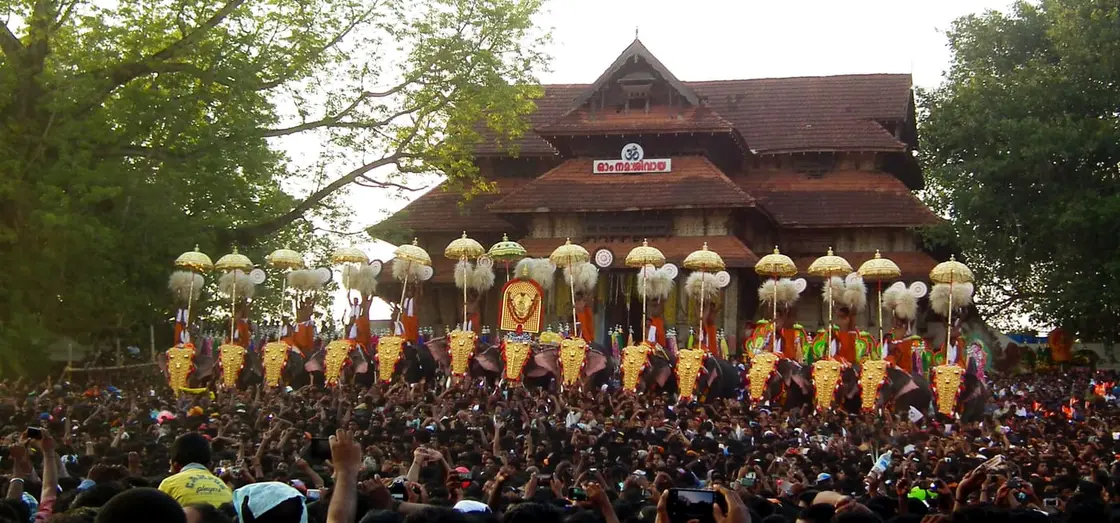
The heart of the pageant is the caparisoned elephant. Rows of majestic tuskers stand draped in the ‘nettipattam’, the gleaming gold forehead ornament, their mahouts perched high with ceremonial parasols, peacock-feather fans and yak-tail whisks. Facing them across the maidan, a second identical row belongs to the rival camp. This is the genius of the Pooram: two temple factions — the Paramekkavu Bhagavathy Devaswom and the Thiruvambadi Sri Krishna Devaswom — stage the entire event as a friendly but ferociously competitive contest, each trying to out-dazzle the other in elephants, music, umbrellas and fireworks.
Music is the soul of it. In the afternoon, beneath the sprawling old ‘ilanji’ tree inside the Vadakkunnathan compound, comes the Ilanjithara Melam — a colossal percussion ensemble of hundreds of artists on chenda drums, kombu horns, kurumkuzhal pipes and elathalam cymbals, building through slow, deliberate cycles to a shattering climax that can hold a crowd of thousands in a single collective trance. Purists call it the finest melam performance anywhere, and connoisseurs follow every rise and fall as intently as a symphony audience.
Then comes the Kudamattam, the parasol exchange, perhaps the single most photographed moment of the Pooram. Thirty caparisoned elephants — fifteen from Paramekkavu, fifteen from Thiruvambadi — line up face to face across the maidan. On a signal, the men riding them whip out one spectacular ceremonial umbrella after another, hoisting brilliantly coloured, sequinned and often ingeniously themed parasols high into the sky, then swapping them in rapid, rhythmic succession. Each side tries to top the other with wittier, grander, more surprising designs, and the crowd answers every flourish with a wall of applause.
When darkness falls the rivalry turns to fire. The Vedikettu — the great fireworks display, traditionally in the small hours before dawn — sends the two camps’ pyrotechnicians into a sky-splitting contest of colour and concussion that lights up the temple silhouette and rattles windows across the city. For many, standing in the dark packed maidan as the sky detonates overhead is the unforgettable core of the whole experience. A gentler daytime finale, the Pakal Pooram, and the tender farewell between the two Devaswoms close the cycle until the next Medam.
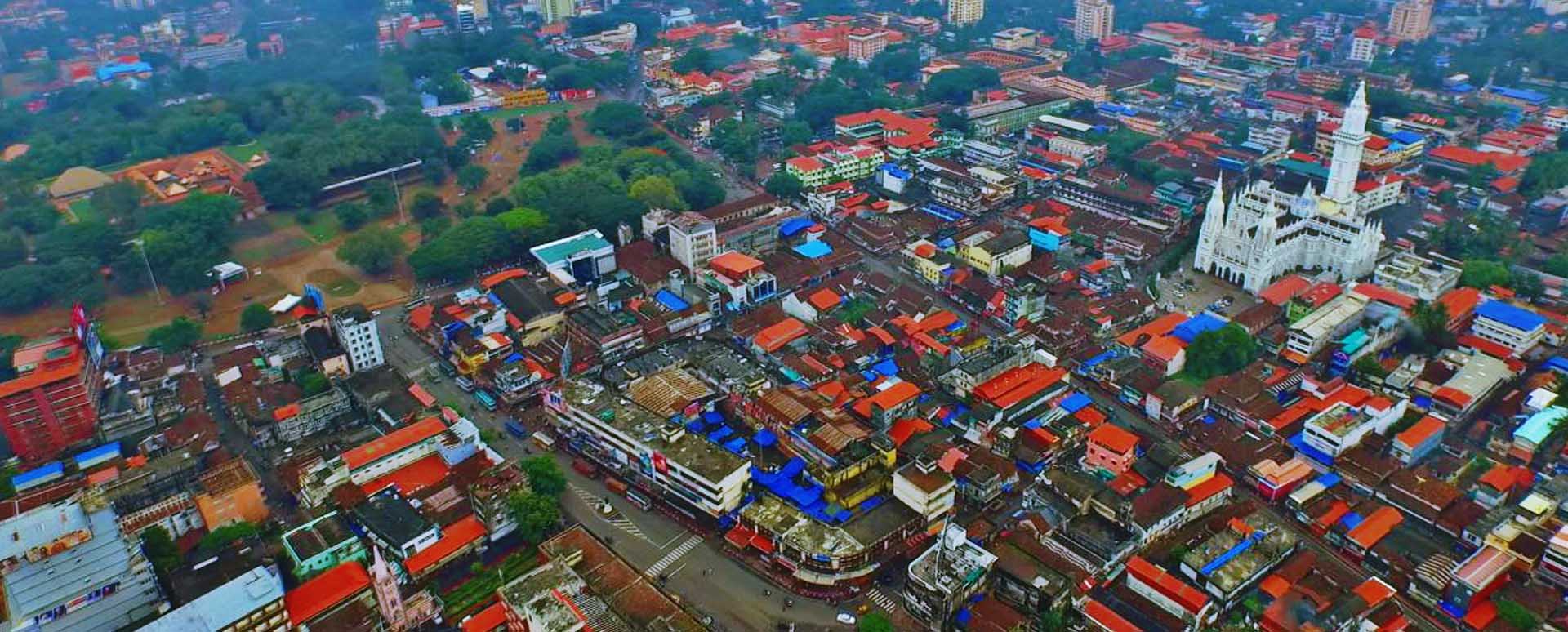
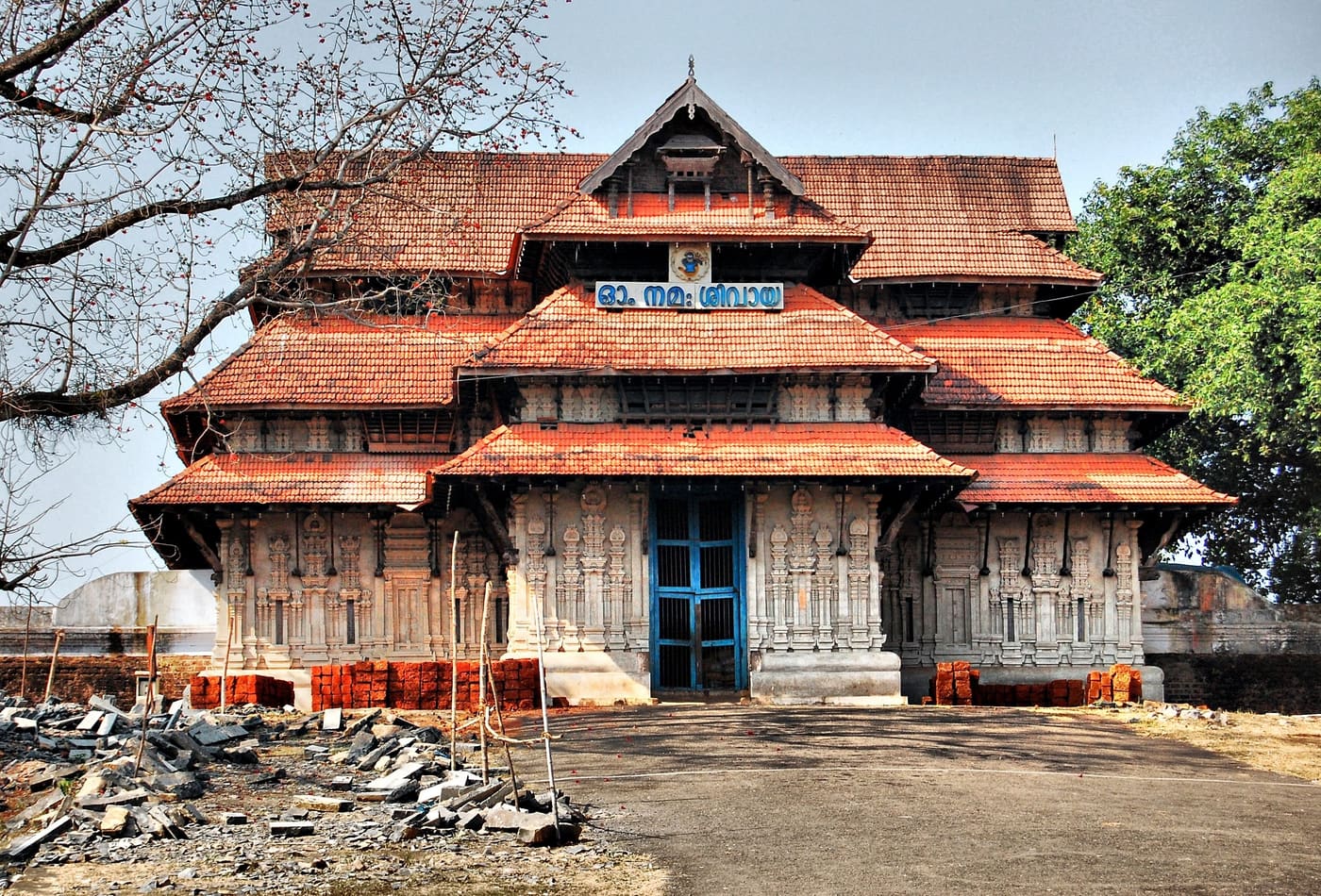
Around all of this swirls a whole ecosystem of celebration — vast decorated pandals and exhibition grounds, food stalls, all-night crowds, families who return to the same patch of grass year after year, and an atmosphere that fuses deep devotion with sheer carnival joy. Framed by the timeless grey walls of the Vadakkunnathan Temple, one of Kerala’s oldest and most sacred Shiva shrines, Thrissur Pooram feels less like an event you attend and more like a tide you are swept up in.
Legend & myth
By tradition, the Pooram was born of defiance. The story goes that the temples of the Thrissur area used to travel to the great Aarattupuzha Pooram, the region’s older grand festival. One year, according to the widely told account, heavy rains delayed the Thrissur contingents and they were shut out — denied their rightful place in the procession. Stung by the insult, the Maharaja of Cochin, Sakthan Thampuran (Raja Rama Varma), resolved that Thrissur would never again be turned away, and created a magnificent festival of its own around the Vadakkunnathan Temple. Whether every detail is literal history or cherished tradition, this tale of pride restored is told and retold as the origin of the Pooram.
History
Thrissur Pooram was founded in the late 18th century by Raja Rama Varma, the ruler of the Kingdom of Cochin better known as Sakthan Thampuran, who reigned from about 1790 to 1805. Sources differ on the exact year — many cite 1796, others a formal royal proclamation around 1798 — so the precise date is best treated as ‘the closing years of the 18th century’ rather than a single certain year.
Sakthan Thampuran organised the new festival on the Thekkinkadu Maidan surrounding the Vadakkunnathan Temple, the great Shiva shrine at the very centre of Thrissur, which serves as the presiding presence over the whole event. He brought together ten temples from in and around the city and grouped them into two rival camps, a structure that survives to this day.
The two lead temples are the Paramekkavu Bhagavathy Temple and the Thiruvambadi Sri Krishna Temple, each heading a group of smaller shrines. The Paramekkavu side is generally listed with Chembukkavu, Panamukkumpally, Choorakkottukavu and Karamukku; the Thiruvambadi side with Laloor, Ayyanthole, Neythalakkavu and Kanimangalam. Each of these temples brings its own ‘pooram’ procession into the city, and the two Devaswoms carry out most of the marquee events — the melam, Kudamattam and Vedikettu — as a matched, competitive pair.
The festival unfolds over a sequence of days rather than a single afternoon. It opens with the Kodiyettam, the ceremonial flag-hoisting, days ahead; a ‘sample’ fireworks show whets the appetite; and then the main Pooram day delivers the grand processions, the Madathil Varavu, the Ilanjithara Melam under the ilanji tree, the Kudamattam parasol exchange, and the great pre-dawn Vedikettu, before the Pakal Pooram daytime finale and the emotional farewell ceremony between the two camps close the cycle.
Timed to the Pooram asterism in the Malayalam month of Medam (falling in April or May), the festival has grown into what is very widely described as the largest and most spectacular temple festival in Kerala — a UNESCO-noted cultural landmark of the state that anchors Thrissur’s identity as Kerala’s cultural capital. Because it follows the traditional lunar-solar calendar, the exact Gregorian date shifts each year and should always be confirmed for the year you plan to travel.
Why visit
Witness Kerala’s single most spectacular festival — scale, sound and colour on a scale you will not see anywhere else.
Rows of caparisoned elephants in gold ‘nettipattam’, mahouts aloft with ceremonial parasols and fans.
The Ilanjithara Melam — hundreds of drummers building to a trance-like climax, widely rated the finest percussion performance in India.
The Kudamattam parasol duel between Paramekkavu and Thiruvambadi, one of the most photographed moments in Kerala.
A jaw-dropping pre-dawn fireworks contest (Vedikettu) that lights up the Vadakkunnathan temple skyline.
The chance to stand inside a living tradition more than two centuries old, at the sacred heart of Kerala’s cultural capital.