A mist-drowned wall of grassland and shola forest straddling the Kerala–Karnataka frontier, where a guided climb from the sacred Thirunelli valley rises past sin-dissolving streams to bird-haunted caves near the roof of Wayanad.
The story of Brahmagiri Hills
The Brahmagiri range lifts abruptly out of the forests of northern Wayanad, its highest ridge cresting at roughly 1,608 metres, and the classic Kerala approach begins in the hush of the Thirunelli valley. From the Forest Department camp shed near the Thirunelli temple, a regulated trek of around 10 kilometres (indicative — confirm locally) sets off with a mandatory guide, threading first through humid evergreen forest before the canopy thins and the world opens into rolling montane grassland. It is a demanding walk — sources describe more than three hours of intense climbing to gain the higher ground — and the reward is the signature Western Ghats spectacle of golden grass running to a horizon of blue folded hills.
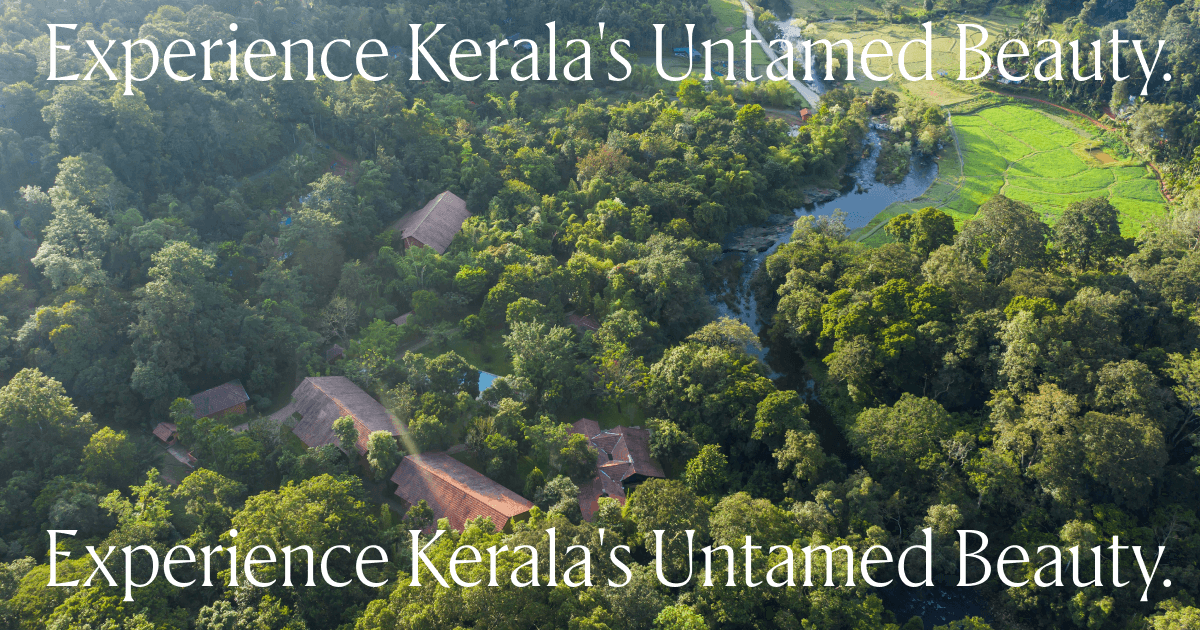
The magic of Brahmagiri is its layering of ecosystems in a single climb. Dense riparian forest gives way to the shola-grassland mosaic that defines the high Ghats: dark, wet pockets of ancient evergreen shola tucked into the valley creases, ringed by open grassy slopes that catch every drifting cloud. In the wet months mist pours over the ridges in slow tides, streams appear underfoot at almost every turn, and the air stays cool and damp even at midday. Trekkers who reach the watchtower and higher meadows can, with luck and binoculars, pick out a herd of gaur or elephants grazing far below in the valleys.
High on the northern shoulder of the range, roughly seven kilometres northeast of Thirunelli and about 36 kilometres from Mananthavady (indicative — confirm locally), lies Pakshipathalam — literally the ‘underworld of birds’. Sitting at around 1,740 metres, it is a jumble of rocky hillocks and deep rock caves that ornithologists and adventure trekkers prize as one of the finest birding spots in Wayanad. Among the boulders and shola edges live myriad Western Ghats birds, from the Malabar trogon to endemic species, and the thick block of rocks makes the final approach a genuinely challenging scramble that needs the Forest Department’s permission and a guide.
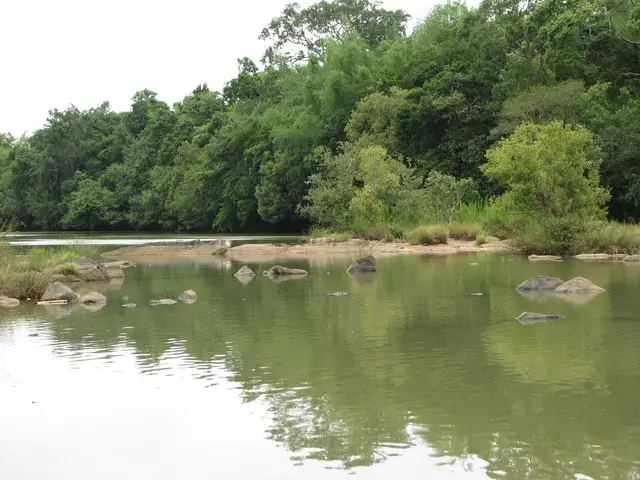
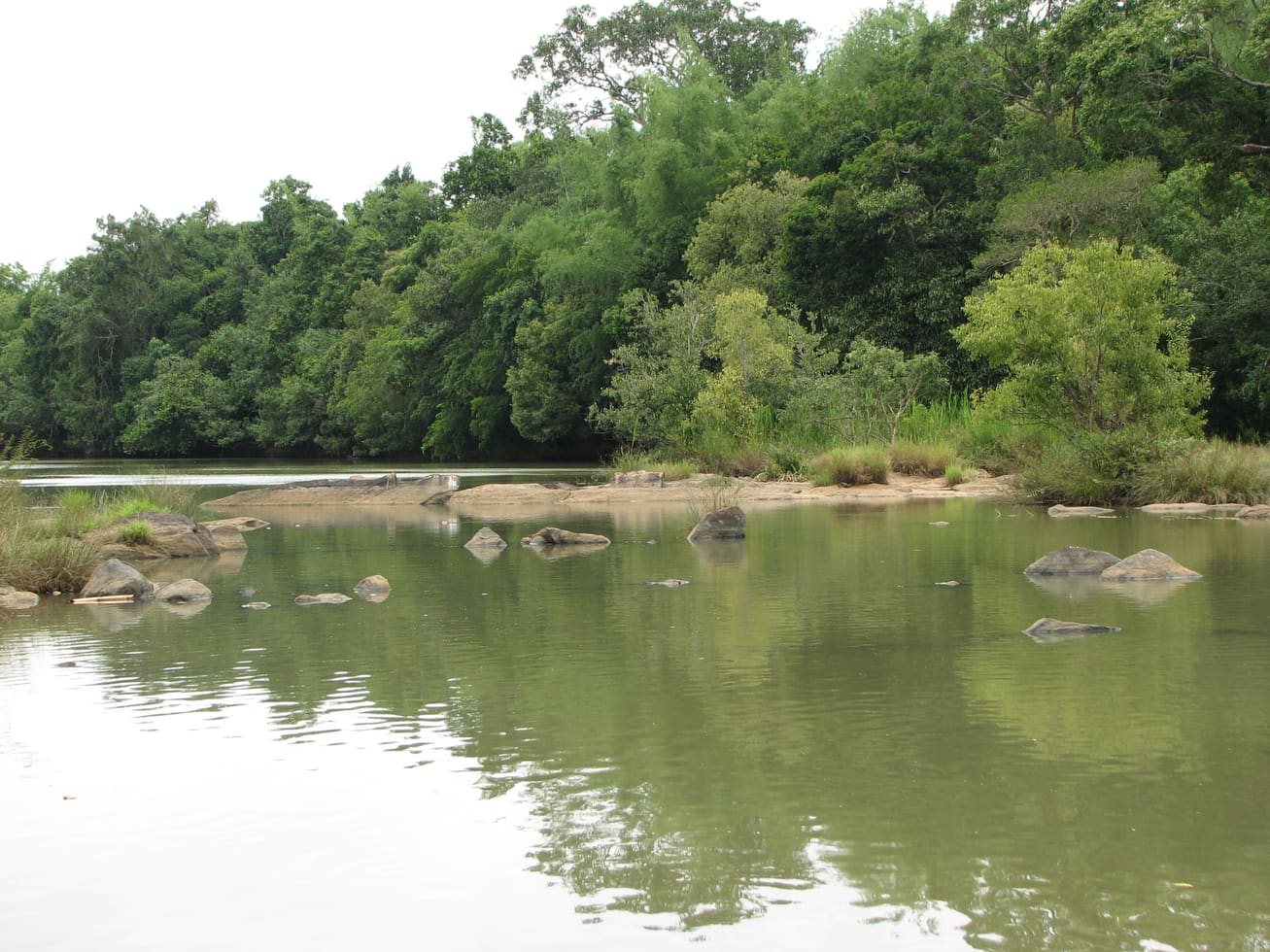
The whole massif is stitched to water and to legend. The Papanasini stream — its name meaning ‘destroyer of sin’ — rises on Brahmagiri and tumbles down to the Thirunelli temple below, where pilgrims perform ancestral rites on its banks. On the Karnataka flank the Lakshmana Tirtha river is born of the same hills before running away to join the mighty Kaveri. To stand on the ridge is to sit at a genuine watershed of the Western Ghats, where the same rain that soaks the grass feeds temples, rivers and forests on both sides of the state line.
This is wild country, and it behaves like it. The forests below the trekking routes form part of one of the richest wildlife tracts of the southern Ghats, home to elephants, gaur, sambar, Malabar giant squirrels, Nilgiri langurs and the endangered lion-tailed macaque, with tigers and leopards moving through the deeper jungle. That richness is exactly why access is tightly controlled: permits, fixed morning entry slots, closed days and compulsory guides all exist to keep both trekkers and the ecosystem safe.
For the traveller, Brahmagiri rewards those who plan properly. Pair it with the ancient Thirunelli temple and the Papanasini stream at its foot, add the Pakshipathalam cave-birding trek, and you have one of the most atmospheric two-in-one experiences in North Wayanad — spiritual valley below, wind-scoured grassland ridge above, and a curtain of Ghats mist tying them together.
Legend & myth
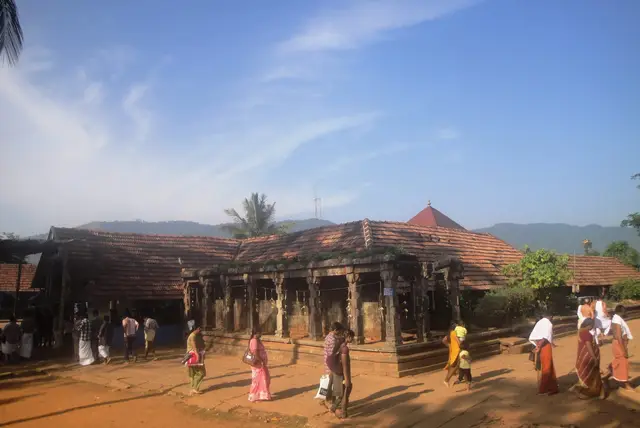
The hills are woven into some of Kerala’s deepest sacred geography. The Papanasini stream that rises on Brahmagiri is held to carry the power to dissolve sin — tradition says the rivers Ganga and Saraswathi themselves join its waters — which is why Thirunelli at its foot is revered as the Sahyamala Kshetram and the ‘Kashi of the South’, one of the few temples where devotees can perform every life-cycle rite from birth to the rites for the dead.
By tradition it was Parashurama, the axe-wielding avatar of Vishnu, who is said to have performed the first Pinda Dhanam and Bali Tharpanam — offerings for departed ancestors — on the sacred rock known as Pinnappara (Pinda Para) beside the Papanasini. To this day pilgrims climb to Thirunelli to offer bali for their forebears on the banks of a stream born high on these very hills, believing the ancestors thereby attain moksha.
On the Karnataka side a parallel legend clings to the range: it is said that Lakshmana, brother of Rama, loosed an arrow at Brahmagiri and from the spot where it struck sprang the Lakshmana Tirtha river — framing the whole massif, in local tradition, as a birthplace of sacred waters.
History
Brahmagiri is a hill range of the Western Ghats sitting squarely on the state border, with the Wayanad district of Kerala on its southern side and the Kodagu (Coorg) district of Karnataka on the north. It is important to distinguish the two faces of the massif: the Kerala/Wayanad side is reached and trekked from the Thirunelli valley, while the formally notified Brahmagiri Wildlife Sanctuary lies largely across the ridge on the Karnataka (Kodagu) flank.
The Karnataka-side Brahmagiri Wildlife Sanctuary, in Kodagu, protects a classic Western Ghats spread of evergreen and semi-evergreen forest, shola patches, bamboo and high grassland, and shelters elephants, gaur, tigers, leopards, lion-tailed macaques, Nilgiri langurs, Malabar giant squirrels and well over 200 bird species. The popular Karnataka trekking approach climbs from the famous Iruppu Falls via the Narimale forest camp toward the peak, under permits issued by the local Range Forest Office.
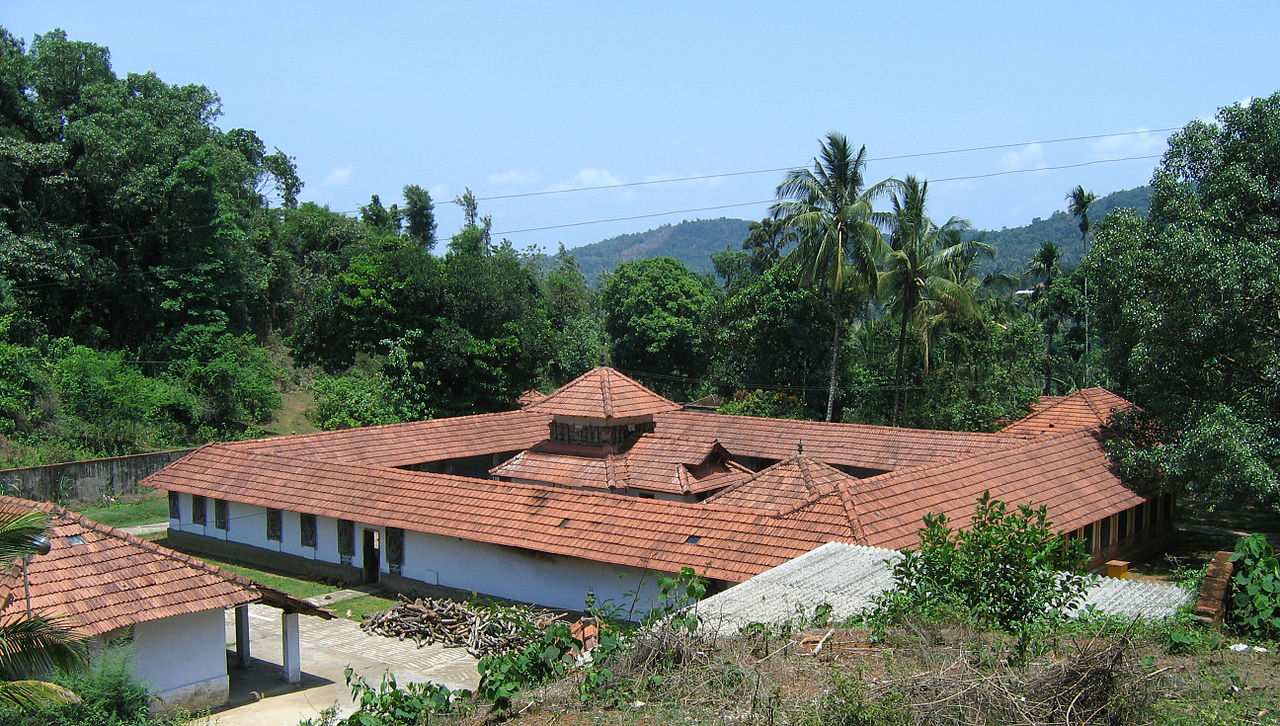
On the Kerala side the story centres on Thirunelli, an ancient Mahavishnu temple set in a natural amphitheatre of the Brahmagiri hills and long celebrated as one of Wayanad’s most sacred sites. The temple’s renown rests on the Papanasini stream that descends from Brahmagiri and on the ancestral rites performed on its banks, drawing pilgrims especially on the no-moon Vavu Bali days.
The hills are also a genuine watershed. The Papanasini flows down to Thirunelli, while the Lakshmana Tirtha rises on the same range on the Karnataka side and joins the Kaveri system — a reminder that Brahmagiri feeds rivers and sacred waters draining in more than one direction.
Because the range is both a biodiversity stronghold and a fragile high-altitude ecosystem, trekking on the Kerala side is regulated by the Forest Department. Access to the Brahmagiri peak trek and to Pakshipathalam requires prior permission, is routed through the Thirunelli forest range under North Wayanad, runs only in fixed morning slots on open days, and always requires a Department-approved guide.
Why visit
One climb, three worlds — riparian jungle, misty shola pockets and open montane grassland on the same trail.
Ridge-top views across an ocean of folded Western Ghats hills, often above a sea of drifting cloud.
Pakshipathalam’s rock caves and boulder-fields — a legendary birding and adventure spot near the roof of Wayanad.
A rare pairing of the sacred and the wild: the ancient Thirunelli temple and sin-dissolving Papanasini stream at the foot of the climb.
Serious Western Ghats wildlife country — gaur, elephants, Nilgiri langur, Malabar giant squirrel and the endangered lion-tailed macaque in the wider forest.
A properly regulated, guide-led adventure that rewards fit trekkers who plan ahead and travel light.